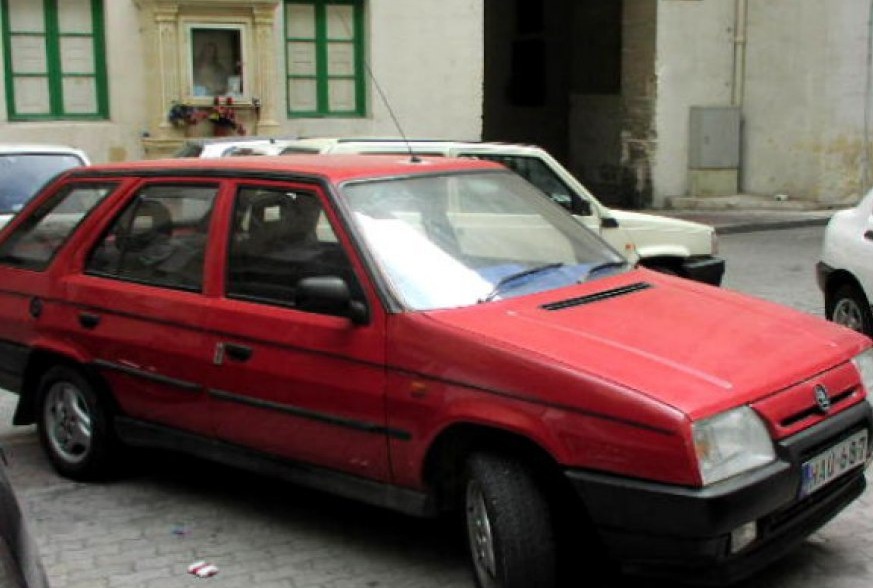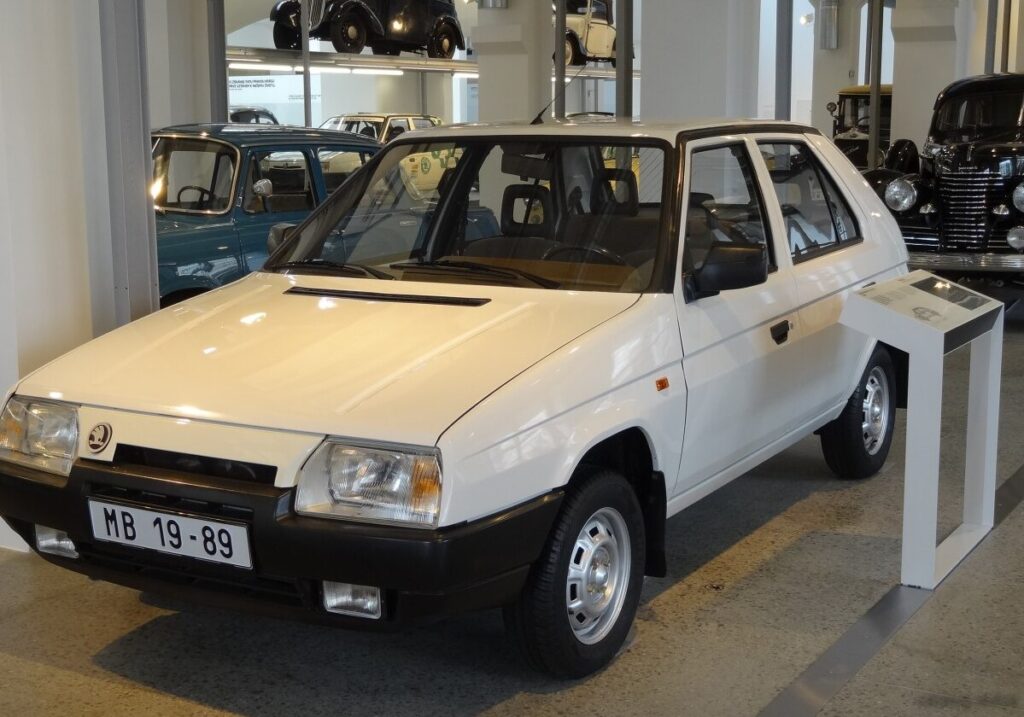
The Skoda Favorit 1.3, designated internally as the 781, was a compact hatchback produced by the Czech automaker Skoda between 1994. Representing a significant step forward for Skoda, the Favorit was the first model developed entirely under the ownership of the Volkswagen Group, following VW’s acquisition of a controlling stake in 1991. The 1.3-liter engine, producing 68 horsepower, served as the entry-level powertrain option for the Favorit range, primarily aimed at budget-conscious buyers in Central and Eastern European markets. It was positioned below the more powerful 1.6-liter variants and offered a more economical alternative, though at the cost of performance. Production of this specific configuration was limited to the 1994 model year.
Technical Specifications
| Brand | Skoda |
| Model | Favorit |
| Generation | Favorit (781) |
| Type (Engine) | 1.3 (781) (68 Hp) |
| Start of production | 1994 |
| End of production | 1994 |
| Powertrain Architecture | Internal Combustion engine |
| Body type | Hatchback |
| Seats | 5 |
| Doors | 5 |
| Fuel consumption (combined) | 6.9 l/100 km (34.1 US mpg, 40.9 UK mpg, 14.5 km/l) |
| Fuel Type | Petrol (Gasoline) |
| Acceleration 0 – 100 km/h | 15 sec |
| Acceleration 0 – 62 mph | 15 sec |
| Acceleration 0 – 60 mph | 14.3 sec |
| Maximum speed | 150 km/h (93.21 mph) |
| Weight-to-power ratio | 12.9 kg/Hp, 77.7 Hp/tonne |
| Weight-to-torque ratio | 8.3 kg/Nm, 121.1 Nm/tonne |
| Power | 68 Hp @ 5000 rpm |
| Power per litre | 52.8 Hp/l |
| Torque | 106 Nm @ 2600 rpm (78.18 lb.-ft. @ 2600 rpm) |
| Engine layout | Front, Transverse |
| Engine Model/Code | 781.136 |
| Engine displacement | 1289 cm3 (78.66 cu. in.) |
| Number of cylinders | 4 |
| Engine configuration | Inline |
| Cylinder Bore | 75.5 mm (2.97 in.) |
| Piston Stroke | 72 mm (2.83 in.) |
| Compression ratio | 9.7:1 |
| Number of valves per cylinder | 2 |
| Fuel injection system | Multi-port manifold injection |
| Engine aspiration | Naturally aspirated engine |
| Engine oil capacity | 4.5 l (4.76 US qt | 3.96 UK qt) |
| Coolant | 6 l (6.34 US qt | 5.28 UK qt) |
| Kerb Weight | 875 kg (1929.04 lbs.) |
| Max. weight | 1325 kg (2921.12 lbs.) |
| Max load | 450 kg (992.08 lbs.) |
| Trunk (boot) space – minimum | 251 l (8.86 cu. ft.) |
| Trunk (boot) space – maximum | 1038 l (36.66 cu. ft.) |
| Fuel tank capacity | 42 l (11.1 US gal | 9.24 UK gal) |
| Length | 3815 mm (150.2 in.) |
| Width | 1620 mm (63.78 in.) |
| Height | 1415 mm (55.71 in.) |
| Wheelbase | 2450 mm (96.46 in.) |
| Front track | 1420 mm (55.91 in.) |
| Rear (Back) track | 1380 mm (54.33 in.) |
| Drivetrain Architecture | The Internal combustion engine (ICE) drives the front wheels of the vehicle. |
| Drive wheel | Front wheel drive |
| Number of gears and type of gearbox | 5 gears, manual transmission |
| Front suspension | Spring Strut |
| Rear suspension | Coil spring |
| Front brakes | Disc |
| Rear brakes | Drum |
| Steering type | Steering rack and pinion |
| Tires size | 165/70 R13 S |
Introduction
The Skoda Favorit 1.3 (781) represented Skoda’s attempt to modernize its lineup and appeal to a wider European audience. Introduced in 1994, it was a crucial model for the brand as it transitioned under Volkswagen Group ownership. The Favorit was built on the front-wheel-drive 781 platform, a significant departure from Skoda’s traditionally rear-engined vehicles. The 1.3-liter engine variant was specifically targeted at markets where affordability and fuel economy were paramount, offering a practical and reliable, if not particularly exciting, driving experience. It was a direct response to the growing demand for modern, economical hatchbacks in Central and Eastern Europe.
Powertrain & Engine Architecture
The heart of the Favorit 1.3 was the 781.136 engine, a 1.3-liter inline-four cylinder gasoline engine. This engine featured a relatively simple design with two valves per cylinder and a single overhead camshaft. Fuel delivery was handled by a multi-port fuel injection system, a step up from the carburetors used in earlier Skoda models. The engine produced 68 horsepower at 5000 rpm and 106 Nm (78.18 lb-ft) of torque at 2600 rpm. The engine’s design prioritized reliability and fuel efficiency over outright performance. The Favorit 1.3 was exclusively offered with a five-speed manual transmission, chosen for its cost-effectiveness and simplicity. This transmission was not particularly sophisticated, but it was durable and well-suited to the engine’s power output.
Driving Characteristics
The driving experience in the Favorit 1.3 was characterized by its modest performance. Acceleration from 0 to 60 mph took approximately 14.3 seconds, and the top speed was around 93 mph. The 1.3-liter engine felt strained when pushed hard, particularly when fully loaded or climbing hills. The five-speed manual transmission helped to keep the engine in its optimal power band, but the overall experience was geared towards practicality rather than driving enjoyment. Compared to the 1.6-liter versions of the Favorit, the 1.3 offered significantly less power and acceleration. However, it also delivered better fuel economy, making it a more attractive option for drivers prioritizing cost savings. The suspension was tuned for comfort, providing a reasonably smooth ride on most road surfaces, although it could feel somewhat wallowy in corners.
Equipment & Trim Levels
The Favorit 1.3 was typically offered with a basic level of equipment, reflecting its position as the entry-level model. Standard features generally included cloth upholstery, a basic instrument cluster, and manual windows and door locks. Power steering was not typically included as standard, although it was sometimes available as an optional extra. The interior was functional and durable, but lacked the refinement of more expensive models. Optional extras included a radio, upgraded seat fabrics, and central locking. The dashboard layout was simple and straightforward, with easy-to-read gauges and controls.
Chassis & Braking
The Favorit 1.3 featured a front-wheel-drive chassis with a MacPherson strut suspension at the front and a coil spring suspension at the rear. The brakes were disc brakes at the front and drum brakes at the rear. The braking system was adequate for the car’s weight and performance, but lacked the stopping power of more modern vehicles. The steering was a rack-and-pinion system, providing reasonably precise steering feel. The tires were typically 165/70 R13 size, offering a good balance of grip and ride comfort.
Market Reception & Comparison
The Skoda Favorit 1.3 was generally well-received in its target markets, particularly in Central and Eastern Europe. Critics praised its affordability, fuel economy, and reliability. However, it was also criticized for its lack of performance and its somewhat basic interior. Compared to other hatchbacks in its class, such as the Fiat Uno and the Renault Clio, the Favorit 1.3 offered a competitive price point but lacked the refinement and driving dynamics of its rivals. The 1.6-liter Favorit models offered a significant performance upgrade, but at a higher price. The 1.3-liter version appealed to buyers who prioritized practicality and cost savings over driving excitement.
Legacy
The Skoda Favorit 1.3 played a crucial role in Skoda’s transition under Volkswagen Group ownership. It helped to establish Skoda as a credible manufacturer of modern, affordable vehicles. While the 1.3-liter engine is not known for its longevity or high performance, it proved to be a reliable and durable unit when properly maintained. Today, the Favorit 1.3 is a relatively rare sight on the roads, but it remains a popular choice among classic car enthusiasts and collectors in Central and Eastern Europe. Its simplicity and affordability make it an attractive option for those seeking a classic hatchback that is easy to maintain and repair. The 781 platform itself laid the groundwork for future Skoda models, paving the way for the brand’s continued success in the European automotive market.