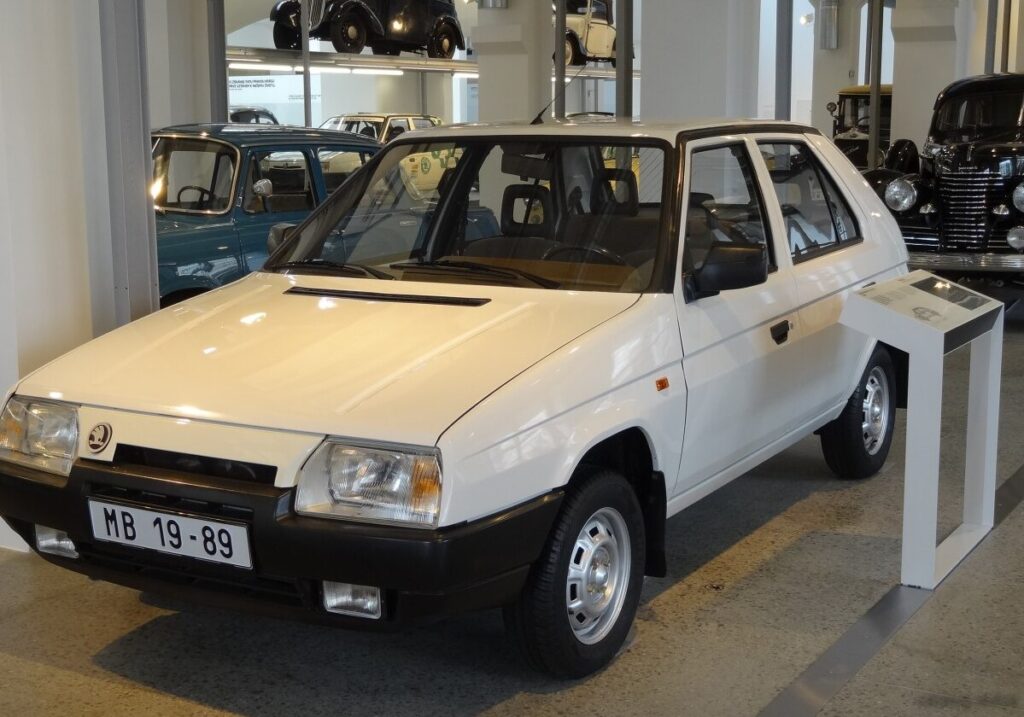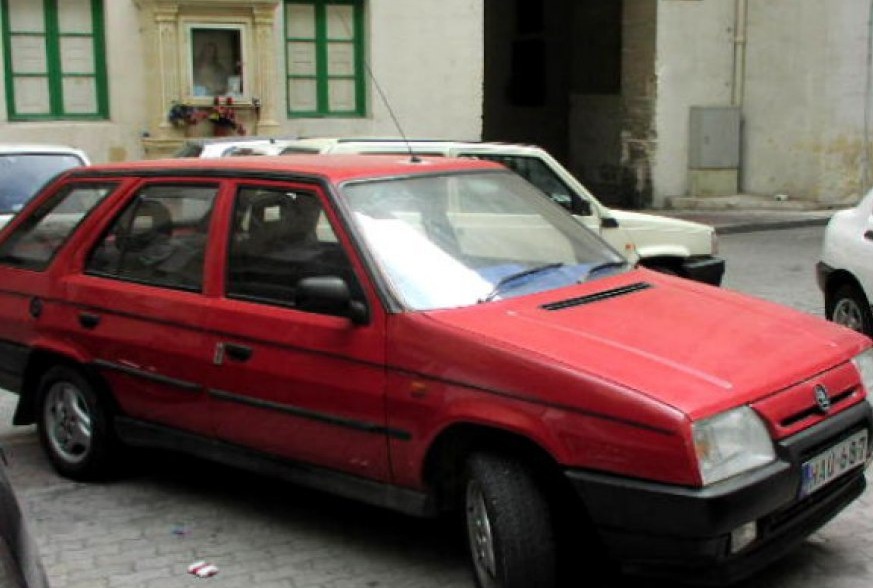
The Skoda Favorit Forman 1.3 (135 E), producing 54 horsepower, was a station wagon variant of the popular Skoda Favorit, manufactured between 1992 and 1995. Positioned as an affordable and practical family vehicle, the Forman represented a significant step forward for Skoda, offering a modern design and improved features compared to its predecessors like the Estelle. It was a key model in Skoda’s lineup before Volkswagen’s acquisition, and played a crucial role in establishing the brand’s reputation for value and durability, particularly within Eastern European markets. The “Forman” designation indicated the estate body style, offering increased cargo capacity over the standard Favorit hatchback.
Technical Specifications
| Brand | Skoda |
| Model | Favorit |
| Generation | Favorit Forman (785) |
| Type (Engine) | 1.3 (135 E) (54 Hp) |
| Start of production | 1992 |
| End of production | 1995 |
| Powertrain Architecture | Internal Combustion engine |
| Body type | Station wagon (estate) |
| Seats | 5 |
| Doors | 5 |
| Fuel consumption (combined) | 7.5 l/100 km (31.4 US mpg, 37.7 UK mpg, 13.3 km/l) |
| Fuel Type | Petrol (Gasoline) |
| Acceleration 0 – 100 km/h | 17 sec |
| Acceleration 0 – 62 mph | 17 sec |
| Acceleration 0 – 60 mph | 16.2 sec |
| Maximum speed | 135 km/h (83.89 mph) |
| Weight-to-power ratio | 17 kg/Hp, 58.7 Hp/tonne |
| Weight-to-torque ratio | 9.8 kg/Nm, 102.2 Nm/tonne |
| Power | 54 Hp @ 5000 rpm |
| Power per litre | 41.9 Hp/l |
| Torque | 94 Nm @ 3250 rpm (69.33 lb.-ft. @ 3250 rpm) |
| Engine layout | Front, Transverse |
| Engine Model/Code | 781.135 |
| Engine displacement | 1289 cm3 (78.66 cu. in.) |
| Number of cylinders | 4 |
| Engine configuration | Inline |
| Cylinder Bore | 75.5 mm (2.97 in.) |
| Piston Stroke | 72 mm (2.83 in.) |
| Compression ratio | 8.8:1 |
| Number of valves per cylinder | 2 |
| Fuel injection system | Single-point injection |
| Engine aspiration | Naturally aspirated engine |
| Engine oil capacity | 4.5 l (4.76 US qt | 3.96 UK qt) |
| Coolant | 6 l (6.34 US qt | 5.28 UK qt) |
| Kerb Weight | 920 kg (2028.25 lbs.) |
| Max. weight | 1370 kg (3020.33 lbs.) |
| Max load | 450 kg (992.08 lbs.) |
| Trunk (boot) space – minimum | 400 l (14.13 cu. ft.) |
| Trunk (boot) space – maximum | 1300 l (45.91 cu. ft.) |
| Fuel tank capacity | 42 l (11.1 US gal | 9.24 UK gal) |
| Length | 4160 mm (163.78 in.) |
| Width | 1620 mm (63.78 in.) |
| Height | 1425 mm (56.1 in.) |
| Wheelbase | 2450 mm (96.46 in.) |
| Front track | 1420 mm (55.91 in.) |
| Rear (Back) track | 1380 mm (54.33 in.) |
| Drivetrain Architecture | The Internal combustion engine (ICE) drives the front wheels of the vehicle. |
| Drive wheel | Front wheel drive |
| Number of gears and type of gearbox | 5 gears, manual transmission |
| Front suspension | Spring Strut |
| Rear suspension | Coil spring |
| Front brakes | Disc |
| Rear brakes | Drum |
| Assisting systems | ABS (Anti-lock braking system) |
| Steering type | Steering rack and pinion |
| Tires size | 165/70 R13 S |
Powertrain & Engine Architecture
The Skoda Favorit Forman 1.3 (135 E) was powered by the 781.135 engine, a 1.3-liter, inline-four cylinder gasoline engine. This engine featured a relatively simple design, utilizing a single overhead camshaft (SOHC) and two valves per cylinder. The engine employed single-point fuel injection, a common technology for the time, which delivered fuel into the intake manifold rather than directly into the cylinders. This system, while less efficient than later multi-point injection systems, contributed to the car’s affordability. The engine produced 54 horsepower at 5000 rpm and 94 Nm (69.33 lb-ft) of torque at 3250 rpm. The engine was transversely mounted, driving the front wheels. The standard transmission was a five-speed manual gearbox, optimized for fuel economy and everyday driving rather than outright performance.
Driving Characteristics
The 1.3-liter engine in the Favorit Forman provided adequate, but not exhilarating, performance. Acceleration from 0 to 60 mph took approximately 16.2 seconds, and the top speed was around 84 mph. The car was geared towards practicality and fuel efficiency, rather than sporty driving. The five-speed manual transmission allowed for reasonable control over the engine’s power band, but the relatively low horsepower meant that frequent downshifting was often necessary, especially when climbing hills or overtaking. Compared to the more powerful (and expensive) versions of the Favorit, such as those with larger engines, the 1.3-liter model felt noticeably slower. However, it offered a more economical and accessible option for budget-conscious buyers.
Equipment & Trim Levels
The Favorit Forman 1.3 (135 E) was typically equipped with basic, but functional, features. Standard equipment included cloth upholstery, a simple dashboard layout, and manual windows and door locks. The interior was designed for durability and ease of cleaning, reflecting the car’s practical nature. Optional extras, depending on the market, could include a radio, upgraded interior trim, and sometimes even power windows. The Forman’s primary appeal lay in its spaciousness and practicality, offering a generous cargo area for a car of its size. The estate body style made it particularly well-suited for families or those needing to transport larger items.
Chassis & Braking
The Skoda Favorit Forman featured a relatively simple chassis design. The front suspension utilized a MacPherson strut setup, while the rear suspension employed a coil spring arrangement. The braking system consisted of disc brakes on the front wheels and drum brakes on the rear. ABS (Anti-lock Braking System) was often included as standard equipment, enhancing safety. The car’s suspension was tuned for comfort and ride quality, rather than sporty handling. The steering was a rack and pinion system, providing reasonably precise control. The tires were typically 165/70 R13 size, offering a balance of grip and fuel efficiency.
Market Reception & Comparison
The Skoda Favorit Forman 1.3 (135 E) was generally well-received in its target markets, particularly in Eastern Europe, where it offered a compelling combination of affordability, practicality, and durability. Critics praised its spacious interior and generous cargo capacity. However, the engine’s modest power output was often noted as a drawback. Compared to other cars in its class, such as the Fiat Uno or Renault Clio, the Favorit Forman offered a more spacious interior and a more robust build quality. Its fuel economy was competitive, averaging around 31.4 US mpg. Reliability was generally good, although maintenance costs could be higher than some of its rivals due to the car’s Czech origins and the availability of parts.
Legacy
The Skoda Favorit Forman 1.3 (135 E) remains a fondly remembered car for many owners. Its simple design and robust construction contribute to its continued reliability, and many examples are still on the road today. While not a performance icon, it represents a significant milestone in Skoda’s history, marking a transition towards more modern and competitive vehicles. In the used car market, the Forman 1.3 is often sought after by those looking for an affordable and practical classic car, or a reliable workhorse. Parts availability can be a challenge in some regions, but a dedicated community of enthusiasts helps to keep these cars running. The 135E engine, while not particularly powerful, is known for its durability and relative ease of maintenance.