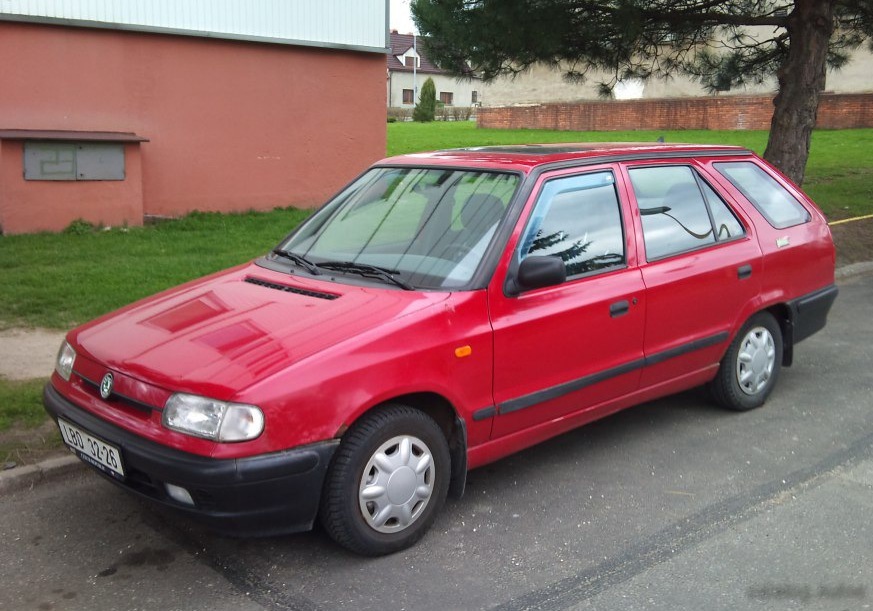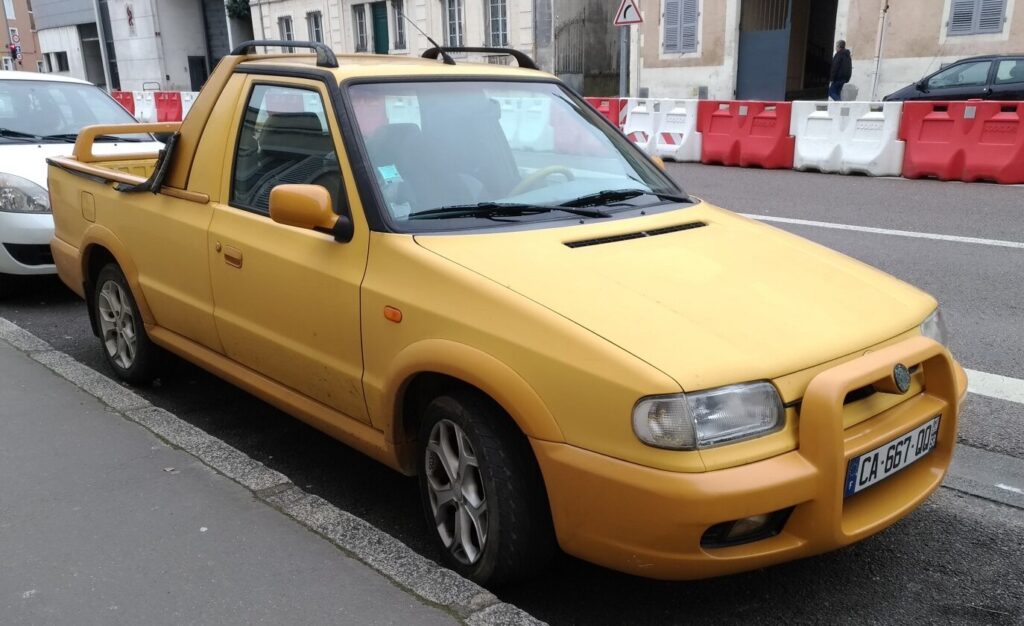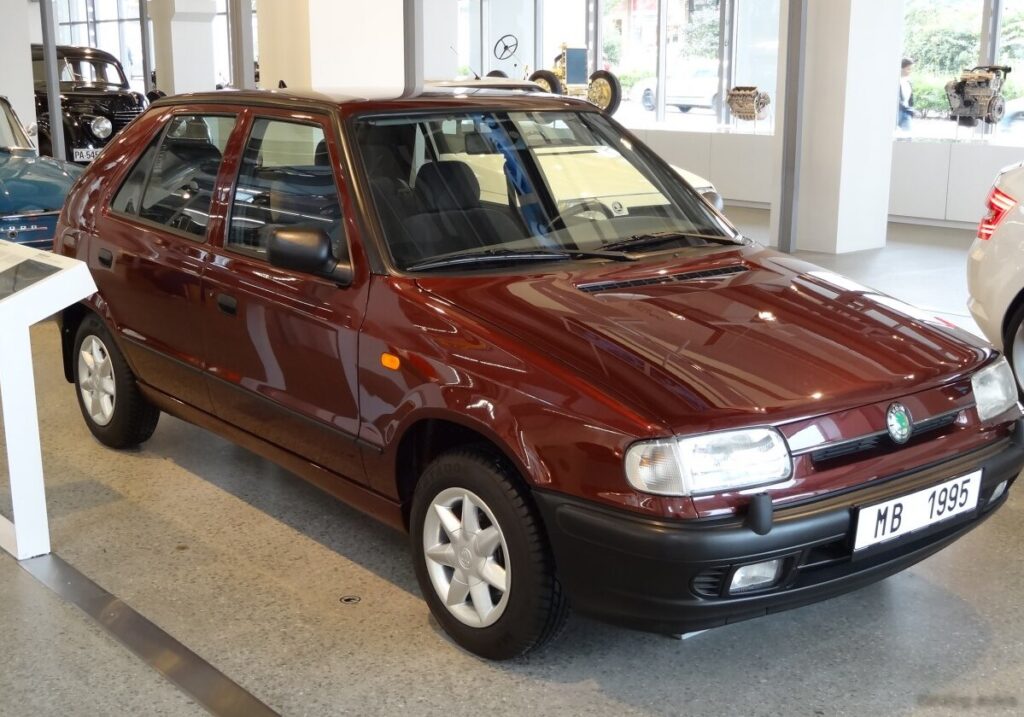
The Skoda Felicia I, produced from 1995 to 2001, represented a significant step forward for the Czech automaker following its acquisition by the Volkswagen Group. Introduced in August 1996, the 1.3-liter (54 horsepower) variant, designated internally as the 791 series, served as the entry point into the Felicia range. This model was primarily aimed at budget-conscious buyers in Central and Eastern European markets, offering affordable transportation with reasonable practicality. It was built upon the shared Volkswagen A04 platform, also underpinning the SEAT Ibiza and Volkswagen Polo of the era, marking a departure from Skoda’s traditionally independent engineering.
Technical Specifications
| Brand | Skoda |
| Model | Felicia |
| Generation | Felicia I (791) |
| Type (Engine) | 1.3 (54 Hp) |
| Start of production | August, 1996 |
| End of production | 1997 |
| Powertrain Architecture | Internal Combustion engine |
| Body type | Hatchback |
| Seats | 5 |
| Doors | 5 |
| Fuel consumption (urban) | 8 l/100 km (29.4 US mpg, 35.3 UK mpg, 12.5 km/l) |
| Fuel consumption (extra urban) | 5.8 l/100 km (40.6 US mpg, 48.7 UK mpg, 17.2 km/l) |
| Fuel consumption (combined) | 7.1 l/100 km (33.1 US mpg, 39.8 UK mpg, 14.1 km/l) |
| Fuel Type | Petrol (Gasoline) |
| Acceleration 0 – 100 km/h | 17 sec |
| Acceleration 0 – 62 mph | 17 sec |
| Acceleration 0 – 60 mph | 16.2 sec |
| Maximum speed | 151 km/h (93.83 mph) |
| Weight-to-power ratio | 16.6 kg/Hp, 60.3 Hp/tonne |
| Weight-to-torque ratio | 9 kg/Nm, 110.6 Nm/tonne |
| Power | 54 Hp @ 4500 rpm |
| Power per litre | 41.9 Hp/l |
| Torque | 99 Nm @ 3000 rpm (73.02 lb.-ft. @ 3000 rpm) |
| Engine layout | Front, Transverse |
| Engine Model/Code | AMG |
| Engine displacement | 1289 cm3 (78.66 cu. in.) |
| Number of cylinders | 4 |
| Engine configuration | Inline |
| Cylinder Bore | 75.5 mm (2.97 in.) |
| Piston Stroke | 72 mm (2.83 in.) |
| Compression ratio | 9:1 |
| Number of valves per cylinder | 2 |
| Fuel injection system | Multi-port manifold injection |
| Engine aspiration | Naturally aspirated engine |
| Engine oil capacity | 4.5 l (4.76 US qt | 3.96 UK qt) |
| Coolant | 6 l (6.34 US qt | 5.28 UK qt) |
| Kerb Weight | 895 kg (1973.14 lbs.) |
| Max. weight | 1420 kg (3130.56 lbs.) |
| Max load | 525 kg (1157.43 lbs.) |
| Trunk (boot) space – minimum | 270 l (9.53 cu. ft.) |
| Trunk (boot) space – maximum | 965 l (34.08 cu. ft.) |
| Fuel tank capacity | 42 l (11.1 US gal | 9.24 UK gal) |
| Length | 3885 mm (152.95 in.) |
| Width | 1635 mm (64.37 in.) |
| Height | 1415 mm (55.71 in.) |
| Wheelbase | 2450 mm (96.46 in.) |
| Front track | 1420 mm (55.91 in.) |
| Rear (Back) track | 1380 mm (54.33 in.) |
| Drivetrain Architecture | The Internal combustion engine (ICE) drives the front wheels of the vehicle. |
| Drive wheel | Front wheel drive |
| Number of gears and type of gearbox | 5 gears, manual transmission |
| Front suspension | Coil spring |
| Rear suspension | Coil spring |
| Front brakes | Disc |
| Rear brakes | Drum |
| Assisting systems | ABS (Anti-lock braking system) |
| Steering type | Steering rack and pinion |
| Tires size | 165/70 R13 |
| Wheel rims size | 5.5J x 13 |
Powertrain & Engine Architecture
The heart of the Felicia 1.3 was the AMG engine, a 1.3-liter inline-four cylinder petrol engine. This engine, while relatively simple in design, benefited from Volkswagen’s engineering expertise. It featured a single overhead camshaft (SOHC) operating two valves per cylinder. Fuel delivery was handled by a multi-port fuel injection system, a significant upgrade over the carburetor systems found in earlier Skoda models. The AMG engine produced 54 horsepower at 4500 rpm and 99 Nm (73 lb-ft) of torque at 3000 rpm. The engine’s relatively low compression ratio of 9:1 allowed it to run on lower octane fuel, important for markets where premium gasoline wasn’t readily available. The engine was transversely mounted, driving the front wheels through a five-speed manual transmission. While an automatic transmission was offered on some Felicia models, it wasn’t typically paired with the base 1.3-liter engine.
Driving Characteristics
The 1.3-liter Felicia was not designed for performance. Acceleration was leisurely, taking approximately 17 seconds to reach 62 mph (100 km/h). Top speed was around 94 mph (151 km/h). The engine felt strained at higher speeds, and overtaking required careful planning. However, the engine was reasonably responsive at lower speeds, making it suitable for urban driving. The five-speed manual transmission was well-matched to the engine’s characteristics, allowing drivers to keep the engine in its optimal power band. Compared to the more powerful 1.6-liter versions, the 1.3 felt noticeably slower, but it offered better fuel economy. The suspension provided a comfortable ride, absorbing bumps and imperfections in the road reasonably well.
Equipment & Trim Levels
The 1.3 Felicia was typically offered in a basic trim level, focusing on affordability. Standard equipment included central locking, a basic stereo, and cloth upholstery. Power steering was often an optional extra. Interior plastics were durable but utilitarian. The dashboard layout was simple and functional, with clearly labeled controls. Optional extras included electric windows, a sunroof, and upgraded upholstery. The interior space was surprisingly generous for a car of its size, offering comfortable seating for five adults. The rear seats could be folded down to increase luggage capacity.
Chassis & Braking
The Felicia’s chassis featured independent coil spring suspension at the front and a semi-independent coil spring suspension at the rear. The front brakes were disc brakes, while the rear brakes were drum brakes. ABS (Anti-lock Braking System) was available as an option, enhancing safety. The steering was a rack and pinion system, providing precise and responsive handling. The car’s relatively light weight (approximately 1973 lbs) helped to compensate for the engine’s modest power output. Tire size was typically 165/70 R13.
Market Reception & Comparison
The Skoda Felicia 1.3 was well-received in its target markets, particularly in Central and Eastern Europe, where it offered a compelling combination of affordability, practicality, and reliability. Critics praised its spacious interior, comfortable ride, and fuel efficiency. However, they also noted its lack of performance and somewhat basic interior trim. Compared to the 1.6-liter versions, the 1.3 offered significantly lower running costs but at the expense of performance. It was often seen as a sensible choice for first-time car buyers or those seeking a reliable and economical mode of transportation.
Legacy
The Skoda Felicia 1.3, while not a performance icon, played a crucial role in establishing Skoda as a credible automaker in the post-Volkswagen era. The AMG engine proved to be reasonably reliable, and many examples are still on the road today. In the used car market, the 1.3 Felicia is valued for its affordability and simplicity. Maintenance costs are relatively low, and spare parts are readily available. While it may not offer the excitement of more powerful variants, the 1.3 Felicia remains a practical and economical choice for those seeking a classic, budget-friendly hatchback.