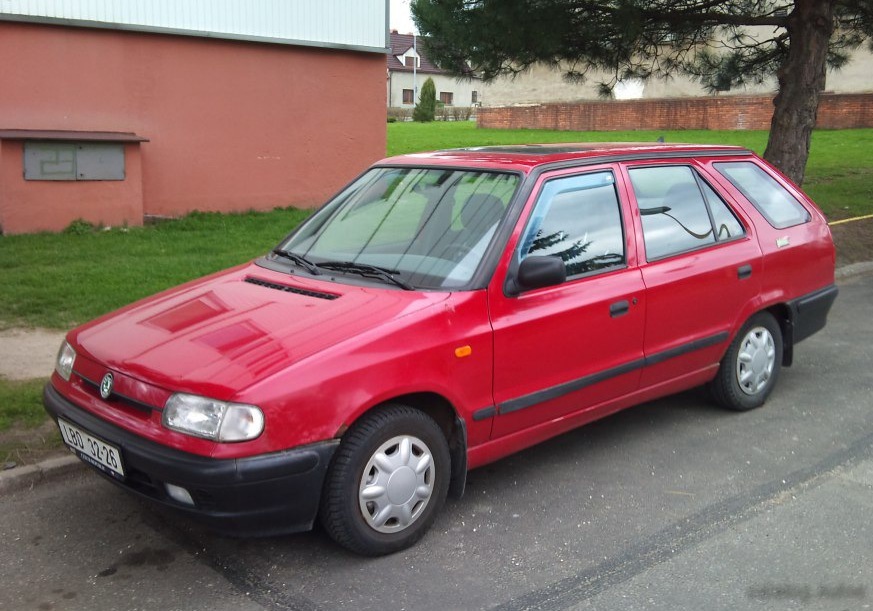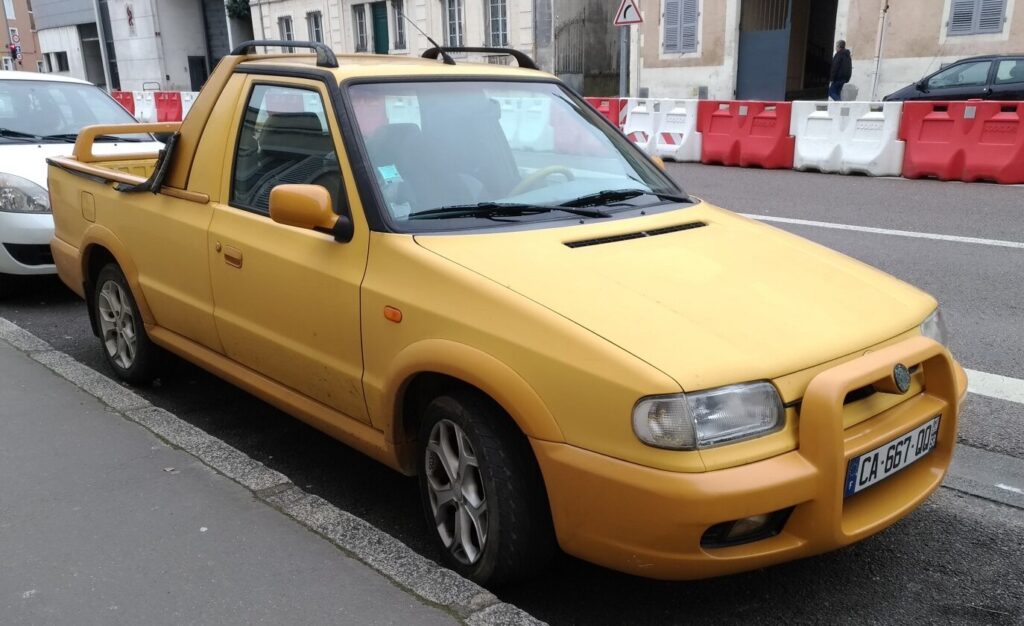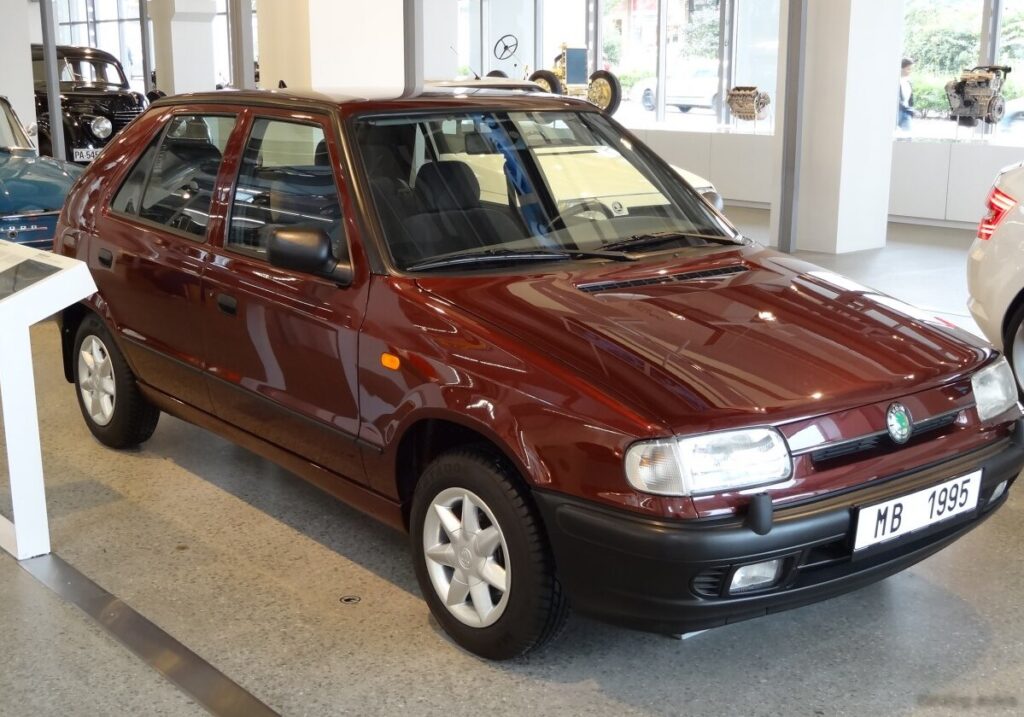
The Skoda Felicia I, produced from 1993 to 1998, represented a significant step forward for the Czech automaker following its acquisition by the Volkswagen Group. The 791 series, launched in August 1996, offered a range of engine and trim options, aiming to provide affordable and practical transportation. Among these, the 1.3-liter (68 horsepower) variant, typically paired with a four or five-speed manual transmission, served as an entry-level offering, appealing to budget-conscious buyers. This article will focus specifically on the 1.3L (68 hp) Felicia I, detailing its technical specifications, performance characteristics, and place within the broader Felicia lineup.
Technical Specifications
| Brand | Skoda |
| Model | Felicia |
| Generation | Felicia I (791) |
| Type (Engine) | 1.3 (68 Hp) |
| Start of production | August, 1996 |
| End of production | 1997 |
| Powertrain Architecture | Internal Combustion engine |
| Body type | Hatchback |
| Seats | 5 |
| Doors | 5 |
| Fuel consumption (urban) | 9.3 l/100 km (25.3 US mpg) |
| Fuel consumption (extra urban) | 5.1 l/100 km (46.1 US mpg) |
| Fuel consumption (combined) | 6.9 l/100 km (34.1 US mpg) |
| Fuel Type | Petrol (Gasoline) |
| Acceleration 0 – 100 km/h | 13.5 sec |
| Acceleration 0 – 62 mph | 13.5 sec |
| Acceleration 0 – 60 mph | 12.8 sec |
| Maximum speed | 162 km/h (100.66 mph) |
| Weight-to-power ratio | 13.8 kg/Hp |
| Weight-to-torque ratio | 8.8 kg/Nm |
| Power | 68 Hp @ 5000 rpm |
| Torque | 106 Nm @ 2600 rpm (78.18 lb.-ft. @ 2600 rpm) |
| Engine layout | Front, Transverse |
| Engine Model/Code | AMH |
| Engine displacement | 1289 cm3 (78.66 cu. in.) |
| Number of cylinders | 4 |
| Engine configuration | Inline |
| Cylinder Bore | 75.5 mm (2.97 in.) |
| Piston Stroke | 72 mm (2.83 in.) |
| Compression ratio | 9.7:1 |
| Number of valves per cylinder | 2 |
| Fuel injection system | Multi-port manifold injection |
| Engine aspiration | Naturally aspirated |
| Engine oil capacity | 4.5 l (4.76 US qt | 3.96 UK qt) |
| Coolant capacity | 6 l (6.34 US qt | 5.28 UK qt) |
| Kerb Weight | 935 kg (2061.32 lbs.) |
| Max. weight | 1420 kg (3130.56 lbs.) |
| Max load | 485 kg (1069.24 lbs.) |
| Trunk (boot) space – minimum | 270 l (9.53 cu. ft.) |
| Trunk (boot) space – maximum | 965 l (34.08 cu. ft.) |
| Fuel tank capacity | 42 l (11.1 US gal | 9.24 UK gal) |
| Length | 3855 mm (151.77 in.) |
| Width | 1635 mm (64.37 in.) |
| Height | 1420 mm (55.91 in.) |
| Wheelbase | 2450 mm (96.46 in.) |
| Front track | 1420 mm (55.91 in.) |
| Rear track | 1380 mm (54.33 in.) |
| Drivetrain Architecture | Front wheel drive |
| Number of gears | 5 |
| Gearbox type | Manual transmission |
| Front suspension | Coil spring |
| Rear suspension | Coil spring |
| Front brakes | Disc |
| Rear brakes | Drum |
| Assisting systems | ABS (Anti-lock braking system) |
| Steering type | Steering rack and pinion |
| Tires size | 165/70 R13; 175/70 R13; 185/65 R14 |
| Wheel rims size | 13; 14 |
INTRODUCTION
The Skoda Felicia I 1.3 (68 hp) was introduced in 1996 as a core model within the 791 series. Positioned as the entry point to the Felicia range, it aimed to provide affordable and reliable transportation for families and individuals. Built on the platform shared with the Volkswagen Polo, the Felicia represented a significant upgrade over its predecessor, the Favorit, offering improved build quality, safety features, and a more modern design. The 1.3-liter engine, while not particularly powerful, was known for its durability and relatively good fuel economy, making it a popular choice in markets where affordability was a key consideration.
Powertrain & Engine Architecture
The heart of the Felicia 1.3 was the AMH engine, a 1.3-liter inline-four cylinder petrol engine. This engine, a derivative of Volkswagen’s EA111 family, featured a naturally aspirated design with two valves per cylinder and a multi-port fuel injection system. The AMH engine produced 68 horsepower at 5000 rpm and 106 Nm (78.18 lb-ft) of torque at 2600 rpm. The engine’s relatively low compression ratio of 9.7:1 contributed to its ability to run on lower octane fuel, a benefit in some markets. The five-speed manual transmission was the most common pairing, offering a reasonable spread of gears for both city driving and highway cruising. The transmission was a standard, cable-operated unit, known for its relatively simple construction and ease of maintenance.
Driving Characteristics
The Felicia 1.3, with its modest 68 horsepower, wasn’t designed for outright performance. Acceleration from 0 to 60 mph took around 12.8 seconds, and top speed was limited to approximately 100 mph. However, the engine’s torque delivery was reasonably linear, making it tractable in everyday driving situations. The five-speed gearbox allowed drivers to keep the engine in its optimal power band, although frequent downshifts were often necessary when overtaking or climbing hills. Compared to the more powerful 1.6-liter versions, the 1.3 felt noticeably slower, but it offered a smoother and more economical driving experience. The manual transmission provided a more engaging driving experience than the optional automatic, which was less common and further reduced performance.
Equipment & Trim Levels
The Felicia 1.3 typically came with a basic level of equipment, reflecting its position as the entry-level model. Standard features generally included power steering, central locking, and a basic stereo system. Interior upholstery was typically cloth, with a simple dashboard layout. Optional extras included power windows, air conditioning, and alloy wheels. Trim levels varied depending on the market, but generally offered incremental upgrades in terms of interior comfort and exterior styling. The focus was on providing a functional and practical vehicle at an affordable price point.
Chassis & Braking
The Felicia 1.3 utilized a relatively simple chassis design, featuring coil spring suspension at both the front and rear. The front suspension employed MacPherson struts, while the rear used a twist beam setup. Braking was provided by disc brakes at the front and drum brakes at the rear. ABS (Anti-lock Braking System) was available as an option, enhancing safety in emergency braking situations. The suspension was tuned for comfort rather than sporty handling, providing a reasonably smooth ride over uneven road surfaces. The relatively light weight of the vehicle (around 935 kg or 2061 lbs) helped to compensate for the engine’s modest power output.
Market Reception & Comparison
The Skoda Felicia 1.3 was generally well-received by critics as a practical and affordable family car. Its fuel economy was a major selling point, particularly in markets where petrol prices were high. Compared to other cars in its class, such as the Renault Clio and Peugeot 206, the Felicia offered a spacious interior and a competitive price. However, its performance was often criticized as being underwhelming, especially when compared to the more powerful engine options available in the Felicia range. The 1.6-liter versions offered significantly more performance, but at a higher price point. The 1.9 TDI diesel variant provided excellent fuel economy and strong torque, but was more expensive to purchase and maintain.
Legacy
The Skoda Felicia 1.3, while not a performance icon, proved to be a reliable and durable vehicle. The AMH engine is known for its longevity, and many examples are still on the road today. In the used car market, the Felicia 1.3 remains an affordable option for those seeking a practical and economical vehicle. Its simple construction and readily available parts make it relatively easy to maintain. The Felicia played a crucial role in establishing Skoda as a credible automaker in the European market, paving the way for the brand’s subsequent success under Volkswagen ownership. The 1.3L variant, in particular, represents a solid and dependable choice for budget-conscious buyers seeking a no-frills, functional hatchback.