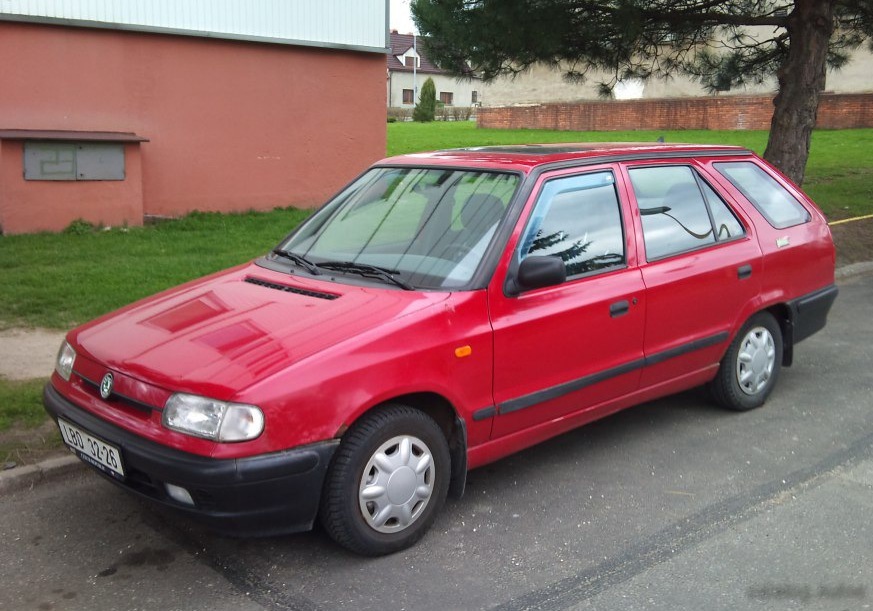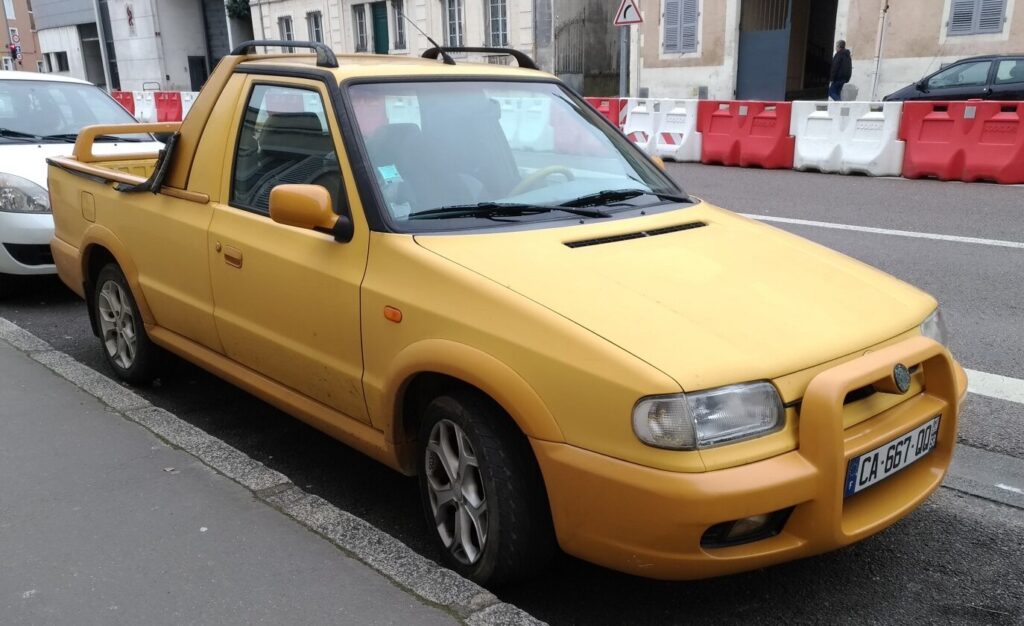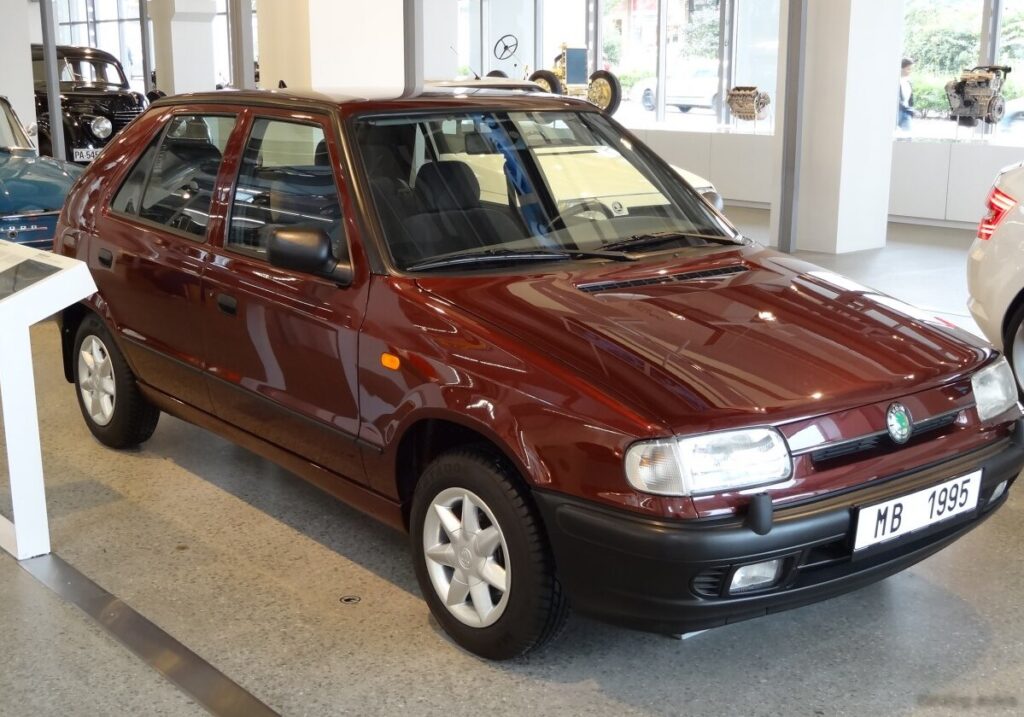
The Skoda Felicia I 1.6 LX, produced between 1995 and 1997, represented a significant step forward for the Czech automaker following its acquisition by the Volkswagen Group. Positioned as a mid-range offering within the Felicia lineup, the 1.6 LX aimed to provide a balance of affordability, practicality, and reasonable performance for European buyers. It was built on the 791 series platform, a modernized version of the Favorit platform, and served as a crucial model in establishing Skoda’s reputation for value in a rapidly changing automotive market. This variant was particularly popular in markets where a reliable and economical family car was prioritized.
Technical Specifications
| Brand | Skoda |
| Model | Felicia |
| Generation | Felicia I (791) |
| Type (Engine) | 1.6 LX (75 Hp) |
| Start of production | May, 1995 |
| End of production | 1997 |
| Powertrain Architecture | Internal Combustion engine |
| Body type | Hatchback |
| Seats | 5 |
| Doors | 5 |
| Fuel consumption (urban) | 9.5 l/100 km (24.8 US mpg) |
| Fuel consumption (extra urban) | 5.4 l/100 km (43.6 US mpg) |
| Fuel consumption (combined) | 7.3 l/100 km (32.2 US mpg) |
| Fuel Type | Petrol (Gasoline) |
| Acceleration 0 – 100 km/h | 12 sec |
| Acceleration 0 – 62 mph | 12 sec |
| Acceleration 0 – 60 mph | 11.4 sec |
| Maximum speed | 170 km/h (105.63 mph) |
| Weight-to-power ratio | 12.9 kg/Hp |
| Weight-to-torque ratio | 7.1 kg/Nm |
| Power | 75 Hp @ 4500 rpm |
| Torque | 135 Nm @ 3500 rpm (99.57 lb.-ft. @ 3500 rpm) |
| Engine layout | Front, Transverse |
| Engine Model/Code | AEE |
| Engine displacement | 1598 cm3 (97.52 cu. in.) |
| Number of cylinders | 4 |
| Engine configuration | Inline |
| Cylinder Bore | 76.5 mm (3.01 in.) |
| Piston Stroke | 86.9 mm (3.42 in.) |
| Compression ratio | 9.8:1 |
| Number of valves per cylinder | 2 |
| Fuel injection system | Multi-port manifold injection |
| Engine aspiration | Naturally aspirated engine |
| Valvetrain | OHC |
| Engine oil capacity | 3.5 l (3.7 US qt | 3.08 UK qt) |
| Coolant capacity | 6 l (6.34 US qt | 5.28 UK qt) |
| Kerb Weight | 965 kg (2127.46 lbs.) |
| Max. weight | 1450 kg (3196.7 lbs.) |
| Max load | 485 kg (1069.24 lbs.) |
| Trunk (boot) space – minimum | 272 l (9.61 cu. ft.) |
| Trunk (boot) space – maximum | 965 l (34.08 cu. ft.) |
| Fuel tank capacity | 42 l (11.1 US gal | 9.24 UK gal) |
| Length | 3885 mm (152.95 in.) |
| Width | 1635 mm (64.37 in.) |
| Height | 1415 mm (55.71 in.) |
| Wheelbase | 2450 mm (96.46 in.) |
| Front track | 1420 mm (55.91 in.) |
| Rear track | 1380 mm (54.33 in.) |
| Drivetrain Architecture | Front wheel drive |
| Number of gears | 5 gears, manual transmission |
Powertrain & Engine Architecture
The heart of the Felicia 1.6 LX was the AEE engine, a 1.6-liter inline four-cylinder gasoline engine. This engine, a product of Skoda’s engineering team but heavily influenced by Volkswagen technology, featured a single overhead camshaft (OHC) valvetrain with two valves per cylinder. It utilized a multi-port fuel injection system, providing a balance between fuel efficiency and performance. The AEE engine produced 75 horsepower at 4500 rpm and 135 Nm (99.57 lb-ft) of torque at 3500 rpm. The engine’s relatively simple design contributed to its reliability and ease of maintenance. The five-speed manual transmission was the standard offering, providing adequate gear spacing for everyday driving. While an automatic transmission was available on some Felicia models, it wasn’t commonly paired with the 1.6 LX engine.
Driving Characteristics
The 1.6 LX offered a comfortable, if not particularly exhilarating, driving experience. Acceleration from 0 to 60 mph took around 11.4 seconds, and top speed was approximately 105.63 mph. The engine’s torque curve was relatively flat, providing usable power across a wide range of engine speeds. However, it wasn’t an engine that encouraged aggressive driving. The five-speed manual transmission allowed drivers to keep the engine in its optimal power band, but the overall experience was geared towards practicality and fuel economy rather than sporty performance. Compared to the more powerful (and expensive) Felicia models with larger engines, the 1.6 LX felt noticeably less responsive, especially when fully loaded with passengers and cargo.
Equipment & Trim Levels
The 1.6 LX trim level offered a reasonable level of standard equipment for its price point. Interior features typically included cloth upholstery, a basic dashboard layout with analog gauges, and manually adjustable front seats. Power steering was standard, making maneuvering in tight spaces easier. Optional extras included power windows, central locking, and an upgraded audio system. The LX trim generally represented a step up from the base Felicia models, offering a more comfortable and refined interior. Exterior features included body-colored bumpers and door handles, and steel wheels with hubcaps.
Chassis & Braking
The Felicia 1.6 LX utilized a relatively simple chassis design. Front suspension consisted of coil springs, while the rear suspension also employed coil springs. The braking system featured disc brakes on the front wheels and drum brakes on the rear wheels. ABS (Anti-lock Braking System) was available as an option, enhancing safety in emergency braking situations. The suspension setup prioritized ride comfort over sporty handling, providing a smooth and compliant ride on most road surfaces. Stabilizer bars were present, but their thickness was modest, reflecting the car’s focus on everyday usability.
Market Reception & Comparison
The Skoda Felicia 1.6 LX was generally well-received by automotive critics as a practical and affordable family car. Its fuel economy – around 32.2 US mpg combined – was a significant selling point, particularly in Europe where fuel prices were high. Compared to other trims in the Felicia lineup, the 1.6 LX offered a compelling value proposition for buyers who didn’t require the extra performance of the larger-engined models. However, some critics noted that the engine could feel underpowered when the car was fully loaded. Compared to competitors like the Renault Clio and Peugeot 205, the Felicia 1.6 LX offered a similar level of practicality and affordability, but often with a more spacious interior.
Legacy
The Skoda Felicia 1.6 LX has proven to be a remarkably durable and reliable car. The AEE engine is known for its longevity, and many examples are still on the road today. Parts availability remains relatively good, making maintenance and repairs relatively straightforward and affordable. In the used car market, the Felicia 1.6 LX is often sought after by enthusiasts and budget-conscious buyers alike. Its simple design, combined with its robust construction, has ensured its continued relevance as a dependable and economical mode of transportation. The Felicia, and the 1.6 LX variant in particular, played a vital role in transforming Skoda from a struggling state-owned manufacturer into a respected and successful member of the Volkswagen Group.