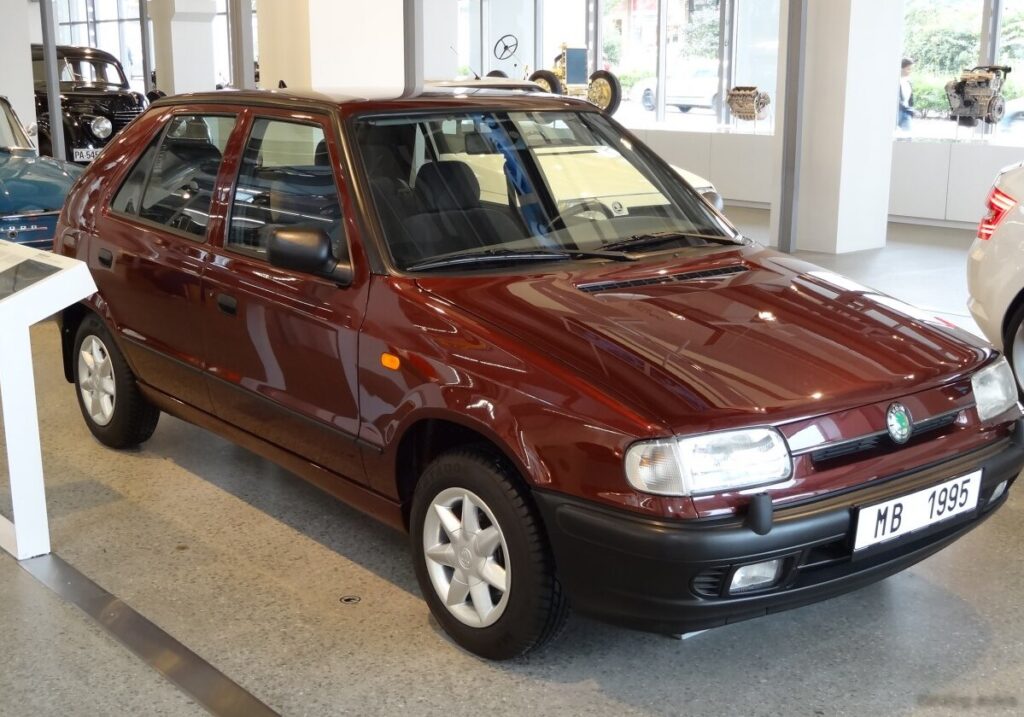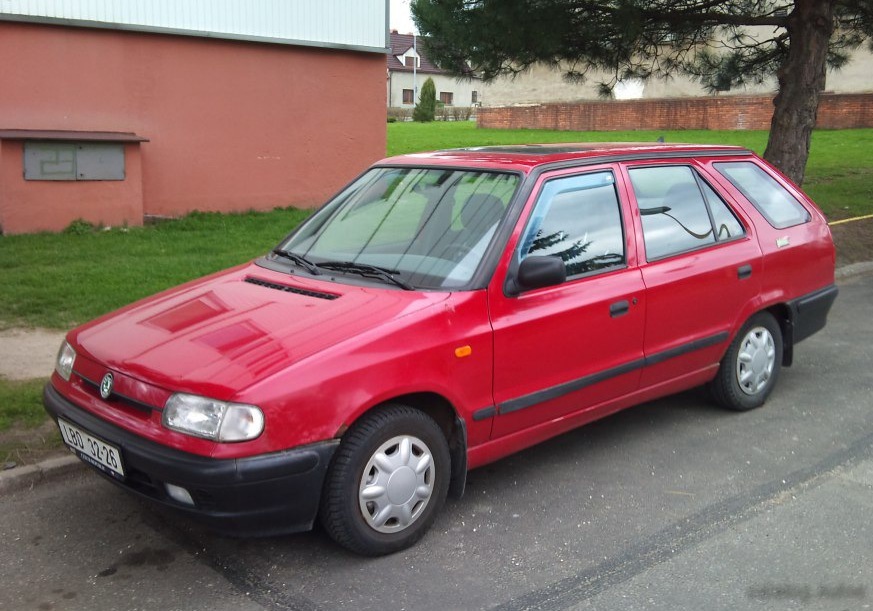
The Skoda Felicia I Combi 1.3 LX, produced from August 1996 to 1997, represented an entry-level offering within the broader Felicia Combi (estate) range. Positioned as a practical and affordable family vehicle, it was a key model for Skoda as they transitioned under Volkswagen Group ownership. The Felicia, and particularly the Combi variant, aimed to provide spaciousness and utility at a competitive price point, primarily targeting the European market. This 1.3 LX trim focused on value, offering essential features with a smaller displacement engine and a five-speed manual transmission. It served as a stepping stone into the Felicia lineup, below the more powerful 1.6 and 1.9 diesel options.
Technical Specifications
| Brand | Skoda |
| Model | Felicia |
| Generation | Felicia I Combi (795) |
| Type (Engine) | 1.3 LX (54 Hp) |
| Start of production | August, 1996 |
| End of production | 1997 |
| Powertrain Architecture | Internal Combustion engine |
| Body type | Station wagon (estate) |
| Seats | 5 |
| Doors | 5 |
| Fuel consumption (urban) | 8.8 l/100 km (26.7 US mpg, 32.1 UK mpg, 11.4 km/l) |
| Fuel consumption (extra urban) | 4.5 l/100 km (52.3 US mpg, 62.8 UK mpg, 22.2 km/l) |
| Fuel consumption (combined) | 7.1 l/100 km (33.1 US mpg, 39.8 UK mpg, 14.1 km/l) |
| Fuel Type | Petrol (Gasoline) |
| Acceleration 0 – 100 km/h | 18 sec |
| Acceleration 0 – 62 mph | 18 sec |
| Acceleration 0 – 60 mph | 17.1 sec |
| Maximum speed | 151 km/h (93.83 mph) |
| Weight-to-power ratio | 20.4 kg/Hp, 49.1 Hp/tonne |
| Weight-to-torque ratio | 11.1 kg/Nm, 90 Nm/tonne |
| Power | 54 Hp @ 4500 rpm |
| Power per litre | 41.9 Hp/l |
| Torque | 99 Nm @ 2500 rpm (73.02 lb.-ft. @ 2500 rpm) |
| Engine layout | Front, Transverse |
| Engine Model/Code | AMG |
| Engine displacement | 1289 cm3 (78.66 cu. in.) |
| Number of cylinders | 4 |
| Engine configuration | Inline |
| Cylinder Bore | 75.5 mm (2.97 in.) |
| Piston Stroke | 72 mm (2.83 in.) |
| Compression ratio | 9.5:1 |
| Number of valves per cylinder | 2 |
| Fuel injection system | Single-point injection |
| Engine aspiration | Naturally aspirated engine |
| Engine oil capacity | 4.5 l (4.76 US qt | 3.96 UK qt) |
| Coolant | 6 l (6.34 US qt | 5.28 UK qt) |
| Kerb Weight | 1100 kg (2425.08 lbs.) |
| Max. weight | 1600 kg (3527.4 lbs.) |
| Max load | 500 kg (1102.31 lbs.) |
| Trunk (boot) space – minimum | 445 l (15.72 cu. ft.) |
| Trunk (boot) space – maximum | 1365 l (48.2 cu. ft.) |
| Fuel tank capacity | 42 l (11.1 US gal | 9.24 UK gal) |
| Length | 4235 mm (166.73 in.) |
| Width | 1635 mm (64.37 in.) |
| Height | 1420 mm (55.91 in.) |
| Wheelbase | 2450 mm (96.46 in.) |
| Front track | 1420 mm (55.91 in.) |
| Rear (Back) track | 1380 mm (54.33 in.) |
| Drivetrain Architecture | The Internal combustion engine (ICE) drives the front wheels of the vehicle. |
| Drive wheel | Front wheel drive |
| Number of gears and type of gearbox | 5 gears, manual transmission |
| Front suspension | Transverse stabilizer |
| Rear suspension | Coil spring |
| Front brakes | Disc |
| Rear brakes | Drum |
| Assisting systems | ABS (Anti-lock braking system) |
| Steering type | Steering rack and pinion |
| Tires size | 165/70 R13 |
| Wheel rims size | 5.5J x 13 |
Powertrain & Engine Architecture
The Felicia 1.3 LX was powered by the Skoda AMG engine, a 1.3-liter inline four-cylinder petrol engine. This engine, while relatively simple in design, was a workhorse known for its durability. It featured a single-point fuel injection system, a common setup for vehicles of this era aiming for affordability. The engine produced 54 horsepower at 4500 rpm and 99 Nm (73 lb-ft) of torque at 2500 rpm. The engine’s architecture was fairly conventional, with a two-valve per cylinder configuration and a compression ratio of 9.5:1. The five-speed manual transmission was chosen for its efficiency and cost-effectiveness, complementing the engine’s characteristics. The AMG engine was a derivative of designs originating from earlier Favorit models, refined and updated for the Felicia platform.
Driving Characteristics
The 1.3 LX offered modest performance. Acceleration from 0 to 100 km/h (0-62 mph) took around 18 seconds, and top speed was limited to 151 km/h (93.83 mph). The engine’s power delivery was relatively flat, with usable torque available from low revs, making it suitable for everyday driving. Compared to the more powerful 1.6-liter versions, the 1.3 LX felt noticeably slower, particularly when fully loaded or tackling inclines. The five-speed gearbox was well-matched to the engine, allowing drivers to keep the engine in its optimal power band. The gear ratios were spaced to prioritize fuel economy over outright acceleration. The driving experience was best described as practical and undemanding, rather than sporty or engaging.
Equipment & Trim Levels
The 1.3 LX trim level was considered the base model within the Felicia Combi range. Standard equipment included basic cloth upholstery, a simple dashboard layout, and manual windows and door locks. Safety features were limited to an ABS anti-lock braking system, which was becoming increasingly common on European vehicles during this period. Optional extras included power windows, central locking, and a radio/cassette player. The interior was designed for functionality and durability, with hard-wearing plastics and a focus on maximizing space. The LX trim was intended to appeal to buyers prioritizing affordability and practicality over luxury features.
Chassis & Braking
The Felicia Combi featured a relatively simple chassis design. The front suspension utilized a transverse stabilizer, while the rear suspension employed a coil spring setup. The front brakes were discs, providing adequate stopping power, while the rear brakes were drums, a cost-saving measure common on entry-level models. The steering was a rack and pinion system, offering reasonable precision. The car’s weight of around 1100 kg (2425 lbs) contributed to its manageable handling characteristics. Tire size was 165/70 R13, a common size for vehicles in this class.
Market Reception & Comparison
The Skoda Felicia 1.3 LX was generally well-received as an affordable and practical family car. Critics praised its spacious interior, large boot capacity, and reasonable fuel economy. However, the engine’s lack of power was often noted as a drawback. Compared to the 1.6-liter versions, the 1.3 LX offered significantly lower performance but also lower running costs. The 1.9 TDI diesel version provided superior fuel economy and torque but came at a higher purchase price. The 1.3 LX appealed to buyers who prioritized value and practicality over performance and refinement.
Legacy
The Skoda Felicia, and the 1.3 LX variant in particular, holds a significant place in Skoda’s history as the first model developed under Volkswagen Group ownership. The AMG engine proved to be a reliable and durable unit, and many examples are still on the road today. While not known for its performance, the 1.3 LX remains a popular choice for those seeking a simple, affordable, and practical classic car. Its relatively low running costs and readily available parts make it an attractive option for enthusiasts and budget-conscious buyers alike. The Felicia Combi, in general, is remembered fondly for its spaciousness and versatility, cementing its place as a practical and dependable family vehicle of the 1990s.