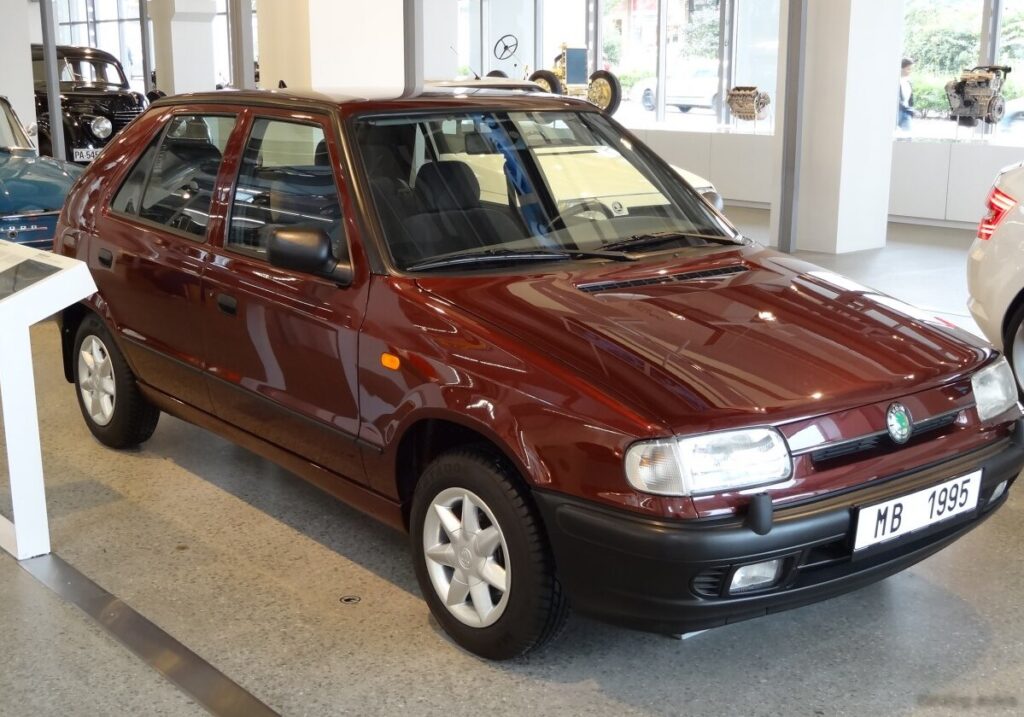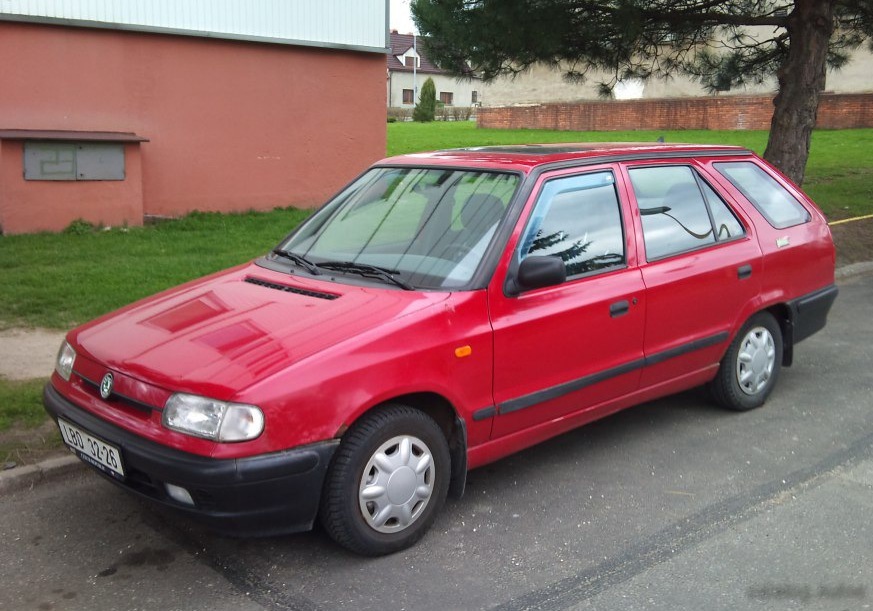
The Skoda Felicia I Combi 1.6 GLX, produced from 1995 to 1997, represented a significant step forward for the Czech automaker following its acquisition by the Volkswagen Group. Positioned as a practical and affordable family vehicle, the Combi (estate/station wagon) body style offered increased cargo capacity compared to the standard hatchback. This particular 1.6 GLX variant, equipped with a 75 horsepower engine, occupied a mid-range position within the Felicia lineup, offering a balance between performance, economy, and equipment. It was built on the 795 series platform, a modernized version of the Favorit platform, and played a crucial role in establishing Skoda as a viable competitor in Western European markets.
Technical Specifications
| Brand | Skoda |
| Model | Felicia |
| Generation | Felicia I Combi (795) |
| Type (Engine) | 1.6 GLX (75 Hp) |
| Start of production | May, 1995 |
| End of production | 1997 |
| Powertrain Architecture | Internal Combustion engine |
| Body type | Station wagon (estate) |
| Seats | 5 |
| Doors | 5 |
| Fuel consumption (urban) | 9.5 l/100 km (24.8 US mpg, 29.7 UK mpg, 10.5 km/l) |
| Fuel consumption (extra urban) | 5.4 l/100 km (43.6 US mpg, 52.3 UK mpg, 18.5 km/l) |
| Fuel consumption (combined) | 7.3 l/100 km (32.2 US mpg, 38.7 UK mpg, 13.7 km/l) |
| Fuel Type | Petrol (Gasoline) |
| Acceleration 0 – 100 km/h | 13 sec |
| Acceleration 0 – 62 mph | 13 sec |
| Acceleration 0 – 60 mph | 12.4 sec |
| Maximum speed | 170 km/h (105.63 mph) |
| Weight-to-power ratio | 13.4 kg/Hp, 74.6 Hp/tonne |
| Weight-to-torque ratio | 7.4 kg/Nm, 134.3 Nm/tonne |
| Power | 75 Hp @ 4500 rpm |
| Power per litre | 46.9 Hp/l |
| Torque | 135 Nm @ 3500 rpm (99.57 lb.-ft. @ 3500 rpm) |
| Engine layout | Front, Transverse |
| Engine Model/Code | AEE |
| Engine displacement | 1598 cm3 (97.52 cu. in.) |
| Number of cylinders | 4 |
| Engine configuration | Inline |
| Cylinder Bore | 76.5 mm (3.01 in.) |
| Piston Stroke | 86.9 mm (3.42 in.) |
| Compression ratio | 9.8:1 |
| Number of valves per cylinder | 2 |
| Fuel injection system | Multi-port manifold injection |
| Engine aspiration | Naturally aspirated engine |
| Valvetrain | OHC |
| Engine oil capacity | 3.5 l (3.7 US qt | 3.08 UK qt) |
| Coolant capacity | 6 l (6.34 US qt | 5.28 UK qt) |
| Kerb Weight | 1005 kg (2215.65 lbs.) |
| Max. weight | 1490 kg (3284.89 lbs.) |
| Max load | 485 kg (1069.24 lbs.) |
| Trunk (boot) space – minimum | 447 l (15.79 cu. ft.) |
| Trunk (boot) space – maximum | 1365 l (48.2 cu. ft.) |
| Fuel tank capacity | 42 l (11.1 US gal | 9.24 UK gal) |
| Length | 4235 mm (166.73 in.) |
| Width | 1635 mm (64.37 in.) |
| Height | 1420 mm (55.91 in.) |
| Wheelbase | 2450 mm (96.46 in.) |
| Front track | 1420 mm (55.91 in.) |
| Rear track | 1380 mm (54.33 in.) |
| Drivetrain Architecture | Front wheel drive |
| Number of gears | 5 gears, manual transmission |
| Front suspension | Transverse stabilizer |
| Rear suspension | Coil spring |
| Front brakes | Disc |
| Rear brakes | Drum |
| Assisting systems | ABS (Anti-lock braking system) |
| Steering type | Steering rack and pinion |
| Tires size | 165/70 R13 |
| Wheel rims size | 5.5J x 13 |
Powertrain & Engine Architecture
The Felicia 1.6 GLX utilized the AEE engine, a 1.6-liter inline four-cylinder petrol engine. This engine was a relatively simple design, featuring a single overhead camshaft (OHC) and two valves per cylinder. The multi-port fuel injection system, a significant upgrade from the carburetor systems found in older Skoda models, contributed to improved fuel efficiency and smoother operation. The AEE engine produced 75 horsepower at 4500 rpm and 135 Nm (99.57 lb-ft) of torque at 3500 rpm. The engine’s design prioritized reliability and ease of maintenance over outright performance. The five-speed manual transmission was the standard offering, providing a reasonable spread of gears for both city driving and highway cruising. While an automatic transmission was available on some Felicia models, it wasn’t commonly paired with the 1.6 GLX engine.
Driving Characteristics
The 1.6 GLX offered adequate, but not exhilarating, performance. Acceleration from 0 to 60 mph took around 12.4 seconds, and the top speed was approximately 105 mph. The engine felt relatively responsive at lower speeds, making it suitable for everyday driving. However, when fully loaded or tackling steep inclines, the engine could feel strained. The five-speed manual transmission allowed drivers to keep the engine in its optimal power band, but the gear ratios were not particularly sporty. Compared to the more powerful 1.9 TDI diesel or the sportier 1.6 MPI versions, the 1.6 GLX prioritized fuel economy and a comfortable ride over outright speed.
Equipment & Trim Levels
The GLX trim level represented a step up from the base Felicia models. Standard equipment included central locking, power steering, and a basic stereo system. Interior upholstery was typically cloth, with a relatively simple dashboard layout. Optional extras included electric windows, a sunroof, and upgraded audio systems. The Combi body style, in particular, benefited from a spacious interior and a large cargo area, making it a practical choice for families. The rear seats could be folded down to further increase cargo capacity.
Chassis & Braking
The Felicia Combi 1.6 GLX featured a MacPherson strut front suspension and a coil spring rear suspension. This setup provided a comfortable ride, although it wasn’t particularly sporty. The front brakes were discs, while the rear brakes were drums. ABS (Anti-lock Braking System) was included as standard equipment, enhancing safety. The steering was a rack and pinion system, providing reasonably precise control. The relatively lightweight construction of the vehicle helped to offset the modest engine output.
Market Reception & Comparison
The Skoda Felicia 1.6 GLX was generally well-received by automotive critics as a practical and affordable family car. It offered a good balance of space, economy, and reliability. Compared to other cars in its class, such as the Ford Escort or Opel Astra, the Felicia offered a lower price point, but with slightly less refinement. The 1.6 GLX was often seen as a sensible choice for buyers who prioritized practicality over performance. Fuel economy was a strong point, with combined fuel consumption figures around 32.2 US mpg. The 1.9 TDI diesel version offered significantly better fuel economy, but at a higher purchase price. The 1.6 MPI offered more power, but at the expense of fuel efficiency.
Legacy
The Skoda Felicia played a pivotal role in transforming Skoda from a largely unknown Eastern European automaker into a respected player in the Western European market. The 1.6 GLX variant, while not the most powerful or technologically advanced version, proved to be a reliable and affordable option for many families. Today, well-maintained examples of the Felicia 1.6 GLX are becoming increasingly sought after by classic car enthusiasts. The AEE engine is known for its durability, and parts availability remains relatively good. The Felicia’s simple design and robust construction contribute to its enduring appeal as a practical and affordable classic car.