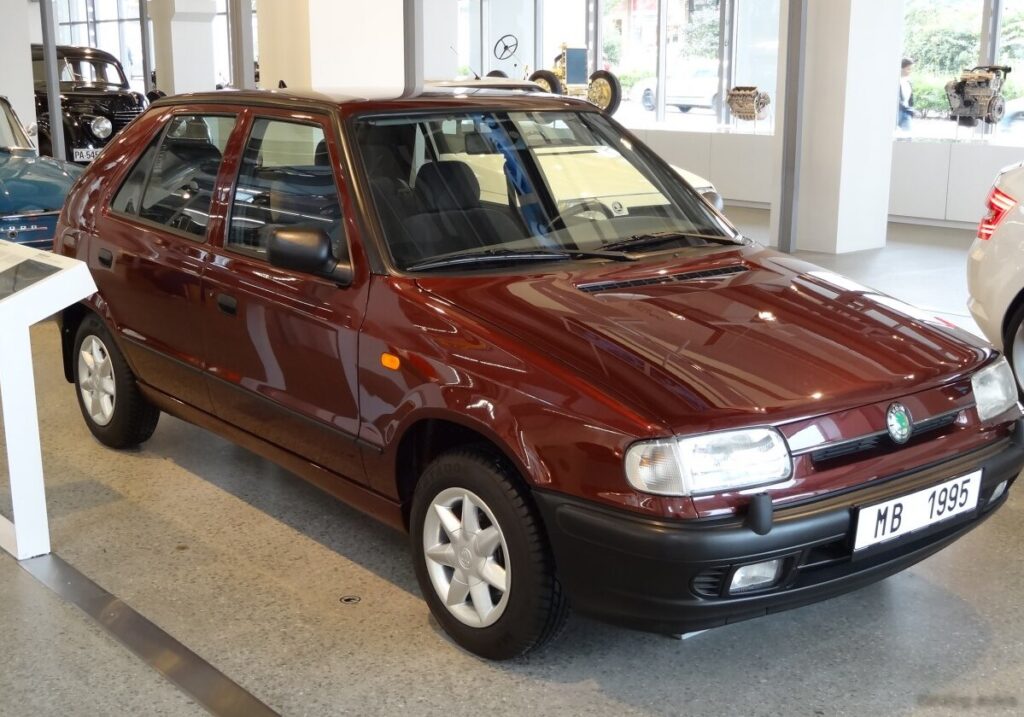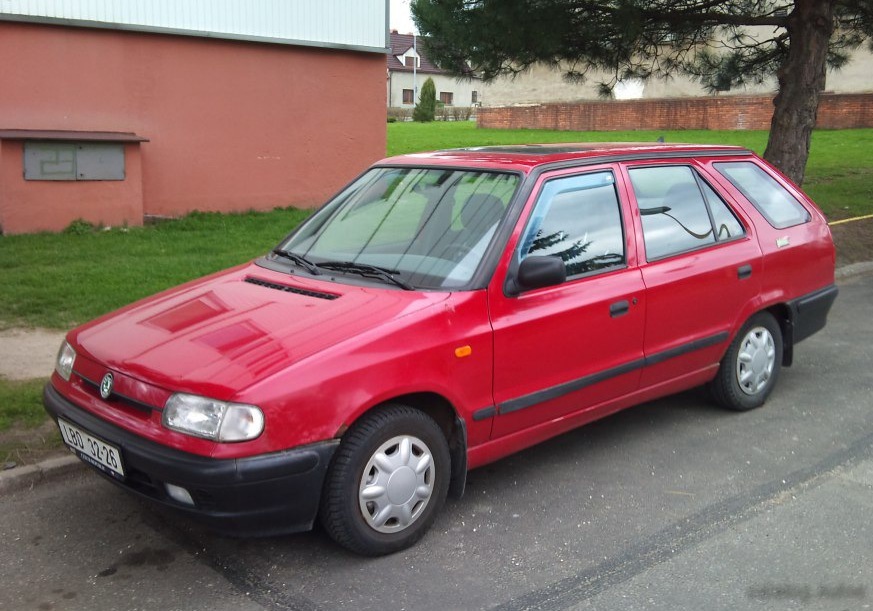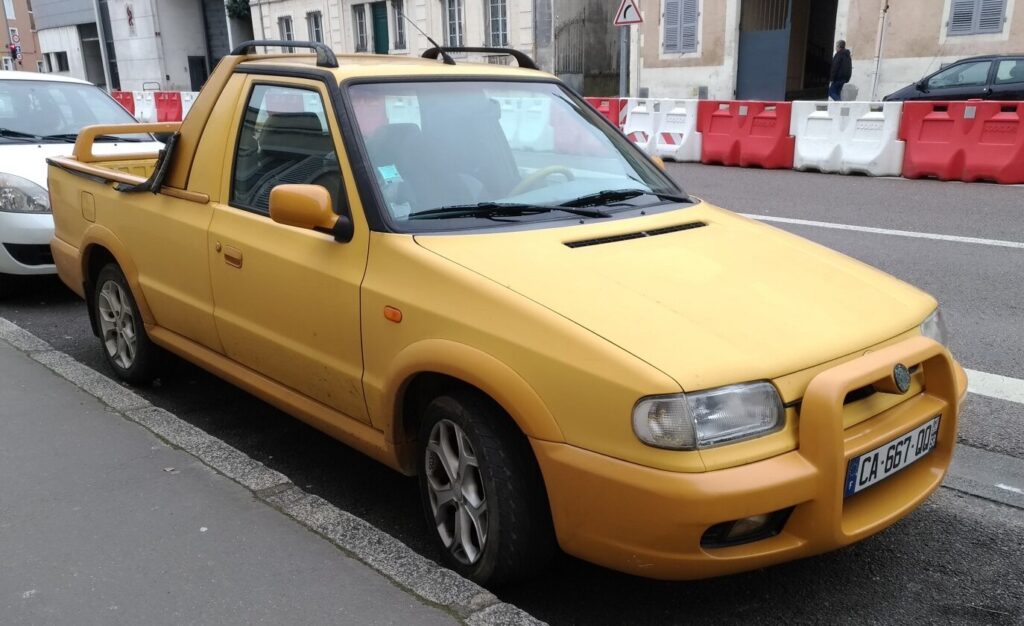
The Skoda Felicia I Fun (797) 1.3, produced between 1997 and 2000, represents a unique offering within the broader Felicia range. Positioned as a practical, entry-level pick-up variant, it catered to buyers needing a small, affordable vehicle capable of carrying moderate loads. The Felicia itself was a significant model for Skoda, representing the first entirely new design following the company’s acquisition by the Volkswagen Group. The ‘Fun’ designation denoted the pick-up body style, distinguishing it from the more common hatchback versions. This particular 1.3-liter, 68 horsepower configuration was aimed at cost-conscious consumers and those prioritizing fuel efficiency over outright performance.
Technical Specifications
| Brand | Skoda |
| Model | Felicia |
| Generation | Felicia I Fun (797) |
| Type (Engine) | 1.3 (68 Hp) |
| Start of production | 1997 |
| End of production | 2000 |
| Powertrain Architecture | Internal Combustion engine |
| Body type | Pick-up |
| Seats | 4 |
| Doors | 2 |
| Fuel consumption (urban) | 9.5 l/100 km (24.8 US mpg) |
| Fuel consumption (extra urban) | 5.5 l/100 km (42.8 US mpg) |
| Fuel Type | Petrol (Gasoline) |
| Acceleration 0 – 100 km/h | 14 sec |
| Acceleration 0 – 62 mph | 14 sec |
| Acceleration 0 – 60 mph | 13.3 sec |
| Maximum speed | 156 km/h (96.93 mph) |
| Weight-to-power ratio | 14.8 kg/Hp |
| Weight-to-torque ratio | 9.5 kg/Nm |
| Power | 68 Hp @ 5000 rpm |
| Torque | 106 Nm @ 2600 rpm (78.18 lb.-ft. @ 2600 rpm) |
| Engine layout | Front, Transverse |
| Engine Model/Code | AMH |
| Engine displacement | 1289 cm3 (78.66 cu. in.) |
| Number of cylinders | 4 |
| Engine configuration | Inline |
| Cylinder Bore | 75.5 mm (2.97 in.) |
| Piston Stroke | 72 mm (2.83 in.) |
| Compression ratio | 9.7:1 |
| Number of valves per cylinder | 2 |
| Fuel injection system | Multi-port manifold injection |
| Engine aspiration | Naturally aspirated |
| Engine oil capacity | 4.5 l (4.76 US qt | 3.96 UK qt) |
| Coolant capacity | 6 l (6.34 US qt | 5.28 UK qt) |
| Kerb Weight | 1005 kg (2215.65 lbs.) |
| Max. weight | 1450 kg (3196.7 lbs.) |
| Max load | 445 kg (981.06 lbs.) |
| Trunk (boot) space – minimum | 477 l (16.85 cu. ft.) |
| Trunk (boot) space – maximum | 743 l (26.24 cu. ft.) |
| Fuel tank capacity | 42 l (11.1 US gal | 9.24 UK gal) |
| Length | 4245 mm (167.13 in.) |
| Width | 1680 mm (66.14 in.) |
| Height | 1465 mm (57.68 in.) |
| Wheelbase | 2450 mm (96.46 in.) |
| Front track | 1420 mm (55.91 in.) |
| Rear track | 1400 mm (55.12 in.) |
| Drivetrain | Front wheel drive |
| Number of gears | 5 gears, manual transmission |
| Front suspension | Spring Strut |
| Rear suspension | Torsion |
| Front brakes | Disc |
| Rear brakes | Drum |
| Assisting systems | ABS (Anti-lock braking system) |
| Steering type | Steering rack and pinion |
| Power steering | Hydraulic |
| Tires size | 165/80 R13 |
| Wheel rims size | 5.5J x 13 |
Powertrain & Engine Architecture
The Felicia Fun 1.3 utilized the AMH engine code, a 1.3-liter inline four-cylinder petrol engine. This engine, while relatively simple in design, was a workhorse known for its durability. It featured a single overhead camshaft (SOHC) operating two valves per cylinder. Fuel delivery was handled by a multi-port fuel injection system, a significant upgrade over the carburetor systems found in older Skoda models. The AMH engine produced 68 horsepower at 5000 rpm and 106 Nm (78.18 lb-ft) of torque at 2600 rpm. The engine’s relatively low compression ratio of 9.7:1 allowed it to run on lower octane fuel, a consideration for many European markets. The transmission was a standard five-speed manual gearbox, chosen for its affordability and efficiency. An automatic transmission was not offered with this engine/body style combination.
Driving Characteristics
The 1.3-liter engine in the Felicia Fun provided adequate, but not exhilarating, performance. Acceleration from 0-60 mph took approximately 13.3 seconds, and the top speed was around 97 mph. The engine’s torque curve was relatively flat, providing usable power across a reasonable rev range, but it did require frequent gear changes to maintain momentum, especially when loaded. Compared to the more powerful 1.6-liter versions of the Felicia, the 1.3 felt noticeably slower, particularly when climbing hills or overtaking. However, the lighter weight of the pick-up body style partially offset the engine’s modest output. The manual gearbox was light and easy to use, contributing to a relatively engaging driving experience. The suspension, tuned for comfort rather than sporty handling, provided a reasonably smooth ride, even on uneven surfaces.
Equipment & Trim Levels
The Felicia Fun 1.3 was typically equipped with basic, functional features. Standard equipment included power steering, a basic stereo system, and cloth upholstery. Safety features were limited, with ABS being a notable inclusion. Optional extras included power windows, central locking, and upgraded interior trim. The interior was characterized by its simple, utilitarian design, with durable plastics and a focus on practicality. The pick-up bed offered a useful cargo capacity, making the Fun variant a popular choice for small businesses and individuals needing a versatile vehicle.
Chassis & Braking
The Felicia Fun utilized a front-wheel-drive layout with a relatively simple chassis design. The front suspension consisted of MacPherson strut springs, while the rear suspension employed a torsion beam. This setup provided a good balance between ride comfort and handling. The braking system featured disc brakes on the front wheels and drum brakes on the rear. ABS was standard, enhancing braking performance and stability, particularly on slippery surfaces. The steering was a rack-and-pinion system with hydraulic power assistance, providing light and precise steering feel.
Market Reception & Comparison
The Felicia Fun 1.3 was generally well-received as an affordable and practical pick-up. Critics praised its fuel efficiency and durability, but noted its lack of performance. Compared to other small pick-ups available at the time, such as the Fiat Strada, the Felicia Fun offered a more spacious cargo bed and a more comfortable ride. However, it lacked the more refined features and higher performance of some of its competitors. The 1.3-liter engine offered better fuel economy than the 1.6-liter engine, but at the cost of performance. The manual transmission was favored by many for its simplicity and reliability.
Legacy
The Skoda Felicia Fun 1.3, while not a performance icon, has proven to be a remarkably durable and reliable vehicle. Many examples are still on the road today, testament to the quality of its construction and the robustness of its engine. In the used car market, these vehicles are valued for their affordability and practicality. The AMH engine is known for its longevity, and parts availability remains relatively good. The Felicia Fun 1.3 represents a significant chapter in Skoda’s history, marking its transition to a modern, Volkswagen-backed manufacturer. It remains a popular choice for those seeking a simple, dependable, and affordable pick-up truck.