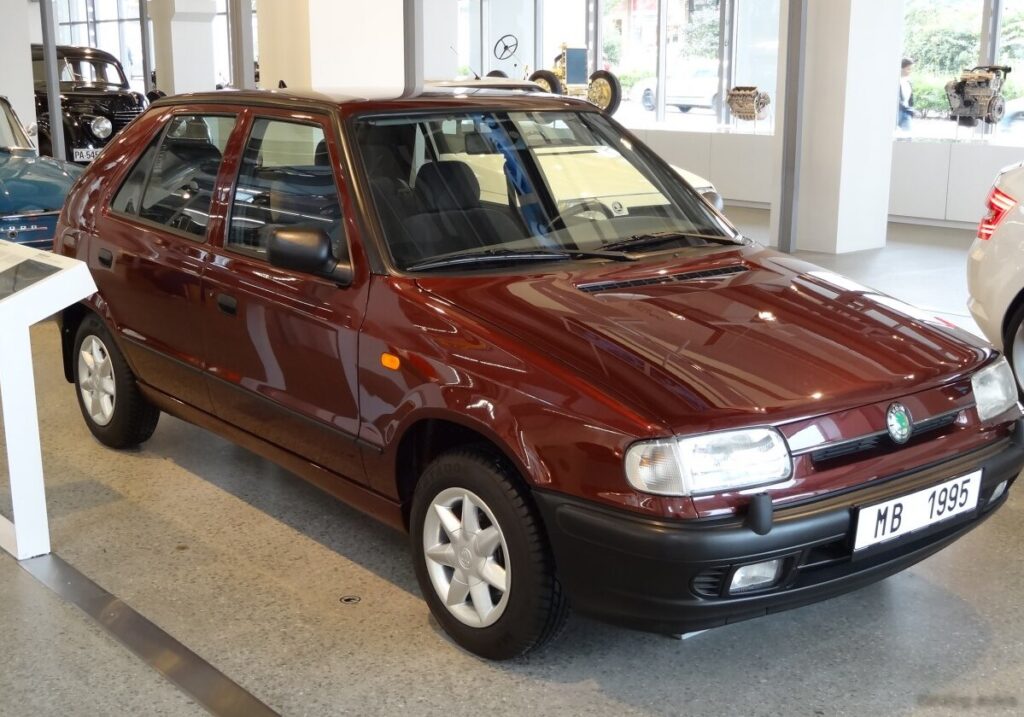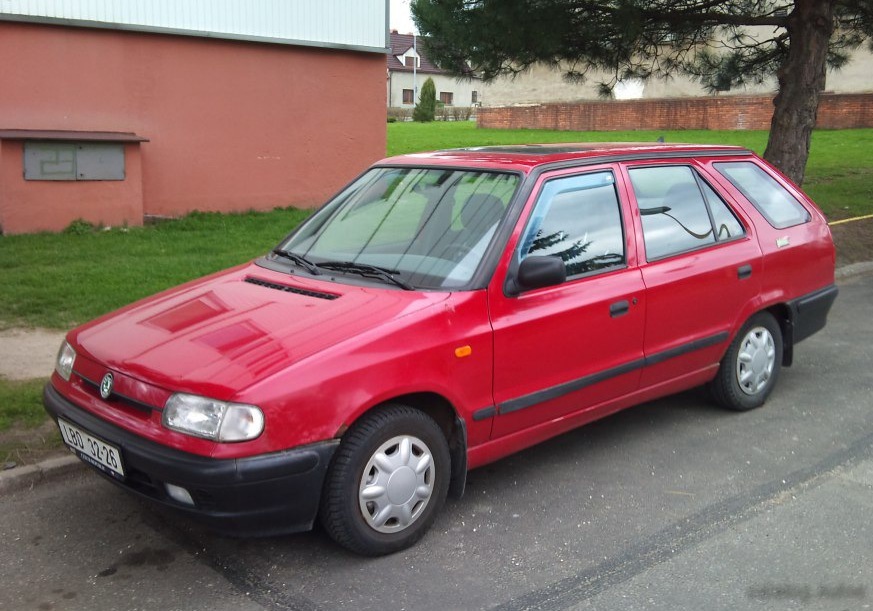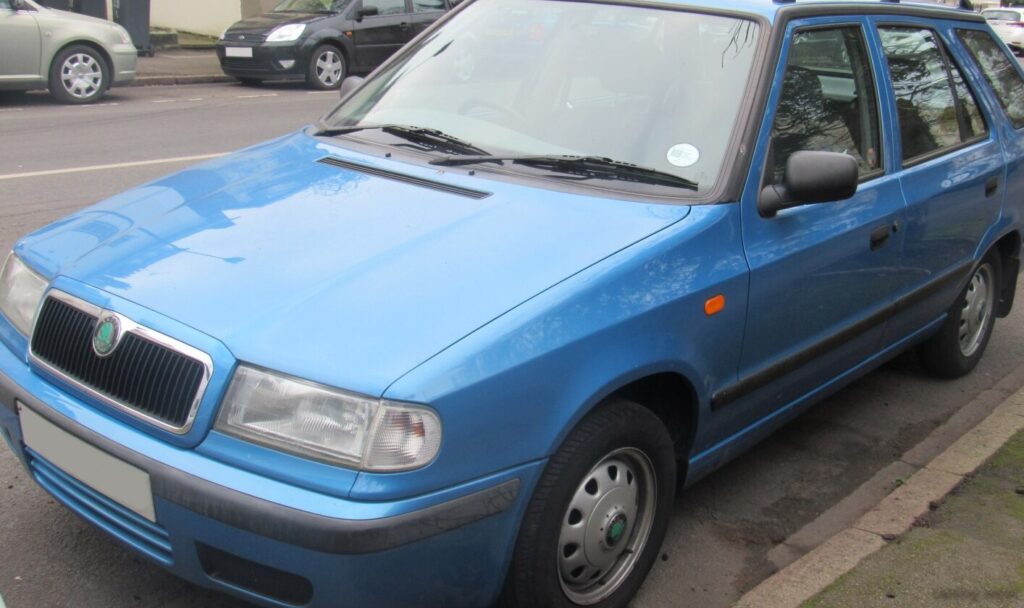
The Skoda Felicia II Combi 1.3, producing 54 horsepower, was a mainstay of Skoda’s lineup from January 1998 to August 2000. Positioned as the entry-level variant of the Felicia Combi (estate) range, it offered practical, affordable transportation for families and individuals. The Felicia II represented a significant step forward for Skoda, building upon the success of the original Felicia and utilizing the shared Volkswagen A04 platform – also known as the 1HX0/A3 platform – underpinning models like the VW Polo and SEAT Ibiza. This variant was particularly important in European markets where the compact estate body style remained popular, offering a balance of space and economy.
Technical Specifications
| Brand | Skoda |
| Model | Felicia |
| Generation | Felicia II Combi |
| Type (Engine) | 1.3 (54 Hp) |
| Start of production | January, 1998 |
| End of production | August, 2000 |
| Powertrain Architecture | Internal Combustion engine |
| Body type | Station wagon (estate) |
| Seats | 5 |
| Doors | 5 |
| Fuel consumption (urban) | 8.8 l/100 km (26.7 US mpg, 32.1 UK mpg, 11.4 km/l) |
| Fuel consumption (extra urban) | 5 l/100 km (47 US mpg, 56.5 UK mpg, 20 km/l) |
| Fuel Type | Petrol (Gasoline) |
| Acceleration 0 – 100 km/h | 16.5 sec |
| Acceleration 0 – 62 mph | 16.5 sec |
| Acceleration 0 – 60 mph | 15.7 sec |
| Maximum speed | 151 km/h (93.83 mph) |
| Weight-to-power ratio | 18.1 kg/Hp, 55.4 Hp/tonne |
| Weight-to-torque ratio | 9.8 kg/Nm, 101.5 Nm/tonne |
| Power | 54 Hp @ 4500 rpm |
| Power per litre | 41.9 Hp/l |
| Torque | 99 Nm @ 3000 rpm (73.02 lb.-ft. @ 3000 rpm) |
| Engine layout | Front, Transverse |
| Engine Model/Code | AMG |
| Engine displacement | 1289 cm3 (78.66 cu. in.) |
| Number of cylinders | 4 |
| Engine configuration | Inline |
| Cylinder Bore | 75.5 mm (2.97 in.) |
| Piston Stroke | 72 mm (2.83 in.) |
| Compression ratio | 9:1 |
| Number of valves per cylinder | 2 |
| Fuel injection system | Multi-port manifold injection |
| Engine aspiration | Naturally aspirated engine |
| Engine oil capacity | 4.5 l (4.76 US qt | 3.96 UK qt) |
| Coolant | 6 l (6.34 US qt | 5.28 UK qt) |
| Kerb Weight | 975 kg (2149.51 lbs.) |
| Max. weight | 1460 kg (3218.75 lbs.) |
| Max load | 485 kg (1069.24 lbs.) |
| Trunk (boot) space – minimum | 447 l (15.79 cu. ft.) |
| Trunk (boot) space – maximum | 1365 l (48.2 cu. ft.) |
| Fuel tank capacity | 42 l (11.1 US gal | 9.24 UK gal) |
| Length | 4237 mm (166.81 in.) |
| Width | 1635 mm (64.37 in.) |
| Height | 1420 mm (55.91 in.) |
| Wheelbase | 2450 mm (96.46 in.) |
| Front track | 1420 mm (55.91 in.) |
| Rear (Back) track | 1380 mm (54.33 in.) |
| Drivetrain Architecture | The Internal combustion engine (ICE) drives the front wheels of the vehicle. |
| Drive wheel | Front wheel drive |
| Number of gears and type of gearbox | 5 gears, manual transmission |
| Front suspension | Coil spring |
| Rear suspension | Coil spring |
| Front brakes | Disc |
| Rear brakes | Drum |
| Assisting systems | ABS (Anti-lock braking system) |
| Steering type | Steering rack and pinion |
| Power steering | Hydraulic Steering |
| Tires size | 165/70 R13 |
| Wheel rims size | 5.5J x 13 |
Powertrain & Engine Architecture
The Felicia II Combi 1.3 utilized the Skoda/Volkswagen AMG engine, a 1.3-liter inline four-cylinder petrol engine. This engine, a descendant of the older OHV designs, featured a single overhead camshaft operating two valves per cylinder. The AMG engine employed multi-port fuel injection, a significant improvement over earlier carburetor setups, contributing to better fuel efficiency and smoother operation. While relatively simple in design, the AMG engine was known for its durability and ease of maintenance. The 54 horsepower output was achieved at 4500 rpm, with peak torque of 99 Nm (73 lb-ft) delivered at 3000 rpm. The engine was transversely mounted, driving the front wheels. The standard transmission was a five-speed manual gearbox, although a four-speed automatic transmission was also available, albeit less common. The automatic transmission, while offering convenience, did noticeably impact acceleration and fuel economy.
Driving Characteristics
The 1.3-liter engine in the Felicia Combi, particularly when paired with the five-speed manual transmission, provided adequate performance for everyday driving. Acceleration was modest, taking around 16.5 seconds to reach 62 mph, but the engine was willing enough for navigating city streets and country roads. The automatic transmission version suffered from slower acceleration and a less engaging driving experience. The gear ratios were optimized for fuel economy rather than outright performance. The Felicia’s suspension, consisting of coil springs all around, offered a comfortable ride, absorbing bumps and imperfections in the road surface reasonably well. However, handling was not particularly sporty, with noticeable body roll in corners. The steering, while hydraulically assisted, lacked feedback.
Equipment & Trim Levels
The 1.3 Felicia Combi was typically equipped with basic but functional features. Standard equipment included power steering, central locking, and a basic stereo system. Interior upholstery was typically cloth, with a simple dashboard layout. Optional extras included power windows, air conditioning, and alloy wheels. The trim level was generally considered entry-level, appealing to buyers prioritizing practicality and affordability over luxury. Higher trim levels, such as the 1.6 MPI variants, offered more features and a more refined interior.
Chassis & Braking
The Felicia II Combi featured a relatively simple chassis design. The front suspension utilized coil springs and independent suspension, while the rear suspension employed a twist beam setup. Brakes were disc brakes at the front and drum brakes at the rear, providing adequate stopping power for the vehicle’s weight and performance. ABS (Anti-lock Braking System) was available as an option, enhancing safety in emergency braking situations. The stabilizer bar thickness was modest, contributing to the car’s comfortable ride but limiting its handling capabilities.
Market Reception & Comparison
The Skoda Felicia II Combi 1.3 was generally well-received as an affordable and practical family car. Critics praised its spacious interior, large boot capacity, and fuel efficiency. However, the engine’s modest power output and the car’s somewhat basic interior were points of criticism. Compared to the more powerful 1.6 MPI variants, the 1.3 offered significantly less performance but at a lower price point. The 1.9 TDI diesel version provided superior fuel economy and torque but came with a higher initial cost. The 1.3 version appealed to buyers who prioritized economy and practicality over performance.
Legacy
The Skoda Felicia II Combi 1.3, while not a performance icon, proved to be a reliable and durable vehicle. The AMG engine, despite its relatively simple design, was known for its longevity. Today, these cars are relatively rare and are often sought after by enthusiasts looking for a classic, affordable, and practical vehicle. The availability of spare parts is generally good, thanks to the widespread use of Volkswagen components. The Felicia II Combi 1.3 represents a significant chapter in Skoda’s history, marking its transition from a state-owned manufacturer to a member of the Volkswagen Group and demonstrating its ability to produce competitive vehicles for the European market.