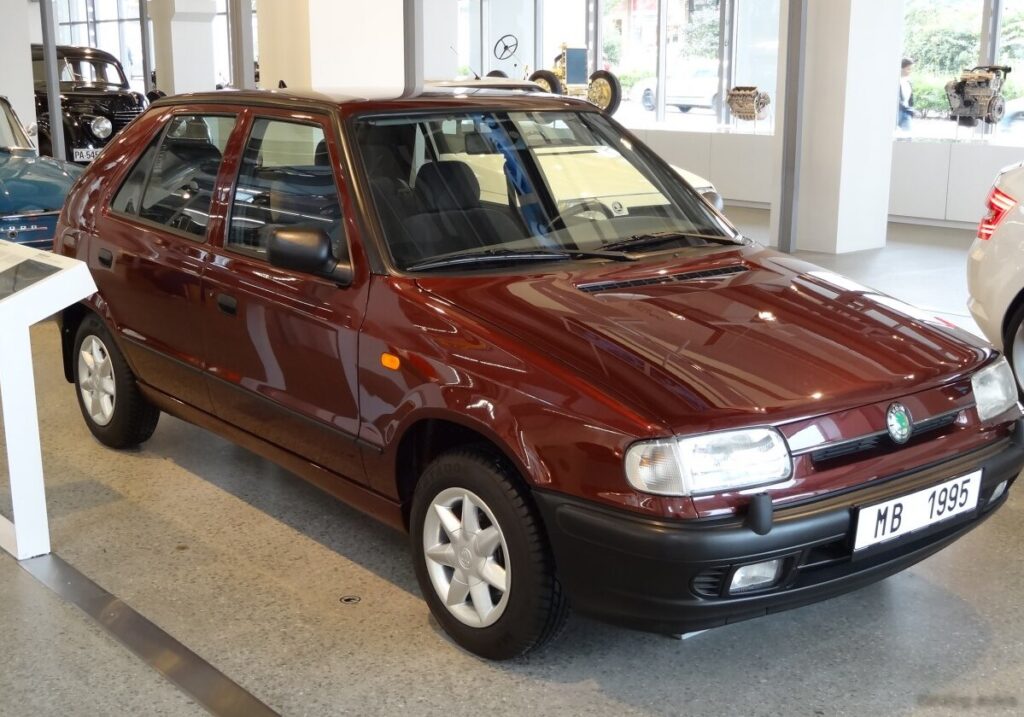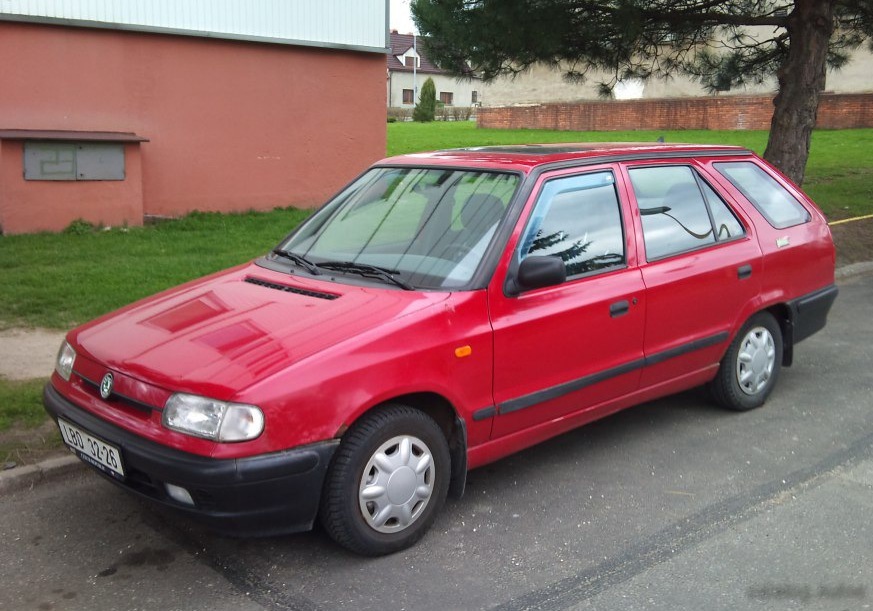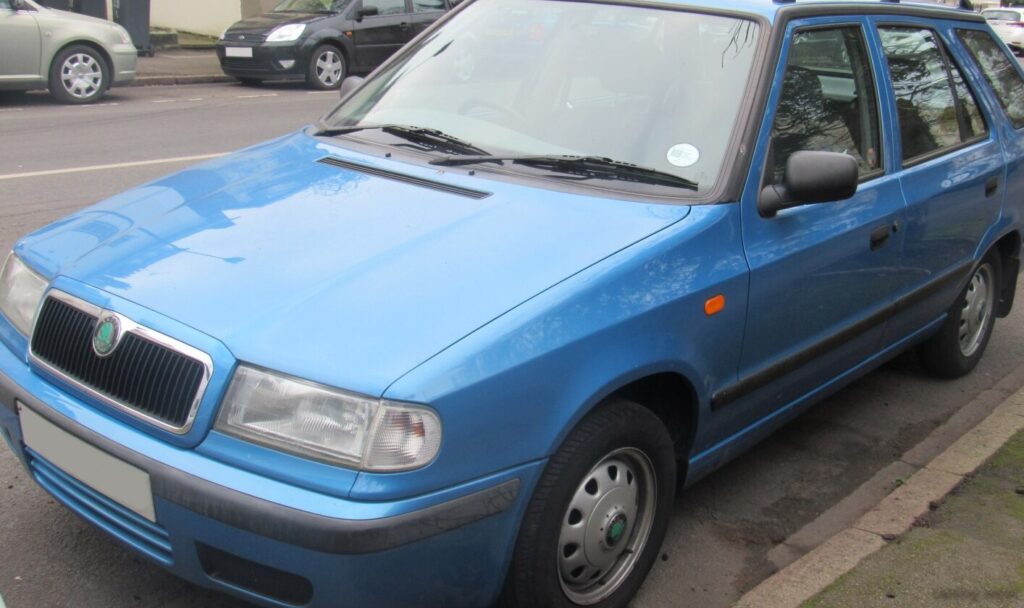
The Skoda Felicia II Combi 1.6, producing 75 horsepower, was a popular station wagon variant produced between January 1998 and August 2001. Positioned as a practical and affordable family vehicle, it represented a key part of Skoda’s lineup during its early years under Volkswagen Group ownership. The Felicia II Combi, built on the 6U platform (shared with the first generation VW Polo), aimed to offer spaciousness and utility at a competitive price point, primarily targeting the European market. This particular 1.6-liter engine and five-speed manual transmission combination occupied a middle ground within the Felicia range, offering a balance between economy and usability.
Technical Specifications
| Brand | Skoda |
| Model | Felicia |
| Generation | Felicia II Combi |
| Type (Engine) | 1.6 (75 Hp) |
| Start of production | January, 1998 |
| End of production | August, 2001 |
| Powertrain Architecture | Internal Combustion engine |
| Body type | Station wagon (estate) |
| Seats | 5 |
| Doors | 5 |
| Fuel consumption (urban) | 9.5 l/100 km (24.8 US mpg, 29.7 UK mpg, 10.5 km/l) |
| Fuel consumption (extra urban) | 7.5 l/100 km (31.4 US mpg, 37.7 UK mpg, 13.3 km/l) |
| Fuel consumption (combined) | 8.2 l/100 km (28.7 US mpg, 34.4 UK mpg, 12.2 km/l) |
| Fuel Type | Petrol (Gasoline) |
| Acceleration 0 – 100 km/h | 13 sec |
| Acceleration 0 – 62 mph | 13 sec |
| Acceleration 0 – 60 mph | 12.4 sec |
| Maximum speed | 170 km/h (105.63 mph) |
| Weight-to-power ratio | 13.4 kg/Hp, 74.6 Hp/tonne |
| Weight-to-torque ratio | 7.4 kg/Nm, 134.3 Nm/tonne |
| Power | 75 Hp @ 4500 rpm |
| Power per litre | 46.9 Hp/l |
| Torque | 135 Nm @ 3500 rpm (99.57 lb.-ft. @ 3500 rpm) |
| Engine layout | Front, Transverse |
| Engine Model/Code | AEE |
| Engine displacement | 1598 cm3 (97.52 cu. in.) |
| Number of cylinders | 4 |
| Engine configuration | Inline |
| Cylinder Bore | 76.5 mm (3.01 in.) |
| Piston Stroke | 86.9 mm (3.42 in.) |
| Compression ratio | 9.8:1 |
| Number of valves per cylinder | 2 |
| Fuel injection system | Multi-port manifold injection |
| Engine aspiration | Naturally aspirated engine |
| Valvetrain | OHC |
| Engine oil capacity | 3.5 l (3.7 US qt | 3.08 UK qt) |
| Coolant | 6 l (6.34 US qt | 5.28 UK qt) |
| Kerb Weight | 1005 kg (2215.65 lbs.) |
| Max. weight | 1490 kg (3284.89 lbs.) |
| Max load | 485 kg (1069.24 lbs.) |
| Trunk (boot) space – minimum | 447 l (15.79 cu. ft.) |
| Trunk (boot) space – maximum | 1365 l (48.2 cu. ft.) |
| Fuel tank capacity | 42 l (11.1 US gal | 9.24 UK gal) |
| Length | 4237 mm (166.81 in.) |
| Width | 1635 mm (64.37 in.) |
| Height | 1420 mm (55.91 in.) |
| Wheelbase | 2450 mm (96.46 in.) |
| Front track | 1420 mm (55.91 in.) |
| Rear (Back) track | 1380 mm (54.33 in.) |
| Drivetrain Architecture | The Internal combustion engine (ICE) drives the front wheels of the vehicle. |
| Drive wheel | Front wheel drive |
| Number of gears and type of gearbox | 5 gears, manual transmission |
| Front suspension | Coil spring |
| Rear suspension | Coil spring |
| Front brakes | Disc |
| Rear brakes | Drum |
| Power steering | Hydraulic Steering |
| Tires size | 165/70 R13 |
| Wheel rims size | 5.5J x 13 |
Powertrain & Engine Architecture
The Felicia II Combi 1.6 utilized the AEE engine code, a 1.6-liter inline four-cylinder petrol engine. This engine was a relatively simple design, featuring a single overhead camshaft (OHC) operating two valves per cylinder. Fuel delivery was handled by a multi-port fuel injection system, providing adequate, though not exceptional, performance. The AEE engine was known for its robustness and relative simplicity, making it easier to maintain compared to more complex contemporary engines. The five-speed manual transmission offered a fairly standard gear ratio spread, prioritizing fuel efficiency over outright acceleration. First gear was geared for starting from a standstill, while fifth gear was designed for comfortable highway cruising. The transmission itself was a conventional design, lacking any advanced features like electronic control or variable valve timing.
Driving Characteristics
The 75 horsepower output of the 1.6-liter engine, coupled with the five-speed manual transmission, provided adequate performance for everyday driving. Acceleration to 60 mph took around 12.4 seconds, and top speed was approximately 105 mph. While not particularly sporty, the engine delivered usable torque at lower RPMs, making it suitable for navigating city streets and country roads. Compared to the more powerful (and expensive) Felicia variants, such as those equipped with larger engines, the 1.6 offered a more economical driving experience. The manual transmission allowed for greater driver control, but the gear ratios weren’t optimized for rapid acceleration. The suspension, tuned for comfort, provided a reasonably smooth ride, although it could feel somewhat soft during spirited driving.
Equipment & Trim Levels
The Felicia II Combi 1.6 typically came with a modest level of standard equipment. Interior features generally included cloth upholstery, a basic dashboard layout, and manual windows and door locks. Power steering was usually standard, but air conditioning and central locking were often optional extras. Trim levels varied depending on the market, but generally offered upgrades such as upgraded upholstery, alloy wheels, and a more comprehensive audio system. The Combi body style itself was a key feature, offering a generous 447-1365 liter cargo capacity, making it a practical choice for families and those needing to transport larger items.
Chassis & Braking
The Felicia II Combi featured a relatively simple chassis design. Front suspension utilized coil springs, while the rear suspension also employed coil springs. The braking system consisted of disc brakes on the front wheels and drum brakes on the rear. Hydraulic power steering was standard, providing reasonable assistance at lower speeds. The suspension setup prioritized ride comfort over handling precision, resulting in a somewhat soft and forgiving ride. Stabilizer bars were present, but their thickness was modest, reflecting the car’s focus on practicality rather than performance.
Market Reception & Comparison
The Skoda Felicia II Combi 1.6 was generally well-received by critics as a practical and affordable family car. Its spacious interior, generous cargo capacity, and reasonable fuel economy were all praised. However, its performance was often criticized as being somewhat underwhelming, particularly when compared to more powerful competitors. Compared to other Felicia variants, the 1.6 offered a more economical option, but at the expense of performance. The 1.9 TDI diesel version, for example, offered significantly better fuel economy and more torque, while the higher-powered petrol engines provided quicker acceleration. Reliability was generally good, although the drum brakes on the rear wheels were sometimes criticized for their limited stopping power.
Legacy
The Skoda Felicia II Combi 1.6, while not a particularly groundbreaking vehicle, played an important role in establishing Skoda as a credible automotive brand in Europe. The AEE engine proved to be a durable and reliable unit, and many examples are still on the road today. In the used car market, the Felicia II Combi 1.6 remains an affordable and practical option for those seeking a spacious and economical station wagon. Its simplicity and robust construction make it relatively easy to maintain, and spare parts are generally readily available. While it may not offer the refinement or performance of more modern vehicles, the Felicia II Combi 1.6 represents a solid and dependable choice for budget-conscious buyers.