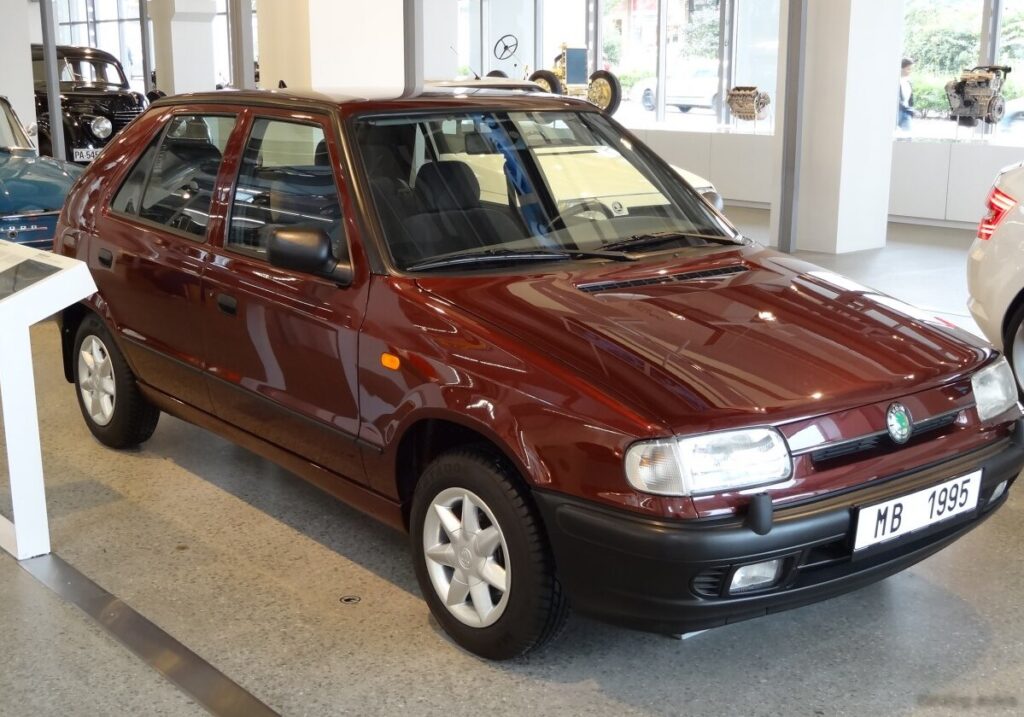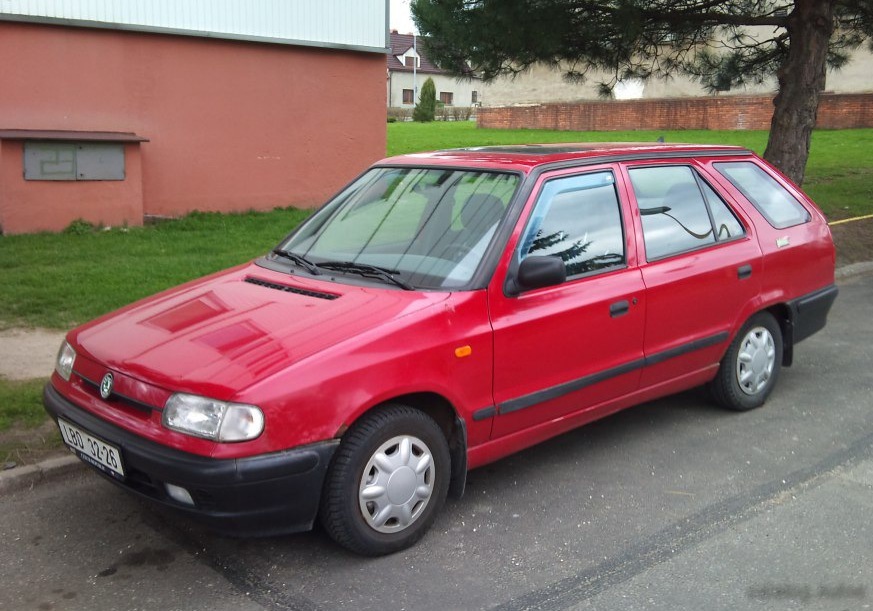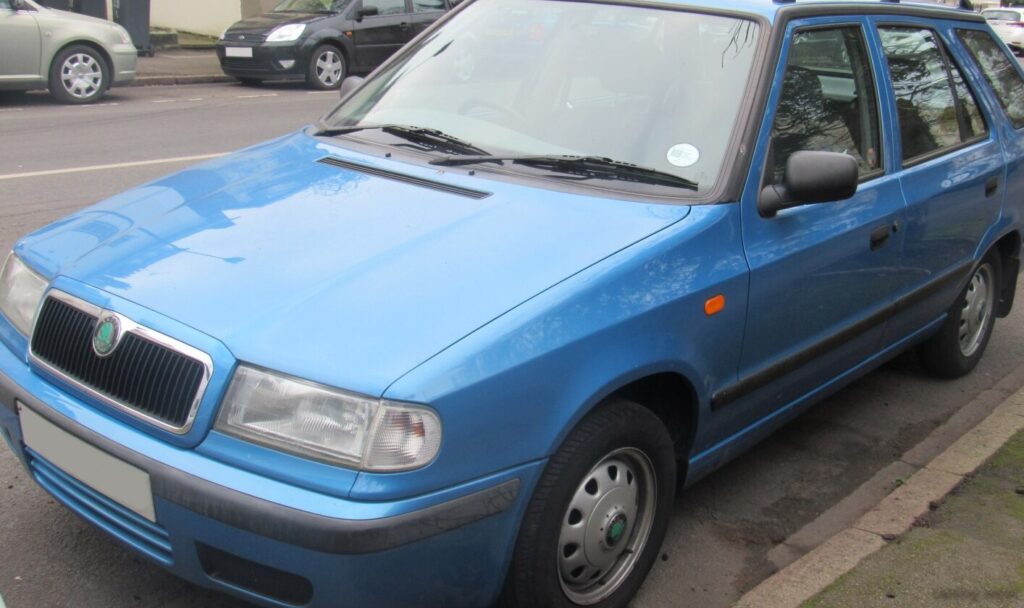
The Skoda Felicia II Combi 1.9 D, produced from January 1998 to August 2000, represented a practical and economical offering within the Felicia range. Positioned as a budget-friendly station wagon, it catered to buyers prioritizing space and fuel efficiency over outright performance. This variant utilized the naturally aspirated 1.9-liter diesel engine, delivering 64 horsepower, and was typically paired with a five-speed manual transmission. It occupied the lower end of the Felicia Combi lineup, serving as an entry point for those needing a versatile family vehicle. The Felicia II Combi, built upon the 6U platform, was a significant model for Skoda, representing a substantial step forward in quality and design compared to its predecessor.
Technical Specifications
| Brand | Skoda |
| Model | Felicia |
| Generation | Felicia II Combi |
| Type (Engine) | 1.9 D (64 Hp) |
| Start of production | January, 1998 |
| End of production | August, 2000 |
| Powertrain Architecture | Internal Combustion engine |
| Body type | Station wagon (estate) |
| Seats | 5 |
| Doors | 5 |
| Fuel consumption (urban) | 7.7 l/100 km (30.5 US mpg) |
| Fuel consumption (extra urban) | 4.7 l/100 km (50 US mpg) |
| Fuel Type | Diesel |
| Acceleration 0 – 100 km/h | 17 sec |
| Acceleration 0 – 62 mph | 17 sec |
| Acceleration 0 – 60 mph | 16.2 sec |
| Maximum speed | 156 km/h (96.93 mph) |
| Weight-to-power ratio | 16.6 kg/Hp |
| Weight-to-torque ratio | 8.5 kg/Nm |
| Power | 64 Hp @ 4300 rpm |
| Torque | 124 Nm @ 2500 rpm (91.46 lb.-ft. @ 2500 rpm) |
| Engine layout | Front, Transverse |
| Engine Model/Code | AEF |
| Engine displacement | 1896 cm3 (115.7 cu. in.) |
| Number of cylinders | 4 |
| Engine configuration | Inline |
| Cylinder Bore | 79.5 mm (3.13 in.) |
| Piston Stroke | 95.5 mm (3.76 in.) |
| Compression ratio | 22.5:1 |
| Number of valves per cylinder | 2 |
| Fuel injection system | Precombustion chamber injection |
| Engine aspiration | Naturally aspirated engine |
| Valvetrain | OHC |
| Engine oil capacity | 5 l (5.28 US qt | 4.4 UK qt) |
| Coolant capacity | 6 l (6.34 US qt | 5.28 UK qt) |
| Kerb Weight | 1060 kg (2336.9 lbs.) |
| Max. weight | 1520 kg (3351.03 lbs.) |
| Max load | 460 kg (1014.13 lbs.) |
| Trunk (boot) space – minimum | 447 l (15.79 cu. ft.) |
| Trunk (boot) space – maximum | 1365 l (48.2 cu. ft.) |
| Fuel tank capacity | 42 l (11.1 US gal | 9.24 UK gal) |
| Length | 4237 mm (166.81 in.) |
| Width | 1635 mm (64.37 in.) |
| Height | 1420 mm (55.91 in.) |
| Wheelbase | 2450 mm (96.46 in.) |
| Front track | 1420 mm (55.91 in.) |
| Rear track | 1380 mm (54.33 in.) |
| Drivetrain Architecture | Front wheel drive |
| Number of gears | 5 |
| Gearbox type | Manual transmission |
| Front suspension | Coil spring |
| Rear suspension | Coil spring |
| Front brakes | Disc |
| Rear brakes | Drum |
| Assisting systems | ABS (Anti-lock braking system) |
| Power steering | Hydraulic Steering |
| Tires size | 165/70 R13 |
| Wheel rims size | 5.5J x 13 |
Powertrain & Engine Architecture
The heart of the Felicia II Combi 1.9 D was the AEF engine, a 1.9-liter inline four-cylinder diesel. This engine employed precombustion chamber injection, a system common in older diesel designs. Unlike direct injection, precombustion chambers housed a glow plug and a small auxiliary combustion chamber, improving cold-starting performance and combustion efficiency. The engine featured an overhead camshaft (OHC) valvetrain operating two valves per cylinder. The 1896cc displacement, combined with a relatively high 22.5:1 compression ratio, yielded 64 horsepower at 4300 rpm and 124 Nm (91.46 lb-ft) of torque at 2500 rpm. The five-speed manual transmission was the standard offering, providing a reasonable spread of gears for maximizing fuel economy and managing the engine’s torque characteristics.
Driving Characteristics
The 1.9 D-powered Felicia Combi was not designed for spirited driving. Acceleration was modest, taking approximately 17 seconds to reach 62 mph (100 km/h). However, the engine’s torque delivery made it reasonably capable for everyday driving and hauling loads. The gear ratios in the five-speed manual were geared towards economy, with taller gearing in the upper gears for relaxed cruising. Compared to the more powerful (and often more expensive) gasoline variants, the 1.9 D offered significantly better fuel economy, but at the expense of performance. The manual transmission allowed for greater driver control compared to the optional automatic transmission available on other Felicia models.
Equipment & Trim Levels
The 1.9 D Combi typically came with a basic level of equipment. Standard features generally included power steering, central locking, and a basic instrument cluster. Interior upholstery was typically cloth, and the dashboard featured a functional, if somewhat spartan, design. Optional extras included power windows, a radio/cassette player, and upgraded interior trim. The trim level was generally considered the base level for the Combi body style, focusing on practicality and affordability.
Chassis & Braking
The Felicia II Combi utilized a relatively simple chassis design. Front suspension consisted of coil springs, while the rear employed a coil-sprung twist beam axle. Braking was handled by disc brakes at the front and drum brakes at the rear. ABS (Anti-lock Braking System) was often included as standard equipment, enhancing safety. The suspension setup prioritized ride comfort over sporty handling, making it suitable for carrying passengers and cargo. Stabilizer bars were typically smaller in diameter on the 1.9 D compared to higher-spec models.
Market Reception & Comparison
The Skoda Felicia II Combi 1.9 D was well-received in markets where fuel economy and practicality were highly valued. Critics praised its spacious interior, large cargo capacity, and low running costs. However, the engine’s lack of refinement and modest performance were often noted. Compared to other trims in the Felicia lineup, such as the 1.6 MPI gasoline engine, the 1.9 D offered significantly better fuel economy but considerably less power. The 1.9 D was often seen as a sensible choice for budget-conscious buyers and those covering long distances.
Legacy
The AEF 1.9-liter diesel engine, while not known for its sophistication, proved to be relatively durable and reliable. The Felicia II Combi 1.9 D remains a relatively affordable and practical used car today. Its simple mechanical design makes it relatively easy to maintain and repair. However, potential buyers should be aware of the age-related issues common to older diesel engines, such as injector wear and potential issues with the precombustion chambers. The Felicia II Combi 1.9 D represents a significant chapter in Skoda’s history, demonstrating the brand’s commitment to providing affordable and practical transportation.