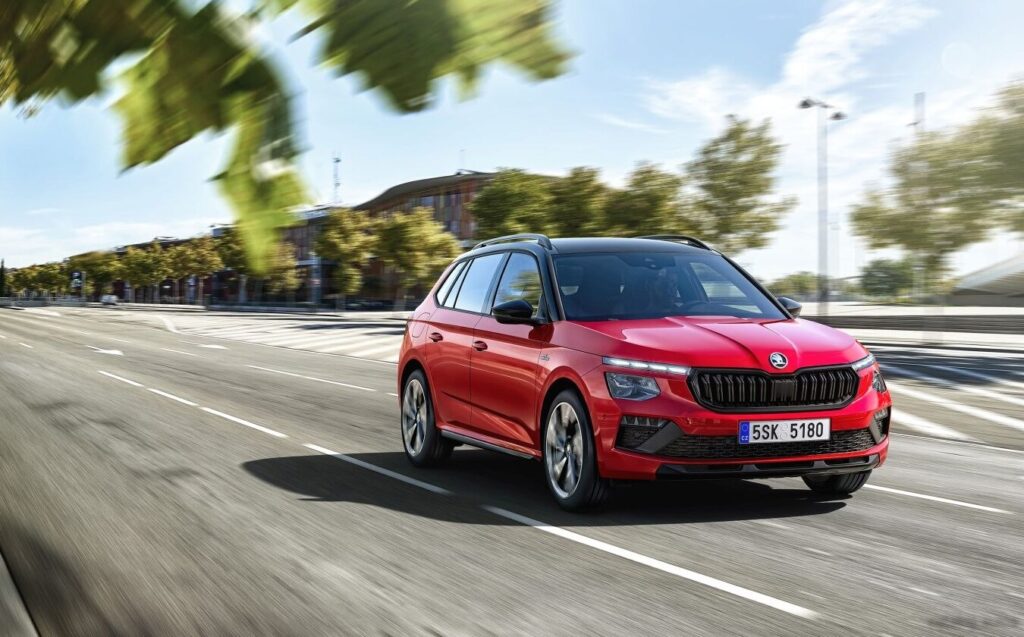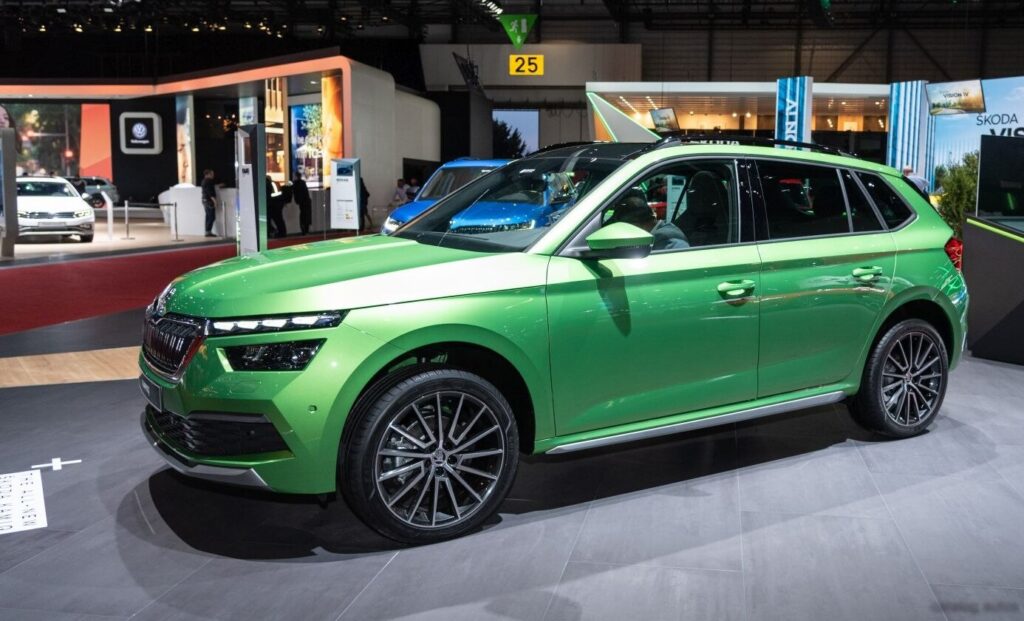
The Skoda Kamiq 1.0 TSI (115 hp) DSG represents a key entry point into the Kamiq range, Skoda’s compact SUV introduced in June 2019 and produced through October 2020. Positioned as a fuel-efficient and practical option, this variant utilized a three-cylinder turbocharged gasoline engine paired with a seven-speed dual-clutch transmission (DSG). It was designed to appeal to buyers seeking a modern, versatile vehicle with reasonable running costs, particularly in European markets where smaller displacement engines are favored. The Kamiq itself is based on the Volkswagen Group’s MQB A0 platform, shared with models like the Volkswagen T-Cross and SEAT Arona.
Technical Specifications
| Brand | Skoda |
| Model | Kamiq |
| Type (Engine) | 1.0 TSI (115 Hp) DSG |
| Start of production | June, 2019 |
| End of production | October, 2020 |
| Powertrain Architecture | Internal Combustion engine |
| Body type | SUV |
| Seats | 5 |
| Doors | 5 |
| Fuel consumption (urban) | 5.7-5.8 l/100 km (41.3 – 40.6 US mpg) |
| Fuel consumption (extra urban) | 4.4-4.5 l/100 km (53.5 – 52.3 US mpg) |
| Fuel consumption (combined) | 4.9-5.0 l/100 km (48 – 47 US mpg) |
| CO2 emissions | 111-113 g/km |
| Fuel Type | Petrol (Gasoline) |
| Acceleration 0 – 100 km/h | 10 sec |
| Acceleration 0 – 62 mph | 10 sec |
| Acceleration 0 – 60 mph | 9.5 sec |
| Maximum speed | 193 km/h (119.92 mph) |
| Emission standard | Euro 6d – TEMP |
| Weight-to-power ratio | 10.2 kg/Hp |
| Weight-to-torque ratio | 5.9 kg/Nm |
| Power | 115 Hp @ 5000-5500 rpm |
| Torque | 200 Nm @ 2000-3500 rpm (147.51 lb.-ft. @ 2000-3500 rpm) |
| Engine layout | Front, Transverse |
| Engine Model/Code | EA211 / DKRF |
| Engine displacement | 999 cm3 (60.96 cu. in.) |
| Number of cylinders | 3 |
| Engine configuration | Inline |
| Number of valves per cylinder | 4 |
| Fuel injection system | Direct injection |
| Engine aspiration | Turbocharger, Intercooler |
| Valvetrain | DOHC |
| Engine oil capacity | 4 l (4.23 US qt | 3.52 UK qt) |
| Kerb Weight | 1176-1334 kg (2592.64 – 2940.97 lbs.) |
| Max. weight | 1732-1765 kg (3818.41 – 3891.16 lbs.) |
| Max load | 431-556 kg (950.19 – 1225.77 lbs.) |
| Trunk (boot) space – minimum | 400 l (14.13 cu. ft.) |
| Trunk (boot) space – maximum | 1395 l (49.26 cu. ft.) |
| Fuel tank capacity | 50 l (13.21 US gal | 11 UK gal) |
| Max. roof load | 75 kg (165.35 lbs.) |
| Permitted trailer load with brakes (12%) | 1200 kg (2645.55 lbs.) |
| Permitted trailer load without brakes | 620 kg (1366.87 lbs.) |
| Permitted towbar download | 75 kg (165.35 lbs.) |
| Length | 4241 mm (166.97 in.) |
| Width | 1793 mm (70.59 in.) |
| Width including mirrors | 1988 mm (78.27 in.) |
| Height | 1553 mm (61.14 in.) |
| Wheelbase | 2651 mm (104.37 in.) |
| Front track | 1531 mm (60.28 in.) |
| Rear (Back) track | 1516 mm (59.69 in.) |
| Front overhang | 837 mm (32.95 in.) |
| Rear overhang | 753 mm (29.65 in.) |
| Ride height (ground clearance) | 182 mm (7.17 in.) |
| Drag coefficient (Cd) | 0.330 |
| Minimum turning circle (turning diameter) | 10.8 m (35.43 ft.) |
| Approach angle | 17.4° |
| Departure angle | 20° |
| Drivetrain Architecture | Front wheel drive |
| Number of gears and type of gearbox | 7 gears, automatic transmission DSG |
| Front suspension | Independent type McPherson |
| Rear suspension | Torsion |
| Front brakes | Ventilated discs |
| Rear brakes | Disc |
| Assisting systems | ABS (Anti-lock braking system) |
| Steering type | Steering rack and pinion |
| Power steering | Electric Steering |
| Tires size | 205/60 R16; 205/55 R17 |
| Wheel rims size | 6J x 16; 6J x 17 |
Powertrain & Engine Architecture
The heart of the Kamiq 1.0 TSI is the EA211 series three-cylinder, 1.0-liter turbocharged gasoline engine, specifically the DKRF code. This engine is a key component of the Volkswagen Group’s modular engine family, known for its compact size and efficiency. It features direct fuel injection, a single turbocharger with an intercooler, and a double overhead camshaft (DOHC) valvetrain with four valves per cylinder. The turbocharger helps to mitigate the power deficit typically associated with small displacement engines, providing a reasonable level of performance. The engine produces 115 horsepower at 5000-5500 rpm and 200 Nm (147.51 lb-ft) of torque between 2000 and 3500 rpm. The engine utilizes a timing chain for durability. Paired with this engine is a seven-speed dual-clutch transmission (DSG), offering quick and smooth gear changes. The DSG transmission contributes to both fuel efficiency and a more engaging driving experience compared to a traditional automatic.
Driving Characteristics
The Kamiq 1.0 TSI DSG delivers adequate performance for everyday driving. Acceleration from 0 to 62 mph takes approximately 10 seconds, and top speed is rated at 193 km/h (119.92 mph). While not particularly sporty, the engine provides sufficient power for merging onto highways and overtaking slower traffic. The DSG transmission is well-programmed, offering responsive shifts and helping to keep the engine in its optimal power band. Compared to higher-output Kamiq variants, such as the 1.5 TSI, the 1.0 TSI feels less eager to accelerate, especially when fully loaded. However, the 1.0 TSI offers a more relaxed and fuel-efficient driving experience. The gear ratios are tuned for economy, prioritizing lower engine speeds at cruising speeds.
Equipment & Trim Levels
The 1.0 TSI DSG variant of the Kamiq typically came with a respectable level of standard equipment. This included air conditioning, a touchscreen infotainment system with Apple CarPlay and Android Auto compatibility, alloy wheels, and a suite of safety features such as ABS, ESC (Electronic Stability Control), and multiple airbags. Higher trim levels offered additional features like automatic climate control, parking sensors, a rear-view camera, and more advanced driver-assistance systems. Interior upholstery was typically cloth, with options for leather or partial leather upgrades. Dashboard design was modern and functional, with a focus on user-friendliness.
Chassis & Braking
The Kamiq 1.0 TSI utilizes a McPherson strut front suspension and a torsion beam rear suspension. This setup provides a good balance between ride comfort and handling. The front brakes are ventilated discs, while the rear brakes are solid discs. The steering is electric power-assisted, offering light and precise control. The suspension is tuned for comfort, absorbing bumps and imperfections in the road surface effectively. Stabilizer bars are fitted to both the front and rear axles to reduce body roll during cornering.
Market Reception & Comparison
The Skoda Kamiq 1.0 TSI DSG was generally well-received by automotive critics. It was praised for its fuel efficiency, comfortable ride, and practical interior. However, some reviewers noted that the engine could feel strained when climbing hills or carrying a full load. Compared to other Kamiq trims, the 1.0 TSI offered the most affordable entry point into the range, making it an attractive option for budget-conscious buyers. Its fuel economy figures of 4.9-5.0 l/100 km (48-47 US mpg) were competitive within its segment. Compared to the 1.5 TSI, the 1.0 TSI offered lower running costs but sacrificed some performance.
Legacy
The EA211 1.0 TSI engine, when paired with the DSG transmission, has proven to be a relatively reliable powertrain. While some early examples experienced minor issues with the turbocharger or fuel injectors, these were generally addressed through software updates and revised components. The Kamiq 1.0 TSI DSG remains a popular choice on the used car market, offering a good balance of practicality, efficiency, and affordability. Its compact size and easy-to-drive nature make it well-suited for urban environments. Regular maintenance, including oil changes and DSG transmission servicing, is crucial to ensure long-term reliability.