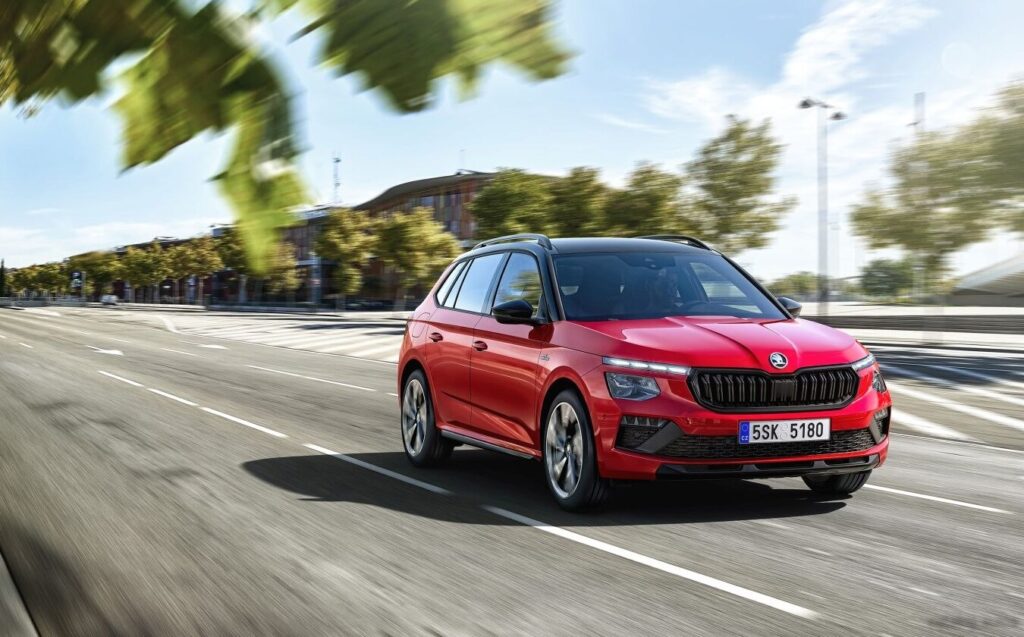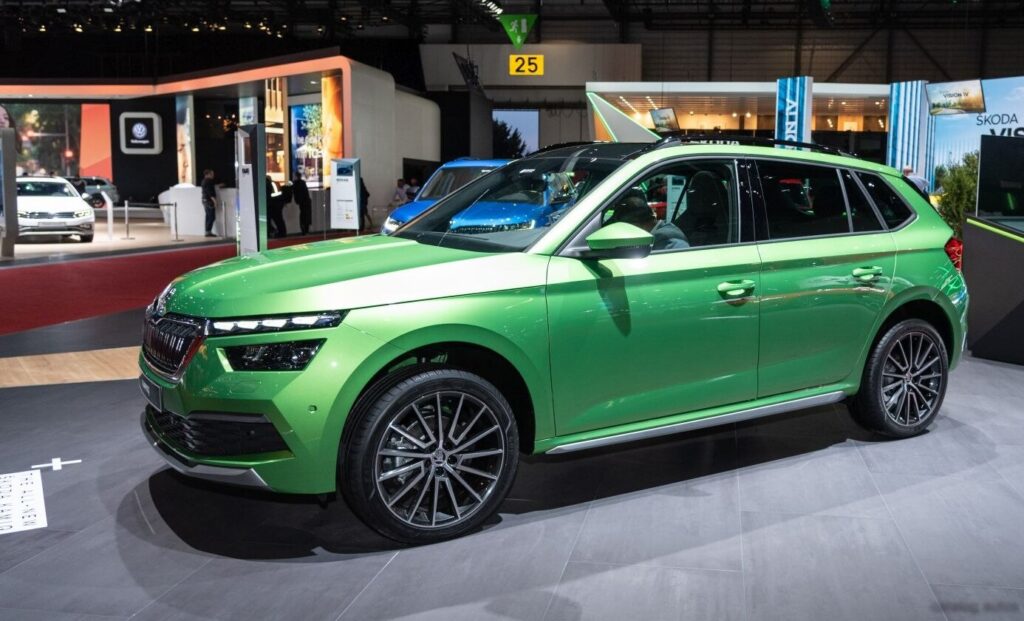
The Skoda Kamiq 1.6 TDI (115 hp) was a front-wheel-drive, five-door subcompact SUV produced by the Czech automaker Skoda between 2019 and November 2020. Positioned as an entry-level offering within the Kamiq range, it served as a more economical alternative to the higher-powered petrol and diesel variants. The Kamiq, launched in 2019, represented Skoda’s entry into the rapidly growing subcompact SUV segment, aiming to provide a practical and affordable option for families and individuals. This particular 1.6 TDI variant was primarily marketed in Europe, where diesel engines remained popular due to their fuel efficiency and lower running costs.
Technical Specifications
| Brand | Skoda |
| Model | Kamiq |
| Generation | Kamiq |
| Type (Engine) | 1.6 TDI (115 Hp) |
| Start of production | 2019 |
| End of production | November, 2020 |
| Powertrain Architecture | Internal Combustion engine |
| Body type | SUV |
| Seats | 5 |
| Doors | 5 |
| Fuel consumption (economy) – urban | 5 l/100 km (47 US mpg, 56.5 UK mpg, 20 km/l) |
| Fuel consumption (economy) – extra urban | 3.8 l/100 km (61.9 US mpg, 74.3 UK mpg, 26.3 km/l) |
| Fuel consumption (economy) – combined | 4.2 l/100 km (56 US mpg, 67.3 UK mpg, 23.8 km/l) |
| CO2 emissions | 112 g/km |
| Fuel Type | Diesel |
| Acceleration 0 – 100 km/h | 10.2 sec |
| Acceleration 0 – 62 mph | 10.2 sec |
| Acceleration 0 – 60 mph | 9.7 sec |
| Maximum speed | 193 km/h (119.92 mph) |
| Emission standard | Euro 6d – TEMP |
| Weight-to-power ratio | 11 kg/Hp, 91.2 Hp/tonne |
| Weight-to-torque ratio | 5 kg/Nm, 198.3 Nm/tonne |
| Power | 115 Hp @ 3250-4000 rpm |
| Power per litre | 72 Hp/l |
| Torque | 250 Nm @ 1500-3250 rpm (184.39 lb.-ft. @ 1500-3250 rpm) |
| Engine layout | Front, Transverse |
| Engine Model/Code | EA288 / DGTA |
| Engine displacement | 1598 cm3 (97.52 cu. in.) |
| Number of cylinders | 4 |
| Engine configuration | Inline |
| Number of valves per cylinder | 4 |
| Fuel injection system | Diesel Commonrail |
| Engine aspiration | Turbocharger, Intercooler |
| Valvetrain | DOHC |
| Engine oil capacity | 4.7 l (4.97 US qt | 4.14 UK qt) |
| Kerb Weight | 1261-1420 kg (2780.03 – 3130.56 lbs.) |
| Max. weight | 1825-1843 kg (4023.44 – 4063.12 lbs.) |
| Max load | 423-564 kg (932.56 – 1243.41 lbs.) |
| Trunk (boot) space – minimum | 400 l (14.13 cu. ft.) |
| Trunk (boot) space – maximum | 1395 l (49.26 cu. ft.) |
| Fuel tank capacity | 50 l (13.21 US gal | 11 UK gal) |
| Max. roof load | 75 kg (165.35 lbs.) |
| Permitted trailer load with brakes (12%) | 1250 kg (2755.78 lbs.) |
| Permitted trailer load without brakes | 660 kg (1455.05 lbs.) |
| Permitted towbar download | 75 kg (165.35 lbs.) |
| Length | 4241 mm (166.97 in.) |
| Width | 1793 mm (70.59 in.) |
| Width including mirrors | 1988 mm (78.27 in.) |
| Height | 1553 mm (61.14 in.) |
| Wheelbase | 2651 mm (104.37 in.) |
| Front track | 1531 mm (60.28 in.) |
| Rear (Back) track | 1516 mm (59.69 in.) |
| Front overhang | 837 mm (32.95 in.) |
| Rear overhang | 753 mm (29.65 in.) |
| Ride height (ground clearance) | 182 mm (7.17 in.) |
| Drag coefficient (Cd) | 0.333 |
| Minimum turning circle (turning diameter) | 10.8 m (35.43 ft.) |
| Approach angle | 17.4° |
| Departure angle | 20° |
| Drivetrain Architecture | The Internal combustion engine (ICE) drives the front wheels of the vehicle. |
| Drive wheel | Front wheel drive |
| Number of gears and type of gearbox | 6 gears, manual transmission |
| Front suspension | Independent type McPherson |
| Rear suspension | Torsion |
| Front brakes | Ventilated discs |
| Rear brakes | Disc |
| Assisting systems | ABS (Anti-lock braking system) |
| Steering type | Steering rack and pinion |
| Power steering | Electric Steering |
| Tires size | 205/60 R16; 205/55 R17 |
| Wheel rims size | 6J x 16; 6J x 17 |
Powertrain & Engine Architecture
The Skoda Kamiq 1.6 TDI was powered by the EA288 series diesel engine, specifically the DGTA code variant. This 1.6-liter inline-four cylinder engine utilized a turbocharger with intercooling to boost power output. The engine featured a common rail direct injection system, delivering fuel directly into the combustion chamber at high pressure for improved efficiency and reduced emissions. The engine employed a Double Overhead Camshaft (DOHC) valvetrain with four valves per cylinder, optimizing gas flow for enhanced performance. The 1.6 TDI engine produced 115 horsepower at 3250-4000 rpm and 250 Nm (184 lb-ft) of torque between 1500-3250 rpm. The engine was paired with a six-speed manual transmission, sending power to the front wheels. The engine also incorporated a diesel particulate filter (DPF) to reduce harmful particulate matter emissions, complying with Euro 6d-TEMP emission standards.
Driving Characteristics
The 1.6 TDI engine, coupled with the six-speed manual transmission, provided adequate, though not exhilarating, performance for everyday driving. Acceleration from 0-100 km/h (0-62 mph) took approximately 10.2 seconds. The engine’s torque peak, available from a relatively low 1500 rpm, provided decent responsiveness in urban environments and during overtaking maneuvers. However, compared to the more powerful petrol variants or even the higher-output diesel options, the 1.6 TDI felt somewhat underpowered, particularly when fully loaded or tackling steep inclines. The gear ratios were tuned for fuel efficiency rather than outright performance, resulting in a comfortable but not particularly sporty driving experience. The manual transmission offered precise shifts, but the relatively long gearing meant that frequent downshifts were necessary to maintain momentum.
Equipment & Trim Levels
The Kamiq 1.6 TDI typically came with a reasonable level of standard equipment, focusing on practicality and comfort. Standard features generally included air conditioning, a touchscreen infotainment system with Bluetooth connectivity, alloy wheels (typically 16-inch), electric front windows, and a multi-function steering wheel. Safety features such as ABS, electronic stability control, and multiple airbags were also standard. Higher trim levels offered additional features such as automatic climate control, parking sensors, a rear-view camera, and upgraded upholstery. Optional extras included a panoramic sunroof, navigation system, and adaptive cruise control.
Chassis & Braking
The Kamiq 1.6 TDI utilized a McPherson strut front suspension and a torsion beam rear suspension. This setup provided a comfortable ride quality, absorbing bumps and imperfections in the road surface effectively. The front brakes were ventilated discs, while the rear brakes were solid discs, providing adequate stopping power for the vehicle’s weight and performance. The electric power steering offered light and precise steering feel, making it easy to maneuver in urban environments. The Kamiq’s relatively low weight, ranging from 1261 to 1420 kg (2780 to 3130 lbs), contributed to its manageable handling characteristics.
Market Reception & Comparison
The Skoda Kamiq 1.6 TDI was generally well-received by automotive critics as a practical and fuel-efficient option in the subcompact SUV segment. Its strengths included its spacious interior, comfortable ride, and competitive pricing. However, some reviewers noted that the 1.6 TDI engine felt underpowered compared to its petrol counterparts. In terms of fuel economy, the 1.6 TDI offered a significant advantage over the petrol engines, achieving a combined fuel consumption of around 4.2 l/100 km (56 US mpg). Compared to other diesel variants in the Kamiq range, the 1.6 TDI represented the entry point, offering a more affordable option for budget-conscious buyers.
Legacy
The 1.6 TDI engine, while not known for being particularly exciting, proved to be a relatively reliable powertrain. The EA288 engine family, in general, has a good reputation for durability, provided that regular maintenance is performed, including timely DPF regeneration. On the used car market, Kamiq 1.6 TDI models represent a good value proposition for buyers seeking a practical and economical subcompact SUV. However, potential buyers should be aware of the potential costs associated with DPF maintenance and ensure that the vehicle has been properly serviced throughout its life.