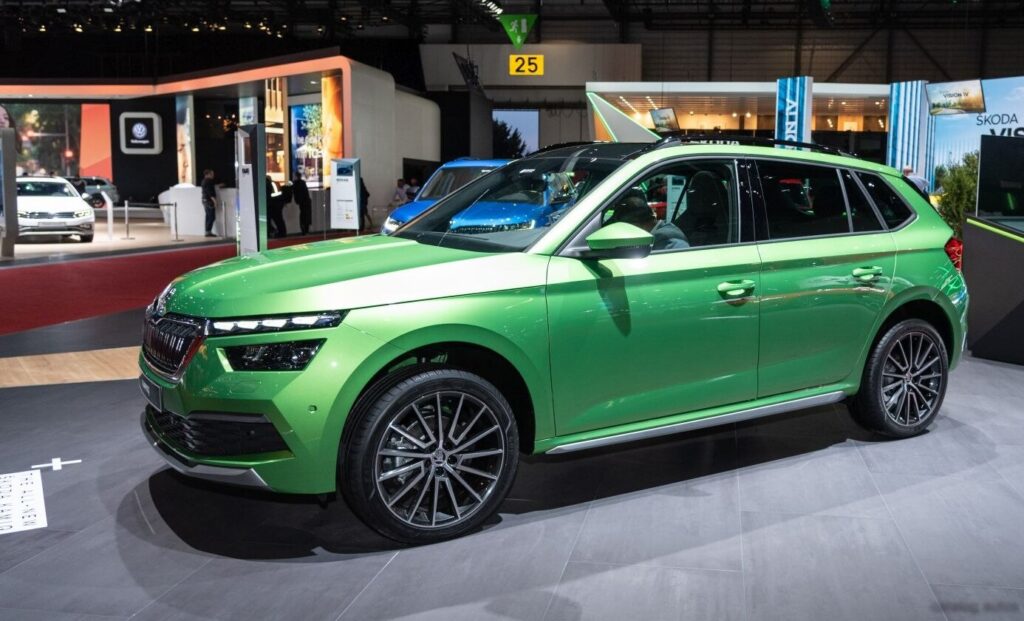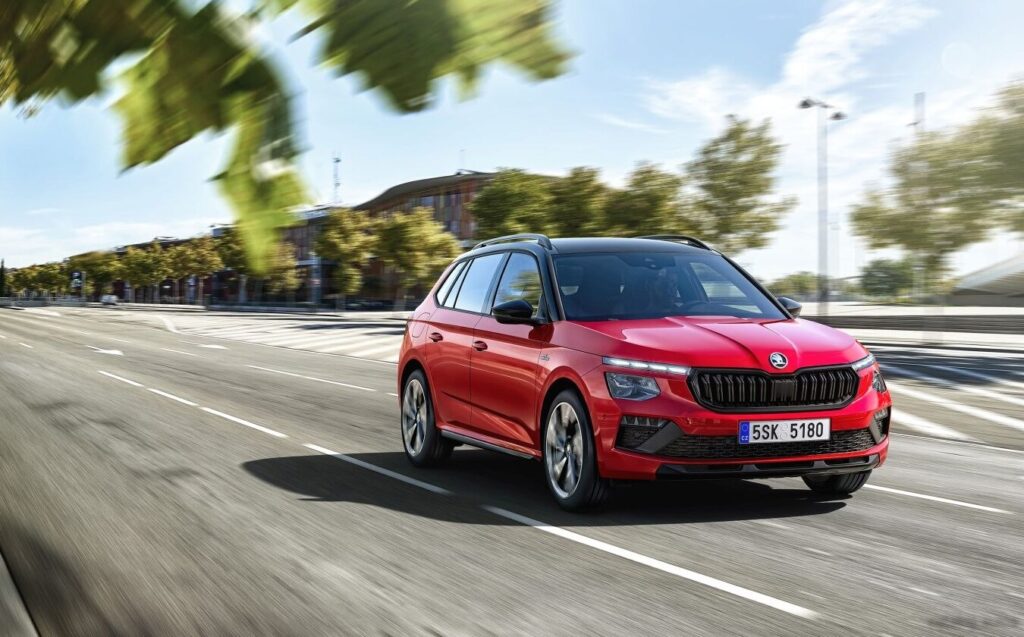
The Skoda Kamiq, a subcompact crossover SUV, was introduced in 2019 as a more affordable and practical alternative to the larger Karoq. The 2023 facelift brought updated styling, enhanced technology, and refined engine options. This article focuses on the 1.0 TSI (115 horsepower) variant equipped with a 7-speed Dual Clutch Gearbox (DSG), a popular configuration particularly in European markets. Production of this specific version commenced in December 2023, and it represents an entry-to-mid-range offering within the Kamiq lineup, appealing to buyers prioritizing fuel efficiency and ease of driving over outright performance.
Technical Specifications
| Brand | Skoda |
| Model | Kamiq |
| Generation | Kamiq (facelift 2023) |
| Type (Engine) | 1.0 TSI (115 Hp) DSG |
| Start of production | December, 2023 |
| Powertrain Architecture | Internal Combustion engine |
| Body type | SUV |
| Seats | 5 |
| Doors | 5 |
| Combined fuel consumption (WLTP) | 5.7 l/100 km (41.3 US mpg, 49.6 UK mpg, 17.5 km/l) |
| CO2 emissions (WLTP) | 128 g/km |
| Fuel Type | Petrol (Gasoline) |
| Acceleration 0 – 100 km/h | 10.2 sec |
| Acceleration 0 – 62 mph | 10.2 sec |
| Acceleration 0 – 60 mph | 9.7 sec |
| Maximum speed | 195 km/h (121.17 mph) |
| Power | 115 Hp |
| Power per litre | 115.1 Hp/l |
| Torque | 200 Nm @ 2000-3500 rpm (147.51 lb.-ft. @ 2000-3500 rpm) |
| Engine layout | Front, Transverse |
| Engine Model/Code | EA211 / DKRF |
| Engine displacement | 999 cm3 (60.96 cu. in.) |
| Number of cylinders | 3 |
| Engine configuration | Inline |
| Cylinder Bore | 74.5 mm (2.93 in.) |
| Piston Stroke | 76.4 mm (3.01 in.) |
| Compression ratio | 11.4:1 |
| Number of valves per cylinder | 4 |
| Fuel injection system | Direct injection |
| Engine aspiration | Turbocharger, Intercooler |
| Valvetrain | DOHC |
| Engine oil capacity | 4 l (4.23 US qt | 3.52 UK qt) |
| Coolant | 10 l (10.57 US qt | 8.8 UK qt) |
| Max. weight | 1746 kg (3849.27 lbs.) |
| Trunk (boot) space – minimum | 400 l (14.13 cu. ft.) |
| Trunk (boot) space – maximum | 1395 l (49.26 cu. ft.) |
| Fuel tank capacity | 50 l (13.21 US gal | 11 UK gal) |
| Permitted trailer load with brakes (12%) | 1200 kg (2645.55 lbs.) |
| Permitted trailer load without brakes | 620 kg (1366.87 lbs.) |
| Permitted towbar download | 75 kg (165.35 lbs.) |
| Length | 4241 mm (166.97 in.) |
| Width | 1793 mm (70.59 in.) |
| Height | 1562 mm (61.5 in.) |
| Wheelbase | 2639 mm (103.9 in.) |
| Front track | 1534 mm (60.39 in.) |
| Rear (Back) track | 1517 mm (59.72 in.) |
| Minimum turning circle | 10.1 m (33.14 ft.) |
| Drivetrain Architecture | The Internal combustion engine (ICE) drives the front wheels of the vehicle. |
| Drive wheel | Front wheel drive |
| Number of gears and type of gearbox | 7 gears, automatic transmission DSG |
| Front brakes | Ventilated discs |
| Rear brakes | Disc |
INTRODUCTION
The Skoda Kamiq, launched in 2019, quickly became a popular choice in the competitive subcompact SUV segment, particularly in Europe. The 2023 facelift refined the model, bringing updated aesthetics and technology. The 1.0 TSI 115 hp DSG variant is a key offering, positioned as a balance between affordability, fuel economy, and usability. It caters to drivers who prioritize practicality and lower running costs over high-performance driving. Built on the Volkswagen Group’s MQB A0 platform, the Kamiq shares its underpinnings with models like the Volkswagen T-Cross and SEAT Arona.
Powertrain & Engine Architecture
At the heart of this Kamiq variant lies the EA211 series 1.0-liter turbocharged three-cylinder engine, specifically the DKRF code. This engine is a hallmark of Volkswagen Group’s downsizing strategy, combining direct fuel injection with a turbocharger and intercooler to deliver a respectable power output from a small displacement. The engine utilizes a timing chain for durability and features a DOHC (Dual Overhead Camshaft) valvetrain with four valves per cylinder. The direct injection system ensures precise fuel delivery, optimizing combustion efficiency. The 7-speed DSG (Dual Clutch Gearbox) is a crucial component, offering smooth and rapid gear changes. This transmission features two separate clutches, allowing for pre-selection of the next gear, resulting in quicker acceleration and improved fuel economy compared to a traditional automatic transmission. The DSG also includes a ‘creep’ function, mimicking the behavior of a traditional torque converter automatic for ease of use in stop-and-go traffic.
Driving Characteristics
The 1.0 TSI 115 hp/DSG combination delivers adequate performance for everyday driving. While not particularly sporty, the engine provides sufficient torque for comfortable cruising and overtaking maneuvers. Acceleration from 0-60 mph takes approximately 9.7 seconds, and the top speed is 195 km/h (121 mph). The DSG transmission contributes to a responsive driving experience, although some drivers may notice slight hesitation at low speeds. Compared to the more powerful 1.5 TSI variants, this engine offers a more relaxed driving experience, prioritizing fuel efficiency over outright speed. The gear ratios are tuned for economy, with taller gearing in higher gears to reduce engine RPM at highway speeds. The 200 Nm of torque, available between 2000-3500 rpm, provides enough pulling power for most situations, but the engine can feel strained when fully loaded or climbing steep hills.
Equipment & Trim Levels
The 1.0 TSI DSG Kamiq typically comes with a generous level of standard equipment. This includes air conditioning, a touchscreen infotainment system with Apple CarPlay and Android Auto compatibility, alloy wheels (typically 16 or 17 inches), and a suite of safety features such as ABS, ESC (Electronic Stability Control), and multiple airbags. Higher trim levels offer additional features like automatic climate control, parking sensors, a rear-view camera, and more advanced driver-assistance systems. Interior upholstery is usually cloth, with options for leather or Alcantara available on higher trims. Dashboard design is modern and functional, with a focus on user-friendliness. Optional extras often include a panoramic sunroof, adaptive cruise control, and a premium sound system.
Chassis & Braking
The Kamiq’s chassis is tuned for comfort and stability. The front suspension utilizes MacPherson struts, while the rear suspension employs a torsion beam setup. This configuration provides a good balance between ride quality and handling. Braking is handled by ventilated discs on the front wheels and solid discs on the rear. ABS (Anti-lock Braking System) is standard, ensuring safe and controlled braking in emergency situations. The steering is electrically assisted, providing light and precise control. Stabilizer bars are fitted to both the front and rear axles to reduce body roll during cornering. The suspension setup is generally well-suited to typical road conditions, offering a comfortable ride without feeling overly soft or unstable.
Market Reception & Comparison
The 1.0 TSI DSG Kamiq has been well-received by automotive critics for its fuel efficiency, practicality, and value for money. It consistently scores well in comparisons against rivals like the Renault Captur, Peugeot 2008, and Nissan Juke. Fuel economy is a key strength, with the WLTP combined figure of 5.7 l/100 km (41.3 US mpg) being competitive in its class. Reliability has generally been good, although some owners have reported minor issues with the DSG transmission. Compared to the more powerful 1.5 TSI variant, the 1.0 TSI offers lower running costs but sacrifices some performance. The 1.6 TDI diesel variant, while offering even better fuel economy, is less popular due to concerns about diesel emissions and potential future restrictions.
Legacy
The Skoda Kamiq 1.0 TSI DSG represents a significant step forward in the subcompact SUV segment, offering a compelling combination of practicality, efficiency, and technology. The EA211 engine, while not known for its outright performance, has proven to be a reliable and durable unit when properly maintained. The 7-speed DSG transmission, while requiring occasional servicing, provides a smooth and efficient driving experience. As the Kamiq ages, it is likely to remain a popular choice in the used car market, particularly for buyers seeking a well-equipped and fuel-efficient crossover SUV. Its reputation for reliability and affordability should ensure continued demand for years to come.