
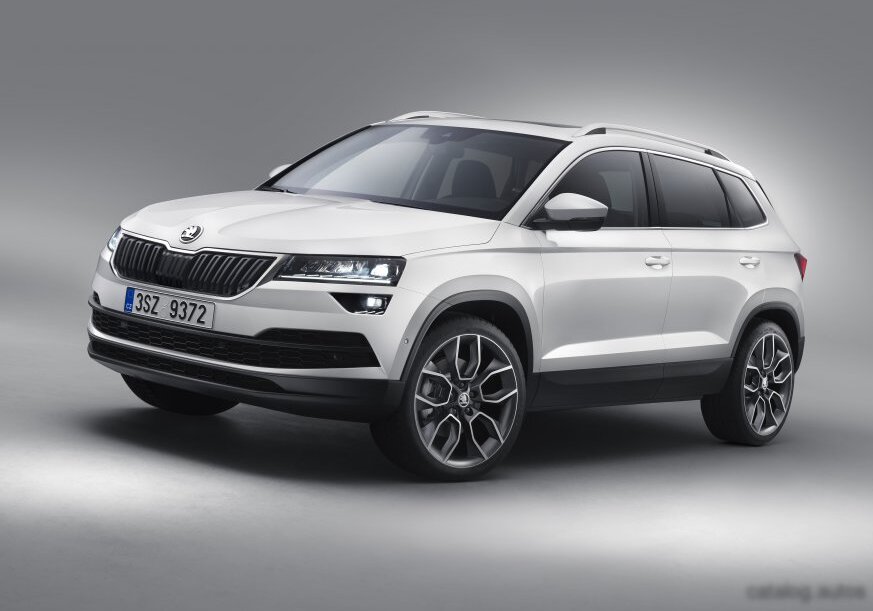
The Skoda Karoq 1.0 TSI (116 horsepower) was a popular entry-level variant of Skoda’s compact SUV, produced from July 2017 to October 2020. Positioned within the broader Karoq range (which utilized the Volkswagen Group’s MQB A1 platform, also known as the A1), this model offered a balance of fuel efficiency and practicality, aimed at buyers seeking a versatile family vehicle. It served as the gateway into the Karoq lineup, offering a more affordable option compared to higher-powered engine choices and more luxurious trim levels. The Karoq itself was intended to replace the Skoda Yeti, offering a more mainstream and spacious alternative.
Technical Specifications
| Brand | Skoda |
| Model | Karoq |
| Type (Engine) | 1.0 TSI (116 Hp) |
| Start of production | July, 2017 |
| End of production | October, 2020 |
| Powertrain Architecture | Internal Combustion engine |
| Body type | SUV |
| Seats | 5 |
| Doors | 5 |
| Fuel consumption (urban) | 6.2 l/100 km (37.9 US mpg, 45.6 UK mpg, 16.1 km/l) |
| Fuel consumption (extra urban) | 4.7 l/100 km (50 US mpg, 60.1 UK mpg, 21.3 km/l) |
| Fuel consumption (combined) | 5.3 l/100 km (44.4 US mpg, 53.3 UK mpg, 18.9 km/l) |
| CO2 emissions | 119 g/km |
| Fuel Type | Petrol (Gasoline) |
| Acceleration 0 – 100 km/h | 10.6 sec |
| Acceleration 0 – 62 mph | 10.6 sec |
| Acceleration 0 – 60 mph | 10.1 sec |
| Maximum speed | 187 km/h (116.2 mph) |
| Emission standard | Euro 6 |
| Weight-to-power ratio | 10.9 kg/Hp, 91.7 Hp/tonne |
| Weight-to-torque ratio | 6.3 kg/Nm, 158.1 Nm/tonne |
| Power | 116 Hp @ 5000-5500 rpm |
| Power per litre | 116.1 Hp/l |
| Torque | 200 Nm @ 2000-3500 rpm (147.51 lb.-ft. @ 2000-3500 rpm) |
| Engine layout | Front, Transverse |
| Engine Model/Code | EA211 / CHZJ |
| Engine displacement | 999 cm3 (60.96 cu. in.) |
| Number of cylinders | 3 |
| Engine configuration | Inline |
| Cylinder Bore | 74.5 mm (2.93 in.) |
| Piston Stroke | 76.4 mm (3.01 in.) |
| Compression ratio | 10.3:1 |
| Number of valves per cylinder | 4 |
| Fuel injection system | Direct injection |
| Engine aspiration | Turbocharger, Intercooler |
| Engine oil capacity | 4 l (4.23 US qt | 3.52 UK qt) |
| Kerb Weight | 1265 kg (2788.85 lbs.) |
| Max. weight | 1878 kg (4140.28 lbs.) |
| Max load | 613 kg (1351.43 lbs.) |
| Trunk (boot) space – minimum | 521 l (18.4 cu. ft.) |
| Trunk (boot) space – maximum | 1630 l (57.56 cu. ft.) |
| Fuel tank capacity | 50 l (13.21 US gal | 11 UK gal) |
| Max. roof load | 75 kg (165.35 lbs.) |
| Permitted trailer load with brakes (12%) | 1200 kg (2645.55 lbs.) |
| Permitted trailer load without brakes | 660 kg (1455.05 lbs.) |
| Length | 4382 mm (172.52 in.) |
| Width | 1841 mm (72.48 in.) |
| Height | 1603 mm (63.11 in.) |
| Wheelbase | 2638 mm (103.86 in.) |
| Front track | 1576 mm (62.05 in.) |
| Rear (Back) track | 1541 mm (60.67 in.) |
| Minimum turning circle | 10.9 m (35.76 ft.) |
| Drivetrain Architecture | The Internal combustion engine (ICE) drives the front wheels of the vehicle. |
| Drive wheel | Front wheel drive |
| Number of gears and type of gearbox | 6 gears, manual transmission |
| Front brakes | Ventilated discs |
| Rear brakes | Disc |
| Assisting systems | ABS (Anti-lock braking system) |
| Steering type | Steering rack and pinion |
| Power steering | Electric Steering |
INTRODUCTION
The Skoda Karoq 1.0 TSI, launched in 2017, represented Skoda’s entry into the increasingly competitive compact SUV segment. It was designed to appeal to families and individuals seeking a practical, well-equipped, and affordable vehicle. The 1.0 TSI engine, a three-cylinder turbocharged unit, was a key component of Skoda’s strategy to offer a range of powertrain options, catering to diverse customer needs. This particular variant was positioned as the most economical option in the Karoq lineup, prioritizing fuel efficiency over outright performance. It was a direct competitor to vehicles like the Nissan Qashqai, Kia Sportage, and Hyundai Tucson in the European market.
Powertrain & Engine Architecture
At the heart of the Karoq 1.0 TSI lies the EA211 engine family, specifically the CHZJ code. This 999cc, three-cylinder engine utilizes direct fuel injection and a single turbocharger with an intercooler to deliver a respectable 116 horsepower. The engine’s aluminum block contributes to its relatively lightweight design. The EA211 is known for its compact size and efficiency. The fuel injection system is a sophisticated direct injection setup, optimizing fuel delivery for improved combustion and reduced emissions. The engine features a timing chain, intended to reduce maintenance compared to timing belts. The Karoq 1.0 TSI was typically paired with a six-speed manual transmission, although a seven-speed DSG (Dual-Clutch Gearbox) was also available as an option. The manual transmission offered precise shifts and contributed to the vehicle’s fuel economy.
Driving Characteristics
The Karoq 1.0 TSI, with its 116 hp and 200 Nm (147.51 lb-ft) of torque, provided adequate performance for everyday driving. Acceleration from 0-60 mph took around 10.1 seconds, which wasn’t particularly brisk, but sufficient for most commuting and highway merging scenarios. The turbocharger provided a noticeable boost in power, but the engine could feel strained when fully loaded or during steep inclines. The six-speed manual transmission allowed drivers to keep the engine in its optimal power band. Compared to the more powerful 1.5 TSI or diesel variants, the 1.0 TSI felt less refined and had a more noticeable engine note. However, its lighter weight and efficient engine contributed to better fuel economy and a more nimble feel in urban environments.
Equipment & Trim Levels
The Karoq 1.0 TSI typically came with a reasonable level of standard equipment. Base models included features like air conditioning, a touchscreen infotainment system with Apple CarPlay and Android Auto compatibility, alloy wheels, and a suite of safety features including ABS, ESC (Electronic Stability Control), and multiple airbags. Higher trim levels, such as SE L and Elegance, added features like automatic climate control, parking sensors, a larger touchscreen display, and upgraded interior materials. Optional extras included a panoramic sunroof, adaptive cruise control, and a premium sound system. Interior upholstery was typically cloth, with leather options available on higher trims. The dashboard layout was clean and functional, with a focus on user-friendliness.
Chassis & Braking
The Karoq’s chassis was tuned to provide a comfortable and composed ride. The front suspension utilized MacPherson struts, while the rear suspension employed a multi-link setup. This configuration provided a good balance between ride comfort and handling. The Karoq 1.0 TSI typically featured ventilated front disc brakes and solid rear disc brakes. ABS (Anti-lock Braking System) was standard, enhancing braking performance and stability. The steering was electrically assisted, providing a light and responsive feel. Stabilizer bars were fitted to both the front and rear axles to reduce body roll during cornering.
Market Reception & Comparison
The Skoda Karoq 1.0 TSI was generally well-received by automotive critics. It was praised for its spacious interior, practical design, and competitive pricing. However, some reviewers noted that the 1.0 TSI engine could feel underpowered, especially when the vehicle was fully loaded. Fuel economy was a strong point, with the Karoq 1.0 TSI achieving combined fuel consumption figures of around 5.3 l/100 km (44.4 US mpg). Compared to the 1.5 TSI variant, the 1.0 TSI offered lower running costs but sacrificed some performance. The diesel variants provided even better fuel economy but came with higher purchase prices and potential concerns about diesel emissions.
Legacy
The Skoda Karoq 1.0 TSI has proven to be a reliable and durable vehicle. The EA211 engine, while not known for being exceptionally powerful, is generally considered to be a robust and dependable unit. Common maintenance items include regular oil changes, air filter replacements, and spark plug replacements. The Karoq’s spacious interior and practical design have made it a popular choice on the used car market. The 1.0 TSI variant remains an attractive option for buyers seeking an affordable and fuel-efficient compact SUV. Its relatively simple engine design and readily available parts contribute to its long-term reliability and ease of maintenance.
