
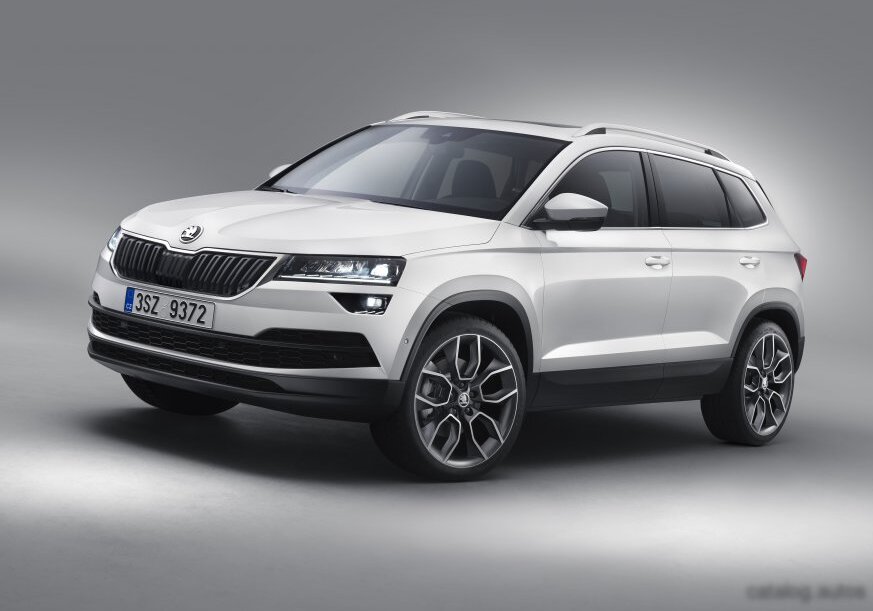
The Skoda Karoq 2.0 TDI (143 hp) DSG was a popular configuration of Skoda’s compact SUV, produced between 2018 and November 2021. Positioned as a mid-range offering within the Karoq lineup, it aimed to balance fuel efficiency with respectable performance, appealing to buyers seeking a practical and comfortable family vehicle. The Karoq, launched in 2017 as a replacement for the Yeti, represented Skoda’s move towards a more mainstream SUV offering, and the 2.0 TDI DSG variant quickly became a significant seller in European markets. It’s built on the Volkswagen Group’s MQB platform (A1), shared with models like the Volkswagen Tiguan and SEAT Ateca.
Technical Specifications
| Brand | Skoda |
| Model | Karoq |
| Type (Engine) | 2.0 TDI (143 Hp) DSG |
| Start of production | 2018 |
| End of production | November, 2021 |
| Powertrain Architecture | Internal Combustion engine |
| Body type | SUV |
| Seats | 5 |
| Doors | 5 |
| Fuel Type | Diesel |
| Acceleration 0 – 100 km/h | 9.1 sec |
| Acceleration 0 – 62 mph | 9.1 sec |
| Acceleration 0 – 60 mph | 8.6 sec |
| Maximum speed | 202 km/h (125.52 mph) |
| Weight-to-power ratio | 10.2 kg/Hp, 98.3 Hp/tonne |
| Weight-to-torque ratio | 4.5 kg/Nm, 219.9 Nm/tonne |
| Power | 143 Hp @ 3500-4000 rpm |
| Power per litre | 72.7 Hp/l |
| Torque | 320 Nm @ 1750-3000 rpm (236.02 lb.-ft. @ 1750-3000 rpm) |
| Engine layout | Front, Transverse |
| Engine Model/Code | EA288 / CRVC |
| Engine displacement | 1968 cm3 (120.09 cu. in.) |
| Number of cylinders | 4 |
| Engine configuration | Inline |
| Number of valves per cylinder | 4 |
| Fuel injection system | Diesel Commonrail |
| Engine aspiration | Turbocharger, Intercooler |
| Engine oil capacity | 4.7 l (4.97 US qt | 4.14 UK qt) |
| Kerb Weight | 1455 kg (3207.73 lbs) |
| Trunk (boot) space – minimum | 521 l (18.4 cu. ft.) |
| Trunk (boot) space – maximum | 1630 l (57.56 cu. ft.) |
| Fuel tank capacity | 55 l (14.53 US gal | 12.1 UK gal) |
| Length | 4382 mm (172.52 in) |
| Width | 1841 mm (72.48 in) |
| Width including mirrors | 2025 mm (79.72 in) |
| Height | 1603-1607 mm (63.11 – 63.27 in) |
| Wheelbase | 2630-2638 mm (103.54 – 103.86 in) |
| Front track | 1576 mm (62.05 in) |
| Rear (Back) track | 1541-1547 mm (60.67 – 60.91 in) |
| Drive wheel | Front wheel drive |
| Number of gears and type of gearbox | 7 gears, automatic transmission DSG |
| Tires size | 215/55 R17 94 V |
| Wheel rims size | 17 |
Powertrain & Engine Architecture
The Karoq 2.0 TDI DSG utilizes the Volkswagen Group’s EA288 engine family, specifically the CRVC variant. This is a four-cylinder, inline diesel engine with a displacement of 1968cc. It features a common rail direct injection system, delivering fuel at extremely high pressures for optimized combustion. The engine is turbocharged and intercooled, enhancing power output and efficiency. The 143 hp version of the EA288 employs a single turbocharger, differing from higher-output variants that may utilize twin-turbo setups. The engine also incorporates a diesel particulate filter (DPF) to reduce emissions, a standard feature for modern diesel engines in Europe. The seven-speed DSG (Direct-Shift Gearbox) is a dual-clutch transmission known for its quick and smooth gear changes. It offers both fully automatic operation and the ability for the driver to manually select gears via paddle shifters or the gear lever.
Driving Characteristics
The 2.0 TDI DSG powertrain in the Karoq provides a good balance of performance and fuel economy. While not a particularly sporty setup, the 143 hp and 320 Nm (236 lb-ft) of torque deliver adequate acceleration for everyday driving and highway cruising. The 0-60 mph time of around 8.6 seconds is respectable for a compact SUV. The DSG transmission contributes to a responsive driving experience, with quick shifts and minimal torque interruption. Compared to the lower-powered 1.6 TDI engine, the 2.0 TDI offers noticeably more punch, especially when overtaking or climbing hills. However, it doesn’t match the performance of the more powerful 2.0 TDI variants (typically around 184 hp). The DSG’s gear ratios are tuned for efficiency, prioritizing fuel economy over outright acceleration. The front-wheel-drive configuration provides predictable handling, although it lacks the all-weather capability of the optional all-wheel-drive system available on other Karoq trims.
Equipment & Trim Levels
The Karoq 2.0 TDI DSG typically came equipped with a solid range of standard features. These generally included air conditioning, a touchscreen infotainment system with Apple CarPlay and Android Auto compatibility, alloy wheels, and a suite of safety features such as ABS, electronic stability control, and multiple airbags. Higher trim levels, such as SE L or Style, added features like automatic climate control, parking sensors, a rearview camera, and upgraded interior upholstery. Optional extras included a panoramic sunroof, adaptive cruise control, and a premium sound system. Interior materials were generally of good quality, with a focus on practicality and durability. The dashboard layout was clean and functional, with intuitive controls.
Chassis & Braking
The Karoq’s chassis features a MacPherson strut front suspension and a multi-link rear suspension, providing a comfortable and controlled ride. The suspension tuning is geared towards comfort rather than sporty handling. The front brakes are typically ventilated discs, while the rear brakes are often solid discs, depending on the specific trim level and market. Electric power steering provides light and precise steering feel. Stabilizer bars are fitted to both the front and rear axles to reduce body roll during cornering. The Karoq’s weight-to-power ratio of 10.2 kg/hp contributes to its balanced handling characteristics.
Market Reception & Comparison
The Skoda Karoq 2.0 TDI DSG was well-received by automotive critics for its practicality, comfort, and fuel efficiency. It was often praised for its spacious interior, comfortable ride, and well-equipped cabin. Compared to rivals like the Nissan Qashqai and Kia Sportage, the Karoq offered a more refined driving experience and a higher-quality interior. The 2.0 TDI engine was considered a good compromise between performance and economy, although some reviewers noted that it could be a bit noisy under hard acceleration. Fuel economy was a strong point, with combined cycle figures typically around 50-55 mpg (depending on driving conditions and wheel size). Reliability was generally good, although some owners reported minor issues with the DSG transmission.
Legacy
The Skoda Karoq 2.0 TDI DSG has proven to be a reliable and durable vehicle, with many examples still on the road today. The EA288 engine is known for its longevity, provided it is properly maintained. The DSG transmission, while generally reliable, requires regular servicing to ensure optimal performance. In the used car market, the Karoq 2.0 TDI DSG holds its value well, thanks to its reputation for practicality, fuel efficiency, and reliability. It remains a popular choice for buyers seeking a well-rounded and affordable compact SUV.
