
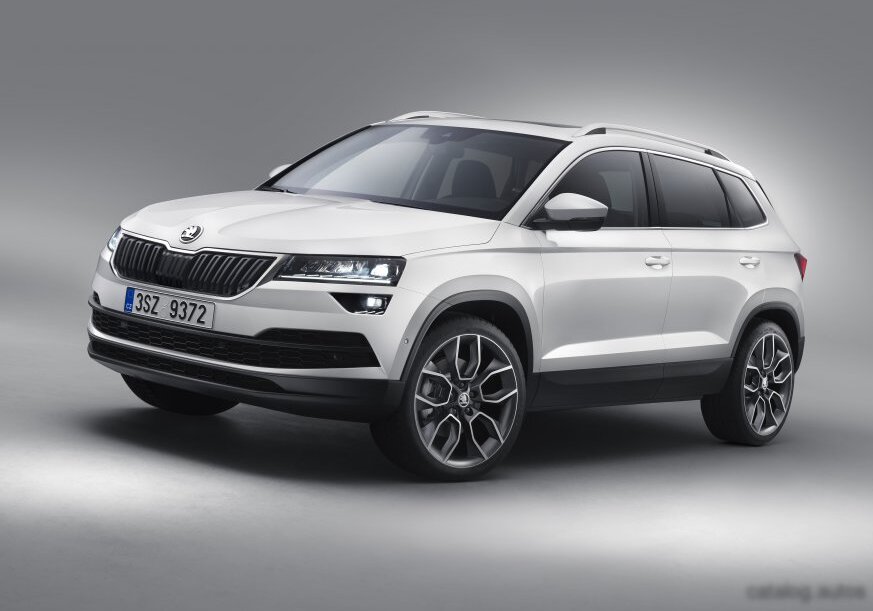
The Skoda Karoq 2.0 TDI 4×4, produced from 2017 to November 2021, represents a significant offering in Skoda’s compact SUV lineup. Positioned as a versatile and practical vehicle, it catered to buyers seeking all-wheel drive capability and the fuel efficiency of a diesel engine. This variant sat within the broader Karoq range, offering a step up in performance and all-weather traction compared to the front-wheel-drive and lower-powered models. It was a key model for Skoda in the European market, where compact SUVs with diesel engines and all-wheel drive were highly sought after, and began to gain traction in other markets as well.
Technical Specifications
| Brand | Skoda |
| Model | Karoq |
| Type (Engine) | 2.0 TDI (150 Hp) 4×4 |
| Start of production | 2017 |
| End of production | November, 2021 |
| Powertrain Architecture | Internal Combustion engine |
| Body type | SUV |
| Seats | 5 |
| Doors | 5 |
| Fuel consumption (urban) | 5.9 l/100 km (39.9 US mpg, 47.9 UK mpg, 16.9 km/l) |
| Fuel consumption (extra urban) | 4.5 l/100 km (52.3 US mpg, 62.8 UK mpg, 22.2 km/l) |
| Fuel consumption (combined) | 5 l/100 km (47 US mpg, 56.5 UK mpg, 20 km/l) |
| CO2 emissions | 130 g/km |
| Fuel Type | Diesel |
| Acceleration 0 – 100 km/h | 8.7 sec |
| Acceleration 0 – 62 mph | 8.7 sec |
| Acceleration 0 – 60 mph | 8.3 sec |
| Maximum speed | 196 km/h (121.79 mph) |
| Emission standard | Euro 6 |
| Weight-to-power ratio | 9.9 kg/Hp, 100.9 Hp/tonne |
| Weight-to-torque ratio | 4.4 kg/Nm, 228.8 Nm/tonne |
| Power | 150 Hp @ 3500-4000 rpm |
| Torque | 340 Nm @ 1750-3000 rpm (250.77 lb.-ft. @ 1750-3000 rpm) |
| Engine layout | Front, Transverse |
| Engine Model/Code | EA288 / DFFA |
| Engine displacement | 1968 cm3 (120.09 cu. in.) |
| Number of cylinders | 4 |
| Engine configuration | Inline |
| Cylinder Bore | 81 mm (3.19 in.) |
| Piston Stroke | 95.5 mm (3.76 in.) |
| Compression ratio | 16.2:1 |
| Number of valves per cylinder | 4 |
| Fuel injection system | Diesel Commonrail |
| Engine aspiration | Turbocharger, Intercooler |
| Engine oil capacity | 4.7 l (4.97 US qt | 4.14 UK qt) |
| Kerb Weight | 1486 kg (3276.07 lbs.) |
| Max. weight | 2100 kg (4629.71 lbs.) |
| Max load | 614 kg (1353.64 lbs.) |
| Trunk (boot) space – minimum | 521 l (18.4 cu. ft.) |
| Trunk (boot) space – maximum | 1630 l (57.56 cu. ft.) |
| Fuel tank capacity | 55 l (14.53 US gal | 12.1 UK gal) |
| Max. roof load | 75 kg (165.35 lbs.) |
| Permitted trailer load with brakes (12%) | 2000 kg (4409.25 lbs.) |
| Permitted trailer load without brakes | 750 kg (1653.47 lbs.) |
| Length | 4382 mm (172.52 in.) |
| Width | 1841 mm (72.48 in.) |
| Height | 1607 mm (63.27 in.) |
| Wheelbase | 2630 mm (103.54 in.) |
| Front track | 1576 mm (62.05 in.) |
| Rear (Back) track | 1547 mm (60.91 in.) |
| Minimum turning circle | 10.8 m (35.43 ft.) |
| Drive wheel | All wheel drive (4×4) |
| Number of gears | 6 gears, manual transmission |
| Front brakes | Ventilated discs |
| Rear brakes | Disc |
INTRODUCTION
The Skoda Karoq 2.0 TDI 4×4, launched in 2017, is a compact SUV built on the Volkswagen Group’s MQB platform (specifically the A1 variant). It represents the first generation of the Karoq, replacing the previous Yeti model. The 2.0 TDI 4×4 variant was positioned as a higher-specification option within the Karoq range, appealing to customers who required all-weather capability and a more powerful engine. It aimed to provide a blend of practicality, comfort, and performance, making it a competitive choice in the crowded European SUV market. The Karoq, in general, was designed to offer a more spacious and refined experience than its predecessor, the Yeti, while maintaining Skoda’s reputation for value for money.
Powertrain & Engine Architecture
At the heart of the Karoq 2.0 TDI 4×4 lies the EA288 series diesel engine, specifically the DFFA code variant. This is a four-cylinder, inline engine displacing 1968cc. The engine utilizes a common rail direct injection system, delivering fuel at extremely high pressures for optimized combustion. A turbocharger with an intercooler is employed to boost power and torque, providing 150 horsepower at 3500-4000 rpm and a substantial 340 Nm (250.77 lb-ft) of torque between 1750 and 3000 rpm. The engine also incorporates a diesel particulate filter (DPF) to meet stringent Euro 6 emission standards. The 6-speed manual transmission was standard for this variant, offering a balance between fuel efficiency and driver engagement. The all-wheel-drive system is a Haldex multi-plate clutch system, which intelligently distributes torque between the front and rear axles as needed, providing enhanced traction in slippery conditions.
Driving Characteristics
The Karoq 2.0 TDI 4×4 delivers a composed and capable driving experience. The 150 hp engine, coupled with the 6-speed manual transmission, provides adequate acceleration, achieving 0-60 mph in approximately 8.3 seconds. While not a sports SUV, the engine’s strong low-end torque makes it feel responsive in everyday driving situations. The all-wheel-drive system inspires confidence on various surfaces, offering improved grip and stability. The gear ratios are well-chosen for both fuel efficiency and usability, with a comfortable cruising speed easily maintained on highways. Compared to the lower-powered 1.6 TDI variants, the 2.0 TDI offers noticeably more punch, particularly when fully loaded or tackling inclines. The manual transmission provides a more engaging driving experience than the optional DSG automatic, but requires more driver involvement.
Equipment & Trim Levels
The Karoq 2.0 TDI 4×4 was typically offered in higher trim levels, such as SE L or Elegance, depending on the market. Standard equipment generally included alloy wheels, air conditioning, a touchscreen infotainment system with Apple CarPlay and Android Auto compatibility, and a suite of safety features including ABS, ESC, and multiple airbags. Higher trims added features like leather upholstery, heated front seats, a panoramic sunroof, and advanced driver assistance systems such as adaptive cruise control and lane assist. Optional extras included a premium sound system, parking sensors, and a rear-view camera. Interior upholstery was typically cloth on lower trims, upgrading to leather or Alcantara on higher specifications. The dashboard layout was clean and functional, with a focus on ergonomics and ease of use.
Chassis & Braking
The Karoq’s chassis is tuned for comfort and stability. It utilizes independent suspension all around, with MacPherson struts at the front and a multi-link setup at the rear. The suspension provides a comfortable ride quality, absorbing bumps and imperfections in the road surface effectively. The 4×4 variant typically featured slightly stiffer springs and dampers compared to the front-wheel-drive models to accommodate the added weight and provide better handling. Braking is handled by ventilated discs at the front and solid discs at the rear, providing adequate stopping power. ABS (Anti-lock Braking System) and ESC (Electronic Stability Control) are standard features, enhancing safety and control.
Market Reception & Comparison
The Skoda Karoq 2.0 TDI 4×4 was generally well-received by automotive critics. It was praised for its spacious interior, comfortable ride, and strong diesel engine. The all-wheel-drive system was also highlighted as a significant benefit, particularly for drivers in regions with harsh weather conditions. Compared to rivals like the Nissan Qashqai and Kia Sportage, the Karoq offered a compelling combination of value, practicality, and performance. Fuel economy was a strong point, with combined figures around 5.0 l/100 km (47 US mpg), making it an economical choice for long-distance driving. Reliability reports have been generally positive, although, like all modern diesel vehicles, the DPF system requires regular maintenance to prevent issues.
Legacy
The Skoda Karoq 2.0 TDI 4×4 has proven to be a reliable and durable vehicle. The EA288 engine, while complex, is generally considered robust when properly maintained. On the used car market, these models hold their value reasonably well, particularly those with lower mileage and a full service history. The all-wheel-drive system adds to their appeal, making them a popular choice for buyers seeking a practical and capable SUV. While newer Karoq models have introduced updated technology and styling, the first-generation 2.0 TDI 4×4 remains a solid and well-rounded option for those seeking a dependable and fuel-efficient compact SUV.
