
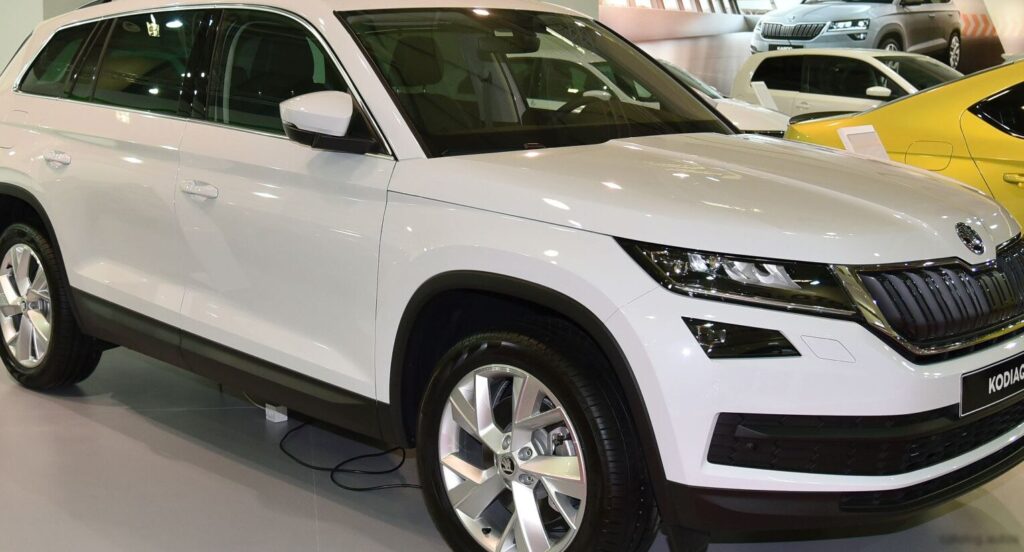
The Skoda Kodiaq, launched in 2016, represented Skoda’s entry into the increasingly popular mid-size SUV segment. The Kodiaq I, produced from 2016 to 2021, quickly became a cornerstone of the Skoda lineup, offering a compelling blend of practicality, space, and value. The 2.0 TDI 177 horsepower (hp) variant with a seven-speed dual-clutch transmission (DSG) and all-wheel drive (4×4), produced from 2018 to April 2021, occupied a significant position within the range, appealing to buyers seeking a balance between fuel efficiency, performance, and all-weather capability. This version aimed to provide a more refined driving experience than the lower-powered engine options while remaining more accessible than the flagship trims.
Technical Specifications
| Brand | Skoda |
| Model | Kodiaq |
| Generation | Kodiaq I |
| Type (Engine) | 2.0 TDI (177 Hp) 4×4 DSG |
| Start of production | 2018 |
| End of production | April, 2021 |
| Powertrain Architecture | Internal Combustion engine |
| Body type | SUV |
| Seats | 5 |
| Doors | 5 |
| Fuel Type | Diesel |
| Acceleration 0 – 100 km/h | 8.6 sec |
| Acceleration 0 – 62 mph | 8.6 sec |
| Acceleration 0 – 60 mph | 8.2 sec |
| Maximum speed | 205 km/h (127.38 mph) |
| Weight-to-power ratio | 9.6 kg/Hp, 103.7 Hp/tonne |
| Weight-to-torque ratio | 4.5 kg/Nm, 222.6 Nm/tonne |
| Power | 177 Hp @ 3500-4000 rpm |
| Power per litre | 89.9 Hp/l |
| Torque | 380 Nm @ 1750-3000 rpm (280.27 lb.-ft. @ 1750-3000 rpm) |
| Engine layout | Front, Transverse |
| Engine Model/Code | EA288 / CRGB |
| Engine displacement | 1968 cm3 (120.09 cu. in.) |
| Number of cylinders | 4 |
| Engine configuration | Inline |
| Number of valves per cylinder | 4 |
| Fuel injection system | Diesel Commonrail |
| Engine aspiration | Turbocharger, Intercooler |
| Engine oil capacity | 4.7 l (4.97 US qt | 4.14 UK qt) |
| Coolant | 8 l (8.45 US qt | 7.04 UK qt) |
| Kerb Weight | 1707 kg (3763.29 lbs) |
| Fuel tank capacity | 60 l (15.85 US gal | 13.2 UK gal) |
| Length | 4697 mm (184.92 in) |
| Width | 1882 mm (74.09 in) |
| Width including mirrors | 2087 mm (82.17 in) |
| Height | 1660 mm (65.35 in) |
| Wheelbase | 2791 mm (109.88 in) |
| Front track | 1586 mm (62.44 in) |
| Rear track | 1576 mm (62.05 in) |
| Ride height (ground clearance) | 191-193 mm (7.52 – 7.6 in) |
| Minimum turning circle | 11.6 m (38.06 ft) |
| Drive wheel | All wheel drive (4×4) |
| Number of gears and type of gearbox | 7 gears, automatic transmission DSG |
| Front suspension | Independent, type McPherson with coil spring and anti-roll bar |
| Rear suspension | Independent multi-link suspension |
| Front brakes | Ventilated discs |
| Rear brakes | Disc |
| Tires size | 215/65 R17 |
| Wheel rims size | 17 |
Powertrain & Engine Architecture
The heart of this Kodiaq variant is the EA288 series 2.0-liter four-cylinder diesel engine, specifically the CRGB code. This engine is a common rail direct injection (CRDI) unit, utilizing piezo injectors for precise fuel delivery. The engine benefits from a turbocharger with an intercooler, boosting power and torque output. The EA288 engine family is known for its robust construction and relatively straightforward maintenance. The 177 hp output is achieved through careful calibration of the engine management system, balancing performance with fuel economy and emissions. The seven-speed DSG dual-clutch transmission provides quick and smooth gear changes, contributing to a more engaging driving experience compared to a traditional torque-converter automatic. The 4×4 system employs a multi-plate clutch to distribute torque between the front and rear axles as needed, enhancing traction in slippery conditions.
Driving Characteristics
The 2.0 TDI 177 hp/DSG/4×4 Kodiaq offers a comfortable and capable driving experience. Acceleration from 0-60 mph in around 8.2 seconds is respectable for a mid-size SUV. The DSG transmission keeps the engine in its optimal power band, providing readily available torque for overtaking and climbing hills. While not a sports SUV, the Kodiaq handles corners with composure, aided by its well-tuned suspension. Compared to the lower-powered 1.6 TDI variants, the 2.0 TDI offers significantly more punch, making it a better choice for those who frequently carry passengers or cargo, or tow trailers. The 4×4 system provides enhanced stability and grip, particularly on loose surfaces. The automatic transmission, while efficient, may exhibit some hesitation at lower speeds, a characteristic sometimes noted in DSG units.
Equipment & Trim Levels
The 2.0 TDI 4×4 DSG trim typically included a generous level of standard equipment. Features commonly found in this variant include alloy wheels (typically 17-inch), automatic climate control, a touchscreen infotainment system with Apple CarPlay and Android Auto compatibility, rear parking sensors, and cruise control. Higher trim levels, such as SE L or Laurin & Klement, added features like leather upholstery, heated front seats, a panoramic sunroof, and advanced driver-assistance systems (ADAS) such as adaptive cruise control and lane-keeping assist. Interior upholstery was generally cloth on base models, with leather options available on higher trims. Dashboard configurations were consistent across the range, featuring a clean and functional design.
Chassis & Braking
The Kodiaq I utilizes a McPherson strut front suspension and a multi-link rear suspension, providing a good balance between ride comfort and handling. The suspension is tuned to prioritize comfort, but it remains reasonably controlled in corners. Braking duties are handled by ventilated discs at the front and solid discs at the rear. Anti-lock braking system (ABS) and electronic stability control (ESC) are standard features, enhancing safety. Stabilizer bars are fitted to both the front and rear axles to reduce body roll. The 4×4 system adds to the vehicle’s stability, particularly during braking on uneven surfaces.
Market Reception & Comparison
The Skoda Kodiaq 2.0 TDI 4×4 DSG was generally well-received by automotive critics. It was praised for its spacious interior, comfortable ride, and strong engine performance. Fuel economy was also a strong point, with combined cycle figures typically around 45-50 mpg. Compared to rivals like the Volkswagen Tiguan and Nissan X-Trail, the Kodiaq offered a compelling value proposition, providing more space and features for the price. The DSG transmission was sometimes criticized for its occasional hesitation, but overall, the powertrain was considered a strong performer. Reliability reports suggest that the EA288 engine is generally reliable, although regular maintenance is crucial.
Legacy
The Skoda Kodiaq I 2.0 TDI 4×4 DSG has proven to be a durable and practical SUV. On the used car market, these models hold their value reasonably well, reflecting their reputation for reliability and practicality. The EA288 engine, when properly maintained, is known to be capable of high mileage. Common maintenance items include regular oil changes, filter replacements, and DSG transmission servicing. The Kodiaq’s spacious interior and comfortable ride continue to make it a popular choice for families and those seeking a versatile SUV. The 2.0 TDI 177 hp variant strikes a good balance between performance, fuel economy, and affordability, making it a well-rounded option in the used car market.
