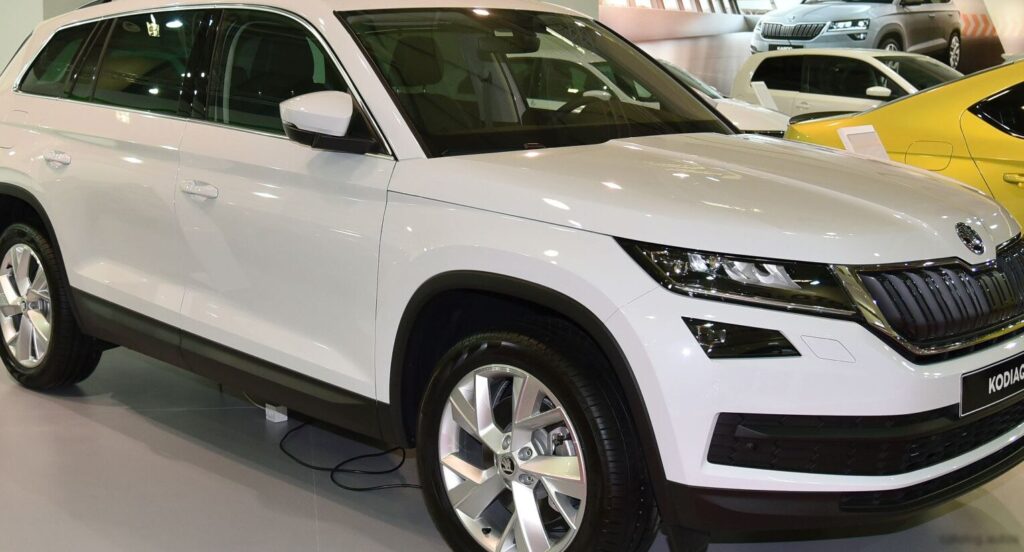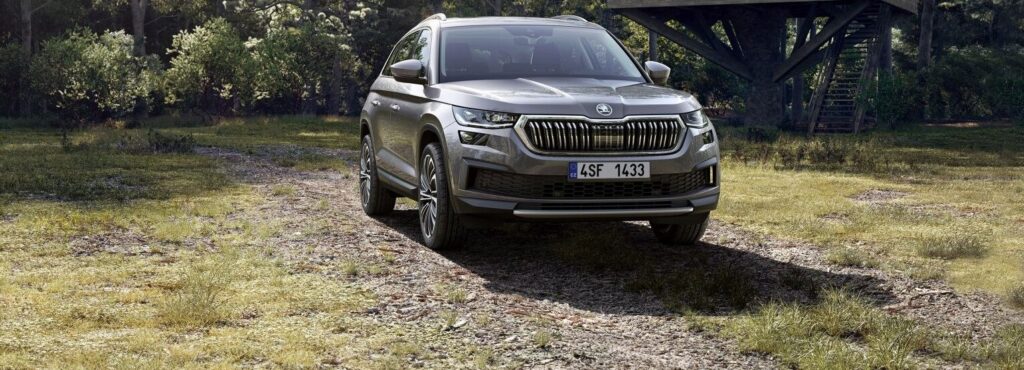
The Skoda Kodiaq I (facelift, introduced in 2021) 2.0 TDI 200 horsepower (Hp) 4×4 Dual Clutch Gearbox (DSG) represents a significant iteration within the Kodiaq range. Launched as part of the facelift for the first-generation Kodiaq (designated the NS7), this variant aimed to provide a balance of performance, practicality, and all-weather capability for European consumers. Production ran from 2021 through 2023, positioning it as a mid-to-high trim level within the Kodiaq lineup, appealing to families and drivers needing a versatile SUV with enhanced power and grip.
Technical Specifications
| Brand | Skoda |
| Model | Kodiaq |
| Generation | Kodiaq I (facelift 2021) |
| Type (Engine) | 2.0 TDI (200 Hp) 4×4 DSG |
| Start of production | 2021 |
| End of production | 2023 |
| Powertrain Architecture | Internal Combustion engine |
| Body type | SUV |
| Seats | 5 |
| Doors | 5 |
| Fuel consumption at Low speed (WLTP) | 8.6 l/100 km (27.4 US mpg, 32.8 UK mpg, 11.6 km/l) |
| Fuel consumption at Medium speed (WLTP) | 6.3 l/100 km (37.3 US mpg, 44.8 UK mpg, 15.9 km/l) |
| Fuel consumption at high speed (WLTP) | 5.7 l/100 km (41.3 US mpg, 49.6 UK mpg, 17.5 km/l) |
| Fuel consumption at very high speed (WLTP) | 6.7 l/100 km (35.1 US mpg, 42.2 UK mpg, 14.9 km/l) |
| Combined fuel consumption (WLTP) | 6.6 l/100 km (35.6 US mpg, 42.8 UK mpg, 15.2 km/l) |
| CO2 emissions (WLTP) | 172 g/km |
| Fuel consumption (economy) – urban (NEDC) | 6.6 l/100 km (35.6 US mpg, 42.8 UK mpg, 15.2 km/l) |
| Fuel consumption (economy) – extra urban (NEDC) | 4.9 l/100 km (48 US mpg, 57.6 UK mpg, 20.4 km/l) |
| Fuel consumption (economy) – combined (NEDC) | 5.5 l/100 km (42.8 US mpg, 51.4 UK mpg, 18.2 km/l) |
| CO2 emissions (NEDC) | 145 g/km |
| Fuel Type | Diesel |
| Maximum speed | 218 km/h (135.46 mph) |
| Weight-to-power ratio | 8.5 kg/Hp, 118.3 Hp/tonne |
| Weight-to-torque ratio | 4.2 kg/Nm, 236.7 Nm/tonne |
| Power | 200 Hp |
| Power per litre | 101.6 Hp/l |
| Torque | 400 Nm @ 1750-3500 rpm (295.02 lb.-ft. @ 1750-3500 rpm) |
| Engine layout | Front, Transverse |
| Engine Model/Code | EA288 evo / DTUA |
| Engine displacement | 1968 cm3 (120.09 cu. in.) |
| Number of cylinders | 4 |
| Engine configuration | Inline |
| Cylinder Bore | 81 mm (3.19 in.) |
| Piston Stroke | 95.5 mm (3.76 in.) |
| Number of valves per cylinder | 4 |
| Fuel injection system | Diesel Commonrail |
| Engine aspiration | Turbocharger, Intercooler |
| Valvetrain | DOHC |
| Engine oil capacity | 5.5 l (5.81 US qt | 4.84 UK qt) |
| Kerb Weight | 1690 kg (3725.81 lbs.) |
| Max. weight | 2410 kg (5313.14 lbs.) |
| Max load | 720 kg (1587.33 lbs.) |
| Trunk (boot) space – minimum | 835 l (29.49 cu. ft.) |
| Trunk (boot) space – maximum | 2065 l (72.92 cu. ft.) |
| Fuel tank capacity | 60 l (15.85 US gal | 13.2 UK gal) |
| Max. roof load | 75 kg (165.35 lbs.) |
| Permitted trailer load with brakes (12%) | 2300 kg (5070.63 lbs.) |
| Permitted trailer load without brakes | 750 kg (1653.47 lbs.) |
| Permitted towbar download | 100 kg (220.46 lbs.) |
| Length | 4697 mm (184.92 in.) |
| Width | 1882 mm (74.09 in.) |
| Height | 1681 mm (66.18 in.) |
| Wheelbase | 2788 mm (109.76 in.) |
| Front track | 1585 mm (62.4 in.) |
| Rear (Back) track | 1575 mm (62.01 in.) |
| Minimum turning circle (turning diameter) | 12.2 m (40.03 ft.) |
| Drivetrain Architecture | The Internal combustion engine (ICE) drives the front wheels permanently, and the rear wheels are driven through an electrically or mechanically operated clutch if necessary. |
| Drive wheel | All wheel drive (4×4) |
| Number of gears and type of gearbox | 7 gears, automatic transmission DSG |
| Front suspension | Independent type McPherson, Transverse stabilizer |
| Rear suspension | Independent multi-link suspension, Transverse stabilizer |
| Front brakes | Ventilated discs |
| Rear brakes | Disc |
| Assisting systems | ABS (Anti-lock braking system) |
| Steering type | Steering rack and pinion |
| Power steering | Electric Steering |
| Tires size | 215/65 R17; 235/55 R18; 235/50 R19 |
| Wheel rims size | 7J x 17; 7J x 18; 7J x 19 |
INTRODUCTION
The Skoda Kodiaq, launched in 2016, was Skoda’s first foray into the seven-seat SUV segment, designed to appeal to families and those needing a spacious and practical vehicle. The 2021 facelift brought updated styling, enhanced technology, and refined engine options. The 2.0 TDI 200 Hp 4×4 DSG variant occupied a sweet spot in the range, offering a significant power upgrade over the lower-spec engines while remaining more accessible than the flagship models. Built on the Volkswagen Group’s MQB platform (specifically the A7 iteration for the facelift), the Kodiaq aimed to deliver a compelling blend of value, space, and driving dynamics.
Powertrain & Engine Architecture
At the heart of this Kodiaq variant lies the EA288 evo 2.0-liter turbocharged diesel engine, specifically the DTUA code. This engine is a four-cylinder, inline configuration, utilizing a common-rail direct injection system for precise fuel delivery. The engine benefits from a variable geometry turbocharger (VGT) and an intercooler to optimize performance and efficiency. The 200 horsepower output is achieved through careful calibration of the engine management system, and the engine produces a substantial 400 Nm (295 lb-ft) of torque between 1750 and 3500 rpm. This broad torque band contributes to strong acceleration and effortless cruising. The engine features a Dual Overhead Camshaft (DOHC) valvetrain with four valves per cylinder. Paired with this engine is a seven-speed Dual Clutch Gearbox (DSG). The DSG provides quick and smooth gear changes, enhancing both performance and fuel economy. The 4×4 system utilizes a multi-plate clutch to distribute power between the front and rear axles as needed, providing enhanced traction in various conditions.
Driving Characteristics
The 2.0 TDI 200 Hp 4×4 DSG Kodiaq delivers a noticeably more spirited driving experience compared to lower-powered versions. The ample torque allows for brisk acceleration, making overtaking maneuvers easy and confident. The DSG transmission contributes to seamless gear changes, and the 4×4 system provides excellent grip, particularly on slippery surfaces. While not a sports SUV, the Kodiaq handles well for its size, with well-weighted steering and a comfortable ride. The gear ratios in the DSG are tuned for a balance of performance and fuel efficiency, with taller gears for relaxed highway cruising and shorter gears for quicker acceleration. Compared to the 1.5 TSI petrol engine, the 2.0 TDI offers significantly more torque and a more relaxed driving experience, especially when fully loaded. Compared to the lower-powered TDI variants, the 200 Hp version feels considerably more responsive and capable.
Equipment & Trim Levels
The 2.0 TDI 200 Hp 4×4 DSG typically came equipped with a generous level of standard features. These included automatic climate control, an 8-inch touchscreen infotainment system with Apple CarPlay and Android Auto compatibility, and a suite of safety features such as automatic emergency braking, lane departure warning, and adaptive cruise control. Higher trim levels offered additional features such as leather upholstery, a panoramic sunroof, and a premium sound system. Optional extras included a tow bar, parking sensors, and a rear-view camera. Interior upholstery was typically a combination of fabric and Alcantara, with leather options available on higher trims. The dashboard layout was clean and functional, with a focus on user-friendliness.
Chassis & Braking
The Kodiaq’s chassis is tuned for comfort and stability. The front suspension utilizes McPherson struts, while the rear suspension employs a multi-link setup. Both ends feature transverse stabilizer bars to reduce body roll. The 4×4 system adds to the vehicle’s stability, particularly in challenging conditions. Braking duties are handled by ventilated discs at the front and solid discs at the rear. The Kodiaq is equipped with ABS (Anti-lock Braking System) and electronic stability control as standard. The suspension setup is generally compliant, providing a comfortable ride over a variety of road surfaces. The steering is electrically assisted, offering a light and precise feel.
Market Reception & Comparison
The Skoda Kodiaq, and particularly the 2.0 TDI 200 Hp 4×4 DSG variant, received positive reviews from automotive critics. It was praised for its spacious interior, comfortable ride, and strong performance. The diesel engine was noted for its fuel efficiency and ample torque. Compared to rivals such as the Hyundai Santa Fe and Kia Sorento, the Kodiaq offered a compelling value proposition, with a generous level of equipment and a refined driving experience. Fuel economy was a strong point, with combined WLTP figures around 6.6 l/100 km (35.6 US mpg). Reliability was generally good, although some owners reported minor issues with the DSG transmission.
Legacy
The Skoda Kodiaq 2.0 TDI 200 Hp 4×4 DSG has proven to be a reliable and durable vehicle. The EA288 engine is well-regarded for its longevity, and the DSG transmission, while requiring regular maintenance, is generally robust. On the used car market, these Kodiaqs hold their value reasonably well, reflecting their practicality, performance, and reputation for reliability. They remain a popular choice for families and drivers seeking a spacious, capable, and fuel-efficient SUV.