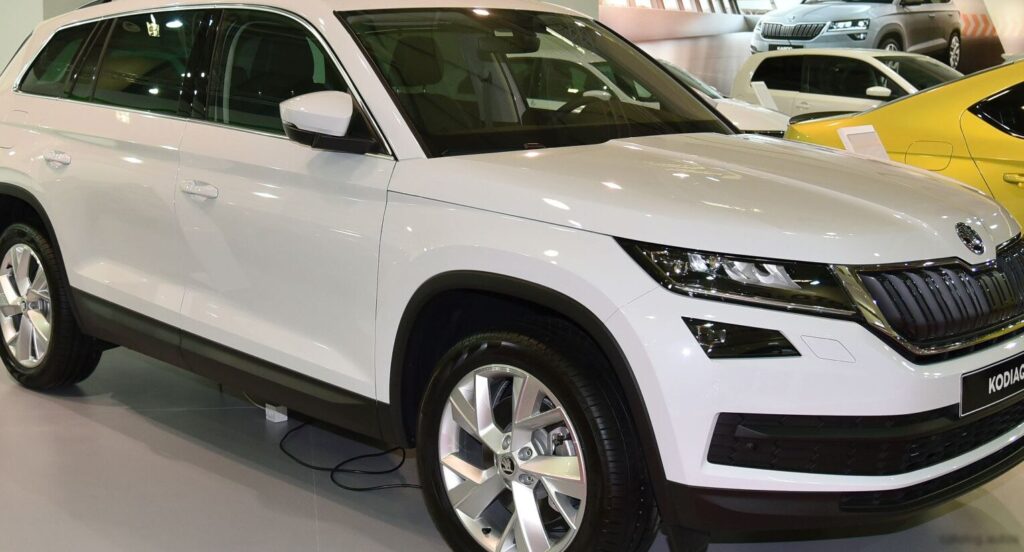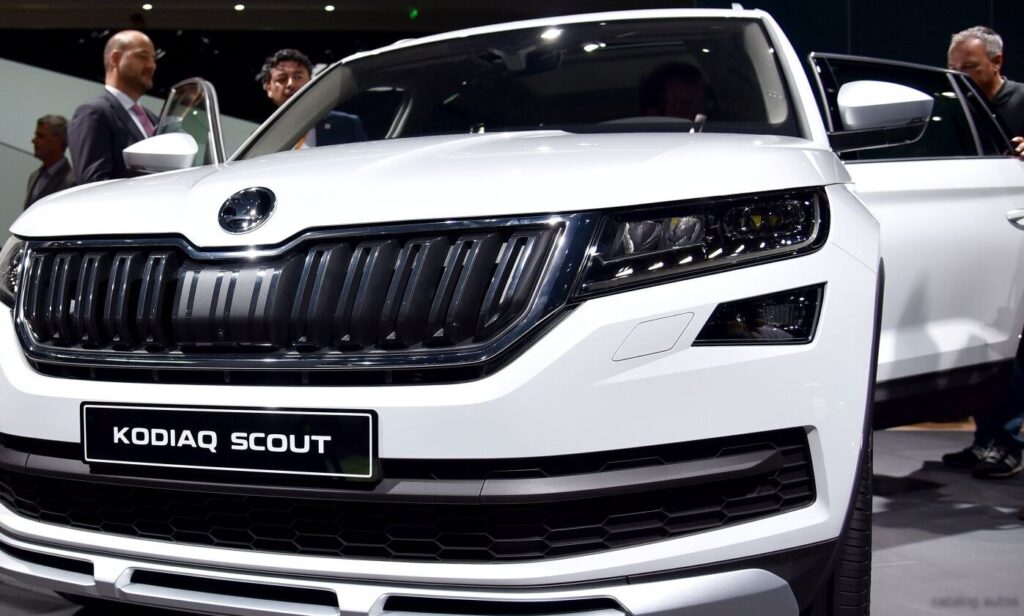
The Skoda Kodiaq I Scout 2.0 TSI 4×4 DSG 7 Seat, produced primarily during the 2019 model year, represents a versatile and technologically advanced offering within the Skoda Kodiaq lineup. Positioned as a premium trim level, the Scout variant focused on providing enhanced all-weather capability and a more rugged aesthetic compared to standard Kodiaq models. It builds upon the foundation of the Kodiaq I (introduced in 2016), which itself is based on the Volkswagen Group’s MQB platform – specifically the A7 iteration. This platform underpins a wide range of vehicles, including the Volkswagen Tiguan, SEAT Ateca, and Audi Q3, allowing for economies of scale and shared componentry. The Kodiaq was Skoda’s first foray into the seven-seat SUV segment, aiming to provide a practical and spacious vehicle for families while maintaining Skoda’s reputation for value and reliability.
Technical Specifications
| Brand | Skoda |
| Model | Kodiaq |
| Generation | Kodiaq I Scout |
| Type (Engine) | 2.0 TSI (190 Hp) 4×4 DSG 7 Seat |
| Start of production | 2019 |
| End of production | 2019 |
| Powertrain Architecture | Internal Combustion engine |
| Body type | SUV |
| Seats | 7 |
| Doors | 5 |
| Fuel consumption (urban) | 8.6-8.9 l/100 km (27.4 – 26.4 US mpg) |
| Fuel consumption (extra urban) | 5.9-6.1 l/100 km (39.9 – 38.6 US mpg) |
| Fuel consumption (combined) | 6.9-7.1 l/100 km (34.1 – 33.1 US mpg) |
| CO2 emissions | 156-162 g/km |
| Fuel Type | Petrol (Gasoline) |
| Acceleration 0 – 100 km/h | 7.7 sec |
| Acceleration 0 – 62 mph | 7.7 sec |
| Acceleration 0 – 60 mph | 7.3 sec |
| Maximum speed | 210 km/h (130.49 mph) |
| Emission standard | Euro 6d-TEMP |
| Weight-to-power ratio | 8.8 kg/Hp, 113.4 Hp/tonne |
| Weight-to-torque ratio | 5.2 kg/Nm, 190.9 Nm/tonne |
| Power | 190 Hp @ 4200-6000 rpm |
| Torque | 320 Nm @ 1500-4100 rpm (236.02 lb.-ft. @ 1500-4100 rpm) |
| Engine layout | Front, Transverse |
| Engine Model/Code | EA888 / DKZA |
| Engine displacement | 1984 cm3 (121.07 cu. in.) |
| Number of cylinders | 4 |
| Engine configuration | Inline |
| Cylinder Bore | 82.5 mm (3.25 in.) |
| Piston Stroke | 92.8 mm (3.65 in.) |
| Compression ratio | 11.65:1 |
| Number of valves per cylinder | 4 |
| Fuel injection system | Direct injection and Multi-port manifold injection |
| Engine aspiration | Turbocharger, Intercooler |
| Valvetrain | DOHC |
| Engine oil capacity | 5.7 l (6.02 US qt | 5.02 UK qt) |
| Kerb Weight | 1676-1881 kg (3694.95 – 4146.9 lbs.) |
| Max. weight | 2414-2487 kg (5321.96 – 5482.9 lbs.) |
| Max load | 606-738 kg (1336 – 1627.01 lbs.) |
| Trunk (boot) space – minimum | 270 l (9.53 cu. ft.) |
| Trunk (boot) space – maximum | 2005 l (70.81 cu. ft.) |
| Fuel tank capacity | 60 l (15.85 US gal | 13.2 UK gal) |
| Max. roof load | 75 kg (165.35 lbs.) |
| Permitted trailer load with brakes (8%) | 2000 kg (4409.25 lbs.) |
| Permitted trailer load with brakes (12%) | 2000 kg (4409.25 lbs.) |
| Permitted trailer load without brakes | 750 kg (1653.47 lbs.) |
| Permitted towbar download | 100 kg (220.46 lbs.) |
| Length | 4706 mm (185.28 in.) |
| Width | 1882 mm (74.09 in.) |
| Width including mirrors | 2087 mm (82.17 in.) |
| Height | 1659 mm (65.31 in.) |
| Wheelbase | 2791 mm (109.88 in.) |
| Front track | 1575 mm (62.01 in.) |
| Rear (Back) track | 1565 mm (61.61 in.) |
| Front overhang | 905 mm (35.63 in.) |
| Rear overhang | 1011 mm (39.8 in.) |
| Ride height (ground clearance) | 191 mm (7.52 in.) |
| Drag coefficient (Cd) | 0.335 |
| Minimum turning circle (turning diameter) | 12.2 m (40.03 ft.) |
| Approach angle | 19.1° |
| Departure angle | 15.7° |
| Drivetrain Architecture | The Internal combustion engine (ICE) drives the front wheels permanently, and the rear wheels are driven through an electrically or mechanically operated clutch if necessary. |
| Drive wheel | All wheel drive (4×4) |
| Number of gears and type of gearbox | 7 gears, automatic transmission DSG |
| Front suspension | Independent, type McPherson with coil spring and anti-roll bar |
| Rear suspension | Independent multi-link spring suspension with stabilizer |
| Front brakes | Ventilated discs |
| Rear brakes | Disc |
| Assisting systems | ABS (Anti-lock braking system) |
| Steering type | Steering rack and pinion |
| Power steering | Electric Steering |
| Tires size | 215/65 R17; 235/55 R18; 235/50 R19 |
| Wheel rims size | 6.5J x 17; 7J x 18; 7J x 19 |
Powertrain & Engine Architecture
The Kodiaq Scout 2.0 TSI utilizes the EA888 engine, specifically the DKZA variant. This is a 1.984-liter (121.07 cubic inches) turbocharged, direct-injection four-cylinder gasoline engine. The EA888 family has been a mainstay in the Volkswagen Group for many years, undergoing continuous refinement. The DKZA version features a combination of direct and multi-port fuel injection, optimizing both power delivery and fuel efficiency. The engine produces 190 horsepower at 4,200-6,000 rpm and 320 Nm (236 lb-ft) of torque between 1,500 and 4,100 rpm. The turbocharger, coupled with an intercooler, helps to mitigate turbo lag and maintain consistent boost pressure. Paired with this engine is a seven-speed dual-clutch transmission (DSG). The DSG provides quick and smooth gear changes, contributing to both performance and fuel economy. The 4×4 system is an on-demand all-wheel-drive system, utilizing a multi-plate clutch to distribute torque between the front and rear axles as needed, enhancing traction in various conditions.
Driving Characteristics
The 190 hp 2.0 TSI engine, combined with the DSG transmission and all-wheel drive, delivers a balanced driving experience. Acceleration from 0-60 mph takes approximately 7.3 seconds, and the car has a top speed of 130.49 mph. While not a sports car, the Kodiaq Scout offers ample power for everyday driving and overtaking maneuvers. The DSG transmission is generally responsive, although some drivers may notice a slight hesitation at low speeds. The all-wheel-drive system provides enhanced stability and grip, particularly on slippery surfaces. Compared to the base 1.4 TSI engine, the 2.0 TSI offers a significant performance upgrade. It also feels more relaxed on long highway journeys. Compared to the diesel variants (like the 2.0 TDI), the TSI engine provides a more linear power delivery and a more refined engine note, but typically at the expense of fuel economy.
Equipment & Trim Levels
The Scout trim level included a number of standard features designed to enhance both comfort and off-road capability. These typically included silver-colored body cladding, unique alloy wheel designs, and a more rugged interior trim. Standard interior features included comfortable seats, a touchscreen infotainment system with Apple CarPlay and Android Auto compatibility, and a suite of safety features such as automatic emergency braking and lane departure warning. Optional extras included a panoramic sunroof, leather upholstery, adaptive cruise control, and a premium sound system. The seven-seat configuration provided flexibility for families, although the third-row seats were best suited for children or shorter adults.
Chassis & Braking
The Kodiaq Scout utilizes an independent suspension setup, with McPherson struts at the front and a multi-link system at the rear. This provides a comfortable ride quality, even on uneven surfaces. The Scout trim often featured slightly increased ride height compared to standard Kodiaq models, further enhancing its off-road capability. The braking system consists of ventilated discs at the front and solid discs at the rear. Anti-lock brakes (ABS) and electronic stability control (ESC) are standard features, providing enhanced safety and control.
Market Reception & Comparison
The Skoda Kodiaq Scout was generally well-received by automotive critics. It was praised for its spacious interior, comfortable ride, and capable all-wheel-drive system. The 2.0 TSI engine was considered a good balance of performance and fuel efficiency. However, some critics noted that the Kodiaq’s styling was somewhat conservative. Compared to rivals such as the Nissan X-Trail and Hyundai Santa Fe, the Kodiaq Scout offered a compelling combination of value, practicality, and refinement. Fuel economy figures were competitive, averaging around 34 mpg in combined driving. Reliability reports have generally been positive, with the EA888 engine proving to be a durable and dependable unit.
Legacy
The Skoda Kodiaq Scout 2.0 TSI 4×4 DSG 7 Seat has established itself as a popular choice in the used car market. Its combination of practicality, comfort, and all-weather capability continues to appeal to buyers. The EA888 engine, while not without its potential issues (such as carbon buildup), is generally considered reliable with proper maintenance. Regular oil changes and occasional carbon cleaning can help to ensure the engine’s longevity. The DSG transmission also requires regular servicing, including fluid changes, to maintain optimal performance. Overall, the Kodiaq Scout 2.0 TSI represents a well-engineered and versatile SUV that offers a compelling ownership experience.