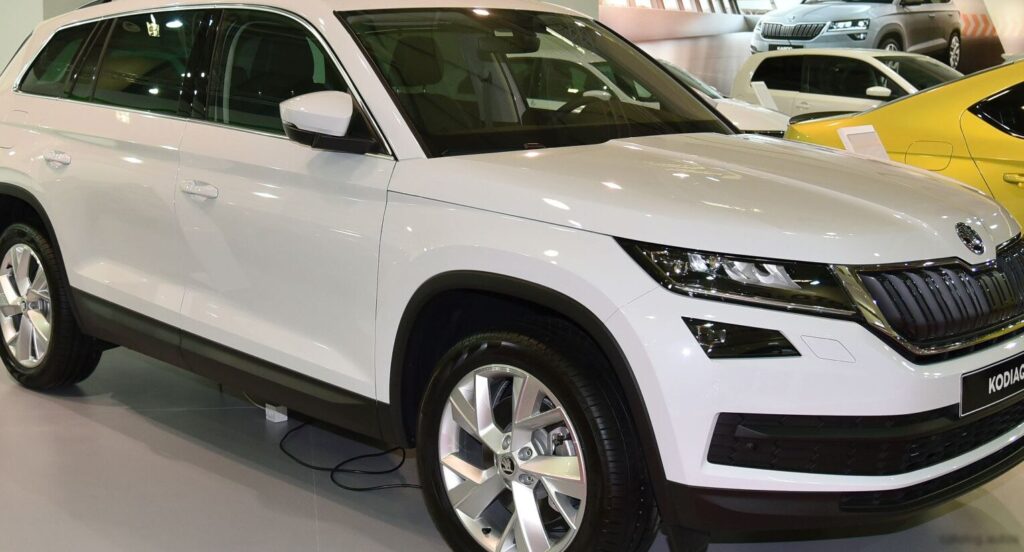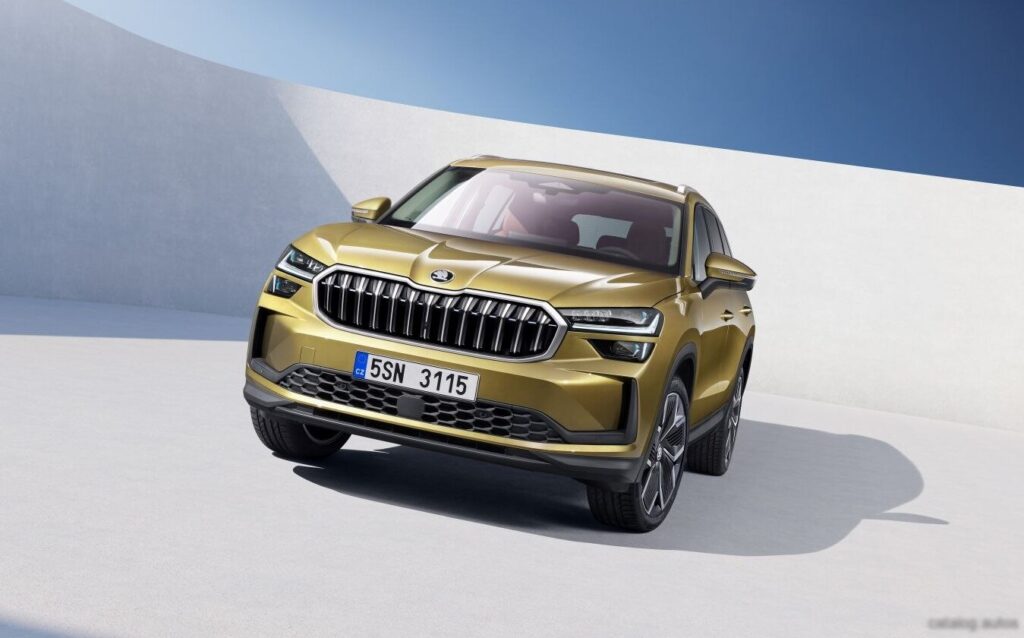
The Skoda Kodiaq II 1.5 TSI (150 hp) Mild Hybrid DSG 7-Seat, launched in January 2024, represents the second generation of Skoda’s popular mid-size SUV. Positioned as a versatile family vehicle, this variant offers a balance between fuel efficiency, practicality, and modern technology. It slots into the Kodiaq II lineup as a mainstream offering, appealing to buyers seeking a well-equipped and economical seven-seater. The Kodiaq II builds upon the success of the first-generation model, utilizing an updated version of the Volkswagen Group’s MQB platform, offering increased space and improved features. This specific configuration, combining the 1.5 TSI engine with a mild hybrid system and a 7-speed DSG transmission, is aimed at the European market, where fuel economy and emissions regulations are particularly stringent.
Technical Specifications
| Brand | Skoda |
| Model | Kodiaq |
| Generation | Kodiaq II |
| Type (Engine) | 1.5 TSI (150 Hp) Mild Hybrid DSG 7 Seat |
| Start of production | January, 2024 |
| Powertrain Architecture | MHEV (Mild Hybrid Electric Vehicle) |
| Body type | SUV |
| Seats | 7 |
| Doors | 5 |
| Combined fuel consumption (WLTP) | 5.9-6.6 l/100 km (39.9 – 35.6 US mpg, 47.9 – 42.8 UK mpg, 16.9 – 15.2 km/l) |
| CO2 emissions (WLTP) | 135-151 g/km |
| Fuel Type | Petrol (Gasoline) |
| Acceleration 0 – 100 km/h | 9.9 sec |
| Acceleration 0 – 62 mph | 9.9 sec |
| Acceleration 0 – 60 mph | 9.4 sec |
| Maximum speed | 205 km/h (127.38 mph) |
| Emission standard | Euro 6e |
| Weight-to-power ratio | 10.9 kg/Hp, 92.1 Hp/tonne |
| Weight-to-torque ratio | 6.5 kg/Nm, 153.6 Nm/tonne |
| Battery voltage | 48 V |
| Battery technology | Lithium-ion (Li-Ion) |
| Electric motor location | Front, Transverse |
| Power | 150 Hp @ 5000-6000 rpm |
| Power per litre | 100.1 Hp/l |
| Torque | 250 Nm @ 1500-3500 rpm (184.39 lb.-ft. @ 1500-3500 rpm) |
| Engine layout | Front, Transverse |
| Engine Model/Code | EA211 evo2 / DXDB |
| Engine displacement | 1498 cm3 (91.41 cu. in.) |
| Number of cylinders | 4 |
| Engine configuration | Inline |
| Cylinder Bore | 74.5 mm (2.93 in.) |
| Piston Stroke | 85.9 mm (3.38 in.) |
| Compression ratio | 12:1 |
| Number of valves per cylinder | 4 |
| Fuel injection system | Direct injection |
| Engine aspiration | Turbocharger, Intercooler |
| Valvetrain | DOHC |
| Engine oil capacity | 4.3 l (4.54 US qt | 3.78 UK qt) |
| Kerb Weight | 1628-1830 kg (3589.13 – 4034.46 lbs.) |
| Max. weight | 2231-2424 kg (4918.51 – 5344.01 lbs.) |
| Max load | 594-603 kg (1309.55 – 1329.39 lbs.) |
| Trunk (boot) space – minimum | 845 l (29.84 cu. ft.) |
| Trunk (boot) space – maximum | 2035 l (71.87 cu. ft.) |
| Fuel tank capacity | 55 l (14.53 US gal | 12.1 UK gal) |
| Max. roof load | 75 kg (165.35 lbs.) |
| Permitted trailer load with brakes (8%) | 1800 kg (3968.32 lbs.) |
| Permitted trailer load with brakes (12%) | 1800 kg (3968.32 lbs.) |
| Permitted trailer load without brakes | 750 kg (1653.47 lbs.) |
| Permitted towbar download | 100 kg (220.46 lbs.) |
| Length | 4758 mm (187.32 in.) |
| Width | 1864 mm (73.39 in.) |
| Width with mirrors folded | 1924 mm (75.75 in.) |
| Width including mirrors | 2133 mm (83.98 in.) |
| Height | 1658 mm (65.28 in.) |
| Wheelbase | 2791 mm (109.88 in.) |
| Front track | 1586 mm (62.44 in.) |
| Rear (Back) track | 1576 mm (62.05 in.) |
| Ride height (ground clearance) | 189 mm (7.44 in.) |
| Drag coefficient (Cd) | 0.293-0.321 |
| Minimum turning circle (turning diameter) | 11.2 m (36.75 ft.) |
| Approach angle | 17° |
| Departure angle | 17.6° |
| Drivetrain Architecture | ICE and electric motor drive the front wheels |
| Drive wheel | Front wheel drive |
| Number of gears and type of gearbox | 7 gears, automatic transmission DSG |
| Front suspension | Independent, type McPherson with coil spring and anti-roll bar |
| Rear suspension | Independent multi-link spring suspension with stabilizer |
| Front brakes | Ventilated discs |
| Rear brakes | Disc |
| Assisting systems | ABS (Anti-lock braking system) |
| Steering type | Steering rack and pinion |
| Power steering | Electric Steering |
| Tires size | 215/65 R17; 235/55 R18; 235/50 R19; 235/45 R20 |
| Wheel rims size | 7J x 17; 7.5J x 18; 7.5J x 19; 8J x 20 |
Powertrain & Engine Architecture
At the heart of the Kodiaq II 1.5 TSI is the EA211 evo2 engine, a 1.5-liter turbocharged four-cylinder gasoline engine. This engine, designated DXDB, produces 150 horsepower at 5000-6000 rpm and 250 Nm (184 lb-ft) of torque between 1500 and 3500 rpm. The engine utilizes direct fuel injection and a turbocharger with an intercooler to enhance performance and efficiency. A key feature is the inclusion of a 48V mild hybrid system. This system employs a belt starter generator (BSG) and a small 48V lithium-ion battery to provide power assistance during acceleration, enable extended start-stop functionality, and allow for coasting with the engine switched off. The 7-speed DSG (Direct-Shift Gearbox) automatic transmission is standard, offering quick and smooth gear changes. The DSG transmission is known for its efficiency and responsiveness, contributing to the overall driving experience.
Driving Characteristics
The 1.5 TSI engine paired with the DSG transmission delivers adequate performance for everyday driving. Acceleration from 0 to 100 km/h (0-62 mph) takes approximately 9.9 seconds. While not a particularly sporty setup, the engine provides sufficient power for overtaking and highway cruising. The DSG transmission is well-tuned, offering seamless shifts and keeping the engine in its optimal power band. Compared to higher-output versions of the Kodiaq II, such as those with the 2.0 TSI engine, this variant feels less eager to accelerate. However, it excels in fuel economy, achieving between 5.9 and 6.6 liters per 100 kilometers (39.9-35.6 US mpg). The mild hybrid system contributes to a smoother driving experience, particularly in urban environments.
Equipment & Trim Levels
The Kodiaq II 1.5 TSI typically comes with a generous level of standard equipment. This includes features like an infotainment system with a touchscreen display, Apple CarPlay and Android Auto compatibility, automatic climate control, and a suite of safety features such as automatic emergency braking, lane departure warning, and adaptive cruise control. Interior upholstery is typically cloth or a combination of cloth and synthetic leather, depending on the trim level. Optional extras include leather upholstery, a panoramic sunroof, a premium sound system, and advanced driver-assistance systems like blind-spot monitoring and rear cross-traffic alert. Trim levels vary by market, but generally offer increasing levels of luxury and technology.
Chassis & Braking
The Kodiaq II utilizes an independent suspension setup, with McPherson struts at the front and a multi-link system at the rear. This provides a comfortable ride quality, absorbing bumps and imperfections in the road effectively. Stabilizer bars are fitted to both axles to reduce body roll during cornering. The braking system consists of ventilated discs at the front and solid discs at the rear. ABS (Anti-lock Braking System) is standard, ensuring safe and controlled braking in various conditions. The steering is electrically assisted, providing a light and precise feel.
Market Reception & Comparison
The Skoda Kodiaq II 1.5 TSI has been well-received by automotive critics for its practicality, fuel efficiency, and value for money. It’s often praised for its spacious interior and comfortable ride. Compared to other trims in the Kodiaq II lineup, this variant offers a more economical option for buyers who prioritize fuel efficiency over outright performance. It competes with other mid-size SUVs such as the Volkswagen Tiguan, Hyundai Tucson, and Kia Sportage. The Kodiaq II generally offers more interior space and a more refined driving experience than some of its competitors.
Legacy
The EA211 engine family, including the 1.5 TSI variant, has proven to be relatively reliable. The mild hybrid system adds a layer of complexity, but early reports suggest it is functioning reliably. The DSG transmission, while requiring periodic maintenance (fluid changes), is generally durable. On the used car market, the Kodiaq II 1.5 TSI is expected to hold its value well due to its practicality, fuel efficiency, and the Skoda brand’s reputation for build quality. Its long-term reliability will depend on regular maintenance and adherence to recommended service intervals.