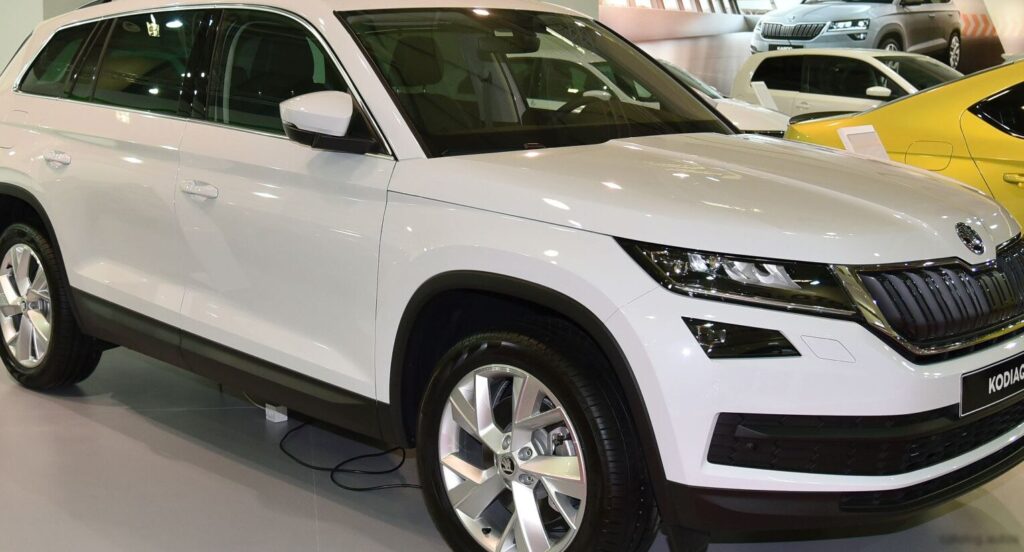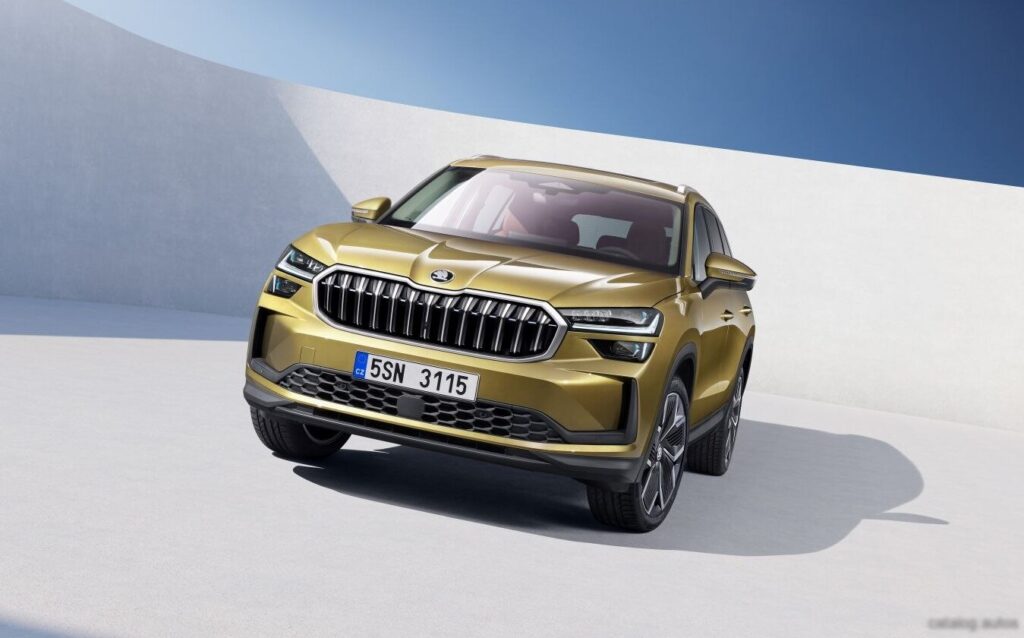
The Skoda Kodiaq II 2.0 TDI (150 hp) DSG 7-seat variant, introduced in January 2024, represents a key offering within the second generation of Skoda’s popular SUV. Positioned as a mid-range option in the Kodiaq II lineup, it balances fuel efficiency, practicality with seven-passenger capability, and a comfortable driving experience. This model builds upon the foundation of the Kodiaq, originally launched in 2016, and leverages the advancements in Volkswagen Group’s modular transverse matrix (MQB) platform. The Kodiaq, from its inception, was designed to be a spacious and versatile SUV, aimed at families and those requiring a practical vehicle with a premium feel at a competitive price point, particularly within the European market.
Technical Specifications
| Brand | Skoda |
| Model | Kodiaq |
| Generation | Kodiaq II |
| Type (Engine) | 2.0 TDI (150 Hp) DSG 7 Seat |
| Start of production | January, 2024 |
| Powertrain Architecture | Internal Combustion engine |
| Body type | SUV |
| Seats | 7 |
| Doors | 5 |
| Combined fuel consumption (WLTP) | 5.3-5.9 l/100 km (44.4 – 39.9 US mpg, 53.3 – 47.9 UK mpg, 18.9 – 16.9 km/l) |
| CO2 emissions (WLTP) | 138-155 g/km |
| Fuel Type | Diesel |
| Acceleration 0 – 100 km/h | 9.8 sec |
| Acceleration 0 – 62 mph | 9.8 sec |
| Acceleration 0 – 60 mph | 9.3 sec |
| Maximum speed | 203 km/h (126.14 mph) |
| Emission standard | Euro 6e |
| Weight-to-power ratio | 11.4 kg/Hp, 87.7 Hp/tonne |
| Weight-to-torque ratio | 4.8 kg/Nm, 210.5 Nm/tonne |
| Power | 150 Hp @ 3000-4200 rpm |
| Power per litre | 76.2 Hp/l |
| Torque | 360 Nm @ 1600-2750 rpm (265.52 lb.-ft. @ 1600-2750 rpm) |
| Engine layout | Front, Transverse |
| Engine Model/Code | EA288 evo / DXPA |
| Engine displacement | 1968 cm3 (120.09 cu. in.) |
| Number of cylinders | 4 |
| Engine configuration | Inline |
| Cylinder Bore | 81 mm (3.19 in.) |
| Piston Stroke | 95.5 mm (3.76 in.) |
| Compression ratio | 16:1 |
| Number of valves per cylinder | 4 |
| Fuel injection system | Diesel Commonrail |
| Engine aspiration | Turbocharger, Intercooler |
| Valvetrain | DOHC |
| Engine oil capacity | 5.5 l (5.81 US qt | 4.84 UK qt) |
| Kerb Weight | 1710-1907 kg (3769.9 – 4204.22 lbs.) |
| Trunk (boot) space – minimum | 845 l (29.84 cu. ft.) |
| Trunk (boot) space – maximum | 2035 l (71.87 cu. ft.) |
| Fuel tank capacity | 55 l (14.53 US gal | 12.1 UK gal) |
| Max. roof load | 75 kg (165.35 lbs.) |
| Permitted trailer load with brakes (8%) | 2000 kg (4409.25 lbs.) |
| Permitted trailer load with brakes (12%) | 2000 kg (4409.25 lbs.) |
| Permitted trailer load without brakes | 750 kg (1653.47 lbs.) |
| Permitted towbar download | 100 kg (220.46 lbs.) |
| Length | 4758 mm (187.32 in.) |
| Width | 1864 mm (73.39 in.) |
| Width with mirrors folded | 1924 mm (75.75 in.) |
| Width including mirrors | 2133 mm (83.98 in.) |
| Height | 1658 mm (65.28 in.) |
| Wheelbase | 2791 mm (109.88 in.) |
| Front track | 1586 mm (62.44 in.) |
| Rear (Back) track | 1576 mm (62.05 in.) |
| Front overhang | 927 mm (36.5 in.) |
| Rear overhang | 1041 mm (40.98 in.) |
| Ride height (ground clearance) | 189 mm (7.44 in.) |
| Drag coefficient (Cd) | 0.299-0.326 |
| Minimum turning circle (turning diameter) | 11.2 m (36.75 ft.) |
| Approach angle | 17° |
| Departure angle | 17.6° |
| Drivetrain Architecture | The Internal combustion engine (ICE) drives the front wheels of the vehicle. |
| Drive wheel | Front wheel drive |
| Number of gears and type of gearbox | 7 gears, automatic transmission DSG |
| Front suspension | Independent, type McPherson with coil spring and anti-roll bar |
| Rear suspension | Independent multi-link spring suspension with stabilizer |
| Front brakes | Ventilated discs |
| Rear brakes | Disc |
| Assisting systems | ABS (Anti-lock braking system) |
| Steering type | Steering rack and pinion |
| Power steering | Electric Steering |
| Tires size | 215/65 R17; 235/55 R18; 235/50 R19; 235/45 R20 |
| Wheel rims size | 7J x 17; 7.5J x 18; 7.5J x 19; 8J x 20 |
Powertrain & Engine Architecture
The Kodiaq II 2.0 TDI (150 hp) utilizes the EA288 evo series of diesel engines, specifically the DXPA code. This is a four-cylinder, inline engine with a displacement of 1968 cc. It features a turbocharger with an intercooler to enhance power and efficiency. The engine employs a common rail direct injection system, delivering fuel at extremely high pressures for optimized combustion. The valvetrain is a dual overhead camshaft (DOHC) design with four valves per cylinder, contributing to improved breathing and power output. Paired with this engine is a 7-speed dual-clutch transmission (DSG), known for its quick and smooth gear changes. The DSG transmission offers both automatic and manual shifting modes, allowing drivers to tailor the driving experience to their preferences. The engine incorporates a particulate filter to reduce emissions, meeting stringent Euro 6e standards.
Driving Characteristics
The 150 hp 2.0 TDI with the DSG transmission provides a balanced driving experience. While not offering the outright performance of higher-powered Kodiaq variants, it delivers adequate power for everyday driving and highway cruising. Acceleration from 0-60 mph takes approximately 9.3 seconds. The DSG transmission effectively manages the engine’s torque, providing smooth acceleration and responsive gear changes. The gear ratios are tuned for a blend of fuel efficiency and usability, with taller gears for relaxed highway driving and shorter gears for quicker acceleration. Compared to the manual transmission versions, the DSG offers greater convenience, particularly in stop-and-go traffic. However, some drivers may prefer the more direct feel of a manual gearbox. The 360 Nm of torque, available from 1600-2750 rpm, provides good pulling power for overtaking and carrying a full load of passengers and luggage.
Equipment & Trim Levels
The 2.0 TDI (150 hp) DSG 7-seat trim typically includes a generous level of standard equipment. This often encompasses features such as alloy wheels, automatic climate control, a touchscreen infotainment system with Apple CarPlay and Android Auto compatibility, and a suite of safety features including automatic emergency braking, lane departure warning, and adaptive cruise control. Interior upholstery is usually a combination of fabric and synthetic leather. Optional extras available for this trim may include leather upholstery, a panoramic sunroof, a premium sound system, and parking sensors. The seven-seat configuration provides flexibility for families or those needing to transport extra passengers occasionally.
Chassis & Braking
The Kodiaq II features an independent suspension setup, with a McPherson strut arrangement at the front and a multi-link system at the rear. This configuration provides a comfortable ride quality and good handling characteristics. The front brakes are ventilated discs, while the rear brakes are solid discs. Anti-lock braking system (ABS) is standard, along with electronic stability control. The suspension is tuned to prioritize comfort, but it also offers reasonable body control in corners. Stabilizer bars are fitted to both the front and rear axles to reduce body roll.
Market Reception & Comparison
The Skoda Kodiaq II 2.0 TDI (150 hp) DSG 7-seat variant has been well-received by critics for its practicality, spaciousness, and fuel efficiency. It offers a compelling alternative to other mid-size SUVs in the European market. Compared to the higher-powered 2.0 TDI variants, this version offers a lower price point but sacrifices some performance. The fuel economy is generally excellent, with combined figures ranging from 5.3 to 5.9 l/100 km. Reliability has been generally good, with the EA288 engine proving to be a robust and dependable unit. However, as with any diesel engine, it’s important to ensure regular maintenance, including oil changes and filter replacements.
Legacy
The Kodiaq has established itself as a popular and well-regarded SUV, and the 2.0 TDI (150 hp) DSG variant continues to be a strong seller. The EA288 evo engine is known for its durability and relatively low maintenance costs. On the used car market, well-maintained examples of this model are likely to hold their value reasonably well, due to the Kodiaq’s reputation for practicality and reliability. The combination of seven-seat capability, fuel efficiency, and a comfortable driving experience makes this variant a practical choice for families and those seeking a versatile SUV.