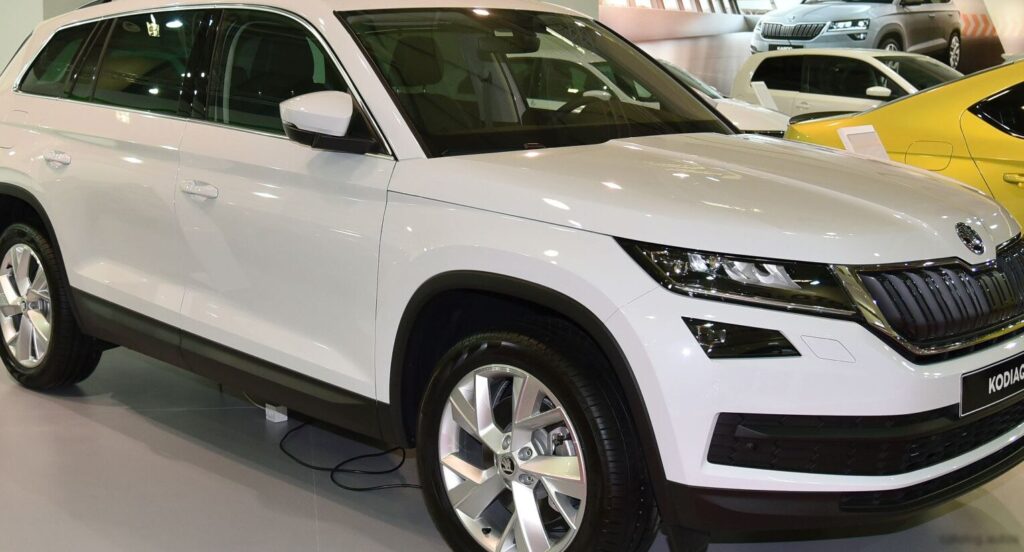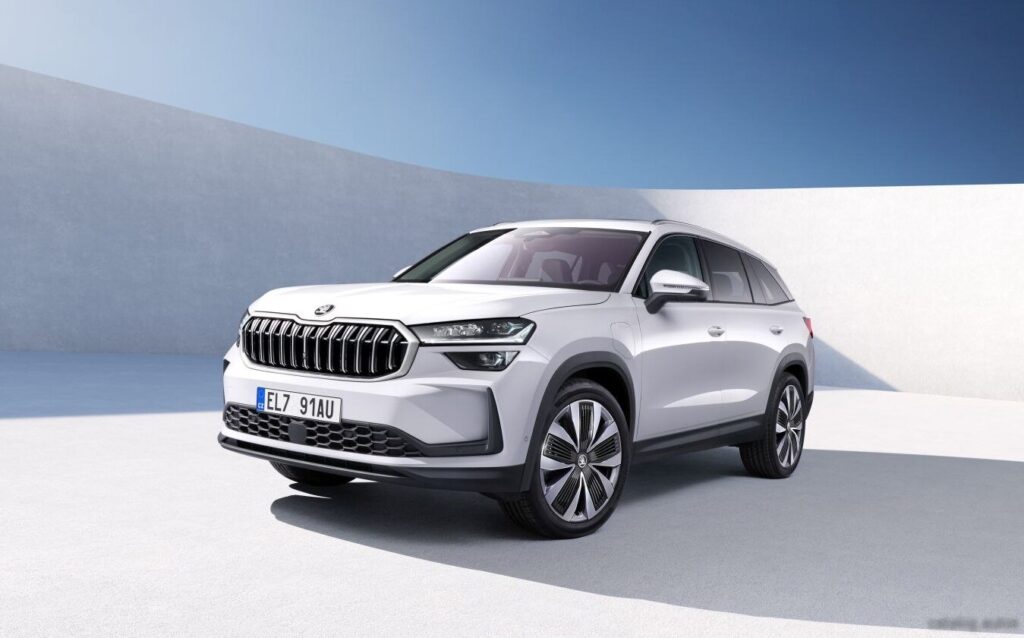
The Skoda Kodiaq II iV 1.5 TSI, introduced in January 2024, represents the second generation of Skoda’s popular SUV, incorporating plug-in hybrid technology. This variant, producing a combined 204 horsepower, is positioned as a mid-range offering within the Kodiaq II lineup, balancing fuel efficiency with respectable performance. It builds upon the foundation of the original Kodiaq, which debuted in 2016 as Skoda’s first seven-seater SUV, and is based on the Volkswagen Group’s MQB platform (specifically the evolution of it). The iV designation signifies Skoda’s commitment to electrified vehicles, and this model aims to appeal to buyers seeking a practical and environmentally conscious family SUV.
Technical Specifications
| Brand | Skoda |
| Model | Kodiaq |
| Generation | Kodiaq II |
| Type (Engine) | iV 1.5 TSI (204 Hp) Plug-in Hybrid DSG |
| Start of production | January, 2024 |
| Powertrain Architecture | PHEV (Plug-in Hybrid Electric Vehicle) |
| Body type | SUV |
| Seats | 5 |
| Doors | 5 |
| Fuel Type | Petrol / electricity |
| Acceleration 0 – 100 km/h | 8.4 sec |
| Acceleration 0 – 62 mph | 8.4 sec |
| Acceleration 0 – 60 mph | 8 sec |
| Maximum speed | 210 km/h (130.49 mph) |
| Emission standard | Euro 6e |
| Weight-to-power ratio | 9 kg/Hp, 111 Hp/tonne |
| Weight-to-torque ratio | 5.3 kg/Nm, 190.4 Nm/tonne |
| Gross battery capacity | 25.7 kWh |
| Net (usable) battery capacity | 19.7 kWh |
| Battery technology | Lithium nickel manganese cobalt oxides (Li-NMC) |
| Battery location | Under the rear seats |
| All-electric range (WLTP) | 100 km (62.14 mi) |
| Electric motor power | 116 Hp |
| Electric motor Torque | 330 Nm (243.4 lb.-ft.) |
| Electric motor location | Between the combustion engine and the transmission |
| Electric motor type | Synchronous |
| System power | 204 Hp |
| System torque | 350 Nm (258.15 lb.-ft.) |
| Power | 150 Hp @ 5000-6000 rpm |
| Torque | 250 Nm @ 1500-4000 rpm (184.39 lb.-ft. @ 1500-4000 rpm) |
| Engine layout | Front, Transverse |
| Engine Model/Code | EA211 evo2 / DUCB |
| Engine displacement | 1498 cm3 (91.41 cu. in.) |
| Number of cylinders | 4 |
| Engine configuration | Inline |
| Cylinder Bore | 74.5 mm (2.93 in.) |
| Piston Stroke | 85.9 mm (3.38 in.) |
| Compression ratio | 11.5:1 |
| Number of valves per cylinder | 4 |
| Fuel injection system | Direct injection |
| Engine aspiration | Turbocharger, Intercooler |
| Valvetrain | DOHC |
| Engine oil capacity | 4.3 l (4.54 US qt | 3.78 UK qt) |
| Kerb Weight | 1838-2009 kg (4052.1 – 4429.09 lbs.) |
| Max. weight | 2432 kg (5361.64 lbs.) |
| Max load | 423-594 kg (932.56 – 1309.55 lbs.) |
| Trunk (boot) space – minimum | 745 l (26.31 cu. ft.) |
| Trunk (boot) space – maximum | 1945 l (68.69 cu. ft.) |
| Fuel tank capacity | 45 l (11.89 US gal | 9.9 UK gal) |
| Max. roof load | 75 kg (165.35 lbs.) |
| Permitted trailer load with brakes (8%) | 1800 kg (3968.32 lbs.) |
| Permitted trailer load with brakes (12%) | 1800 kg (3968.32 lbs.) |
| Permitted trailer load without brakes | 750 kg (1653.47 lbs.) |
| Permitted towbar download | 100 kg (220.46 lbs.) |
| Length | 4758 mm (187.32 in.) |
| Width | 1864 mm (73.39 in.) |
| Width with mirrors folded | 1924 mm (75.75 in.) |
| Width including mirrors | 2133 mm (83.98 in.) |
| Height | 1659 mm (65.31 in.) |
| Wheelbase | 2791 mm (109.88 in.) |
| Front track | 1586 mm (62.44 in.) |
| Rear (Back) track | 1576 mm (62.05 in.) |
| Front overhang | 927 mm (36.5 in.) |
| Rear overhang | 1041 mm (40.98 in.) |
| Ride height (ground clearance) | 189 mm (7.44 in.) |
| Drag coefficient (Cd) | 0.296-0.324 |
| Minimum turning circle (turning diameter) | 11.2 m (36.75 ft.) |
| Drivetrain Architecture | The Internal combustion engine (ICE) and electric motor drive the front wheels of the car with the ability to work in full electric or mixed mode. |
| Drive wheel | Front wheel drive |
| Number of gears and type of gearbox | 6 gears, automatic transmission DSG |
| Front suspension | Independent, type McPherson with coil spring and anti-roll bar |
| Rear suspension | Independent multi-link spring suspension with stabilizer |
| Front brakes | Ventilated discs |
| Rear brakes | Disc |
| Assisting systems | ABS (Anti-lock braking system) |
| Steering type | Steering rack and pinion |
| Power steering | Electric Steering |
| Tires size | 215/65 R17; 235/55 R18; 235/50 R19; 235/45 R20 |
| Wheel rims size | 7J x 17; 7.5J x 18; 7.5J x 19; 8J x 20 |
Powertrain & Engine Architecture
The Kodiaq II iV 1.5 TSI utilizes a plug-in hybrid powertrain centered around the EA211 evo2 1.5-liter turbocharged four-cylinder gasoline engine (DUCB code). This engine produces 150 horsepower and 250 Nm (184 lb-ft) of torque. It features direct fuel injection and a sophisticated turbocharging system designed for both efficiency and responsiveness. The engine is paired with an 116 horsepower electric motor integrated between the engine and the seven-speed dual-clutch DSG transmission. This configuration allows for both all-electric driving and combined operation, resulting in a total system output of 204 horsepower and 350 Nm (258 lb-ft) of torque. The 25.7 kWh (gross) / 19.7 kWh (net) lithium-ion battery pack, located under the rear seats, provides an all-electric range of up to 100 km (62 miles) according to WLTP standards. The DSG transmission is crucial for seamless transitions between electric and gasoline power, and its seven gears are optimized for both fuel economy and performance.
Driving Characteristics
The 1.5 TSI iV offers a refined driving experience. In electric mode, the vehicle provides near-silent acceleration and is well-suited for urban driving. When the gasoline engine engages, the transition is generally smooth, and the combined power output delivers adequate performance for highway cruising and overtaking. The DSG transmission provides quick and precise gear changes. Compared to higher-output Kodiaq variants, such as those with the 2.0 TSI engine, the iV prioritizes efficiency over outright speed. The electric motor’s instant torque helps to compensate for the slightly lower overall horsepower, providing a responsive feel at lower speeds. The weight of the battery pack does impact handling somewhat, making the iV feel slightly less agile than its non-hybrid counterparts.
Equipment & Trim Levels
The Kodiaq II iV 1.5 TSI typically comes well-equipped as standard. Features generally include automatic climate control, a touchscreen infotainment system with smartphone integration (Apple CarPlay and Android Auto), a digital instrument cluster, and a suite of safety features such as automatic emergency braking, lane departure warning, and adaptive cruise control. Interior upholstery is typically cloth or leatherette, with higher trims offering full leather options. Optional extras can include a panoramic sunroof, premium sound system, heated and ventilated seats, and advanced driver-assistance systems like park assist and blind-spot monitoring.
Chassis & Braking
The Kodiaq II iV utilizes an independent suspension setup, with McPherson struts at the front and a multi-link system at the rear. This configuration provides a comfortable ride quality and good handling characteristics. Stabilizer bars are fitted to both axles to reduce body roll. The braking system consists of ventilated discs at the front and solid discs at the rear, with ABS and electronic brake-force distribution as standard. The increased weight of the hybrid powertrain necessitates a robust braking system to ensure adequate stopping power.
Market Reception & Comparison
The Kodiaq II iV has been generally well-received by automotive critics, who praise its fuel efficiency, comfortable ride, and spacious interior. Compared to the non-hybrid Kodiaq variants, the iV offers significantly improved fuel economy and lower emissions, making it an attractive option for environmentally conscious buyers. However, the higher purchase price and slightly reduced cargo space (due to the battery pack) are potential drawbacks. Compared to other plug-in hybrid SUVs in its class, the Kodiaq iV offers a competitive range and a well-rounded package of features and performance.
Legacy
The long-term reliability of the Kodiaq II iV powertrain remains to be fully established, as it is a relatively new model. However, the EA211 engine family has a proven track record of reliability, and the DSG transmission, while sometimes requiring maintenance, is generally durable. The hybrid system components, including the battery pack and electric motor, are covered by Skoda’s warranty. As the used car market matures, the Kodiaq iV is expected to hold its value well, particularly among buyers seeking a practical and efficient family SUV with a reduced environmental impact.