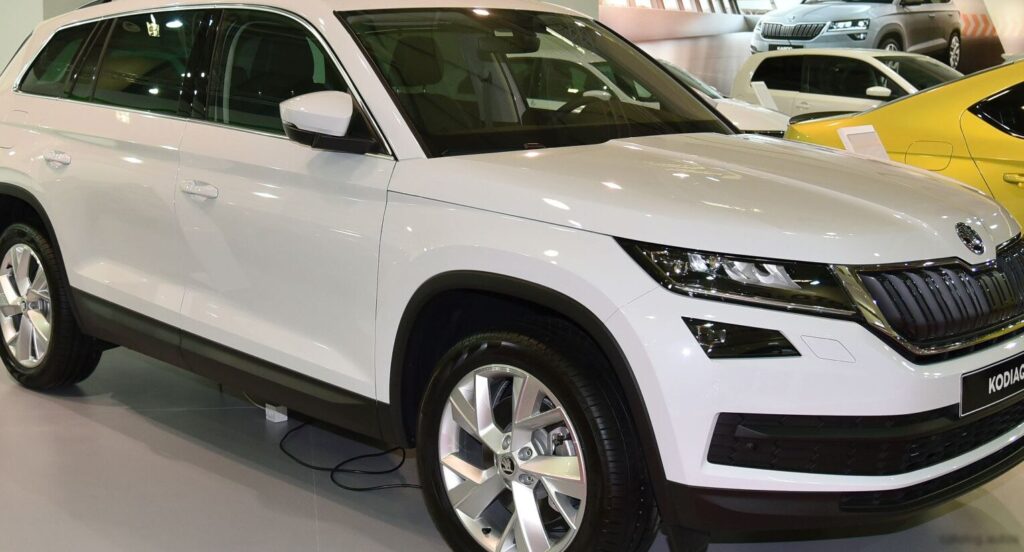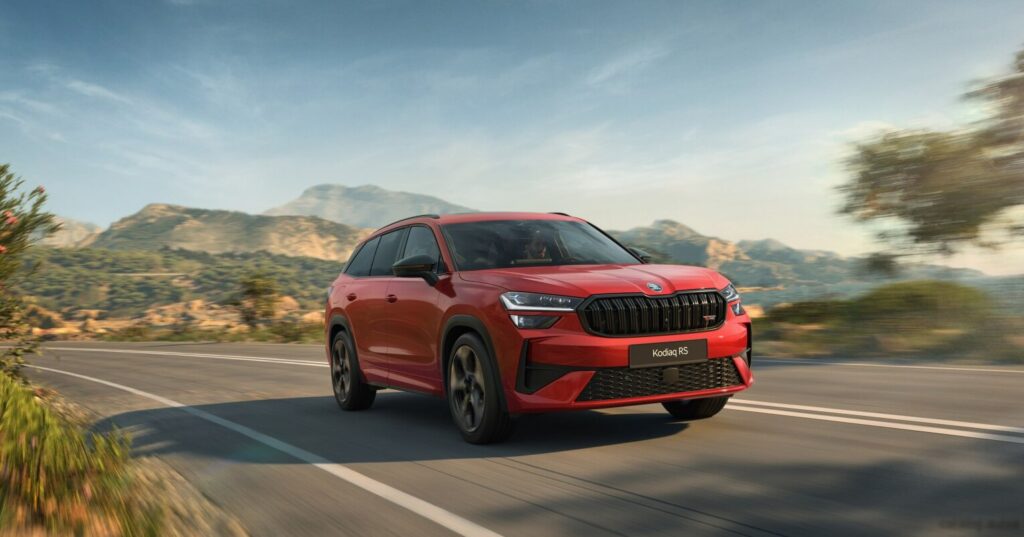
The Skoda Kodiaq II RS 2.0 TSI (265 Hp) 4×4 DSG 7 Seat, launched in October 2024, represents the performance-oriented top trim level of the second-generation Kodiaq SUV. Positioned as Skoda’s flagship SUV, the Kodiaq II builds upon the success of the original model, offering increased space, updated technology, and a more refined driving experience. This particular variant, equipped with the potent 2.0-liter turbocharged engine and a seven-speed dual-clutch transmission (DSG), caters to buyers seeking a blend of practicality, performance, and all-weather capability. The Kodiaq II is a key model for Skoda, particularly in the European market, where larger SUVs are increasingly popular with families and those requiring versatile transportation.
Technical Specifications
| Brand | Skoda |
| Model | Kodiaq |
| Generation | Kodiaq II |
| Type | RS 2.0 TSI (265 Hp) 4×4 DSG 7 Seat |
| Start of production | October, 2024 |
| Powertrain Architecture | Internal Combustion engine |
| Body type | SUV |
| Seats | 7 |
| Doors | 5 |
| Combined fuel consumption (WLTP) | 8.2-8.6 l/100 km (28.7 – 27.4 US mpg, 34.4 – 32.8 UK mpg, 12.2 – 11.6 km/l) |
| CO2 emissions (WLTP) | 189-197 g/km |
| Fuel Type | Petrol (Gasoline) |
| Acceleration 0 – 100 km/h | 6.4 sec |
| Acceleration 0 – 62 mph | 6.4 sec |
| Acceleration 0 – 60 mph | 6.1 sec |
| Maximum speed | 231 km/h (143.54 mph) |
| Emission standard | Euro 6e |
| Weight-to-power ratio | 6.9 kg/Hp, 145 Hp/tonne |
| Weight-to-torque ratio | 4.6 kg/Nm, 218.8 Nm/tonne |
| Power | 265 Hp @ 5000-6500 rpm |
| Power per litre | 133.6 Hp/l |
| Torque | 400 Nm @ 1650-4350 rpm (295.02 lb.-ft. @ 1650-4350 rpm) |
| Engine layout | Front, Transverse |
| Engine Model/Code | EA888 evo4 |
| Engine displacement | 1984 cm3 (121.07 cu. in.) |
| Number of cylinders | 4 |
| Engine configuration | Inline |
| Cylinder Bore | 82.5 mm (3.25 in.) |
| Piston Stroke | 92.8 mm (3.65 in.) |
| Compression ratio | 9.6:1 |
| Number of valves per cylinder | 4 |
| Fuel injection system | Direct injection |
| Engine aspiration | Turbocharger, Intercooler |
| Valvetrain | DOHC |
| Engine systems | Start & Stop System, Particulate filter |
| Kerb Weight | 1828-1935 kg (4030.05 – 4265.94 lbs.) |
| Max. weight | 2500 kg (5511.56 lbs.) |
| Max load | 565-672 kg (1245.61 – 1481.51 lbs.) |
| Trunk (boot) space – minimum | 340 l (12.01 cu. ft.) |
| Trunk (boot) space – maximum | 2035 l (71.87 cu. ft.) |
| Fuel tank capacity | 58 l (15.32 US gal | 12.76 UK gal) |
| Max. roof load | 75 kg (165.35 lbs.) |
| Permitted trailer load with brakes (8%) | 2500 kg (5511.56 lbs.) |
| Permitted trailer load with brakes (12%) | 2500 kg (5511.56 lbs.) |
| Permitted trailer load without brakes | 750 kg (1653.47 lbs.) |
| Permitted towbar download | 100 kg (220.46 lbs.) |
| Length | 4761 mm (187.44 in.) |
| Width | 1864 mm (73.39 in.) |
| Width including mirrors | 2133 mm (83.98 in.) |
| Height | 1663 mm (65.47 in.) |
| Wheelbase | 2791 mm (109.88 in.) |
| Front track | 1580 mm (62.2 in.) |
| Rear (Back) track | 1570 mm (61.81 in.) |
| Ride height (ground clearance) | 194 mm (7.64 in.) |
| Drag coefficient (Cd) | 0.305-0.313 |
| Minimum turning circle (turning diameter) | 11.2 m (36.75 ft.) |
| Drivetrain Architecture | All wheel drive (4×4). ICE drives front wheels, rear driven by clutch. |
| Drive wheel | All wheel drive (4×4) |
| Number of gears and type of gearbox | 7 gears, automatic transmission DSG |
| Front suspension | Independent, McPherson with coil spring and anti-roll bar |
| Rear suspension | Independent multi-link spring suspension with stabilizer |
| Front brakes | Ventilated discs |
| Rear brakes | Ventilated discs |
| Assisting systems | ABS (Anti-lock braking system) |
| Steering type | Steering rack and pinion |
| Power steering | Electric Steering |
| Wheel rims size | 20 |
Powertrain & Engine Architecture
At the heart of the Kodiaq II RS is the EA888 evo4, a 2.0-liter turbocharged inline-four cylinder gasoline engine. This engine is a staple in the Volkswagen Group’s performance models, known for its robust construction and tuning potential. The ‘evo4’ designation signifies the fourth evolution of this engine family, incorporating advancements in fuel injection, turbocharger technology, and thermal management. Direct injection is employed, delivering fuel directly into the combustion chambers for improved efficiency and responsiveness. The engine utilizes a sophisticated turbocharger with an intercooler to mitigate turbo lag and maximize power output. The engine produces 265 horsepower at 5000-6500 rpm and 400 Nm (295 lb-ft) of torque between 1650 and 4350 rpm. This power is channeled through a seven-speed dual-clutch DSG transmission, which offers rapid and seamless gear changes. The DSG transmission is paired with a sophisticated all-wheel-drive system, providing enhanced traction and stability in various driving conditions.
Driving Characteristics
The Kodiaq II RS 2.0 TSI delivers a noticeably sporty driving experience compared to lower-trim Kodiaq models. The 265 hp engine provides ample power for confident acceleration and effortless highway cruising. The DSG transmission contributes to quick shifts and maintains the engine in its optimal power band. The all-wheel-drive system enhances grip, particularly on slippery surfaces, and inspires confidence during spirited driving. While not a dedicated sports SUV, the RS variant offers a well-balanced ride, combining comfort with engaging handling. The steering is precise and well-weighted, providing good feedback to the driver. The gear ratios in the DSG transmission are tuned for a balance of acceleration and fuel efficiency, with shorter ratios in the lower gears for quick take-offs and taller ratios for relaxed cruising.
Equipment & Trim Levels
The RS trim level is the highest specification available for the Kodiaq II, and comes standard with a comprehensive array of features. Interior appointments include sport seats upholstered in a combination of leather and Alcantara, with RS-specific badging. A digital instrument cluster, a large touchscreen infotainment system with navigation, and a premium sound system are also standard. Exterior features include a sporty body kit, unique alloy wheels, and darkened exterior trim. Optional extras include a panoramic sunroof, adaptive cruise control, and a 360-degree camera system.
Chassis & Braking
The Kodiaq II RS features a robust chassis designed to handle the increased power output. The suspension utilizes independent McPherson struts at the front and a multi-link setup at the rear, providing a comfortable yet controlled ride. Stabilizer bars are fitted to both axles to reduce body roll during cornering. The braking system consists of ventilated discs on all four wheels, providing ample stopping power. ABS (Anti-lock Braking System) is standard, enhancing safety and stability during emergency braking situations.
Market Reception & Comparison
The Kodiaq II RS has been well-received by automotive critics, who praise its blend of performance, practicality, and technology. Compared to other trims in the Kodiaq lineup, the RS offers a significant performance upgrade, but at a higher price point. Fuel economy is slightly lower than the more economical engine options, but the added performance is often considered a worthwhile trade-off. The RS competes with other performance-oriented SUVs in the European market, such as the Volkswagen Tiguan R and the BMW X3.
Legacy
The EA888 engine family has a proven track record for reliability, and the Kodiaq II RS is expected to be a durable and dependable vehicle. The DSG transmission, while offering performance benefits, requires regular maintenance to ensure longevity. On the used car market, the Kodiaq II RS is likely to hold its value well due to its desirable combination of features and performance. Its seven-seat configuration and spacious interior will continue to appeal to families, while its sporty driving dynamics will attract enthusiasts seeking a versatile and engaging SUV.