
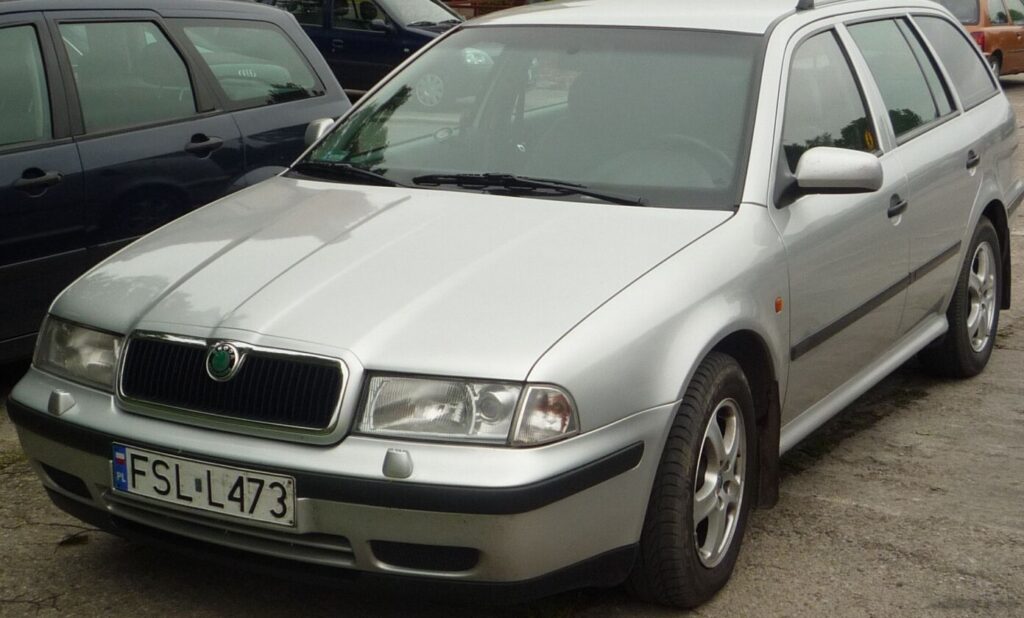
The Skoda Octavia I Combi Tour 1.6, produced between February 1997 and July 2000, represented an important entry point into the expanding Octavia range. Part of the first generation Octavia (1HX0/A3 platform) – a model that marked Skoda’s transition under Volkswagen Group ownership – the Combi Tour (estate) body style offered increased practicality compared to the standard saloon. This 1.6-liter, 100 horsepower variant was positioned as the more economical and accessible option within the lineup, appealing to families and drivers prioritizing fuel efficiency and value over outright performance. It served as a crucial volume seller for Skoda in European markets, establishing the Octavia as a credible competitor in the compact family car segment.
Technical Specifications
| Brand | Skoda |
| Model | Octavia |
| Generation | Octavia I Combi Tour |
| Type (Engine) | 1.6 (100 Hp) |
| Start of production | February, 1997 |
| End of production | July, 2000 |
| Powertrain Architecture | Internal Combustion engine |
| Body type | Station wagon (estate) |
| Seats | 5 |
| Doors | 5 |
| Fuel consumption (urban) | 10.6 l/100 km (22.2 US mpg, 26.6 UK mpg, 9.4 km/l) |
| Fuel consumption (extra urban) | 6.2 l/100 km (37.9 US mpg, 45.6 UK mpg, 16.1 km/l) |
| Fuel consumption (combined) | 7.9 l/100 km (29.8 US mpg, 35.8 UK mpg, 12.7 km/l) |
| Fuel Type | Petrol (Gasoline) |
| Acceleration 0 – 100 km/h | 12.4 sec |
| Acceleration 0 – 62 mph | 12.4 sec |
| Acceleration 0 – 60 mph | 11.8 sec |
| Maximum speed | 190 km/h (118.06 mph) |
| Weight-to-power ratio | 12.9 kg/Hp, 77.8 Hp/tonne |
| Weight-to-torque ratio | 8.9 kg/Nm, 112.8 Nm/tonne |
| Power | 100 Hp @ 5600 rpm |
| Power per litre | 62.7 Hp/l |
| Torque | 145 Nm @ 3800 rpm (106.95 lb.-ft. @ 3800 rpm) |
| Engine layout | Front, Transverse |
| Engine Model/Code | AEH, AKL |
| Engine displacement | 1595 cm3 (97.33 cu. in.) |
| Number of cylinders | 4 |
| Engine configuration | Inline |
| Cylinder Bore | 81 mm (3.19 in.) |
| Piston Stroke | 77.4 mm (3.05 in.) |
| Compression ratio | 10.3:1 |
| Number of valves per cylinder | 2 |
| Fuel injection system | Multi-port manifold injection |
| Engine aspiration | Naturally aspirated engine |
| Valvetrain | OHC |
| Engine oil capacity | 4.5 l (4.76 US qt | 3.96 UK qt) |
| Coolant | 5 l (5.28 US qt | 4.4 UK qt) |
| Kerb Weight | 1285 kg (2832.94 lbs.) |
| Max. weight | 1738 kg (3831.63 lbs.) |
| Max load | 453 kg (998.69 lbs.) |
| Trunk (boot) space – minimum | 548 l (19.35 cu. ft.) |
| Trunk (boot) space – maximum | 1512 l (53.4 cu. ft.) |
| Fuel tank capacity | 55 l (14.53 US gal | 12.1 UK gal) |
| Length | 4511 mm (177.6 in.) |
| Width | 1731 mm (68.15 in.) |
| Height | 1448 mm (57.01 in.) |
| Wheelbase | 2512 mm (98.9 in.) |
| Front track | 1516 mm (59.69 in.) |
| Rear (Back) track | 1492 mm (58.74 in.) |
| Drivetrain Architecture | The Internal combustion engine (ICE) drives the front wheels of the vehicle. |
| Drive wheel | Front wheel drive |
| Number of gears and type of gearbox | 5 gears, manual transmission |
| Front suspension | Coil spring |
| Rear suspension | Coil spring |
| Front brakes | Ventilated discs |
| Rear brakes | Drum |
| Assisting systems | ABS (Anti-lock braking system) |
| Steering type | Steering rack and pinion |
| Power steering | Hydraulic Steering |
| Tires size | 175/80 R14 88T |
| Wheel rims size | 6J x 14 |
Powertrain & Engine Architecture
The Octavia Combi Tour 1.6 utilized either the AEH or AKL engine code, both representing variations of the Volkswagen EA827 series. This 1.6-liter inline-four engine featured a naturally aspirated configuration and a single overhead camshaft (OHC) valvetrain with two valves per cylinder. Fuel delivery was managed by a multi-port fuel injection system, a common setup for the era, providing adequate but not exceptional performance. The engine’s 100 horsepower output at 5600 rpm and 145 Nm (106.95 lb-ft) of torque at 3800 rpm were considered modest, but sufficient for everyday driving. The engine’s design prioritized reliability and fuel economy over outright power. The five-speed manual transmission was the standard offering, providing a reasonable spread of gears for both urban and highway driving. The transmission was known for its durability, though its shift quality wasn’t particularly sporty.
Driving Characteristics
The 1.6-liter Octavia Combi Tour offered a comfortable, if uninspiring, driving experience. Acceleration from 0-60 mph took around 11.8 seconds, and top speed was limited to 190 km/h (118 mph). Compared to the more powerful 1.8-liter and 2.0-liter variants, or the diesel-powered TDIs, the 1.6 felt noticeably slower, particularly when fully loaded or tackling inclines. The gear ratios were tuned for economy, meaning the engine often needed to be revved to maintain speed. However, the relatively light weight of the vehicle – around 1285 kg (2833 lbs) – helped to mitigate the lack of power. The suspension provided a compliant ride, absorbing bumps and imperfections in the road surface effectively. Steering was light and easy, making it well-suited for city driving.
Equipment & Trim Levels
The 1.6-liter Octavia Combi Tour typically came with a fairly basic level of equipment. Standard features generally included power steering, central locking, electric front windows, and an adjustable steering column. Interior upholstery was typically cloth, and the dashboard featured a functional but somewhat utilitarian design. Optional extras included air conditioning, alloy wheels, a radio/cassette player, and upgraded interior trim. The trim level was generally considered the entry-level offering, making it an attractive option for budget-conscious buyers. Higher trim levels, available with the more powerful engines, offered features like leather upholstery, climate control, and more sophisticated audio systems.
Chassis & Braking
The Octavia Combi Tour utilized a MacPherson strut front suspension and a twist-beam rear suspension. This setup provided a good balance between ride comfort and handling. Front brakes were ventilated discs, offering adequate stopping power, while rear brakes were drums, a cost-saving measure common in this class of vehicle. Anti-lock Braking System (ABS) was standard, enhancing safety. The chassis was relatively lightweight, contributing to the car’s overall agility. Stabilizer bars were fitted to both the front and rear axles, helping to reduce body roll during cornering.
Market Reception & Comparison
The Octavia Combi Tour 1.6 was generally well-received by critics as a practical and affordable family car. Its fuel economy – around 29.8 US mpg combined – was a major selling point. However, its performance was often criticized as being underwhelming, particularly when compared to its rivals. The 1.8-liter Octavia offered a significant performance boost, while the TDI diesel models provided even better fuel economy and torque. Despite its limitations, the 1.6-liter model remained a popular choice for buyers who prioritized value and practicality over performance.
Legacy
The Skoda Octavia I Combi Tour 1.6, while not the most powerful or exciting variant, proved to be a reliable and durable vehicle. The EA827 engine, in its various iterations, is known for its longevity, and many examples are still on the road today. In the used car market, these Octavias are often sought after by buyers looking for an affordable and practical estate car. Maintenance costs are generally low, and parts availability is good. The 1.6-liter engine is relatively simple to work on, making it a popular choice for DIY mechanics. The Octavia Combi Tour 1.6 played a significant role in establishing Skoda as a mainstream automotive brand, demonstrating the company’s ability to produce well-built and affordable vehicles.
