
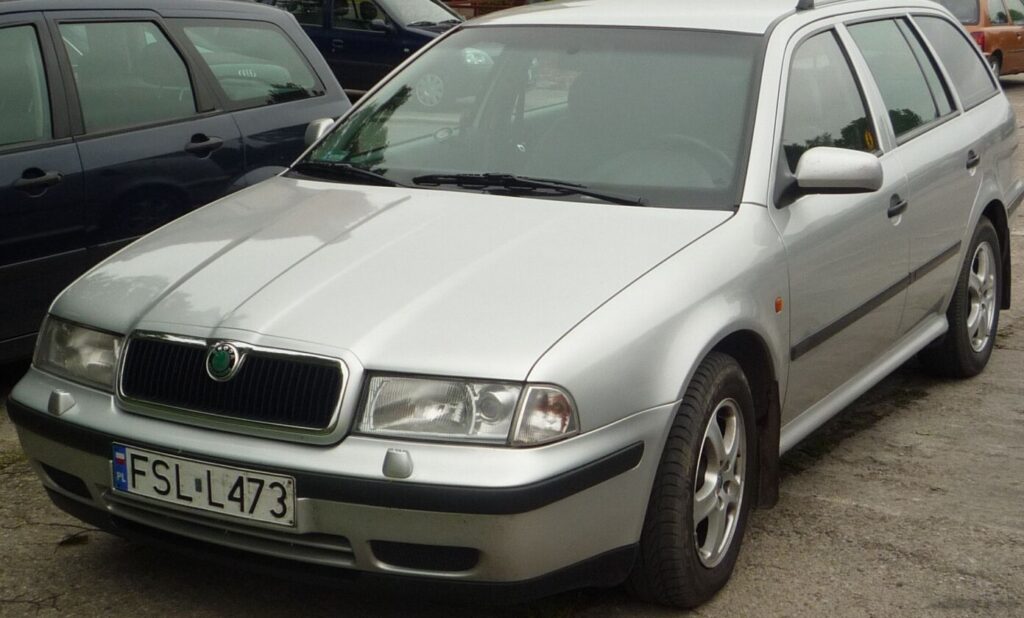
The Skoda Octavia I Combi Tour 1.6, equipped with a 75 horsepower engine and automatic transmission, was a popular variant of Skoda’s first foray into the modern compact estate car market. Produced between July 1996 and July 2000, this model occupied the entry-level position within the Octavia Combi Tour range, offering practicality and affordability. It was built on the Volkswagen Group’s A4 (1HX0/A3) platform, shared with models like the Volkswagen Golf, Audi A3, and SEAT Leon, and represented a significant step forward for Skoda in terms of build quality and design. The Combi Tour designation refers to the facelifted version of the original Octavia, introducing minor cosmetic and equipment upgrades.
Technical Specifications
| Brand | Skoda |
| Model | Octavia |
| Generation | Octavia I Combi Tour |
| Type (Engine) | 1.6 (75 Hp) Automatic |
| Start of production | July, 1996 |
| End of production | July, 2000 |
| Powertrain Architecture | Internal Combustion engine |
| Body type | Station wagon (estate) |
| Seats | 5 |
| Doors | 5 |
| Fuel consumption (urban) | 10.8 l/100 km (21.8 US mpg, 26.2 UK mpg, 9.3 km/l) |
| Fuel consumption (extra urban) | 5.8 l/100 km (40.6 US mpg, 48.7 UK mpg, 17.2 km/l) |
| Fuel Type | Petrol (Gasoline) |
| Acceleration 0 – 100 km/h | 15 sec |
| Acceleration 0 – 62 mph | 15 sec |
| Acceleration 0 – 60 mph | 14.3 sec |
| Maximum speed | 167 km/h (103.77 mph) |
| Weight-to-power ratio | 16.1 kg/Hp, 62.2 Hp/tonne |
| Weight-to-torque ratio | 8.9 kg/Nm, 112 Nm/tonne |
| Power | 75 Hp @ 4500 rpm |
| Power per litre | 46.9 Hp/l |
| Torque | 135 Nm @ 3500 rpm (99.57 lb.-ft. @ 3500 rpm) |
| Engine layout | Front, Transverse |
| Engine Model/Code | AEE |
| Engine displacement | 1598 cm3 (97.52 cu. in.) |
| Number of cylinders | 4 |
| Engine configuration | Inline |
| Cylinder Bore | 76.5 mm (3.01 in.) |
| Piston Stroke | 86.9 mm (3.42 in.) |
| Compression ratio | 9.8:1 |
| Number of valves per cylinder | 2 |
| Fuel injection system | Multi-port manifold injection |
| Engine aspiration | Naturally aspirated engine |
| Valvetrain | OHC |
| Engine oil capacity | 3.2 l (3.38 US qt | 2.82 UK qt) |
| Coolant | 6.3 l (6.66 US qt | 5.54 UK qt) |
| Kerb Weight | 1205 kg (2656.57 lbs.) |
| Max. weight | 1725 kg (3802.97 lbs.) |
| Max load | 520 kg (1146.4 lbs.) |
| Trunk (boot) space – minimum | 548 l (19.35 cu. ft.) |
| Trunk (boot) space – maximum | 1512 l (53.4 cu. ft.) |
| Fuel tank capacity | 55 l (14.53 US gal | 12.1 UK gal) |
| Length | 4511 mm (177.6 in.) |
| Width | 1731 mm (68.15 in.) |
| Height | 1448 mm (57.01 in.) |
| Wheelbase | 2512 mm (98.9 in.) |
| Front track | 1516 mm (59.69 in.) |
| Rear (Back) track | 1492 mm (58.74 in.) |
| Drivetrain Architecture | The Internal combustion engine (ICE) drives the front wheels of the vehicle. |
| Drive wheel | Front wheel drive |
| Number of gears and type of gearbox | 4 gears, automatic transmission |
| Front suspension | Coil spring |
| Rear suspension | Coil spring |
| Front brakes | Ventilated discs |
| Rear brakes | Drum |
| Assisting systems | ABS (Anti-lock braking system) |
| Steering type | Steering rack and pinion |
| Power steering | Hydraulic Steering |
| Tires size | 175/80 R14 |
| Wheel rims size | 6J x 14 |
Powertrain & Engine Architecture
The 1.6-liter AEE engine powering this Octavia variant is a naturally aspirated, inline-four cylinder gasoline engine. It utilizes a multi-port fuel injection system, delivering fuel directly into the intake ports. The engine features a single overhead camshaft (OHC) operating two valves per cylinder. This configuration was chosen for its simplicity and cost-effectiveness, making it suitable for the entry-level model. The AEE engine was a common sight in various Volkswagen Group vehicles of the era, known for its relative reliability, though not for its outright performance. The four-speed automatic transmission was a traditional hydraulic automatic, offering smooth but not particularly quick shifts. It was designed to prioritize comfort and ease of use over sporty driving dynamics.
Driving Characteristics
The 1.6-liter engine and automatic transmission combination resulted in a relaxed and unhurried driving experience. Acceleration was modest, taking around 15 seconds to reach 60 mph. The automatic transmission’s gear ratios were geared towards fuel efficiency rather than performance, meaning the engine often felt strained during overtaking maneuvers or when climbing hills. Compared to the more powerful 1.8-liter and 2.0-liter variants, or even the diesel-powered Octavias, this model lacked punch. However, the automatic transmission made it a comfortable choice for city driving and long journeys, particularly for drivers unfamiliar with manual transmissions. The steering was light and easy, contributing to the overall ease of driving.
Equipment & Trim Levels
The 1.6 Automatic Octavia Combi Tour typically came with a basic level of equipment. Standard features included power steering, central locking, electric front windows, and an anti-lock braking system (ABS). Interior upholstery was typically cloth, and the dashboard featured a functional but somewhat basic design. Optional extras included air conditioning, alloy wheels, a radio/cassette player, and upgraded interior trim. This trim level was aimed at buyers prioritizing practicality and affordability over luxury features.
Chassis & Braking
The Octavia Combi Tour’s chassis featured coil spring suspension at both the front and rear. The front suspension utilized independent struts, while the rear employed a torsion beam axle. This setup provided a reasonable balance between ride comfort and handling. The braking system consisted of ventilated discs at the front and drum brakes at the rear. While adequate for everyday driving, the drum brakes at the rear were less effective than disc brakes, particularly under heavy braking. Stabilizer bars were fitted to both axles, helping to reduce body roll during cornering.
Market Reception & Comparison
The 1.6 Automatic Octavia Combi Tour was generally well-received as a practical and affordable estate car. Critics praised its spacious interior, large boot capacity, and comfortable ride. However, the engine’s lack of power and the automatic transmission’s sluggishness were often criticized. Compared to the 1.8-liter and 2.0-liter variants, the 1.6 offered significantly less performance but at a lower price point. The diesel-powered Octavias provided better fuel economy and more torque, but were more expensive to purchase. The 1.6 Automatic appealed to buyers who prioritized comfort and practicality over performance and were looking for a reliable and affordable family car.
Legacy
The Skoda Octavia I Combi Tour 1.6 Automatic has proven to be a relatively reliable vehicle, with the AEE engine generally holding up well over time. However, like any older car, it is prone to age-related issues such as corrosion and wear and tear on suspension components. In the used car market, these models are typically very affordable, making them an attractive option for budget-conscious buyers. While not a performance icon, the 1.6 Automatic Octavia Combi Tour represents a significant milestone in Skoda’s history, demonstrating the brand’s ability to produce a competitive and well-rounded family car. Its enduring practicality and affordability continue to make it a viable option for those seeking a dependable and spacious estate car.
