
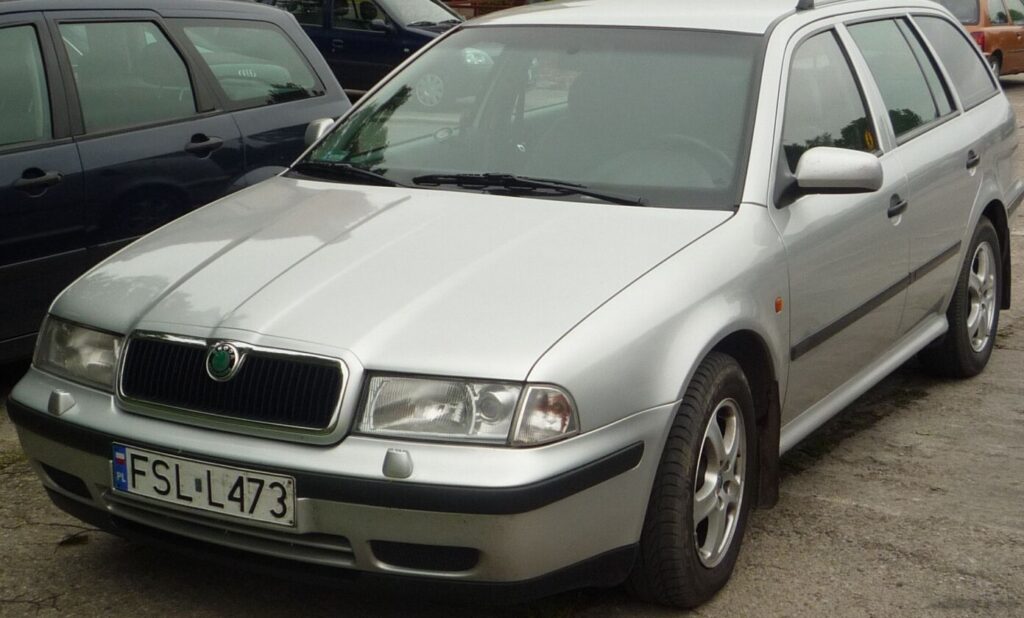
The Skoda Octavia I Combi Tour 1.8 20V, produced between 1997 and 2000, represented a significant step forward for Skoda following its acquisition by the Volkswagen Group. This variant, a station wagon (estate) based on the Volkswagen Group’s A4 platform (internally designated 1HX0), offered a practical and relatively affordable option within the compact family car segment. It was positioned as a mid-range offering in the Octavia Combi Tour lineup, bridging the gap between the base 1.6-liter engine and the more powerful, and often more expensive, 2.0-liter variants. The Combi Tour designation refers to the facelifted version of the original Octavia, introducing subtle styling updates and improvements to the interior.
Technical Specifications
| Brand | Skoda |
| Model | Octavia |
| Generation | Octavia I Combi Tour |
| Type (Engine) | 1.8 20V (125 Hp) |
| Start of production | January, 1997 |
| End of production | July, 2000 |
| Powertrain Architecture | Internal Combustion engine |
| Body type | Station wagon (estate) |
| Seats | 5 |
| Doors | 5 |
| Fuel consumption (urban) | 11.8 l/100 km (19.9 US mpg, 23.9 UK mpg, 8.5 km/l) |
| Fuel consumption (extra urban) | 6.6 l/100 km (35.6 US mpg, 42.8 UK mpg, 15.2 km/l) |
| Fuel consumption (combined) | 9.7 l/100 km (24.2 US mpg, 29.1 UK mpg, 10.3 km/l) |
| Fuel Type | Petrol (Gasoline) |
| Acceleration 0 – 100 km/h | 10.6 sec |
| Acceleration 0 – 62 mph | 10.6 sec |
| Acceleration 0 – 60 mph | 10.1 sec |
| Maximum speed | 200 km/h (124.27 mph) |
| Weight-to-power ratio | 10.2 kg/Hp, 98 Hp/tonne |
| Weight-to-torque ratio | 7.5 kg/Nm, 133.3 Nm/tonne |
| Power | 125 Hp @ 6000 rpm |
| Power per litre | 70.2 Hp/l |
| Torque | 170 Nm @ 4200 rpm (125.39 lb.-ft. @ 4200 rpm) |
| Engine layout | Front, Transverse |
| Engine Model/Code | AGN |
| Engine displacement | 1781 cm3 (108.68 cu. in.) |
| Number of cylinders | 4 |
| Engine configuration | Inline |
| Cylinder Bore | 81 mm (3.19 in.) |
| Piston Stroke | 86.4 mm (3.4 in.) |
| Compression ratio | 10.3:1 |
| Number of valves per cylinder | 5 |
| Fuel injection system | Multi-port manifold injection |
| Engine aspiration | Naturally aspirated engine |
| Valvetrain | DOHC |
| Engine oil capacity | 4.5 l (4.76 US qt | 3.96 UK qt) |
| Coolant | 6.3 l (6.66 US qt | 5.54 UK qt) |
| Kerb Weight | 1275 kg (2810.89 lbs.) |
| Max. weight | 1820 kg (4012.41 lbs.) |
| Max load | 545 kg (1201.52 lbs.) |
| Trunk (boot) space – minimum | 550 l (19.42 cu. ft.) |
| Trunk (boot) space – maximum | 1510 l (53.33 cu. ft.) |
| Fuel tank capacity | 55 l (14.53 US gal | 12.1 UK gal) |
| Length | 4510 mm (177.56 in.) |
| Width | 1730 mm (68.11 in.) |
| Height | 1450 mm (57.09 in.) |
| Wheelbase | 2510 mm (98.82 in.) |
| Front track | 1515 mm (59.65 in.) |
| Rear (Back) track | 1490 mm (58.66 in.) |
| Drivetrain Architecture | The Internal combustion engine (ICE) drives the front wheels of the vehicle. |
| Drive wheel | Front wheel drive |
| Number of gears and type of gearbox | 5 gears, manual transmission |
| Front suspension | Coil spring |
| Rear suspension | Coil spring |
| Front brakes | Ventilated discs |
| Rear brakes | Drum |
| Assisting systems | ABS (Anti-lock braking system) |
| Steering type | Steering rack and pinion |
| Power steering | Hydraulic Steering |
| Tires size | 195/65 R15 |
| Wheel rims size | 6.5J X 15 |
Powertrain & Engine Architecture
The 1.8-liter 20-valve engine, identified by the AGN engine code, was a mainstay of the Volkswagen Group’s offerings during this period. It’s a naturally aspirated, inline-four cylinder engine featuring multi-port fuel injection. The 20-valve configuration (five valves per cylinder – three intake, two exhaust) allowed for improved breathing and higher engine speeds compared to traditional two-valve designs. This engine benefited from Volkswagen’s engineering expertise, offering a good balance of power and fuel efficiency. The engine’s block was cast iron, while the cylinder head was aluminum. The 5-speed manual transmission was the standard offering, providing a relatively direct connection between the engine and the front wheels. The transmission was known for its durability and smooth shifting, although it wasn’t particularly sporty in its gearing.
Driving Characteristics
The 1.8 20V engine in the Octavia Combi Tour delivered a respectable, if not exhilarating, driving experience. With 125 horsepower, acceleration from 0 to 60 mph took around 10.1 seconds, and top speed was approximately 124 mph. While not a performance car, the engine provided sufficient power for everyday driving and overtaking maneuvers. The 5-speed manual transmission allowed drivers to keep the engine in its optimal power band. Compared to the more powerful 2.0-liter versions, the 1.8 felt less strained at higher speeds, but lacked the same level of outright acceleration. The automatic transmission option, while offering convenience, noticeably dulled performance and increased fuel consumption. The suspension, tuned for comfort, provided a reasonably smooth ride, although it wasn’t particularly engaging for enthusiastic drivers.
Equipment & Trim Levels
The 1.8 20V Combi Tour typically came equipped with features considered standard for a mid-range family car of the late 1990s. This included power steering, ABS brakes, central locking, and electric front windows. Interior upholstery was typically cloth, with a functional, if somewhat basic, dashboard layout. Optional extras included air conditioning, alloy wheels, a sunroof, and a radio/cassette player. Higher trim levels offered upgrades such as upgraded upholstery, wood trim, and additional safety features.
Chassis & Braking
The Octavia Combi Tour utilized a MacPherson strut front suspension and a twist-beam rear suspension. This setup provided a good compromise between ride comfort and handling. The front brakes were ventilated discs, offering adequate stopping power, while the rear brakes were drums, a cost-saving measure common in this class of vehicle. The steering was a hydraulic power-assisted rack and pinion system, providing reasonable feedback and ease of use. The chassis was robust and well-built, contributing to the car’s overall durability.
Market Reception & Comparison
The Skoda Octavia I Combi Tour 1.8 20V was generally well-received by automotive critics. It was praised for its spacious interior, practical estate car body style, and good value for money. Compared to its siblings, the 1.8 offered a more economical option than the 2.0-liter variants, while providing more power than the base 1.6-liter engine. Fuel economy was respectable for its class, averaging around 24 mpg in combined driving. Reliability was generally good, although some owners reported minor issues with the electrical system.
Legacy
The Skoda Octavia I Combi Tour 1.8 20V has proven to be a durable and reliable vehicle. Today, well-maintained examples are still relatively common on the used car market. The AGN engine is known for its longevity, provided it has been regularly serviced. While not a collector’s item, the Octavia Combi Tour remains a practical and affordable option for those seeking a spacious and reliable estate car. Its success helped establish Skoda as a credible player in the European automotive market, paving the way for the brand’s continued growth and popularity.
