
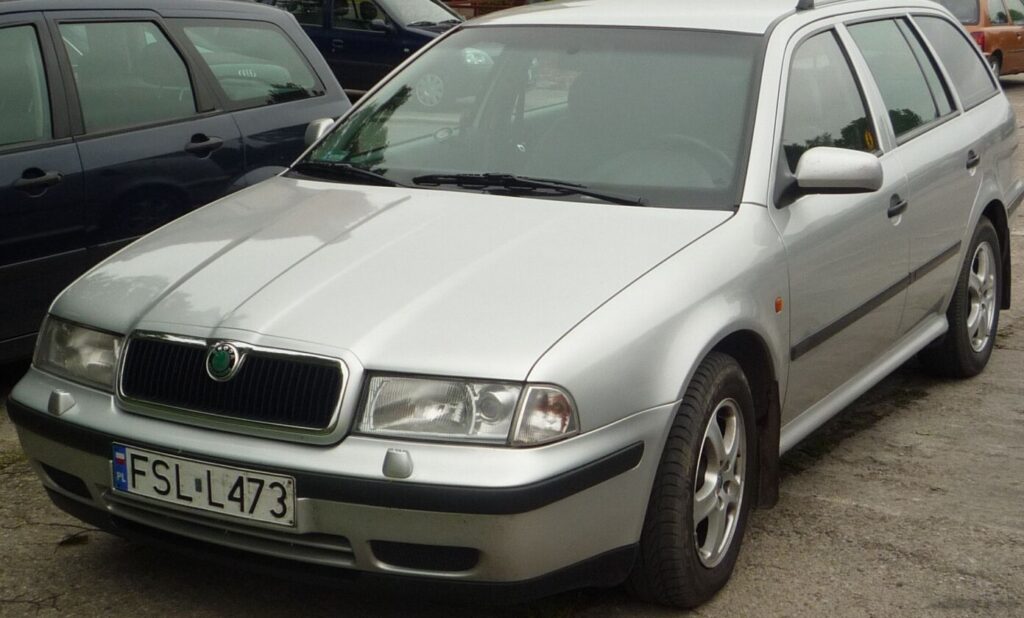
The Skoda Octavia I Combi Tour 1.8 T, produced between December 1997 and July 2000, represented a significant offering in the compact estate car segment. Positioned as a mid-range trim within the Octavia I Combi Tour lineup, it combined a turbocharged 1.8-liter petrol engine with a four-speed automatic transmission. This variant aimed to provide a balance of performance and convenience, appealing to buyers seeking a practical family vehicle with a more refined driving experience than the base models. It was built on the Volkswagen Group’s 1HX0/A3 platform, shared with models like the Volkswagen Golf and Audi A3, benefiting from the platform’s inherent strengths in packaging and engineering.
Technical Specifications
| Brand | Skoda |
| Model | Octavia |
| Generation | Octavia I Combi Tour |
| Type (Engine) | 1.8 T (150 Hp) Automatic |
| Start of production | December, 1997 |
| End of production | July, 2000 |
| Powertrain Architecture | Internal Combustion engine |
| Body type | Station wagon (estate) |
| Seats | 5 |
| Doors | 5 |
| Fuel consumption (urban) | 12.8 l/100 km (18.4 US mpg, 22.1 UK mpg, 7.8 km/l) |
| Fuel consumption (extra urban) | 6.9 l/100 km (34.1 US mpg, 40.9 UK mpg, 14.5 km/l) |
| Fuel consumption (combined) | 9 l/100 km (26.1 US mpg, 31.4 UK mpg, 11.1 km/l) |
| Fuel Type | Petrol (Gasoline) |
| Acceleration 0 – 100 km/h | 10 sec |
| Acceleration 0 – 62 mph | 10 sec |
| Acceleration 0 – 60 mph | 9.5 sec |
| Maximum speed | 215 km/h (133.59 mph) |
| Weight-to-power ratio | 8.7 kg/Hp, 115.4 Hp/tonne |
| Weight-to-torque ratio | 6.2 kg/Nm, 161.5 Nm/tonne |
| Power | 150 Hp @ 5700 rpm |
| Power per litre | 84.2 Hp/l |
| Torque | 210 Nm @ 1750 rpm (154.89 lb.-ft. @ 1750 rpm) |
| Engine layout | Front, Transverse |
| Engine Model/Code | AGU, ARZ, AUM |
| Engine displacement | 1781 cm3 (108.68 cu. in.) |
| Number of cylinders | 4 |
| Engine configuration | Inline |
| Cylinder Bore | 81 mm (3.19 in.) |
| Piston Stroke | 86.4 mm (3.4 in.) |
| Compression ratio | 9:1 |
| Number of valves per cylinder | 5 |
| Fuel injection system | Multi-port manifold injection |
| Engine aspiration | Turbocharger |
| Valvetrain | DOHC |
| Engine oil capacity | 4.5 l (4.76 US qt | 3.96 UK qt) |
| Coolant | 6.3 l (6.66 US qt | 5.54 UK qt) |
| Kerb Weight | 1300 kg (2866.01 lbs.) |
| Max. weight | 1850 kg (4078.55 lbs.) |
| Max load | 550 kg (1212.54 lbs.) |
| Trunk (boot) space – minimum | 548 l (19.35 cu. ft.) |
| Trunk (boot) space – maximum | 1512 l (53.4 cu. ft.) |
| Fuel tank capacity | 55 l (14.53 US gal | 12.1 UK gal) |
| Length | 4511 mm (177.6 in.) |
| Width | 1731 mm (68.15 in.) |
| Height | 1457 mm (57.36 in.) |
| Wheelbase | 2512 mm (98.9 in.) |
| Front track | 1516 mm (59.69 in.) |
| Rear (Back) track | 1492 mm (58.74 in.) |
| Drivetrain Architecture | The Internal combustion engine (ICE) drives the front wheels of the vehicle. |
| Drive wheel | Front wheel drive |
| Number of gears and type of gearbox | 4 gears, automatic transmission |
| Front suspension | Coil spring |
| Rear suspension | Coil spring |
| Front brakes | Ventilated discs |
| Rear brakes | Disc |
| Assisting systems | ABS (Anti-lock braking system) |
| Steering type | Steering rack and pinion |
| Power steering | Hydraulic Steering |
| Tires size | 195/65 R15 |
| Wheel rims size | 6.5J X 15 |
Powertrain & Engine Architecture
The heart of the Octavia Combi Tour 1.8 T was the 1781cc inline-four cylinder engine, identifiable by engine codes AGU, ARZ, and AUM. This engine featured a single overhead camshaft (SOHC) design, but with five valves per cylinder (three intake, two exhaust) – a configuration that enhanced breathing and contributed to its power output. Crucially, it was equipped with a turbocharger and an intercooler, boosting power and torque significantly compared to naturally aspirated engines of similar displacement. Fuel delivery was handled by a multi-port fuel injection system, providing precise fuel metering for optimal combustion. The four-speed automatic transmission, while not as sophisticated as modern multi-gear automatics, was a reliable unit designed to handle the engine’s torque. It featured a torque converter for smooth engagement and a relatively conventional hydraulic control system.
Driving Characteristics
The 1.8 T automatic Octavia Combi Tour offered a comfortable and reasonably responsive driving experience. Acceleration from 0-60 mph took around 9.5 seconds, and top speed was approximately 133.59 mph. While not a sports car, the turbocharger provided a noticeable surge of power during acceleration, making overtaking maneuvers relatively effortless. The automatic transmission, while smooth, did exhibit some of the characteristics common to older four-speed units – occasional hunting for gears and a less-than-sporty feel. Compared to the manual transmission versions of the same engine, the automatic offered less direct control and slightly slower acceleration. However, it provided a more relaxed driving experience, particularly in urban traffic. The gear ratios were tuned for a balance of fuel economy and usability, prioritizing mid-range torque over outright top-end performance.
Equipment & Trim Levels
The 1.8 T automatic trim typically included features such as power windows, central locking, power steering, and an anti-lock braking system (ABS). Interior upholstery was generally cloth, with options for upgraded materials available. Dashboard design was functional and straightforward, reflecting the Octavia’s focus on practicality. Optional extras included air conditioning, a radio/cassette player, alloy wheels, and a sunroof. The level of equipment placed this variant comfortably in the mid-range of the Octavia lineup, offering a step up in comfort and convenience compared to the base models but lacking the more luxurious features found in the higher-spec trims.
Chassis & Braking
The Octavia Combi Tour featured a MacPherson strut front suspension and a coil spring rear suspension. This setup provided a good balance of ride comfort and handling. The front brakes were ventilated discs, offering good stopping power, while the rear brakes were solid discs. The steering was a rack-and-pinion system with hydraulic power assistance, providing a reasonably direct and responsive feel. Stabilizer bars were fitted to both the front and rear axles to reduce body roll during cornering. The suspension was tuned for comfort, prioritizing a smooth ride over aggressive handling.
Market Reception & Comparison
The Octavia Combi Tour 1.8 T automatic was generally well-received by automotive critics. It was praised for its spacious interior, practical estate car body style, and the punchy performance of the turbocharged engine. However, the four-speed automatic transmission was sometimes criticized for being somewhat dated compared to the newer transmissions offered in competing vehicles. Fuel economy was respectable for its class, averaging around 26.1 US mpg in combined driving. Compared to the 1.6-liter base engine, the 1.8 T offered a significant performance upgrade, while the 2.0-liter petrol and diesel variants provided even more power and torque, but at a higher price point. The 1.8 T automatic represented a sweet spot for many buyers, offering a good balance of performance, economy, and convenience.
Legacy
The Octavia I Combi Tour 1.8 T, particularly with the AGU engine code, has proven to be a relatively reliable powertrain. The engine itself is known for its durability, provided it is properly maintained. The automatic transmission, while not without its quirks, is also generally robust. Today, these vehicles are increasingly sought after by enthusiasts and collectors, particularly those looking for a practical and affordable classic car. Parts availability is generally good, thanks to the Octavia’s widespread popularity and the shared components with other Volkswagen Group models. However, potential buyers should be aware of common issues such as turbocharger wear and potential oil leaks. Overall, the Octavia Combi Tour 1.8 T remains a well-regarded and capable estate car, offering a compelling blend of practicality, performance, and value.
