
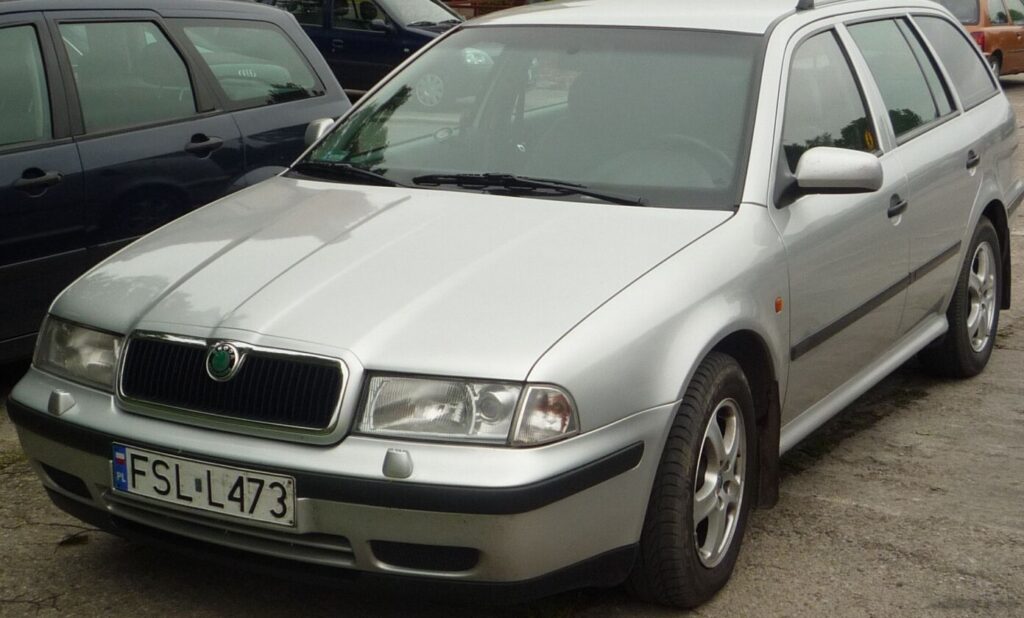
The Skoda Octavia I Combi Tour 1.9 TDI, produced between 1997 and 2000, represented a significant step forward for the Czech automaker following its acquisition by the Volkswagen Group. This variant, equipped with the 1.9-liter turbocharged diesel engine producing 110 horsepower, was a mainstay of the Octavia Combi (estate) lineup, offering a practical and fuel-efficient option for families and businesses. It sat within the first generation (Typ 1U) Octavia, specifically the “Tour” facelift introduced in 1997, which featured revised styling and improved interior appointments. The Octavia Combi, in general, was Skoda’s entry into the competitive compact estate market, aiming to provide Volkswagen-level quality at a more accessible price point.
Technical Specifications
| Brand | Skoda |
| Model | Octavia |
| Generation | Octavia I Combi Tour |
| Type (Engine) | 1.9 TDI (110 Hp) |
| Start of production | August, 1997 |
| End of production | July, 2000 |
| Powertrain Architecture | Internal Combustion engine |
| Body type | Station wagon (estate) |
| Seats | 5 |
| Doors | 5 |
| Fuel consumption (urban) | 6.7 l/100 km (35.1 US mpg, 42.2 UK mpg, 14.9 km/l) |
| Fuel consumption (extra urban) | 4.1 l/100 km (57.4 US mpg, 68.9 UK mpg, 24.4 km/l) |
| Fuel consumption (combined) | 5 l/100 km (47 US mpg, 56.5 UK mpg, 20 km/l) |
| Fuel Type | Diesel |
| Acceleration 0 – 100 km/h | 11.5 sec |
| Acceleration 0 – 62 mph | 11.5 sec |
| Acceleration 0 – 60 mph | 10.9 sec |
| Maximum speed | 192 km/h (119.3 mph) |
| Weight-to-power ratio | 12 kg/Hp, 83.7 Hp/tonne |
| Weight-to-torque ratio | 5.6 kg/Nm, 178.7 Nm/tonne |
| Power | 110 Hp @ 4150 rpm |
| Power per litre | 58 Hp/l |
| Torque | 235 Nm @ 1900 rpm (173.33 lb.-ft. @ 1900 rpm) |
| Engine layout | Front, Transverse |
| Engine Model/Code | AHF, ASV |
| Engine displacement | 1896 cm3 (115.7 cu. in.) |
| Number of cylinders | 4 |
| Engine configuration | Inline |
| Cylinder Bore | 79.5 mm (3.13 in.) |
| Piston Stroke | 95.5 mm (3.76 in.) |
| Compression ratio | 19:1 |
| Number of valves per cylinder | 2 |
| Fuel injection system | Direct injection |
| Engine aspiration | Turbocharger, Intercooler |
| Valvetrain | OHC |
| Engine oil capacity | 4.5 l (4.76 US qt | 3.96 UK qt) |
| Coolant | 6.3 l (6.66 US qt | 5.54 UK qt) |
| Kerb Weight | 1315 kg (2899.08 lbs.) |
| Max. weight | 1865 kg (4111.62 lbs.) |
| Max load | 550 kg (1212.54 lbs.) |
| Trunk (boot) space – minimum | 548 l (19.35 cu. ft.) |
| Trunk (boot) space – maximum | 1512 l (53.4 cu. ft.) |
| Fuel tank capacity | 55 l (14.53 US gal | 12.1 UK gal) |
| Length | 4511 mm (177.6 in.) |
| Width | 1731 mm (68.15 in.) |
| Height | 1457 mm (57.36 in.) |
| Wheelbase | 2512 mm (98.9 in.) |
| Front track | 1516 mm (59.69 in.) |
| Rear (Back) track | 1492 mm (58.74 in.) |
| Drivetrain Architecture | The Internal combustion engine (ICE) drives the front wheels of the vehicle. |
| Drive wheel | Front wheel drive |
| Number of gears and type of gearbox | 5 gears, manual transmission |
| Front suspension | Coil spring |
| Rear suspension | Rigid axle suspension |
| Front brakes | Disc |
| Rear brakes | Disc |
| Assisting systems | ABS (Anti-lock braking system) |
| Steering type | Steering rack and pinion |
| Power steering | Hydraulic Steering |
| Tires size | 195/65 R15 |
| Wheel rims size | 6J x 15 |
Powertrain & Engine Architecture
The heart of this Octavia variant is the 1.9-liter (1896 cc) inline-four cylinder diesel engine, typically identified by engine codes AHF or ASV. This engine was a cornerstone of Volkswagen Group’s diesel offerings in the late 1990s. It featured direct fuel injection, a turbocharger with an intercooler, and an overhead camshaft (OHC) valvetrain with two valves per cylinder. The direct injection system, a Bosch unit, allowed for precise fuel delivery and contributed to the engine’s efficiency and relatively low emissions for the time. The turbocharger boosted power output, providing a noticeable improvement over naturally aspirated diesel engines. The engine’s robust construction and relatively simple design contributed to its longevity and ease of maintenance. The 110 horsepower and 235 Nm (173 lb-ft) of torque were delivered to the front wheels through a five-speed manual transmission, which was the standard offering for this trim level.
Driving Characteristics
The 1.9 TDI 110 hp Octavia Combi Tour offered a balanced driving experience. While not particularly quick – 0-60 mph in around 10.9 seconds – it provided ample torque for everyday driving and comfortable cruising. The turbocharger provided a noticeable surge of power in the mid-range, making overtaking maneuvers relatively effortless. The five-speed manual transmission was well-matched to the engine’s characteristics, offering smooth gear changes and allowing the driver to keep the engine in its optimal power band. Compared to the more powerful TDI variants (like the 130 hp version), this 110 hp model prioritized fuel economy and affordability over outright performance. It also felt more manageable for less experienced drivers. The suspension, while tuned for comfort, provided adequate handling, although it wasn’t as sporty as some of its competitors.
Equipment & Trim Levels
The 1.9 TDI 110 hp Octavia Combi Tour typically came with a reasonable level of standard equipment. This included central locking, power windows, power steering, and an anti-lock braking system (ABS). Interior upholstery was typically cloth, and the dashboard featured a functional, if somewhat utilitarian, design. Optional extras included air conditioning, alloy wheels, a radio/cassette player, and upgraded interior trim. The trim level generally positioned this variant as a mid-range offering, appealing to buyers who wanted a practical and well-equipped estate car without the expense of the higher-specification models.
Chassis & Braking
The Octavia Combi Tour utilized a front-wheel-drive layout with a MacPherson strut front suspension and a torsion beam rear suspension. This setup provided a good balance between ride comfort and handling. The braking system consisted of disc brakes on all four wheels, providing adequate stopping power for the vehicle’s weight and performance. The ABS system enhanced safety by preventing wheel lockup during hard braking. The steering was a hydraulic power-assisted rack and pinion system, offering precise and responsive steering feel.
Market Reception & Comparison
The Skoda Octavia I Combi Tour 1.9 TDI was well-received by critics and buyers alike. It was praised for its spacious interior, large cargo capacity, fuel efficiency, and competitive price. Compared to other compact estates of the time, such as the Ford Focus Estate and the Vauxhall/Opel Astra Estate, the Octavia offered a compelling combination of practicality and value. The 1.9 TDI engine was particularly lauded for its reliability and fuel economy. However, some critics noted that the interior design was somewhat bland and that the ride could be a bit firm on rough roads.
Legacy
The 1.9 TDI engine, in its various iterations, became renowned for its durability and longevity. Many examples of the Octavia Combi Tour 1.9 TDI are still on the road today, testament to the engine’s robust construction. While maintenance costs can increase with age, the engine is generally considered to be relatively easy to repair. In the used car market, this variant remains a popular choice for buyers seeking a practical, reliable, and fuel-efficient estate car. Its reputation for dependability and affordability continues to make it a worthwhile consideration for those looking for a classic European vehicle.
