
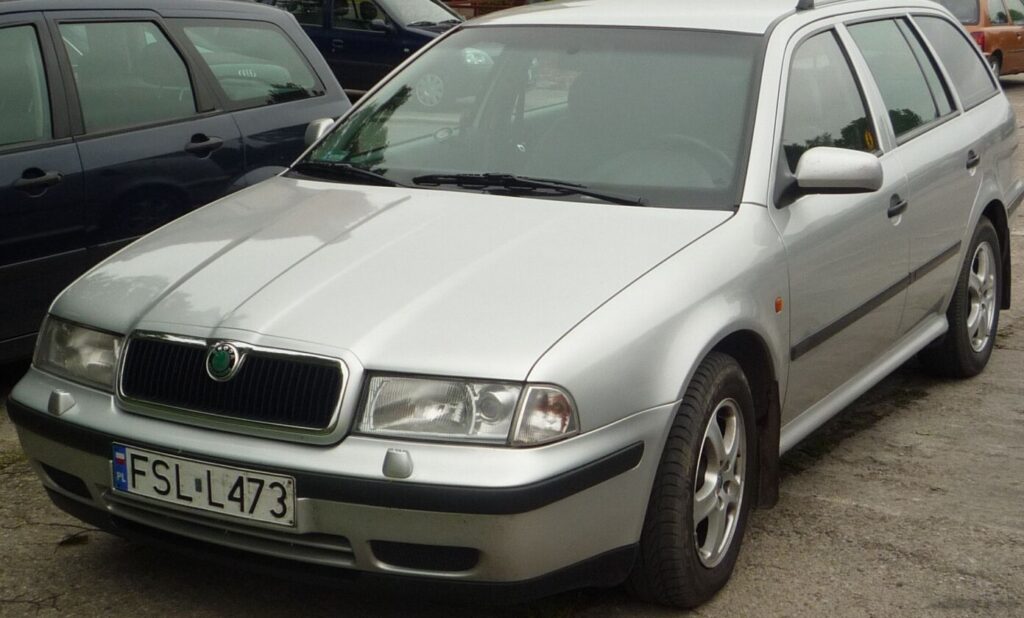
The Skoda Octavia I Combi Tour 1.9 TDI 4×4 Automatic, produced between October 1999 and July 2000, represents a niche offering within the first generation Octavia Combi (estate) range. Positioned as a practical, all-weather vehicle, it combined the fuel efficiency of a diesel engine with the convenience of an automatic transmission and the added security of all-wheel drive. This variant was primarily aimed at buyers in regions where inclement weather or varied road conditions were common, offering a blend of utility and capability. It falls within the 1HX0/A3 platform family, sharing components with the Volkswagen Golf, Bora, and Audi A3.
Technical Specifications
| Brand | Skoda |
| Model | Octavia |
| Generation | Octavia I Combi Tour |
| Type (Engine) | 1.9 TDI (90 Hp) 4×4 Automatic |
| Start of production | October, 1999 |
| End of production | July, 2000 |
| Powertrain Architecture | Internal Combustion engine |
| Body type | Station wagon (estate) |
| Seats | 5 |
| Doors | 5 |
| Fuel consumption (urban) | 7.3 l/100 km (32.2 US mpg, 38.7 UK mpg, 13.7 km/l) |
| Fuel consumption (extra urban) | 4.9 l/100 km (48 US mpg, 57.6 UK mpg, 20.4 km/l) |
| Fuel consumption (combined) | 5.8 l/100 km (40.6 US mpg, 48.7 UK mpg, 17.2 km/l) |
| Fuel Type | Diesel |
| Acceleration 0 – 100 km/h | 14.9 sec |
| Acceleration 0 – 62 mph | 14.9 sec |
| Acceleration 0 – 60 mph | 14.2 sec |
| Maximum speed | 176 km/h (109.36 mph) |
| Weight-to-power ratio | 15.8 kg/Hp, 63.4 Hp/tonne |
| Weight-to-torque ratio | 6.8 kg/Nm, 147.9 Nm/tonne |
| Power | 90 Hp @ 4000 rpm |
| Power per litre | 47.5 Hp/l |
| Torque | 210 Nm @ 1900 rpm (154.89 lb.-ft. @ 1900 rpm) |
| Engine layout | Front, Transverse |
| Engine Model/Code | AGR |
| Engine displacement | 1896 cm3 (115.7 cu. in.) |
| Number of cylinders | 4 |
| Engine configuration | Inline |
| Cylinder Bore | 79.5 mm (3.13 in.) |
| Piston Stroke | 95.5 mm (3.76 in.) |
| Compression ratio | 19:1 |
| Number of valves per cylinder | 2 |
| Fuel injection system | Direct injection |
| Engine aspiration | Turbocharger, Intercooler |
| Valvetrain | OHC |
| Engine oil capacity | 4.5 l (4.76 US qt | 3.96 UK qt) |
| Coolant capacity | 6.3 l (6.66 US qt | 5.54 UK qt) |
| Kerb Weight | 1420 kg (3130.56 lbs.) |
| Max. weight | 1950 kg (4299.01 lbs.) |
| Max load | 530 kg (1168.45 lbs.) |
| Trunk (boot) space – minimum | 448 l (15.82 cu. ft.) |
| Trunk (boot) space – maximum | 1412 l (49.86 cu. ft.) |
| Fuel tank capacity | 63 l (16.64 US gal | 13.86 UK gal) |
| Length | 4511 mm (177.6 in.) |
| Width | 1731 mm (68.15 in.) |
| Height | 1457 mm (57.36 in.) |
| Wheelbase | 2512 mm (98.9 in.) |
| Front track | 1516 mm (59.69 in.) |
| Rear track | 1492 mm (58.74 in.) |
| Drive wheel | All wheel drive (4×4) |
| Number of gears | 4 |
| Gearbox type | automatic transmission |
| Front suspension | Coil spring |
| Rear suspension | Coil spring |
| Front brakes | Ventilated discs |
| Rear brakes | Ventilated discs |
| Assisting systems | ABS (Anti-lock braking system) |
| Steering type | Steering rack and pinion |
| Power steering | Hydraulic Steering |
| Tires size | 195/65 R15 |
| Wheel rims size | 6.5J x 15 |
Powertrain & Engine Architecture
The heart of this Octavia variant is the 1.9-liter, four-cylinder AGR engine. This engine is a member of the Volkswagen Group’s diesel engine family, known for its durability and fuel efficiency. The AGR code designates a specific iteration of the 1.9 TDI, featuring direct injection and a turbocharger with an intercooler. Direct injection, in this case, utilizes a distributor-type pump (TDI) system, injecting fuel directly into the combustion chamber at extremely high pressure. This contributes to cleaner combustion and improved fuel economy. The engine employs an overhead camshaft (OHC) valvetrain with two valves per cylinder. The four-speed automatic transmission, typically an Aisin-Warner unit, was chosen for its robustness and relative simplicity. It’s a conventional hydraulic automatic, lacking the more advanced electronic controls found in later transmissions.
Driving Characteristics
The 90 horsepower output, coupled with 210 Nm (155 lb-ft) of torque, resulted in a driving experience focused on practicality rather than performance. Acceleration was modest, with a 0-60 mph time around 14.2 seconds. The automatic transmission, while convenient, did detract from the engine’s responsiveness. Gear ratios were optimized for fuel economy and smooth cruising, rather than spirited acceleration. Compared to the manual transmission versions of the same engine, the automatic felt noticeably slower. Higher-output TDI variants, such as the 110 hp or 130 hp versions, offered significantly more performance, but at the expense of fuel economy. The all-wheel-drive system provided enhanced traction, particularly in slippery conditions, making it a capable vehicle for year-round use.
Equipment & Trim Levels
The 1.9 TDI 4×4 Automatic typically came with a reasonable level of standard equipment. This included central locking, electric front windows, power steering, and an ABS anti-lock braking system. Interior upholstery was generally cloth, with a functional, if somewhat basic, dashboard layout. Optional extras included alloy wheels, a sunroof, air conditioning, and a radio/cassette player. The trim level often sat in the mid-range of the Octavia Combi lineup, offering a good balance of features and affordability. It wasn’t as sparsely equipped as the base models, but lacked the luxury appointments of the higher-spec versions.
Chassis & Braking
The Octavia Combi Tour utilized a MacPherson strut front suspension and a coil spring rear suspension. The all-wheel-drive system added weight, necessitating slightly firmer spring rates compared to front-wheel-drive models. Braking was provided by ventilated discs on all four wheels, offering adequate stopping power for the vehicle’s weight and performance. The ABS system helped to maintain steering control during emergency braking. Stabilizer bars were fitted front and rear to reduce body roll during cornering.
Market Reception & Comparison
The Skoda Octavia I Combi Tour 1.9 TDI 4×4 Automatic was generally well-received by automotive critics as a practical and economical estate car. Its fuel efficiency was a major selling point, and the all-wheel-drive system added a valuable layer of security for drivers in challenging weather conditions. However, the automatic transmission was often criticized for its lack of responsiveness. Compared to other trims, the 1.8L gasoline automatic was less fuel efficient but offered quicker acceleration. The 1.9 TDI manual was the preferred choice for drivers prioritizing performance and driver engagement. Reliability was generally good, although the TDI engine’s fuel injection pump could be prone to failure if not properly maintained.
Legacy
The 1.9 TDI engine, in various iterations, proved to be remarkably durable and long-lasting. Many examples of this powertrain are still on the road today, testament to its robust construction. The Octavia Combi Tour, as a whole, established Skoda as a credible competitor in the European estate car market. In the used car market, this specific variant – the 1.9 TDI 4×4 Automatic – remains a relatively affordable and practical option, particularly for those seeking a reliable and fuel-efficient all-weather vehicle. However, potential buyers should be aware of the potential for fuel injection pump issues and ensure that the vehicle has been regularly serviced.
