
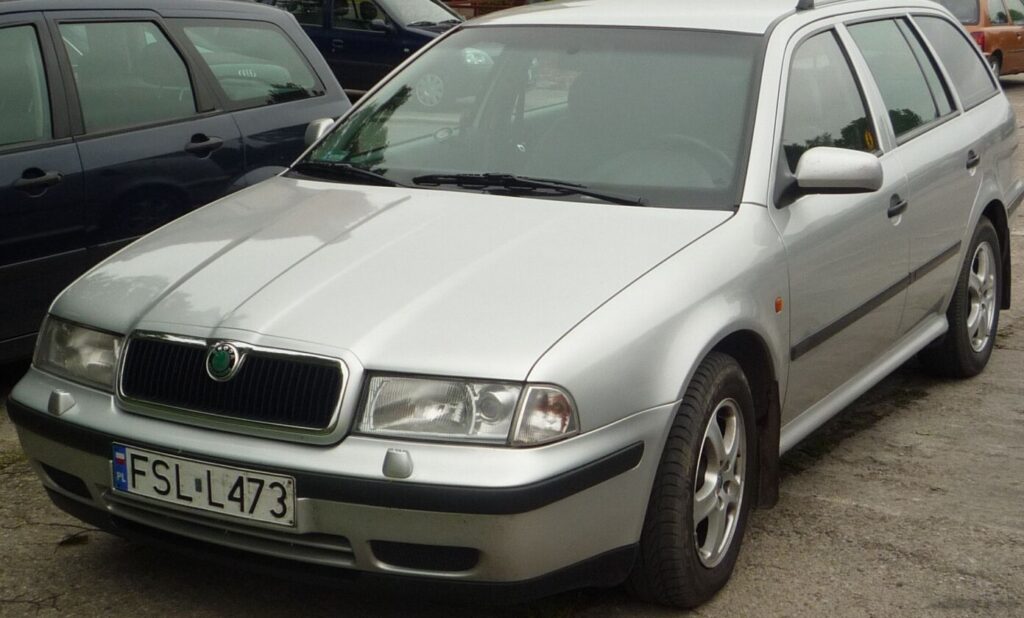
The Skoda Octavia I Combi Tour 2.0, produced between May 1999 and July 2000, represented a significant offering in the compact estate car segment. Part of the first generation Octavia (1HX0/A4 platform) facelift, the “Combi Tour” designation signified the updated styling and minor mechanical revisions applied to the original Octavia released in 1996. This 2.0-liter, 116 horsepower variant occupied a mid-range position within the Octavia lineup, offering a balance between performance, fuel economy, and practicality for family buyers. It was primarily marketed in Europe, where the station wagon (estate) body style held considerable popularity, and aimed to provide a spacious and affordable alternative to more premium competitors.
Technical Specifications
| Brand | Skoda |
| Model | Octavia |
| Generation | Octavia I Combi Tour |
| Type (Engine) | 2.0 (116 Hp) |
| Start of production | May, 1999 |
| End of production | July, 2000 |
| Powertrain Architecture | Internal Combustion engine |
| Body type | Station wagon (estate) |
| Seats | 5 |
| Doors | 5 |
| Fuel consumption (urban) | 11.2 l/100 km (21 US mpg, 25.2 UK mpg, 8.9 km/l) |
| Fuel consumption (extra urban) | 6.1 l/100 km (38.6 US mpg, 46.3 UK mpg, 16.4 km/l) |
| Fuel consumption (combined) | 8.1 l/100 km (29 US mpg, 34.9 UK mpg, 12.3 km/l) |
| Fuel Type | Petrol (Gasoline) |
| Acceleration 0 – 100 km/h | 10.9 sec |
| Acceleration 0 – 62 mph | 10.9 sec |
| Acceleration 0 – 60 mph | 10.4 sec |
| Maximum speed | 194 km/h (120.55 mph) |
| Weight-to-power ratio | 11 kg/Hp, 91 Hp/tonne |
| Weight-to-torque ratio | 7.5 kg/Nm, 133.3 Nm/tonne |
| Power | 116 Hp @ 5200 rpm |
| Power per litre | 58.5 Hp/l |
| Torque | 170 Nm @ 2400 rpm (125.39 lb.-ft. @ 2400 rpm) |
| Engine layout | Front, Transverse |
| Engine Model/Code | APK, AQY, AZH |
| Engine displacement | 1984 cm3 (121.07 cu. in.) |
| Number of cylinders | 4 |
| Engine configuration | Inline |
| Cylinder Bore | 82.5 mm (3.25 in.) |
| Piston Stroke | 92.8 mm (3.65 in.) |
| Compression ratio | 10:1 |
| Number of valves per cylinder | 2 |
| Fuel injection system | Multi-port manifold injection |
| Engine aspiration | Naturally aspirated engine |
| Valvetrain | OHC |
| Engine oil capacity | 4 l (4.23 US qt | 3.52 UK qt) |
| Coolant | 6.5 l (6.87 US qt | 5.72 UK qt) |
| Kerb Weight | 1275 kg (2810.89 lbs.) |
| Max. weight | 1825 kg (4023.44 lbs.) |
| Max load | 550 kg (1212.54 lbs.) |
| Trunk (boot) space – minimum | 548 l (19.35 cu. ft.) |
| Trunk (boot) space – maximum | 1512 l (53.4 cu. ft.) |
| Fuel tank capacity | 55 l (14.53 US gal | 12.1 UK gal) |
| Length | 4511 mm (177.6 in.) |
| Width | 1731 mm (68.15 in.) |
| Height | 1481 mm (58.31 in.) |
| Wheelbase | 2512 mm (98.9 in.) |
| Front track | 1516 mm (59.69 in.) |
| Rear (Back) track | 1492 mm (58.74 in.) |
| Drivetrain Architecture | The Internal combustion engine (ICE) drives the front wheels of the vehicle. |
| Drive wheel | Front wheel drive |
| Number of gears and type of gearbox | 5 gears, manual transmission |
| Front suspension | Coil spring |
| Rear suspension | Coil spring |
| Front brakes | Ventilated discs |
| Rear brakes | Disc |
| Assisting systems | ABS (Anti-lock braking system) |
| Steering type | Steering rack and pinion |
| Power steering | Hydraulic Steering |
| Tires size | 195/65 R15 |
Powertrain & Engine Architecture
The heart of the Octavia Combi Tour 2.0 was the 1984cc inline-four cylinder petrol engine, identifiable by engine codes APK, AQY, and AZH. This engine belonged to the EA827 family, a common powerplant used across various Volkswagen Group vehicles. It featured a single overhead camshaft (OHC) design with two valves per cylinder. Fuel delivery was managed by a multi-port fuel injection system, providing a balance between efficiency and performance. The engine’s 10:1 compression ratio contributed to its respectable power output. The 116 horsepower peak arrived at 5200 rpm, while the 170 Nm (125 lb-ft) of torque was readily available at 2400 rpm. The engine was transversely mounted in the front of the vehicle, driving the front wheels. The standard transmission for this variant was a five-speed manual gearbox, although a four-speed automatic transmission was also offered, albeit less common.
Driving Characteristics
The Octavia 2.0 Combi Tour, with its 116 hp, offered a reasonably sprightly driving experience. Acceleration from 0-60 mph took around 10.4 seconds, and it could achieve a top speed of 194 km/h (120.55 mph). Compared to the more powerful 1.8T versions, the 2.0 felt less urgent, particularly during overtaking maneuvers. However, the engine’s torque delivery made it perfectly adequate for everyday driving and long-distance cruising. The five-speed manual transmission allowed drivers to keep the engine in its optimal power band. The automatic transmission, while offering convenience, noticeably dulled performance and increased fuel consumption. The suspension, tuned for comfort, provided a compliant ride, although it wasn’t particularly sporty. Steering was light and precise, making the Octavia easy to maneuver in urban environments.
Equipment & Trim Levels
The 2.0-liter Octavia Combi Tour typically came with a decent level of standard equipment. This included central locking, power windows, power steering, and an anti-lock braking system (ABS). Interior upholstery was typically cloth, with a functional and durable design. Optional extras included alloy wheels, air conditioning, a radio/cassette player, and a sunroof. Trim levels varied slightly depending on the market, but generally, the 2.0-liter model was positioned as a mid-range offering, bridging the gap between the base 1.6-liter engine and the more performance-oriented 1.8T variants.
Chassis & Braking
The Octavia Combi Tour utilized a MacPherson strut front suspension and a twist-beam rear suspension. This setup provided a good balance between ride comfort and handling. The front brakes were ventilated discs, offering good stopping power, while the rear brakes were solid discs. The hydraulic power steering provided light and easy steering, making the car easy to maneuver. The 195/65 R15 tires offered adequate grip in most conditions.
Market Reception & Comparison
The Octavia Combi Tour 2.0 was generally well-received by automotive critics. It was praised for its spacious interior, practical estate car body style, and reasonable fuel economy. Compared to the 1.6-liter version, the 2.0-liter offered a noticeable performance improvement. However, it wasn’t as refined or powerful as the 1.8T models. Fuel economy was respectable, averaging around 8.1 l/100 km (29 US mpg). Reliability was generally good, although some owners reported minor issues with the fuel injection system and cooling system.
Legacy
The Skoda Octavia I Combi Tour 2.0 remains a popular choice in the used car market, particularly for those seeking a practical and affordable estate car. The EA827 engine, while not known for being particularly high-tech, is generally reliable and relatively inexpensive to maintain. Parts availability is good, thanks to the engine’s widespread use across the Volkswagen Group. While not a performance icon, the Octavia 2.0 Combi Tour represents a solid and dependable vehicle that offered a compelling combination of space, practicality, and affordability.
