
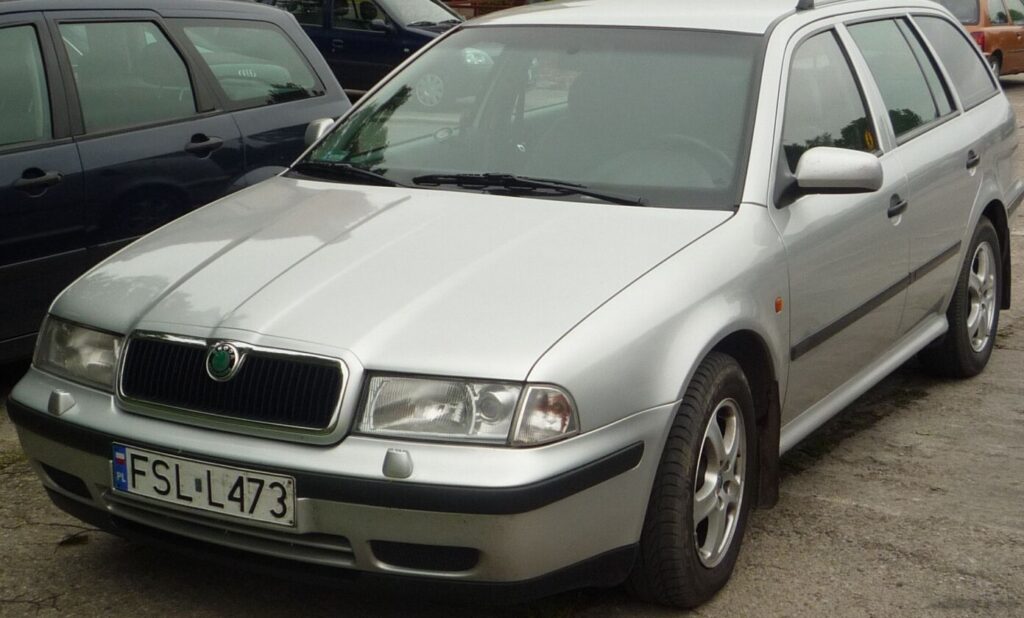
The Skoda Octavia I Combi Tour 2.0 (116 hp) Automatic, produced between May 1999 and July 2000, represented a practical and relatively affordable option within the first generation Octavia Combi (estate) range. Positioned as a mid-range offering, it catered to buyers seeking the versatility of a wagon with the convenience of an automatic transmission. This variant was built on the Volkswagen Group’s 1HX0/A3 platform, shared with models like the Volkswagen Golf, Bora, and Audi A3, and aimed to provide a spacious and comfortable family vehicle. The “Tour” designation indicated a facelift introduced in 1999, featuring minor cosmetic and equipment upgrades over the original Octavia Combi.
Technical Specifications
| Brand | Skoda |
| Model | Octavia |
| Generation | Octavia I Combi Tour |
| Type (Engine) | 2.0 (116 Hp) Automatic |
| Start of production | May, 1999 |
| End of production | July, 2000 |
| Powertrain Architecture | Internal Combustion engine |
| Body type | Station wagon (estate) |
| Seats | 5 |
| Doors | 5 |
| Fuel consumption (urban) | 12.6 l/100 km (18.7 US mpg, 22.4 UK mpg, 7.9 km/l) |
| Fuel consumption (extra urban) | 6.8 l/100 km (34.6 US mpg, 41.5 UK mpg, 14.7 km/l) |
| Fuel consumption (combined) | 8.9 l/100 km (26.4 US mpg, 31.7 UK mpg, 11.2 km/l) |
| Fuel Type | Petrol (Gasoline) |
| Acceleration 0 – 100 km/h | 12.6 sec |
| Acceleration 0 – 62 mph | 12.6 sec |
| Acceleration 0 – 60 mph | 12 sec |
| Maximum speed | 194 km/h (120.55 mph) |
| Weight-to-power ratio | 11 kg/Hp, 91 Hp/tonne |
| Weight-to-torque ratio | 7.5 kg/Nm, 133.3 Nm/tonne |
| Power | 116 Hp @ 5200 rpm |
| Power per litre | 58.5 Hp/l |
| Torque | 170 Nm @ 2400 rpm (125.39 lb.-ft. @ 2400 rpm) |
| Engine layout | Front, Transverse |
| Engine Model/Code | APK, AQY, AZH |
| Engine displacement | 1984 cm3 (121.07 cu. in.) |
| Number of cylinders | 4 |
| Engine configuration | Inline |
| Cylinder Bore | 82.5 mm (3.25 in.) |
| Piston Stroke | 92.8 mm (3.65 in.) |
| Compression ratio | 10:1 |
| Number of valves per cylinder | 2 |
| Fuel injection system | Multi-port manifold injection |
| Engine aspiration | Naturally aspirated engine |
| Valvetrain | OHC |
| Engine oil capacity | 4 l (4.23 US qt | 3.52 UK qt) |
| Coolant | 6.5 l (6.87 US qt | 5.72 UK qt) |
| Kerb Weight | 1275 kg (2810.89 lbs.) |
| Max. weight | 1825 kg (4023.44 lbs.) |
| Max load | 550 kg (1212.54 lbs.) |
| Trunk (boot) space – minimum | 548 l (19.35 cu. ft.) |
| Trunk (boot) space – maximum | 1512 l (53.4 cu. ft.) |
| Fuel tank capacity | 55 l (14.53 US gal | 12.1 UK gal) |
| Length | 4511 mm (177.6 in.) |
| Width | 1731 mm (68.15 in.) |
| Height | 1481 mm (58.31 in.) |
| Wheelbase | 2512 mm (98.9 in.) |
| Front track | 1516 mm (59.69 in.) |
| Rear (Back) track | 1492 mm (58.74 in.) |
| Drivetrain Architecture | The Internal combustion engine (ICE) drives the front wheels of the vehicle. |
| Drive wheel | Front wheel drive |
| Number of gears and type of gearbox | 4 gears, automatic transmission |
| Front suspension | Coil spring |
| Rear suspension | Coil spring |
| Front brakes | Ventilated discs |
| Rear brakes | Disc |
| Assisting systems | ABS (Anti-lock braking system) |
| Steering type | Steering rack and pinion |
| Power steering | Hydraulic Steering |
| Tires size | 195/65 R15 |
| Wheel rims size | 6.5J x 15 |
Powertrain & Engine Architecture
The 2.0-liter inline-four engine, designated with engine codes APK, AQY, or AZH depending on minor variations and market specifications, formed the heart of this Octavia variant. This engine was a naturally aspirated unit employing multi-port fuel injection. The engine featured a single overhead camshaft (OHC) design operating two valves per cylinder. The 116 horsepower output at 5200 rpm and 170 Nm (125 lb-ft) of torque at 2400 rpm were respectable for the time, but not particularly high-performance. The engine’s design prioritized fuel efficiency and reliability over outright power. The automatic transmission was typically a four-speed unit, designed to provide smooth shifts and ease of driving, particularly in urban environments. This transmission wasn’t known for its sportiness, with gear ratios geared towards economy rather than acceleration.
Driving Characteristics
The Octavia Combi Tour 2.0 Automatic offered a comfortable, if not particularly exciting, driving experience. Acceleration from 0-60 mph took around 12 seconds, and top speed was approximately 120 mph. The automatic transmission, while convenient, did detract from the engine’s available power. Compared to the five-speed manual version of the same engine, the automatic felt noticeably slower, especially during overtaking maneuvers. The gear ratios were spaced to prioritize fuel economy, resulting in the engine feeling somewhat strained at higher speeds. The suspension provided a compliant ride, absorbing bumps and imperfections in the road well, making it a suitable vehicle for long journeys. Steering was light and easy, but lacked significant feedback.
Equipment & Trim Levels
The 2.0 Automatic trim typically included features such as power windows, central locking, and an adjustable steering column as standard. Interior upholstery was usually cloth, with options for upgraded materials available. Air conditioning was a common option. The dashboard layout was functional and straightforward, typical of Volkswagen Group designs of the era. Optional extras included alloy wheels, a radio/cassette player (or CD player), and a sunroof. Safety features included ABS brakes and driver and passenger airbags.
Chassis & Braking
The Octavia Combi Tour utilized a MacPherson strut front suspension and a coil spring rear suspension. The front brakes were ventilated discs, providing adequate stopping power, while the rear brakes were solid discs. The suspension setup was tuned for comfort, prioritizing ride quality over sporty handling. Stabilizer bars were fitted to both the front and rear axles to reduce body roll during cornering. The weight distribution was reasonably balanced, contributing to predictable handling characteristics.
Market Reception & Comparison
The Octavia Combi Tour 2.0 Automatic was generally well-received as a practical and affordable family car. Critics praised its spacious interior, large trunk capacity, and comfortable ride. However, the automatic transmission was often criticized for its lack of responsiveness and its impact on fuel economy. Compared to the 1.8-liter versions, the 2.0-liter offered more torque and slightly better performance, but at a higher price point. The 1.9 TDI diesel version was a popular alternative, offering significantly better fuel economy and strong low-end torque, but with a higher initial cost and potentially higher maintenance expenses.
Legacy
The Skoda Octavia I Combi Tour 2.0 Automatic has proven to be a relatively reliable vehicle, with the 2.0-liter engine and four-speed automatic transmission generally holding up well over time. However, like any older vehicle, regular maintenance is crucial to prevent issues. Common problems include wear and tear on suspension components, corrosion, and potential issues with the automatic transmission. Today, these Octavias are readily available on the used car market at affordable prices, making them a practical choice for budget-conscious buyers seeking a spacious and reliable estate car. The Octavia’s reputation for practicality and value has continued with subsequent generations, solidifying its position as a popular choice in the European market and increasingly in other regions as well.
