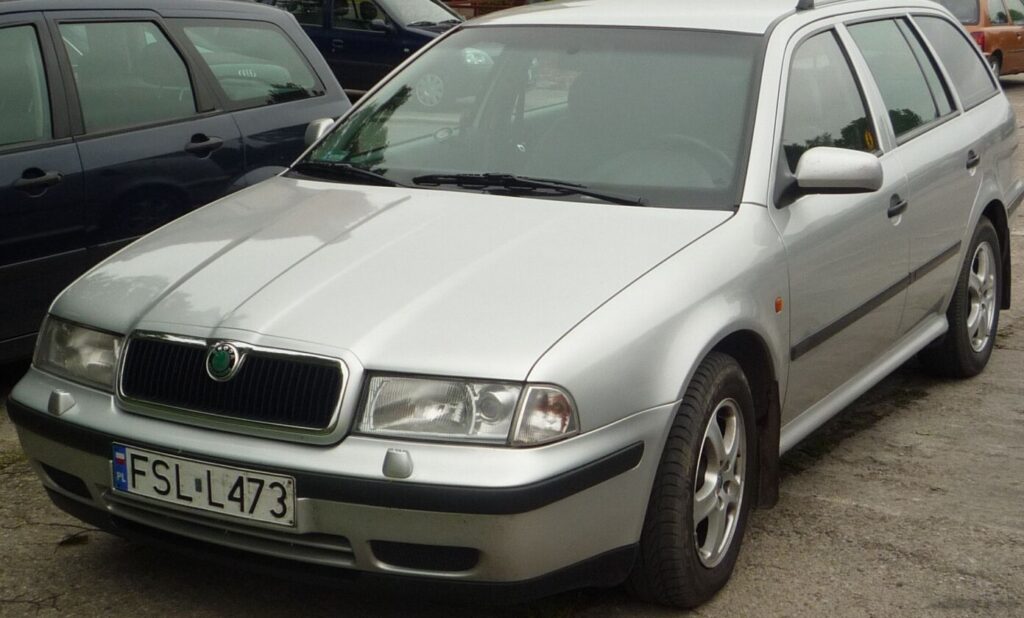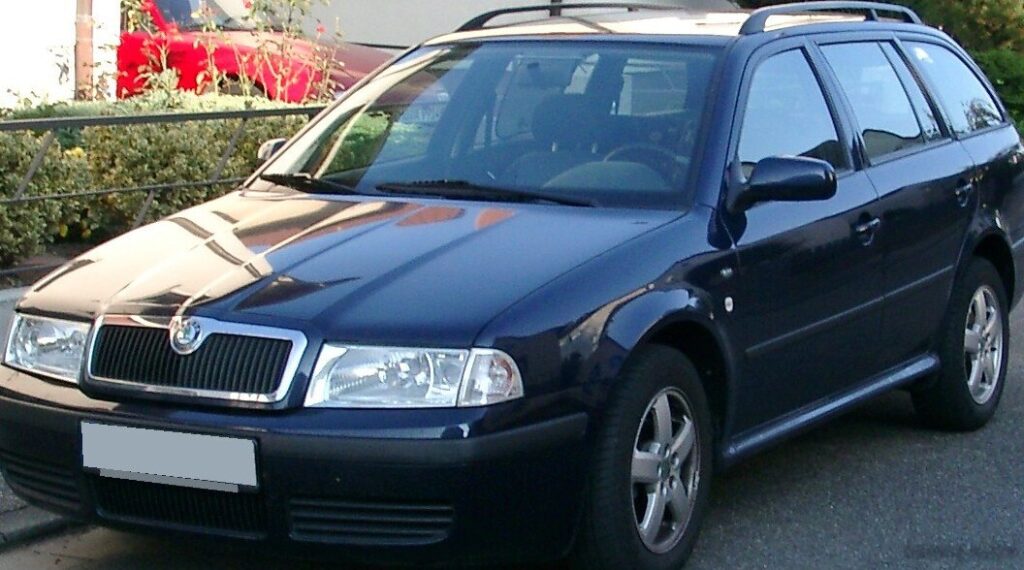
The Skoda Octavia I Combi Tour, specifically the 1.6-liter (102 horsepower) variant produced from 2000 to 2010, represented an important entry point into the popular compact estate car segment. Introduced as part of the facelifted first-generation Octavia (designated the “Tour” in some markets), this model aimed to provide practical family transport with reasonable running costs. It was positioned as the base engine and transmission option within the Combi (estate) body style, appealing to buyers prioritizing affordability and fuel efficiency over outright performance. The Octavia I Combi Tour, built on the Volkswagen Group’s A4 (1HX0) platform, shared many components with the Volkswagen Golf, Audi A3, and SEAT Leon, but offered a significantly larger cargo capacity thanks to its estate body style.
Technical Specifications
| Brand | Skoda |
| Model | Octavia |
| Generation | Octavia I Combi Tour (facelift 2000) |
| Type (Engine) | 1.6 (102 Hp) |
| Start of production | August, 2000 |
| End of production | December, 2010 |
| Powertrain Architecture | Internal Combustion engine |
| Body type | Station wagon (estate) |
| Seats | 5 |
| Doors | 5 |
| Fuel consumption (urban) | 9.9 l/100 km (23.8 US mpg) |
| Fuel consumption (extra urban) | 5.5 l/100 km (42.8 US mpg) |
| Fuel consumption (combined) | 7.2 l/100 km (32.7 US mpg) |
| Fuel Type | Petrol (Gasoline) |
| Acceleration 0 – 100 km/h | 11.9 sec |
| Acceleration 0 – 62 mph | 11.9 sec |
| Acceleration 0 – 60 mph | 11.3 sec |
| Maximum speed | 190 km/h (118.06 mph) |
| Weight-to-power ratio | 12.7 kg/Hp |
| Weight-to-torque ratio | 8.8 kg/Nm |
| Power | 102 Hp @ 5600 rpm |
| Torque | 148 Nm @ 3800 rpm (109.16 lb.-ft. @ 3800 rpm) |
| Engine layout | Front, Transverse |
| Engine Model/Code | AVU, BFQ |
| Engine displacement | 1595 cm3 (97.33 cu. in.) |
| Number of cylinders | 4 |
| Engine configuration | Inline |
| Cylinder Bore | 81 mm (3.19 in.) |
| Piston Stroke | 77.4 mm (3.05 in.) |
| Compression ratio | 10.5:1 |
| Number of valves per cylinder | 2 |
| Fuel injection system | Multi-port manifold injection |
| Engine aspiration | Naturally aspirated engine |
| Valvetrain | OHC |
| Engine oil capacity | 4.5 l (4.76 US qt | 3.96 UK qt) |
| Coolant capacity | 7 l (7.4 US qt | 6.16 UK qt) |
| Kerb Weight | 1295 kg (2854.99 lbs.) |
| Max. weight | 1805 kg (3979.34 lbs.) |
| Max load | 510 kg (1124.36 lbs.) |
| Trunk (boot) space – minimum | 548 l (19.35 cu. ft.) |
| Trunk (boot) space – maximum | 1512 l (53.4 cu. ft.) |
| Fuel tank capacity | 55 l (14.53 US gal | 12.1 UK gal) |
| Length | 4513 mm (177.68 in.) |
| Width | 1731 mm (68.15 in.) |
| Height | 1457 mm (57.36 in.) |
| Wheelbase | 2500 mm (98.43 in.) |
| Front track | 1513 mm (59.57 in.) |
| Rear track | 1494 mm (58.82 in.) |
| Drivetrain Architecture | Front wheel drive |
| Number of gears | 5 |
| Gearbox type | Manual transmission |
| Front suspension | Wishbone |
| Rear suspension | Several levers and rods |
| Front brakes | Ventilated discs |
| Rear brakes | Drum |
| Assisting systems | ABS (Anti-lock braking system) |
| Steering type | Steering rack and pinion |
| Power steering | Hydraulic Steering |
| Tires size | 175/80 R14 |
Powertrain & Engine Architecture
The 1.6-liter engine, identified by engine codes AVU and BFQ, is a naturally aspirated, inline-four cylinder petrol engine. It features a single overhead camshaft (OHC) operating two valves per cylinder. Fuel delivery is managed by a multi-port fuel injection system, a common setup for engines of this era. The engine’s 1595 cc displacement and 10.5:1 compression ratio contribute to its modest power output. The five-speed manual transmission was the standard pairing for this engine, offering a relatively simple and durable drivetrain. This transmission was known for its smooth shifts, but wasn’t particularly sporty in its gearing. The engine’s design prioritized fuel economy and reliability over high performance.
Driving Characteristics
The 1.6-liter Octavia Combi Tour with a manual transmission delivered adequate, but not exhilarating, performance. Acceleration from 0-60 mph took around 11.3 seconds, and top speed was approximately 118 mph. The engine felt somewhat strained when fully loaded or climbing hills, requiring frequent downshifts to maintain speed. Compared to the more powerful 1.8-liter turbocharged or 2.0-liter petrol variants, the 1.6 felt noticeably slower. However, the 1.6 offered a more relaxed driving experience, with a focus on fuel efficiency and ease of use. The gear ratios were tuned for economy, meaning the engine didn’t rev as freely as some competitors.
Equipment & Trim Levels
The 1.6-liter Octavia Combi Tour typically came with a fairly basic level of equipment. Standard features generally included power steering, central locking, electric front windows, and an adjustable steering column. Interior upholstery was typically cloth, and the dashboard featured a functional, if somewhat plain, design. Optional extras included air conditioning, alloy wheels, a radio/CD player, and rear electric windows. Higher trim levels, such as the Elegance, added features like climate control, upgraded upholstery, and more exterior chrome detailing. The base trim was aimed at budget-conscious buyers, while the higher trims offered increased comfort and convenience.
Chassis & Braking
The Octavia Combi Tour’s chassis featured independent front suspension with wishbones and a multi-link rear suspension. This setup provided a comfortable ride, although it wasn’t particularly sporty. Front brakes were ventilated discs, offering adequate stopping power, while rear brakes were drums. This drum brake setup on the rear was a cost-saving measure common in this class of vehicle. ABS (Anti-lock Braking System) was standard, enhancing safety. The suspension was tuned for comfort and stability, prioritizing a smooth ride over sharp handling.
Market Reception & Comparison
The 1.6-liter Octavia Combi Tour was generally well-received as a practical and affordable estate car. Critics praised its spacious interior, large boot capacity, and reasonable fuel economy. However, the engine’s lack of power was often noted as a drawback, particularly when compared to more powerful alternatives. In terms of fuel economy, the 1.6-liter engine offered a significant advantage over the larger petrol engines, achieving around 32.7 US mpg in combined driving. Reliability was generally good, although the engine’s timing belt required periodic replacement to prevent catastrophic failure. Compared to the 1.9 TDI diesel variant, the 1.6 petrol offered lower purchase price but significantly higher running costs due to fuel consumption.
Legacy
The Skoda Octavia I Combi Tour 1.6 remains a popular choice in the used car market, particularly for buyers seeking an affordable and reliable estate car. The engine is known for its durability, although regular maintenance is essential. The availability of spare parts is good, and repair costs are generally reasonable. While not a performance car, the 1.6-liter Octavia Combi Tour provides a practical and economical solution for families and individuals needing a spacious and versatile vehicle. Its enduring popularity is a testament to its well-rounded design and value proposition.