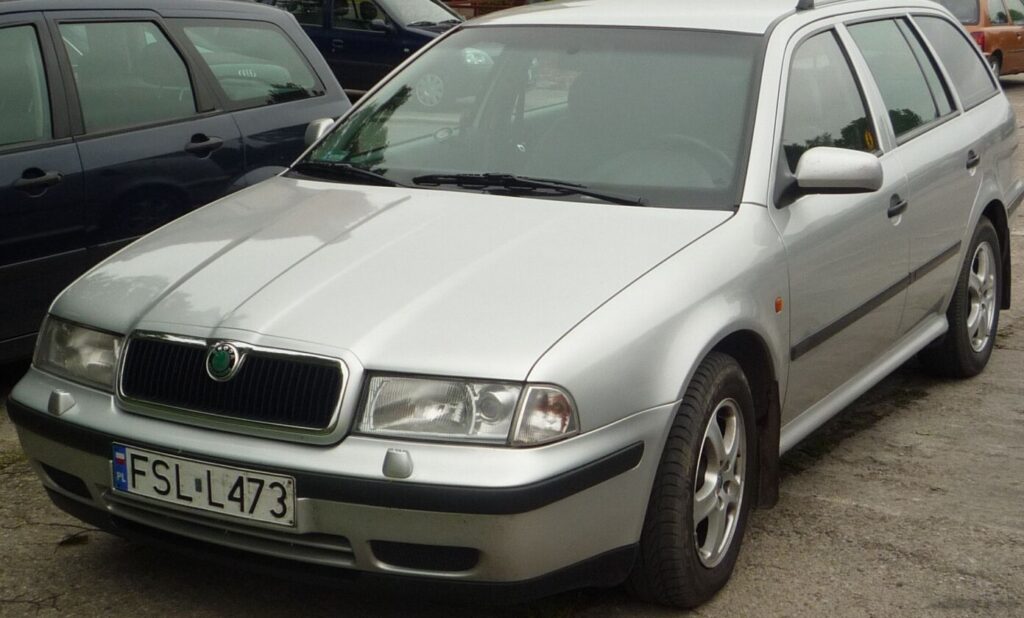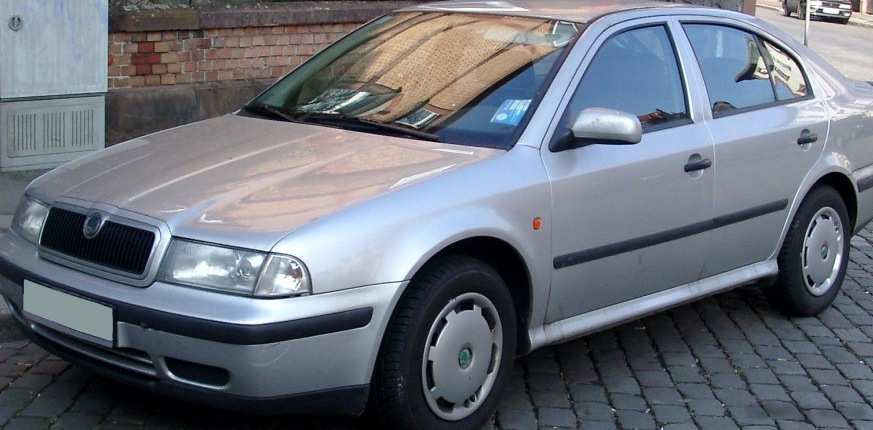
The Skoda Octavia I Tour 2.0 (115 hp) represents a significant step in Skoda’s modernization under Volkswagen Group ownership. Produced between May 1999 and July 2000, this variant occupied a mid-range position within the Octavia I Tour lineup, offering a balance between performance and affordability. It was built on the Volkswagen Group’s A4 (1HX0) platform, shared with models like the Volkswagen Golf Mk4, Audi A3, and SEAT Leon. The 2.0-liter engine provided a noticeable upgrade over the base 1.6-liter models, appealing to buyers seeking more power for highway driving and carrying passengers or cargo.
The 2.0-Liter Engine and its Position in the Octavia I Tour Range
The Octavia I Tour was offered with a variety of engine and transmission combinations. The 2.0-liter 115 hp engine, paired with a five-speed manual transmission, was positioned above the entry-level 1.6-liter options and below the more powerful and expensive 1.8-liter 20V and diesel variants. The 1.6-liter engines were geared towards economy-minded buyers, while the 1.8 and diesel models catered to those prioritizing performance or fuel efficiency, respectively. The 2.0-liter struck a compromise, offering a reasonable level of performance without the higher price tag of the top-tier trims. This made it a popular choice for families and drivers who needed a versatile and reliable vehicle.
Powertrain & Engine Architecture
The heart of the Octavia I Tour 2.0 is the inline four-cylinder, naturally aspirated gasoline engine, identifiable by engine codes APK, AQY, and AZH. This engine features a displacement of 1984 cc (121.07 cubic inches) with a bore of 82.5 mm (3.25 inches) and a stroke of 92.8 mm (3.65 inches). It operates with a compression ratio of 10:1 and utilizes a single overhead camshaft (OHC) valvetrain with two valves per cylinder. Fuel delivery is managed by a multi-port manifold injection system. The engine’s design prioritized reliability and ease of maintenance, characteristics valued by Skoda owners.
The five-speed manual transmission was the standard pairing for this engine. It’s a robust unit designed to handle the engine’s 170 Nm (125.39 lb-ft) of torque at 2400 rpm. The transmission’s gear ratios were tuned for a balance of acceleration and fuel economy, providing adequate performance in both urban and highway driving conditions.
Driving Characteristics
The Octavia I Tour 2.0 (115 hp) offered a respectable driving experience for its time. Acceleration from 0 to 100 km/h (0-62 mph) took approximately 10.8 seconds, while 0-60 mph was achieved in around 10.3 seconds. The maximum speed was rated at 198 km/h (123.03 mph). While not a sports car, the 2.0-liter engine provided sufficient power for overtaking maneuvers and maintaining comfortable cruising speeds on the highway. The engine’s torque curve was relatively flat, delivering usable power across a wide range of engine speeds. Compared to the 1.6-liter models, the 2.0-liter felt noticeably more responsive, particularly when fully loaded. However, it lacked the outright punch of the 1.8-liter 20V engine, which offered a more exciting driving experience but at a higher cost.
Equipment & Trim Levels
The Octavia I Tour 2.0 typically came equipped with a reasonable level of standard features. These included power steering, central locking, electric front windows, and an adjustable steering column. Interior upholstery was typically cloth, with a functional and durable design. Dashboard configuration was straightforward and easy to use. Optional extras available for this trim included air conditioning, alloy wheels, a radio/cassette player, and upgraded interior trim. Higher trim levels, often denoted by additional letters or packages, added features like rear electric windows, a sunroof, and more luxurious interior appointments.
Chassis & Braking
The Octavia I Tour 2.0 utilized a coil spring suspension system for both the front and rear axles. The front suspension featured independent MacPherson struts, while the rear employed a semi-independent torsion beam setup. This configuration provided a comfortable ride quality, absorbing bumps and imperfections in the road surface effectively. The braking system consisted of disc brakes on all four wheels, providing adequate stopping power for the vehicle’s weight. An Anti-lock Braking System (ABS) was often included as standard equipment, enhancing safety and control during emergency braking situations. The vehicle’s curb weight of 1260 kg (2777.82 lbs) contributed to its stable handling characteristics.
Market Reception & Comparison
The Octavia I Tour 2.0 (115 hp) was generally well-received by automotive critics. It was praised for its spacious interior, comfortable ride, and reasonable performance. Fuel economy was also a strong point, with combined fuel consumption figures of around 8 l/100 km (29.4 US mpg, 35.3 UK mpg). Compared to other trims in the lineup, the 2.0-liter offered a good balance of value and performance. While the 1.6-liter models were more affordable, they lacked the power needed for comfortable highway driving. The 1.8-liter and diesel variants offered more performance or fuel efficiency, but at a higher price point. The 2.0-liter proved to be a popular choice for buyers seeking a practical and reliable family car.
Technical Specifications
| Brand | Skoda |
| Model | Octavia |
| Generation | Octavia I Tour |
| Type (Engine) | 2.0 (115 Hp) |
| Start of production | May, 1999 |
| End of production | July, 2000 |
| Powertrain Architecture | Internal Combustion engine |
| Body type | Hatchback |
| Seats | 5 |
| Doors | 5 |
| Fuel consumption (urban) | 11.2 l/100 km (21 US mpg, 25.2 UK mpg) |
| Fuel consumption (extra urban) | 6.1 l/100 km (38.6 US mpg, 46.3 UK mpg) |
| Fuel consumption (combined) | 8 l/100 km (29.4 US mpg, 35.3 UK mpg) |
| Fuel Type | Petrol (Gasoline) |
| Acceleration 0 – 100 km/h | 10.8 sec |
| Acceleration 0 – 62 mph | 10.8 sec |
| Acceleration 0 – 60 mph | 10.3 sec |
| Maximum speed | 198 km/h (123.03 mph) |
| Weight-to-power ratio | 11 kg/Hp |
| Weight-to-torque ratio | 7.4 kg/Nm |
| Power | 115 Hp @ 5200 rpm |
| Torque | 170 Nm @ 2400 rpm (125.39 lb.-ft. @ 2400 rpm) |
| Engine layout | Front, Transverse |
| Engine Model/Code | APK, AQY, AZH |
| Engine displacement | 1984 cm3 (121.07 cu. in.) |
| Number of cylinders | 4 |
| Engine configuration | Inline |
| Cylinder Bore | 82.5 mm (3.25 in.) |
| Piston Stroke | 92.8 mm (3.65 in.) |
| Compression ratio | 10:1 |
| Number of valves per cylinder | 2 |
| Fuel injection system | Multi-port manifold injection |
| Engine aspiration | Naturally aspirated engine |
| Valvetrain | OHC |
| Engine oil capacity | 4 l (4.23 US qt | 3.52 UK qt) |
| Coolant | 6.5 l (6.87 US qt | 5.72 UK qt) |
| Kerb Weight | 1260 kg (2777.82 lbs.) |
| Max. weight | 1805 kg (3979.34 lbs.) |
| Max load | 545 kg (1201.52 lbs.) |
| Trunk (boot) space – minimum | 528 l (18.65 cu. ft.) |
| Trunk (boot) space – maximum | 1330 l (46.97 cu. ft.) |
| Fuel tank capacity | 55 l (14.53 US gal | 12.1 UK gal) |
| Length | 4511 mm (177.6 in.) |
| Width | 1730 mm (68.11 in.) |
| Height | 1430 mm (56.3 in.) |
| Wheelbase | 2512 mm (98.9 in.) |
| Front track | 1516 mm (59.69 in.) |
| Rear (Back) track | 1492 mm (58.74 in.) |
| Drive wheel | Front wheel drive |
| Number of gears and type of gearbox | 5 gears, manual transmission |
Legacy
The Skoda Octavia I Tour 2.0 (115 hp) powertrain has proven to be remarkably durable over the long term. With regular maintenance, these engines can reliably exceed 200,000 kilometers (124,000 miles). Common issues are typically related to age and wear, such as oil leaks, coolant system deterioration, and sensor failures. On the used car market, these Octavias are often sought after for their affordability, practicality, and reputation for reliability. They represent a good value proposition for buyers looking for a dependable and spacious hatchback. The engine’s simplicity and robust construction contribute to its continued popularity among both owners and mechanics.