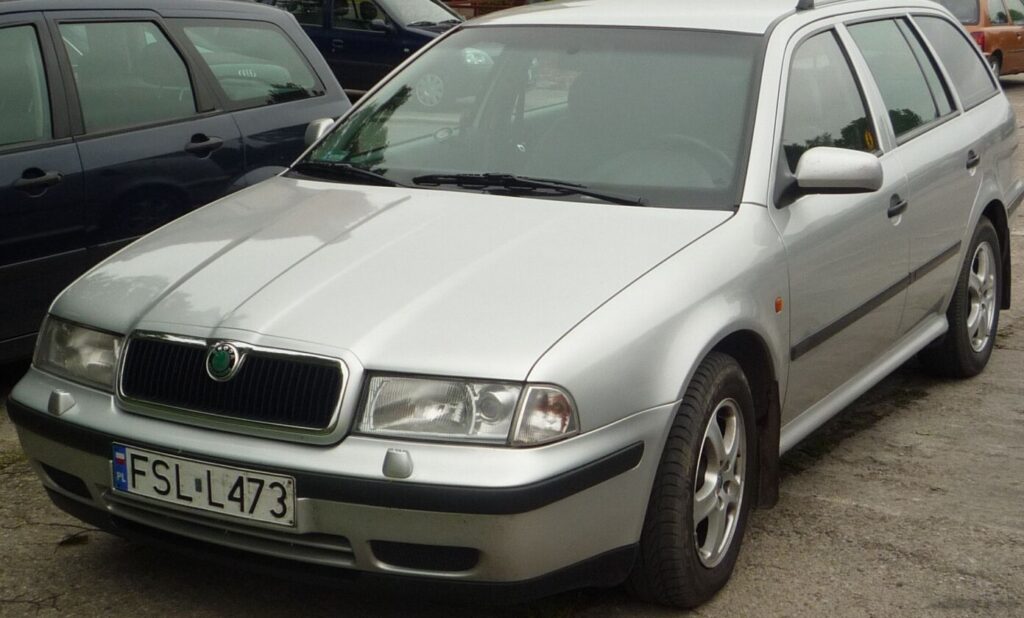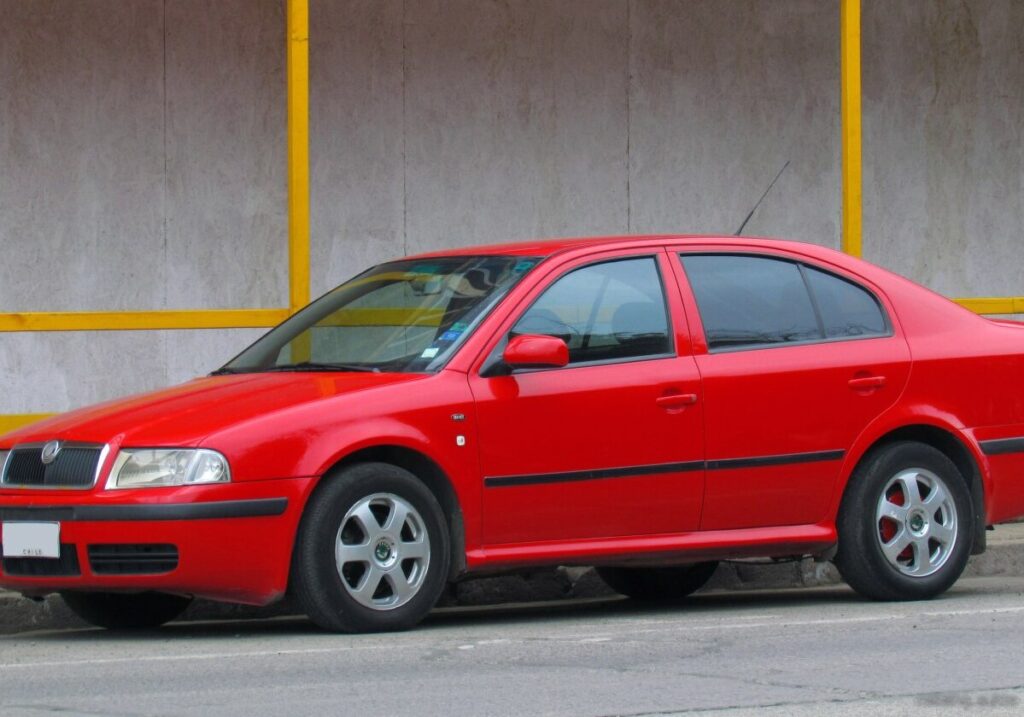
The Skoda Octavia I Tour (facelift, introduced in 2000) 1.4, producing 75 horsepower, represented the entry point into the Octavia range during its production run from August 2000 to December 2010. Positioned as the most affordable option, this variant was aimed at buyers prioritizing economy and practicality over outright performance. It was built on the Volkswagen Group’s A4 (1HX0) platform, shared with the Volkswagen Golf, Bora, and Audi A3, and the facelift brought updated styling and minor mechanical improvements over the original Octavia I introduced in 1996. The 1.4-liter engine and five-speed manual transmission combination was a mainstay of the Octavia lineup, offering a balance between cost and usability.
Powertrain & Engine Architecture
The heart of the Octavia 1.4 was the BCA engine code, a 1390cc inline four-cylinder gasoline engine. This engine featured a naturally aspirated intake and a multi-port fuel injection system, delivering fuel directly into the intake ports. The engine employed a double overhead camshaft (DOHC) valvetrain with four valves per cylinder, contributing to improved breathing and efficiency. The compression ratio was set at 10.5:1. Engine oil capacity was 3.2 liters (3.38 US quarts / 2.82 UK quarts), and the recommended coolant capacity was 5.5 liters (5.81 US quarts / 4.84 UK quarts).
While an automatic transmission was offered on higher-spec Octavia models, the 75 hp 1.4 was almost exclusively paired with a five-speed manual gearbox. This transmission was chosen to maximize fuel efficiency and provide adequate performance for the engine’s output. The gearbox was a standard, fully synchronized unit, designed for durability and ease of use. The front wheels were driven via standard driveshafts.
Engine Specifications (BCA)
The BCA engine was known for its relatively simple design, contributing to its reliability. However, it wasn’t without its quirks. Early versions sometimes experienced issues with the throttle body and idle air control valve. The engine’s power output of 75 hp at 5000 rpm and torque of 126 Nm (92.93 lb-ft) at 3300 rpm were modest, but sufficient for everyday driving. The engine’s power-to-liter ratio was 54 hp/l.
Driving Characteristics
The Octavia 1.4 75 hp offered a predictable, if uninspiring, driving experience. Acceleration was leisurely, taking approximately 15.3 seconds to reach 100 km/h (62 mph) and around 14.5 seconds to 60 mph. The top speed was 171 km/h (106.25 mph). The five-speed manual transmission was well-matched to the engine’s characteristics, allowing drivers to keep the engine in its optimal power band. However, overtaking maneuvers required careful planning, and the engine could feel strained when fully loaded or climbing hills. The gear ratios were fairly conventional, prioritizing fuel economy over rapid acceleration. First gear was geared for smooth starts, while fifth gear was designed for comfortable cruising on the highway.
Compared to the more powerful 1.8L and 2.0L variants, the 1.4 felt significantly slower. The 1.8L, in particular, offered a noticeable improvement in performance, making it a more appealing choice for drivers who frequently traveled on motorways or carried passengers. The diesel variants, such as the 1.9 TDI, provided superior fuel economy and torque, but at a higher initial cost.
Equipment & Trim Levels
The 1.4 75 hp Octavia typically came with a basic level of equipment. Standard features generally included power steering, central locking, front electric windows, and an adjustable steering column. Safety features included ABS (Anti-lock Braking System) and driver and passenger airbags. Interior upholstery was typically cloth, and the dashboard featured a simple, functional design.
Optional extras included air conditioning, alloy wheels, rear electric windows, a radio/CD player, and upgraded interior trim. Higher trim levels, such as the ‘Classic’ and ‘Elegance’ offered more comprehensive equipment lists, but these were usually paired with the more powerful engines. The base 1.4 model was deliberately kept spartan to maintain its affordability.
Chassis & Braking
The Octavia 1.4 utilized a front-wheel-drive layout with independent wishbone suspension at the front and a multi-link rear suspension. This suspension setup provided a reasonable balance between ride comfort and handling. The front brakes were ventilated discs, offering good stopping power, while the rear brakes were drum brakes, a cost-saving measure for the entry-level model.
The steering was a hydraulic power-assisted rack and pinion system, providing a light and responsive feel. Tire size was typically 175/80 R14. The kerb weight of the Octavia 1.4 was 1250 kg (2755.78 lbs), and the maximum permissible weight was 1750 kg (3858.09 lbs). The weight-to-power ratio was 16.7 kg/hp, and the weight-to-torque ratio was 9.9 kg/Nm.
Market Reception & Comparison
The Skoda Octavia 1.4 75 hp was generally well-received as a practical and affordable family car. Critics praised its spacious interior, comfortable ride, and good fuel economy. However, the engine’s lack of power was a common criticism. Compared to its rivals, such as the Ford Focus and Vauxhall/Opel Astra, the Octavia offered a more generous interior space and a more robust build quality.
Fuel economy figures were respectable for the time, with combined fuel consumption averaging 6.7 l/100 km (35.1 US mpg / 42.2 UK mpg / 14.9 km/l). Reliability was generally good, although some owners reported minor issues with the engine’s sensors and the throttle body. The 1.4 was significantly more economical than the 1.8L and 2.0L variants, but it also lacked their performance. The diesel models offered even better fuel economy, but were more expensive to purchase.
Technical Specifications
| Brand | Skoda |
| Model | Octavia I Tour (facelift 2000) |
| Type (Engine) | 1.4 (75 Hp) |
| Start of production | August, 2000 |
| End of production | December, 2010 |
| Powertrain Architecture | Internal Combustion engine |
| Body type | Hatchback |
| Seats | 5 |
| Doors | 5 |
| Fuel consumption (urban) | 9 l/100 km (26.1 US mpg, 31.4 UK mpg, 11.1 km/l) |
| Fuel consumption (extra urban) | 5.4 l/100 km (43.6 US mpg, 52.3 UK mpg, 18.5 km/l) |
| Fuel consumption (combined) | 6.7 l/100 km (35.1 US mpg, 42.2 UK mpg, 14.9 km/l) |
| Fuel Type | Petrol (Gasoline) |
| Acceleration 0 – 100 km/h | 15.3 sec |
| Acceleration 0 – 62 mph | 15.3 sec |
| Acceleration 0 – 60 mph | 14.5 sec |
| Maximum speed | 171 km/h (106.25 mph) |
| Power | 75 Hp @ 5000 rpm |
| Torque | 126 Nm @ 3300 rpm (92.93 lb.-ft. @ 3300 rpm) |
| Engine layout | Front, Transverse |
| Engine Model/Code | BCA |
| Engine displacement | 1390 cm3 (84.82 cu. in.) |
| Number of cylinders | 4 |
| Engine configuration | Inline |
| Cylinder Bore | 76.5 mm (3.01 in.) |
| Piston Stroke | 75.6 mm (2.98 in.) |
| Compression ratio | 10.5:1 |
| Number of valves per cylinder | 4 |
| Fuel injection system | Multi-port manifold injection |
| Engine aspiration | Naturally aspirated |
| Valvetrain | DOHC |
| Engine oil capacity | 3.2 l (3.38 US qt | 2.82 UK qt) |
| Coolant | 5.5 l (5.81 US qt | 4.84 UK qt) |
| Kerb Weight | 1250 kg (2755.78 lbs.) |
| Max. weight | 1750 kg (3858.09 lbs.) |
| Trunk (boot) space – minimum | 528 l (18.65 cu. ft.) |
| Trunk (boot) space – maximum | 1328 l (46.9 cu. ft.) |
| Fuel tank capacity | 55 l (14.53 US gal | 12.1 UK gal) |
| Length | 4507 mm (177.44 in.) |
| Width | 1731 mm (68.15 in.) |
| Height | 1431 mm (56.34 in.) |
| Wheelbase | 2500 mm (98.43 in.) |
| Drive wheel | Front wheel drive |
| Number of gears and type of gearbox | 5 gears, manual transmission |
Legacy
The Skoda Octavia 1.4 75 hp, while not the most exciting version of the Octavia, proved to be a reliable and economical choice for many buyers. Today, these models are readily available on the used car market at very affordable prices. The BCA engine, while prone to minor issues, is generally considered durable and relatively easy to maintain. Parts availability is good, thanks to the Octavia’s widespread popularity and the shared components with other Volkswagen Group vehicles. The 1.4 Octavia remains a practical and cost-effective option for those seeking a spacious and dependable family car, particularly for shorter commutes and urban driving.