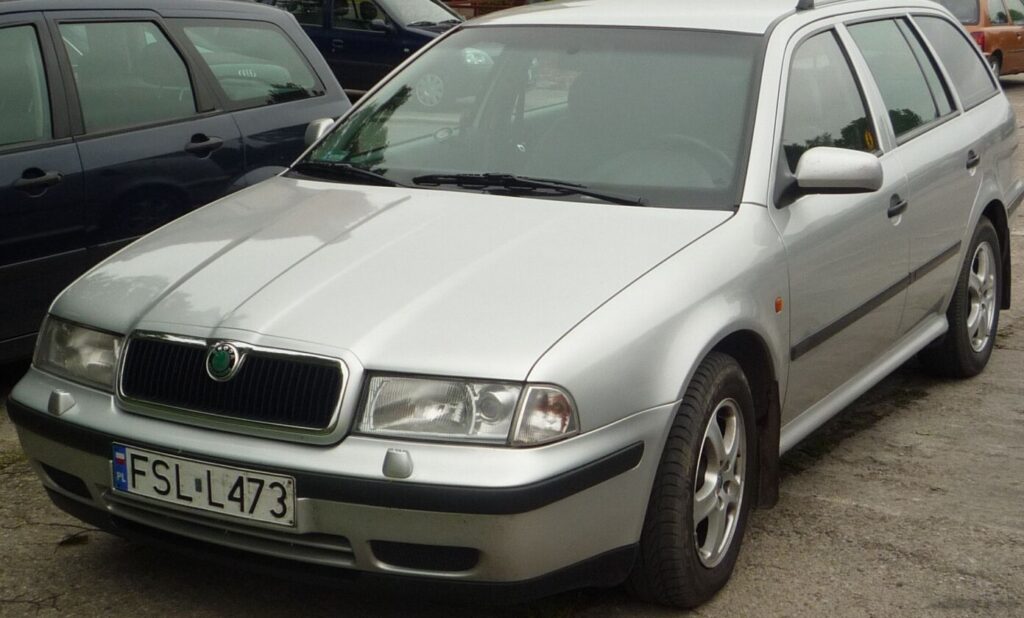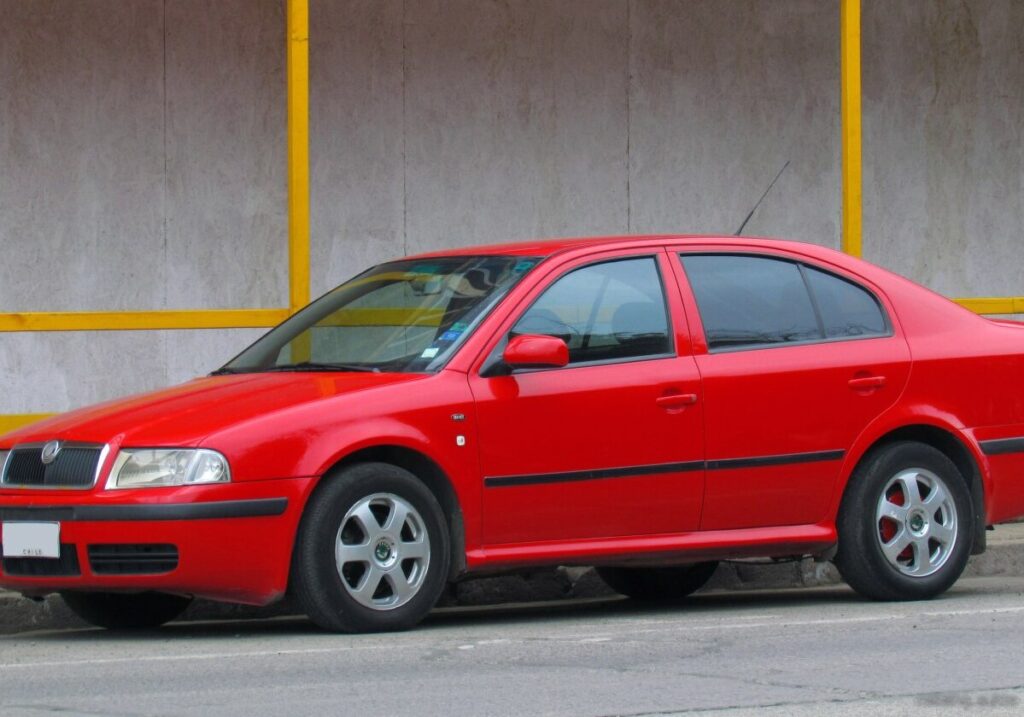
The Skoda Octavia I Tour, specifically the facelifted version introduced in 2000, represented a significant step forward for the Czech automaker under Volkswagen Group ownership. This generation Octavia, built on the Volkswagen Group A4 (PQ35) platform – internally designated 1HX0 – offered a practical and affordable alternative to more established European compacts. The 1.8 Turbo (180 hp) variant, produced from December 2000 to January 2006, occupied a mid-to-upper position within the Octavia I Tour lineup, offering a compelling blend of performance and value. It bridged the gap between the more economical naturally aspirated engines and the higher-performance, but more expensive, vRS model.
The 1.8 Turbo: A Performance-Oriented Octavia
The 1.8 Turbo engine, designated AUQ, quickly became a popular choice for Octavia buyers seeking more than basic transportation. It provided a noticeable performance upgrade over the base 1.4 and 1.6-liter engines, while remaining more accessible than the range-topping vRS. This variant appealed to drivers who desired a comfortable and capable family car with the ability to confidently overtake and cruise on highways. The facelifted Octavia I Tour, introduced in 2000, featured subtle styling revisions, improved interior materials, and enhanced safety features compared to the original 1996 model.
Powertrain & Engine Architecture
At the heart of the 1.8 Turbo Octavia lies the 1781cc, inline-four cylinder engine. This engine is characterized by its turbocharged induction, providing a significant boost in power and torque compared to naturally aspirated alternatives. The AUQ engine code signifies a specific iteration of the 1.8T, optimized for the Octavia’s application. It utilizes multi-port fuel injection, delivering fuel directly into the intake ports, and a double overhead camshaft (DOHC) valvetrain with five valves per cylinder (four intake, one exhaust). This configuration contributes to efficient combustion and a broad powerband.
The turbocharger itself is a K04 unit, providing approximately 0.78 bar (11.3 psi) of boost. This boost pressure, combined with the engine’s internal components, allows it to produce 180 horsepower at 5500 rpm and 235 Nm (173.33 lb-ft) of torque from as low as 1950 rpm. The engine’s compression ratio is 9.5:1. While a five-speed manual transmission was the most common pairing, a four-speed automatic transmission was also available, though it impacted performance and fuel economy. The automatic transmission, a Tiptronic unit, offered a degree of driver control with manual shift capabilities.
Driving Characteristics
The 1.8 Turbo Octavia offered a distinctly more engaging driving experience than its lower-powered siblings. The readily available torque from the turbocharged engine meant strong acceleration in everyday driving situations. The 0-62 mph (0-100 km/h) sprint took approximately 7.9 seconds, making it competitive with other compacts of the era. The manual transmission version felt particularly responsive, allowing drivers to fully exploit the engine’s powerband. The automatic transmission, while convenient, resulted in a slight performance decrease and a less direct connection to the engine.
The Octavia’s suspension, tuned for comfort, provided a compliant ride quality. However, it wasn’t overly sporty, leaning towards a more relaxed driving experience. The steering, while accurate, lacked significant feedback. The combination of a relatively lightweight chassis and the turbocharged engine made the 1.8 Turbo Octavia a capable and enjoyable car to drive, particularly on winding roads.
Equipment & Trim Levels
The 1.8 Turbo Octavia typically came equipped with a reasonable level of standard features. These included central locking, power windows, power steering, an adjustable steering column, and an immobilizer. Higher trim levels added features such as air conditioning, alloy wheels, a radio/cassette player (later upgraded to a CD player), and electric mirrors. Optional extras included a sunroof, leather upholstery, and upgraded audio systems. Interior upholstery was typically cloth, with higher trims offering partial leather options. The dashboard layout was functional and straightforward, typical of Volkswagen Group designs of the period.
Chassis & Braking
The Octavia I Tour utilized a MacPherson strut front suspension and a multi-link rear suspension. This setup provided a good balance between ride comfort and handling. The front brakes were ventilated discs, offering ample stopping power. Rear brakes were also ventilated discs on most models, though some base models featured drum brakes. Anti-lock Braking System (ABS) was standard equipment, enhancing safety. The steering system employed a hydraulic power steering rack and pinion, providing assisted steering without feeling overly light or disconnected. The standard tire size was 205/55 R16, mounted on 16-inch alloy wheels on higher trim levels.
Market Reception & Comparison
The 1.8 Turbo Octavia was generally well-received by automotive critics. It was praised for its strong performance, spacious interior, and competitive price. Compared to the base engines, the 1.8 Turbo offered a significant improvement in driving enjoyment. Compared to the vRS, it provided a more comfortable ride and a lower price point, making it a more practical choice for many buyers. Fuel economy was respectable, averaging around 29.4 US mpg (35.3 UK mpg) in combined driving. Reliability was generally good, although, like all turbocharged engines, it required regular maintenance and careful driving to prevent potential issues. The 1.8T engine, while robust, was known to be susceptible to oil consumption as it aged.
Technical Specifications
| Brand | Skoda |
| Model | Octavia I Tour (facelift 2000) |
| Type (Engine) | 1.8 T (180 Hp) |
| Start of production | December, 2000 year |
| End of production | January, 2006 year |
| Fuel consumption (economy) – urban | 10.8 l/100 km (21.8 US mpg) |
| Fuel consumption (economy) – extra urban | 6.4 l/100 km (36.8 US mpg) |
| Fuel consumption (economy) – combined | 8 l/100 km (29.4 US mpg) |
| Fuel Type | Petrol (Gasoline) |
| Acceleration 0 – 100 km/h | 7.9 sec |
| Acceleration 0 – 62 mph | 7.9 sec |
| Acceleration 0 – 60 mph | 7.5 sec |
| Maximum speed | 235 km/h (146.02 mph) |
| Power | 180 Hp @ 5500 rpm |
| Torque | 235 Nm @ 1950 rpm (173.33 lb.-ft. @ 1950 rpm) |
| Engine layout | Front, Transverse |
| Engine Model/Code | AUQ |
| Engine displacement | 1781 cm3 (108.68 cu. in.) |
| Number of cylinders | 4 |
| Cylinder Bore | 81 mm (3.19 in.) |
| Piston Stroke | 86.4 mm (3.4 in.) |
| Compression ratio | 9.5:1 |
| Kerb Weight | 1325 kg (2921.12 lbs.) |
| Max. weight | 1845 kg (4067.53 lbs.) |
| Trunk (boot) space – minimum | 528 l (18.65 cu. ft.) |
| Trunk (boot) space – maximum | 1328 l (46.9 cu. ft.) |
| Fuel tank capacity | 55 l (14.53 US gal) |
| Length | 4507 mm (177.44 in.) |
| Width | 1731 mm (68.15 in.) |
Legacy
The 1.8 Turbo Octavia I Tour remains a popular choice in the used car market. Its combination of practicality, performance, and affordability has ensured its continued appeal. While age and mileage can lead to maintenance issues, the engine is generally considered robust when properly maintained. Common issues include oil leaks, turbocharger wear, and occasional problems with the cooling system. However, parts availability is good, and the Octavia’s relatively simple mechanical design makes it accessible for DIY repairs. The 1.8 Turbo engine, in its various iterations, proved to be a cornerstone of the Volkswagen Group’s success in the early 2000s, and the Octavia version continues to offer a compelling value proposition for budget-conscious buyers seeking a reliable and enjoyable compact car.