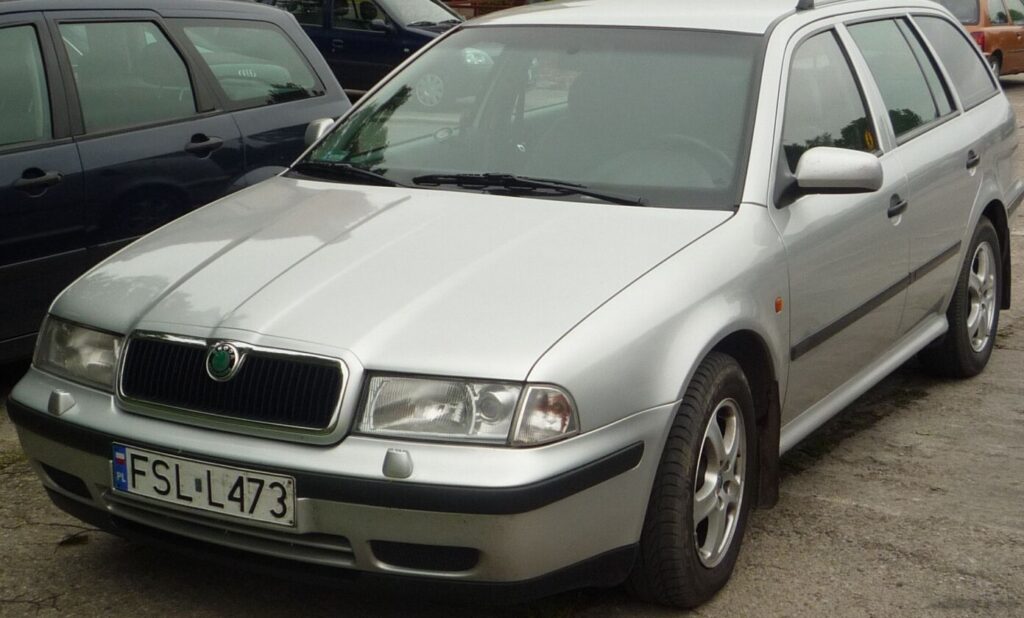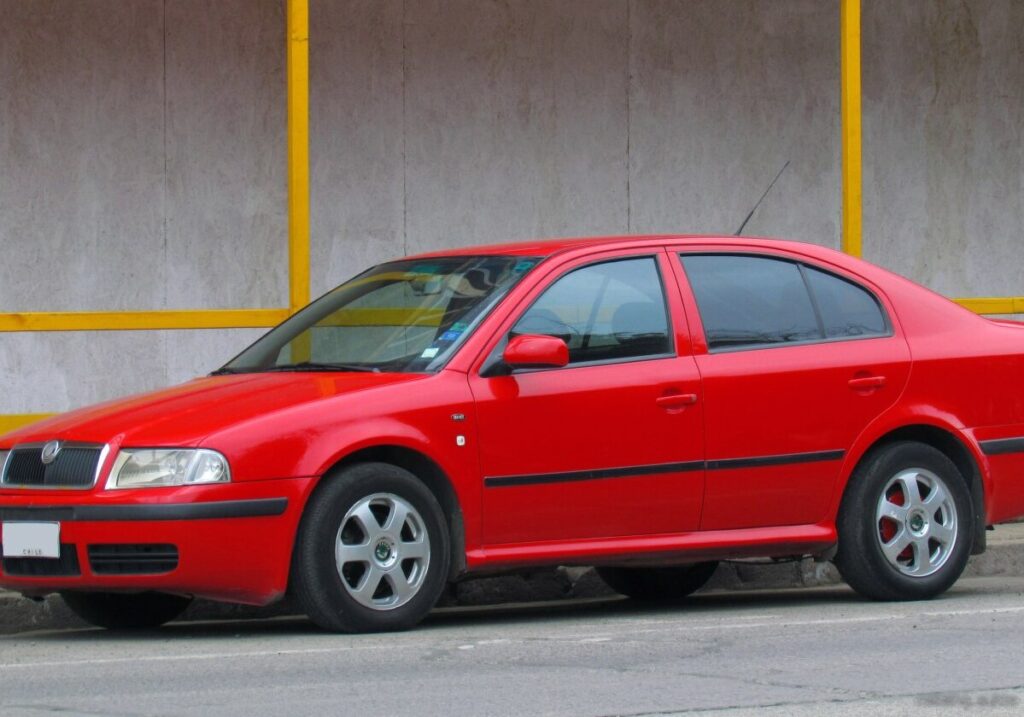
The Skoda Octavia I Tour (facelift, introduced in 2000) 1.9 TDI 100 hp model represents a significant variant within the first generation Octavia lineup, produced from 2005 to 2010. Positioned as a practical and fuel-efficient option, it catered to buyers seeking a balance between economy, usability, and reasonable performance. This model was built on the Volkswagen Group’s A4 (1HX0) platform, shared with the Volkswagen Golf, Bora, and Audi A3, and the facelift brought updated styling and improved interior features compared to the pre-2000 models.
The 1.9 TDI 100 hp Octavia: A Detailed Overview
The Octavia I Tour facelift offered a range of engine and trim options, with the 1.9 TDI 100 hp variant occupying a middle ground. It wasn’t the entry-level choice – that was typically reserved for the 1.4 or 1.6-liter gasoline engines – nor was it the performance-oriented option like the 2.0 TDI or the petrol-powered 1.8T. Instead, it aimed for a sweet spot appealing to drivers prioritizing fuel economy and torque for everyday driving, particularly those covering long distances. The 1.9 TDI offered a compelling alternative to the gasoline engines, providing significantly better fuel consumption and a more relaxed driving experience thanks to its strong low-end torque.
Powertrain & Engine Architecture
At the heart of this Octavia variant lies the Volkswagen Group’s 1.9-liter inline-four cylinder diesel engine, specifically the AXR engine code. This engine is a direct injection diesel, utilizing a pump-nozzle (unit injector) fuel injection system. This system, a hallmark of VW’s TDI engines of the era, delivers highly pressurized fuel directly into the combustion chamber, promoting efficient combustion and reducing emissions. The engine features a single overhead camshaft (SOHC) operating two valves per cylinder. Bore and stroke dimensions are 79.5 mm x 95.5 mm, resulting in a displacement of 1896 cc (115.7 cubic inches). The compression ratio is a high 19:1, typical for diesel engines, contributing to their efficiency.
The engine is turbocharged and intercooled, enhancing power output and mitigating turbo lag. The turbocharger forces more air into the cylinders, allowing for more fuel to be burned and increasing power. The intercooler cools the compressed air, further increasing its density and improving combustion efficiency. The engine produces 100 hp (74 kW) at 4000 rpm and 240 Nm (177 lb-ft) of torque at 1800 rpm. This torque figure is particularly noteworthy, providing strong pulling power from low engine speeds. The engine requires 4.3 liters of oil (4.54 US qt | 3.78 UK qt) and 6.8 liters of coolant (7.19 US qt | 5.98 UK qt).
Driving Characteristics
The 1.9 TDI 100 hp Octavia offers a distinctly different driving experience compared to its gasoline counterparts or the higher-output TDI variants. While not a sports car, the engine’s ample torque makes it surprisingly capable in everyday driving situations. Acceleration from 0-100 km/h (0-62 mph) takes approximately 11.8 seconds, and top speed is rated at 189 km/h (117.44 mph). The five-speed manual transmission, standard on this model, is well-matched to the engine’s characteristics, providing smooth and precise gear changes. The gear ratios are optimized for fuel efficiency and relaxed cruising, rather than outright performance. Compared to the 1.8T petrol engine, the 1.9 TDI offers significantly more torque at lower RPMs, making it easier to accelerate from a standstill or overtake slower traffic. However, the 1.8T provides quicker acceleration and a higher top speed. The 1.9 TDI’s power delivery is linear and predictable, making it easy to control and drive in various conditions.
Equipment & Trim Levels
The Octavia I Tour facelift 1.9 TDI 100 hp was typically offered in a relatively well-equipped trim level, often positioned as a mid-range offering. Standard features generally included power windows, central locking, power steering, an adjustable steering column, and an immobilizer. Air conditioning was often standard, but could be an optional extra depending on the specific market. Interior upholstery was typically cloth, with a durable and practical design. The dashboard layout was functional and straightforward, with easy-to-read gauges and controls. Optional extras could include alloy wheels, a CD stereo system, and upgraded interior trim. Safety features included ABS (Anti-lock Braking System) and driver and passenger airbags.
Chassis & Braking
The Octavia I Tour’s chassis features an independent McPherson strut suspension at the front, providing good ride comfort and handling. The rear suspension utilizes a semi-dependent beam with a stabilizer bar, offering a compromise between comfort and stability. The front brakes are ventilated discs, providing strong stopping power, while the rear brakes are typically solid discs. The steering is a rack and pinion system with hydraulic power assistance, offering precise and responsive steering feel. Tire sizes typically ranged from 195/65 R15 to 205/55 R16, depending on the trim level and optional equipment. The curb weight of the vehicle is approximately 1270 kg (2799.87 lbs), and the maximum permissible weight is 1855 kg (4089.57 lbs).
Market Reception & Comparison
The Skoda Octavia I Tour 1.9 TDI 100 hp received generally positive reviews from automotive critics. It was praised for its fuel efficiency, strong torque, and practical interior. Critics noted that it wasn’t the most exciting car to drive, but it offered a comfortable and reliable driving experience. Fuel economy figures were impressive, with combined consumption averaging around 5.1 l/100 km (46.1 US mpg, 55.4 UK mpg). Compared to the gasoline-powered Octavia variants, the 1.9 TDI offered significantly better fuel economy and lower running costs. In terms of reliability, the 1.9 TDI engine proved to be robust and durable, although regular maintenance was essential to ensure long-term reliability. The pump-nozzle injection system, while efficient, could be prone to issues if not properly maintained.
Technical Specifications
| Brand | Skoda |
| Model | Octavia I Tour (facelift 2000) |
| Type (Engine) | 1.9 TDI (100 Hp) |
| Start of production | 2005 year |
| End of production | 2010 year |
| Fuel consumption (economy) – urban (NEDC) | 6.5 l/100 km (36.2 US mpg, 43.5 UK mpg) |
| Fuel consumption (economy) – extra urban (NEDC) | 4.3 l/100 km (54.7 US mpg, 65.7 UK mpg) |
| Fuel consumption (economy) – combined (NEDC) | 5.1 l/100 km (46.1 US mpg, 55.4 UK mpg) |
| CO2 emissions (NEDC) | 135 g/km |
| Fuel Type | Diesel |
| Acceleration 0 – 100 km/h | 11.8 sec |
| Acceleration 0 – 62 mph | 11.8 sec |
| Acceleration 0 – 60 mph | 11.2 sec (Calculated) |
| Maximum speed | 189 km/h (117.44 mph) |
| Emission standard | Euro 4 |
| Weight-to-power ratio | 12.7 kg/Hp |
| Weight-to-torque ratio | 5.3 kg/Nm |
| Power | 100 Hp @ 4000 rpm |
| Torque | 240 Nm @ 1800 rpm (177.01 lb.-ft. @ 1800 rpm) |
| Engine layout | Front, Transverse |
| Engine Model/Code | AXR |
| Engine displacement | 1896 cm3 (115.7 cu. in.) |
| Number of cylinders | 4 |
| Engine configuration | Inline |
| Cylinder Bore | 79.5 mm (3.13 in.) |
| Piston Stroke | 95.5 mm (3.76 in.) |
| Compression ratio | 19:1 |
| Number of valves per cylinder | 2 |
| Fuel injection system | Pump-nozzle (Unit Injector) |
| Engine aspiration | Turbocharger, Intercooler |
| Valvetrain | SOHC |
| Kerb Weight | 1270 kg (2799.87 lbs.) |
| Max. weight | 1855 kg (4089.57 lbs.) |
| Trunk (boot) space – minimum | 528 l (18.65 cu. ft.) |
| Trunk (boot) space – maximum | 1328 l (46.9 cu. ft.) |
| Fuel tank capacity | 55 l (14.53 US gal | 12.1 UK gal) |
Legacy
The Skoda Octavia I Tour 1.9 TDI 100 hp powertrain has proven to be remarkably durable, and well-maintained examples continue to be found on the used car market today. While age and mileage inevitably take their toll, the engine’s inherent robustness means that many units are still running reliably. The 1.9 TDI engine is known for its longevity and relatively low maintenance costs, making it a popular choice for budget-conscious buyers. However, potential buyers should be aware of the potential for issues with the pump-nozzle injection system and ensure that regular maintenance has been performed. Overall, the Octavia I Tour 1.9 TDI 100 hp remains a practical and economical choice for those seeking a reliable and fuel-efficient vehicle.