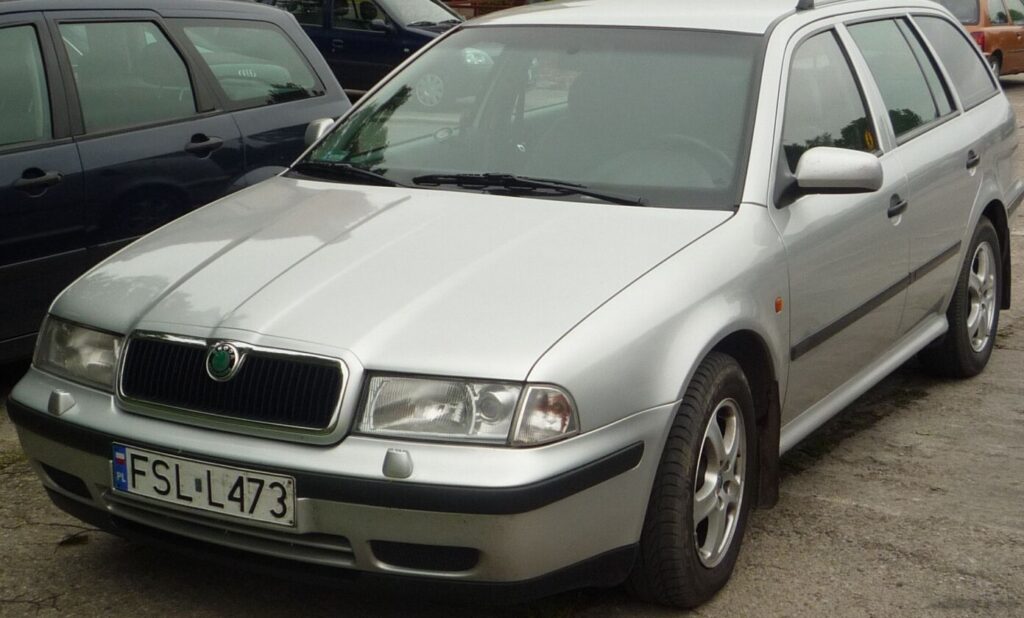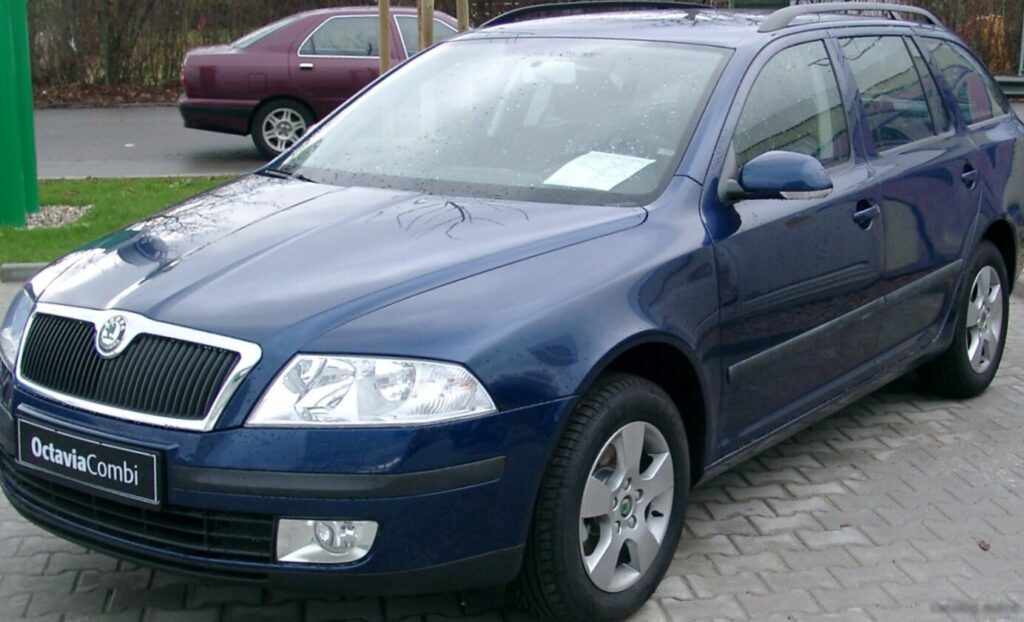
The Skoda Octavia II Combi 1.4 MPI (75 hp) was a station wagon produced between May 2004 and May 2006, representing an entry-level offering within the second generation (Octavia II) of Skoda’s popular Octavia model line. Built on the Volkswagen Group’s A5 (1Z) platform – also known as the 1HX0 for the Combi – this variant aimed to provide affordable, practical transportation with a focus on fuel efficiency. It served as the most accessible Octavia Combi, positioned below the more powerful 1.6 MPI, 2.0 MPI, and diesel variants, as well as the performance-oriented RS model. The 1.4 MPI was targeted towards buyers prioritizing economy and space over outright performance.
Powertrain & Engine Architecture
The Octavia II Combi 1.4 MPI was powered by the Volkswagen Group’s BCA engine code, a 1390cc inline-four cylinder gasoline engine. This engine featured a multi-port fuel injection (MPI) system, delivering fuel directly into the intake ports rather than directly into the combustion chamber. The engine utilized a dual overhead camshaft (DOHC) valvetrain with four valves per cylinder, contributing to improved breathing and efficiency. The compression ratio was set at 10.5:1. The engine produced 75 horsepower at 5000 rpm and 126 Nm (92.93 lb-ft) of torque at 3300 rpm. This configuration was chosen for its simplicity and cost-effectiveness, prioritizing reliability and fuel economy over high performance.
The engine was typically paired with a five-speed manual transmission, although an optional four-speed automatic transmission was available. The automatic transmission was a conventional hydraulic automatic, known for its smooth operation but relatively slow shift times compared to more modern automatic gearboxes. The gear ratios were optimized for fuel efficiency and everyday drivability, rather than sporty acceleration. First gear was relatively short for easy starting, while higher gears were geared for lower engine speeds at cruising speeds.
Engine Specifications (BCA)
- Displacement: 1390 cm³ (84.82 cu. in.)
- Configuration: Inline-4
- Bore x Stroke: 76.5 mm x 75.6 mm (3.01 in x 2.98 in)
- Compression Ratio: 10.5:1
- Valvetrain: DOHC, 4 valves per cylinder
- Fuel Injection: Multi-port Fuel Injection
- Engine Oil Capacity: 3.2 liters (3.38 US qt | 2.82 UK qt)
- Coolant Capacity: 6.7 liters (7.08 US qt | 5.9 UK qt)
Driving Characteristics
The Octavia II Combi 1.4 MPI with the five-speed manual transmission offered adequate, but not exhilarating, performance. Acceleration from 0-100 km/h (0-62 mph) took approximately 15.7 seconds, while 0-60 mph was achieved in around 14.9 seconds. The top speed was 169 km/h (105.01 mph). The engine felt strained when pushed hard, particularly when fully loaded or climbing hills. The automatic transmission further reduced acceleration performance due to its less efficient power transfer and slower shift speeds. The focus was clearly on providing a comfortable and economical driving experience, rather than sporty handling or quick acceleration.
The car’s weight-to-power ratio of 16.6 kg/hp and weight-to-torque ratio of 9.9 kg/Nm reflected its modest performance capabilities. The engine’s torque curve was relatively flat, providing usable power across a narrow rev range, but it lacked the punch of larger engines. The steering was light and easy, making it suitable for urban driving, but lacked feedback. Overall, the driving experience was best described as practical and undemanding.
Equipment & Trim Levels
The 1.4 MPI Octavia Combi typically came with a basic level of equipment, reflecting its position as the entry-level model. Standard features generally included power steering, central locking, electric front windows, and an adjustable steering column. Safety features included ABS (Anti-lock Braking System) and driver and passenger airbags. Interior upholstery was typically cloth, with a simple dashboard layout.
Optional extras included air conditioning, alloy wheels, a radio/CD player, rear electric windows, and parking sensors. Higher trim levels, such as the ‘Classic’ or ‘Ambiente’ offered additional features as standard, such as upgraded upholstery, a multi-function display, and more comprehensive safety equipment. The availability of options varied depending on the specific market.
Chassis & Braking
The Octavia II Combi 1.4 MPI utilized a MacPherson strut front suspension and a torsion beam rear suspension. This suspension setup provided a comfortable ride quality, but wasn’t particularly sporty. The front brakes were ventilated discs, while the rear brakes were typically solid discs, although some earlier models may have featured drum brakes depending on the market. The steering system was a rack and pinion type, providing light and easy steering feel.
The standard tire size was 195/65 R15. The suspension was tuned for comfort and stability, prioritizing ride quality over handling precision. The car’s relatively light weight helped to compensate for the modest engine power, allowing for predictable handling characteristics.
Market Reception & Comparison
The Skoda Octavia II Combi 1.4 MPI was generally well-received as an affordable and practical family car. Critics praised its spacious interior, large boot capacity (580-1620 liters), and fuel efficiency. However, the engine’s lack of power was a common criticism, particularly when compared to the 1.6 MPI and 2.0 MPI variants. Fuel economy was rated at 9.5 l/100 km (24.8 US mpg) in urban conditions and 5.5 l/100 km (42.8 US mpg) on the extra-urban cycle.
Compared to its siblings, the 1.4 MPI offered the lowest purchase price but also the lowest performance. The 1.6 MPI provided a noticeable improvement in power and acceleration, while the 2.0 MPI offered even greater performance. The diesel variants (1.9 TDI and 2.0 TDI) provided superior fuel economy and torque, but at a higher initial cost. The 1.4 MPI was a popular choice for buyers who prioritized affordability and fuel efficiency over performance.
Technical Specifications
| Body Type | Station wagon (estate) |
| Engine Displacement | 1390 cm³ (84.82 cu. in.) |
| Engine Code | BCA |
| Number of Cylinders | 4, Inline |
| Power Output | 75 hp @ 5000 rpm |
| Torque | 126 Nm @ 3300 rpm (92.93 lb.-ft. @ 3300 rpm) |
| Fuel Type | Petrol (Gasoline) |
| Transmission | 5-speed manual or 4-speed automatic |
| Acceleration 0-100 km/h | 15.7 sec |
| Top Speed | 169 km/h (105.01 mph) |
| Kerb Weight | 1245 kg (2744.76 lbs.) |
| Max. Weight | 1905 kg (4199.81 lbs.) |
| Fuel Tank Capacity | 55 liters (14.53 US gal | 12.1 UK gal) |
| Trunk Space (min/max) | 580 l / 1620 l (20.48 cu. ft. / 57.21 cu. ft.) |
| Dimensions (L x W x H) | 4572 mm x 1769 mm x 1468 mm (180 in x 69.65 in x 57.8 in) |
Legacy
The Skoda Octavia II Combi 1.4 MPI, while not known for its performance, proved to be a reliable and durable vehicle. The BCA engine is generally considered to be a robust unit, capable of high mileage with proper maintenance. The simplicity of the engine and its components contributes to its reliability. In the used car market, these Octavias are often sought after as affordable and practical family cars. However, potential buyers should be aware of the engine’s limited power and the potential for wear and tear on the automatic transmission. Overall, the 1.4 MPI Octavia Combi remains a viable option for budget-conscious buyers seeking a spacious and dependable station wagon.