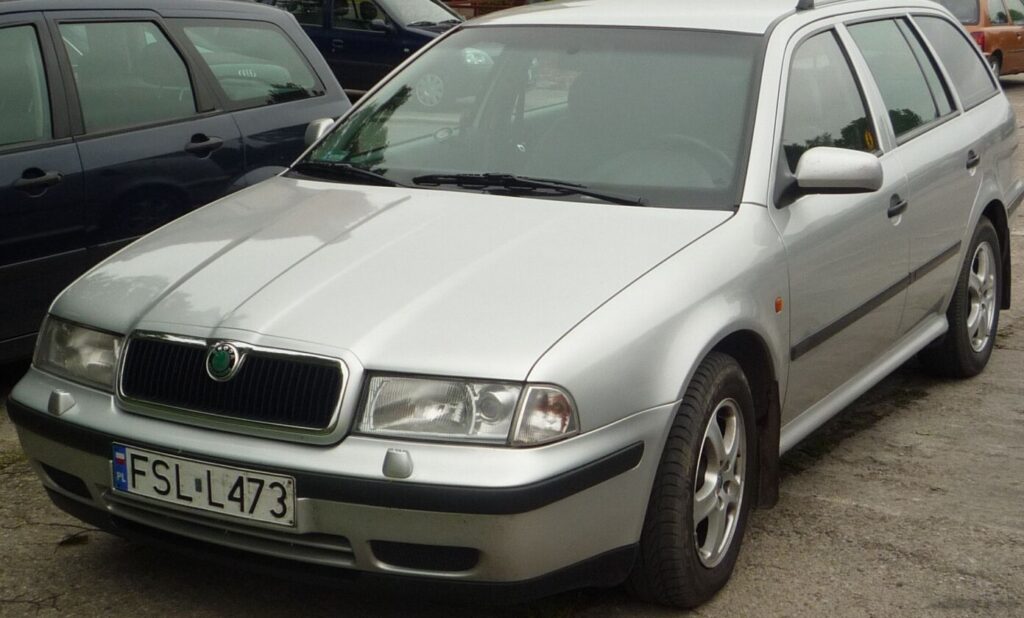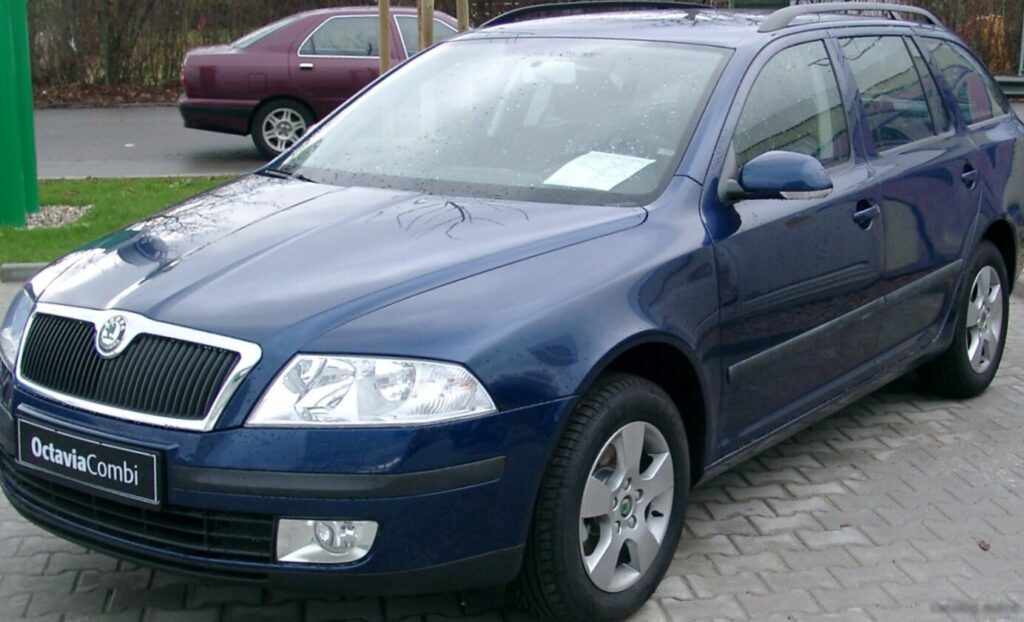
The Skoda Octavia II Combi 1.6 FSI Tiptronic, produced between February 2004 and October 2008, was a station wagon (estate) variant of the popular second-generation Octavia. Positioned as a mid-range offering within the Octavia II Combi lineup, it provided a balance between fuel efficiency, practicality, and affordability. This model catered to families and individuals seeking a spacious and versatile vehicle without the higher price tag or performance focus of the more powerful engine options. It was built on the Volkswagen Group’s A5 (1HX0) platform, shared with models like the Volkswagen Golf Mk5 and Audi A3.
Powertrain & Engine Architecture
The Octavia II Combi 1.6 FSI Tiptronic was powered by the Volkswagen Group’s BLF engine code, a 1.6-liter inline-four cylinder gasoline engine. This engine featured direct fuel injection (FSI – Fuel Stratified Injection), a technology designed to improve fuel economy and power output compared to traditional multi-point injection systems. The FSI system injected fuel directly into the combustion chamber, allowing for more precise control of the air-fuel mixture and higher compression ratios. The engine produced 115 horsepower (hp) at 6000 rpm and 155 Newton-meters (114.32 lb-ft) of torque at 4000 rpm.
The engine’s valvetrain consisted of four valves per cylinder (16V), contributing to its relatively high power output for its displacement. The engine’s aspiration was naturally aspirated, meaning it did not utilize a turbocharger or supercharger. The 1.6 FSI engine had a compression ratio of 12:1. The engine was transversely mounted in the front of the vehicle.
Paired with the 1.6 FSI engine was a six-speed automatic transmission, marketed by Skoda as “Tiptronic.” This transmission offered both fully automatic operation and a manual shift mode, allowing drivers to select gears for greater control. The Tiptronic transmission was a conventional torque converter automatic, known for its smoothness but generally less fuel-efficient than modern dual-clutch transmissions.
Fuel Injection and Engine Management
The BLF engine utilized a sophisticated engine management system to control fuel injection, ignition timing, and other parameters. This system monitored various sensors throughout the engine and adjusted settings to optimize performance, fuel economy, and emissions. The direct injection system required a high-pressure fuel pump to deliver fuel at the necessary pressure to the injectors.
Driving Characteristics
The Octavia II Combi 1.6 FSI Tiptronic offered a comfortable and predictable driving experience. Acceleration from 0 to 100 km/h (0-62 mph) took approximately 12.5 seconds, and 0 to 60 mph took around 11.9 seconds. While not particularly sporty, the engine provided adequate power for everyday driving situations. The Tiptronic transmission contributed to smooth gear changes, but could sometimes feel hesitant during quick acceleration. Compared to the more powerful 2.0 FSI or 1.9 TDI versions of the Octavia, the 1.6 FSI felt noticeably slower, particularly when fully loaded or climbing hills. However, the 1.6 FSI offered a more relaxed and fuel-efficient driving experience, making it well-suited for commuting and long-distance journeys.
The automatic transmission’s gear ratios were optimized for fuel economy and comfort, rather than outright performance. The transmission typically shifted up quickly to maintain low engine speeds, contributing to reduced fuel consumption. The Tiptronic function allowed drivers to hold gears for longer, providing more control during spirited driving or when navigating challenging terrain.
Equipment & Trim Levels
The Octavia II Combi 1.6 FSI Tiptronic typically came equipped with a reasonable level of standard features. These included power windows, central locking, air conditioning, an audio system, and ABS (Anti-lock Braking System). Interior upholstery was typically cloth, with options for upgraded materials available. The dashboard layout was functional and straightforward, with easy-to-read gauges and controls. Optional extras included alloy wheels, a sunroof, parking sensors, and a more advanced audio system. Specific trim levels varied depending on the market, but generally offered progressively more features and cosmetic enhancements.
Chassis & Braking
The Octavia II Combi 1.6 FSI Tiptronic utilized a front-wheel-drive layout. The front suspension consisted of wishbones, providing a comfortable ride and good handling characteristics. The rear suspension employed a multi-link setup, further enhancing ride quality and stability. The braking system featured ventilated discs on the front wheels and solid discs on the rear wheels. ABS was standard, providing enhanced braking performance in emergency situations. Hydraulic power steering was also standard, offering light and precise steering feel. Tire sizes typically ranged from 195/65 R15 to 205/55 R16, depending on the trim level.
Market Reception & Comparison
The Octavia II Combi 1.6 FSI Tiptronic was generally well-received by automotive critics as a practical and affordable station wagon. It was praised for its spacious interior, comfortable ride, and reasonable fuel economy. However, some critics noted its relatively slow acceleration and the somewhat dated feel of the Tiptronic transmission. Compared to the more powerful Octavia variants, the 1.6 FSI offered a lower purchase price and better fuel economy, but at the expense of performance. The 1.9 TDI diesel version, for example, offered significantly more torque and better fuel economy, but was typically more expensive. The 2.0 FSI petrol version provided more power but consumed more fuel. Fuel economy figures were around 7.6 l/100 km combined (30.9 US mpg, 37.2 UK mpg).
Technical Specifications
| Brand | Skoda |
| Model | Octavia |
| Generation | Octavia II Combi |
| Type (Engine) | 1.6 FSI (115 Hp) Tiptronic |
| Start of production | February, 2004 |
| End of production | October, 2008 |
| Powertrain Architecture | Internal Combustion engine |
| Body type | Station wagon (estate) |
| Seats | 5 |
| Doors | 5 |
| Fuel consumption (urban) | 10.6 l/100 km (22.2 US mpg) |
| Fuel consumption (extra urban) | 5.8 l/100 km (40.6 US mpg) |
| Fuel consumption (combined) | 7.6 l/100 km (30.9 US mpg) |
| Fuel Type | Petrol (Gasoline) |
| Acceleration 0 – 100 km/h | 12.5 sec |
| Acceleration 0 – 62 mph | 12.5 sec |
| Acceleration 0 – 60 mph | 11.9 sec |
| Maximum speed | 193 km/h (119.92 mph) |
| Emission standard | Euro 4 |
| Weight-to-power ratio | 11.8 kg/Hp |
| Power | 115 Hp @ 6000 rpm |
| Torque | 155 Nm @ 4000 rpm (114.32 lb.-ft. @ 4000 rpm) |
| Engine layout | Front, Transverse |
| Engine Model/Code | BLF |
| Engine displacement | 1598 cm3 (97.52 cu. in.) |
| Number of cylinders | 4 |
| Engine configuration | Inline |
| Cylinder Bore | 76.5 mm (3.01 in.) |
| Piston Stroke | 86.9 mm (3.42 in.) |
| Compression ratio | 12:1 |
| Number of valves per cylinder | 4 |
| Fuel injection system | Direct injection |
| Engine oil capacity | 3.2 l (3.38 US qt | 2.82 UK qt) |
| Coolant capacity | 6.9 l (7.29 US qt | 6.07 UK qt) |
| Kerb Weight | 1355 kg (2987.26 lbs.) |
| Max. weight | 1940 kg (4276.97 lbs.) |
| Max load | 585 kg (1289.7 lbs.) |
| Trunk (boot) space – minimum | 580 l (20.48 cu. ft.) |
| Trunk (boot) space – maximum | 1630 l (57.56 cu. ft.) |
| Fuel tank capacity | 55 l (14.53 US gal | 12.1 UK gal) |
| Length | 4572 mm (180 in.) |
| Width | 1769 mm (69.65 in.) |
| Height | 1462 mm (57.56 in.) |
| Wheelbase | 2578 mm (101.5 in.) |
| Drivetrain Architecture | Front wheel drive |
| Number of gears and type of gearbox | 6 gears, automatic transmission |
Legacy
The Skoda Octavia II Combi 1.6 FSI Tiptronic, while not the most powerful or technologically advanced version of the Octavia, remains a popular choice in the used car market. Its reputation for reliability, spaciousness, and affordability has ensured continued demand. The BLF engine, while prone to occasional issues with coil packs and fuel injectors, is generally considered durable and relatively easy to maintain. The Tiptronic transmission, if properly maintained with regular fluid changes, can provide years of reliable service. Today, these Octavias represent a good value proposition for buyers seeking a practical and economical station wagon.