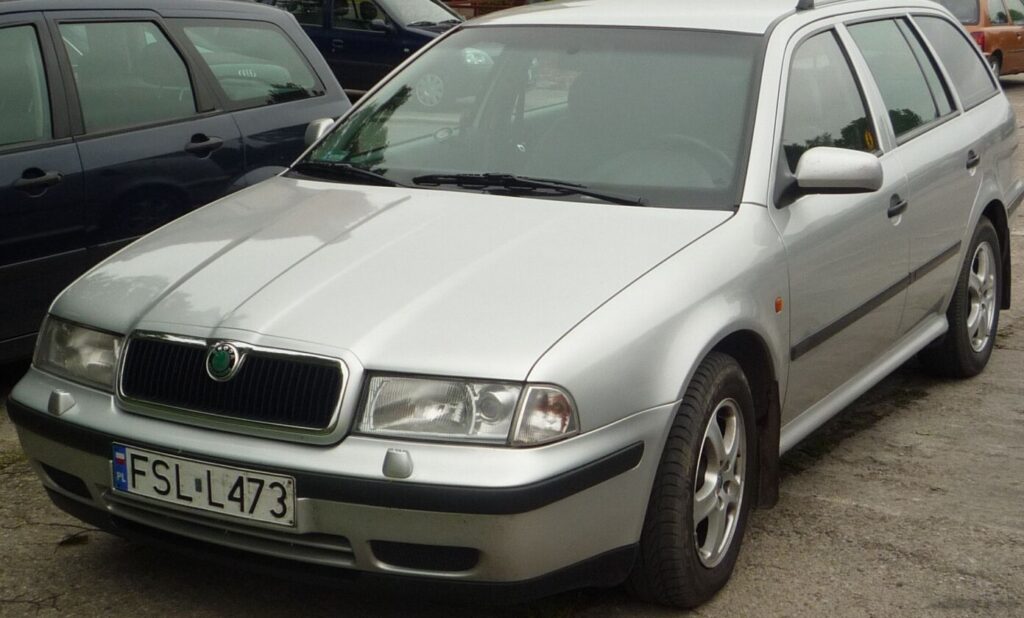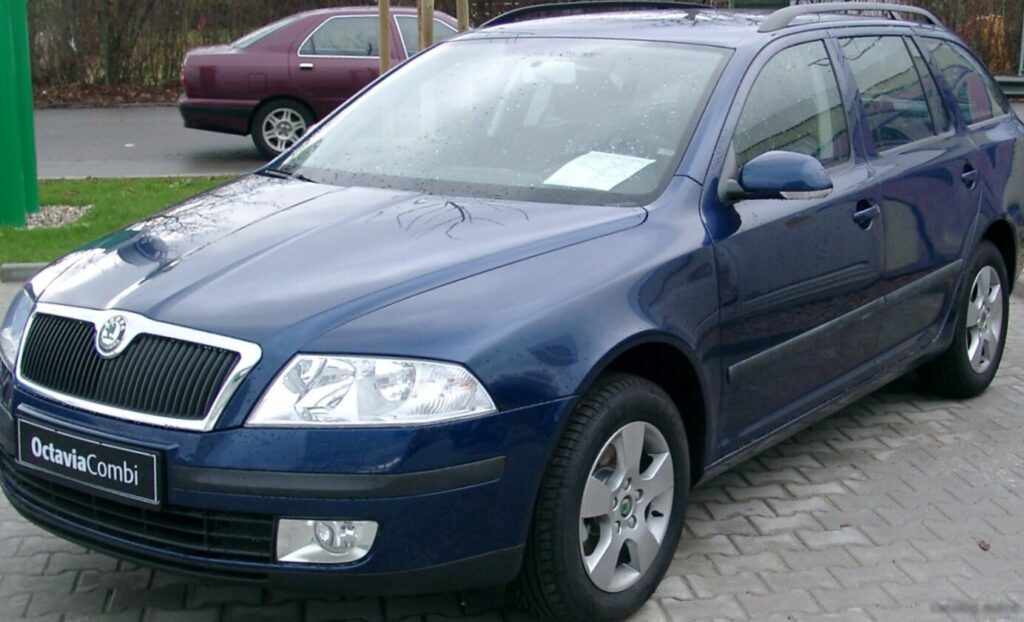
The Skoda Octavia II Combi 1.9 TDI (105 hp) was a popular station wagon produced between February 2004 and October 2008, forming a key part of the second-generation Octavia lineup (the 1Z chassis). Positioned as a practical and fuel-efficient option, it catered to buyers seeking a spacious family vehicle with the reliability of a diesel engine. This variant occupied a mid-range position within the Octavia Combi range, slotting below the more powerful TDI variants and above the entry-level petrol engines. It was built on the Volkswagen Group’s A5 (or 1Z) platform, shared with models like the Volkswagen Golf Mk5 and Audi A3.
Powertrain & Engine Architecture
The Octavia II Combi 1.9 TDI (105 hp) was powered by the EA188 series 1.9-liter inline-four cylinder diesel engine. Specifically, engine codes BJB and BXE were commonly found in this model. This engine utilized a pump-nozzle (unit injector) fuel injection system, a technology known for its precise fuel delivery and contribution to the engine’s efficiency. The engine featured a single overhead camshaft (SOHC) operating two valves per cylinder. A turbocharger with an intercooler was employed to boost power output and improve torque across the rev range.
The engine’s 1896 cc displacement, combined with the turbocharging, allowed it to produce 105 horsepower at 4000 rpm and 250 Nm (184.39 lb-ft) of torque at 1900 rpm. This torque figure was a significant advantage for everyday driving, providing strong pulling power at lower engine speeds. The engine’s compression ratio was relatively high at 19:1, typical for diesel engines, contributing to its thermal efficiency. The engine oil capacity was 3.8 liters (4.02 US quarts / 3.34 UK quarts), and the cooling system held 7.7 liters (8.14 US quarts / 6.78 UK quarts).
Transmission
The 1.9 TDI (105 hp) Octavia Combi was primarily equipped with a five-speed manual transmission. While an automatic transmission was available as an option, it was less common and generally considered to detract from the engine’s fuel efficiency and responsiveness. The manual gearbox was designed to handle the engine’s torque output effectively, providing smooth and precise gear changes. The automatic transmission, when equipped, was a conventional torque converter type, offering convenience but at the expense of some performance.
Driving Characteristics
The Octavia II Combi 1.9 TDI (105 hp) offered a balanced driving experience. Acceleration from 0 to 100 km/h (0-62 mph) took approximately 11.9 seconds, and 0 to 60 mph was achieved in around 11.3 seconds. While not a particularly sporty vehicle, the engine’s strong low-end torque made it well-suited for everyday driving, including overtaking and navigating hilly terrain. The turbocharger provided a noticeable boost in power as the engine revved, but the power delivery was generally linear and predictable. Compared to the more powerful TDI variants (like the 170 hp version), the 105 hp model felt less urgent in its acceleration, but it offered significantly better fuel economy.
The gear ratios in the five-speed manual transmission were well-chosen to maximize fuel efficiency and provide adequate acceleration. Fifth gear was geared for comfortable cruising on highways, while the lower gears offered sufficient power for climbing hills or accelerating quickly. The automatic transmission, while convenient, often felt sluggish and resulted in higher fuel consumption.
Equipment & Trim Levels
The Octavia II Combi 1.9 TDI (105 hp) typically came with a reasonable level of standard equipment. This included power windows, central locking, air conditioning, and an audio system. Safety features such as ABS (Anti-lock Braking System) and front airbags were also standard. Interior upholstery was typically cloth, with options for upgraded materials available. The dashboard layout was functional and straightforward, with easy-to-read gauges and controls.
Optional extras included alloy wheels, a sunroof, parking sensors, and a more advanced audio system. Higher trim levels offered additional features such as climate control, leather upholstery, and heated seats. The Octavia Combi’s spacious interior and large cargo area were key selling points, making it a practical choice for families.
Chassis & Braking
The Octavia II Combi 1.9 TDI (105 hp) featured a MacPherson strut front suspension and a multi-link rear suspension. This suspension setup provided a comfortable ride quality while maintaining good handling characteristics. The front brakes were ventilated discs, while the rear brakes were typically solid discs, although some earlier models may have featured drum brakes depending on the specific trim level and market. A stabilizer bar was fitted to both the front and rear axles to reduce body roll during cornering. The steering system was a rack and pinion type, providing precise and responsive steering feel. The vehicle rode on 195/65 R15 tires, which offered a good balance of comfort and grip.
Market Reception & Comparison
The Skoda Octavia II Combi 1.9 TDI (105 hp) was generally well-received by automotive critics. It was praised for its spacious interior, fuel efficiency, and practicality. However, some critics noted that the engine lacked the outright performance of the more powerful TDI variants. Compared to the 1.9 TDI (130 hp) and 2.0 TDI (170 hp) models, the 105 hp version offered lower running costs but less exciting performance. Against petrol-powered Octavia models, the 1.9 TDI provided significantly better fuel economy and torque. The Octavia Combi, in general, was seen as a strong competitor to other station wagons in its class, such as the Ford Focus Estate and Volkswagen Passat Variant.
Fuel consumption figures were impressive, with approximately 6.4 l/100 km (36.8 US mpg / 44.1 UK mpg) in urban driving and 4.4 l/100 km (53.5 US mpg / 64.2 UK mpg) on the open road. Reliability was generally good, although the pump-nozzle fuel injection system could be prone to issues if not properly maintained.
Technical Specifications
| Brand | Skoda |
| Model | Octavia |
| Generation | Octavia II Combi |
| Type (Engine) | 1.9 TDI (105 Hp) |
| Start of production | February, 2004 |
| End of production | October, 2008 |
| Powertrain Architecture | Internal Combustion engine |
| Body type | Station wagon (estate) |
| Seats | 5 |
| Doors | 5 |
| Fuel consumption (urban) | 6.4 l/100 km (36.8 US mpg / 44.1 UK mpg) |
| Fuel consumption (extra urban) | 4.4 l/100 km (53.5 US mpg / 64.2 UK mpg) |
| Fuel Type | Diesel |
| Acceleration 0 – 100 km/h | 11.9 sec |
| Acceleration 0 – 62 mph | 11.9 sec |
| Acceleration 0 – 60 mph | 11.3 sec |
| Maximum speed | 191 km/h (118.68 mph) |
| Weight-to-power ratio | 12.6 kg/Hp |
| Weight-to-torque ratio | 5.3 kg/Nm |
| Power | 105 Hp @ 4000 rpm |
| Torque | 250 Nm @ 1900 rpm (184.39 lb.-ft. @ 1900 rpm) |
| Engine layout | Front, Transverse |
| Engine Model/Code | EA188 / BJB, BXE |
| Engine displacement | 1896 cm3 (115.7 cu. in.) |
| Number of cylinders | 4 |
| Engine configuration | Inline |
| Cylinder Bore | 79.5 mm (3.13 in.) |
| Piston Stroke | 95.5 mm (3.76 in.) |
| Compression ratio | 19:1 |
| Number of valves per cylinder | 2 |
| Fuel injection system | Pump-nozzle (Unit Injector) |
| Engine oil capacity | 3.8 l (4.02 US qt | 3.34 UK qt) |
| Coolant | 7.7 l (8.14 US qt | 6.78 UK qt) |
| Kerb Weight | 1325 kg (2921.12 lbs.) |
| Max. weight | 1985 kg (4376.18 lbs.) |
| Max load | 660 kg (1455.05 lbs.) |
| Trunk (boot) space – minimum | 580 l (20.48 cu. ft.) |
| Trunk (boot) space – maximum | 1620 l (57.21 cu. ft.) |
| Fuel tank capacity | 55 l (14.53 US gal | 12.1 UK gal) |
| Length | 4572 mm (180 in.) |
| Width | 1769 mm (69.65 in.) |
| Height | 1468 mm (57.8 in.) |
| Wheelbase | 2578 mm (101.5 in.) |
| Drive wheel | Front wheel drive |
| Number of gears | 5 |
| Gearbox type | Manual transmission |
Legacy
The Skoda Octavia II Combi 1.9 TDI (105 hp) remains a popular choice in the used car market due to its practicality, fuel efficiency, and relatively low running costs. While the pump-nozzle fuel injection system can require maintenance, the engine is generally considered durable and reliable if properly cared for. The Octavia Combi’s spacious interior and large cargo area continue to appeal to families and those needing a versatile vehicle. Its reputation for value for money has ensured its continued presence on roads throughout Europe and beyond.