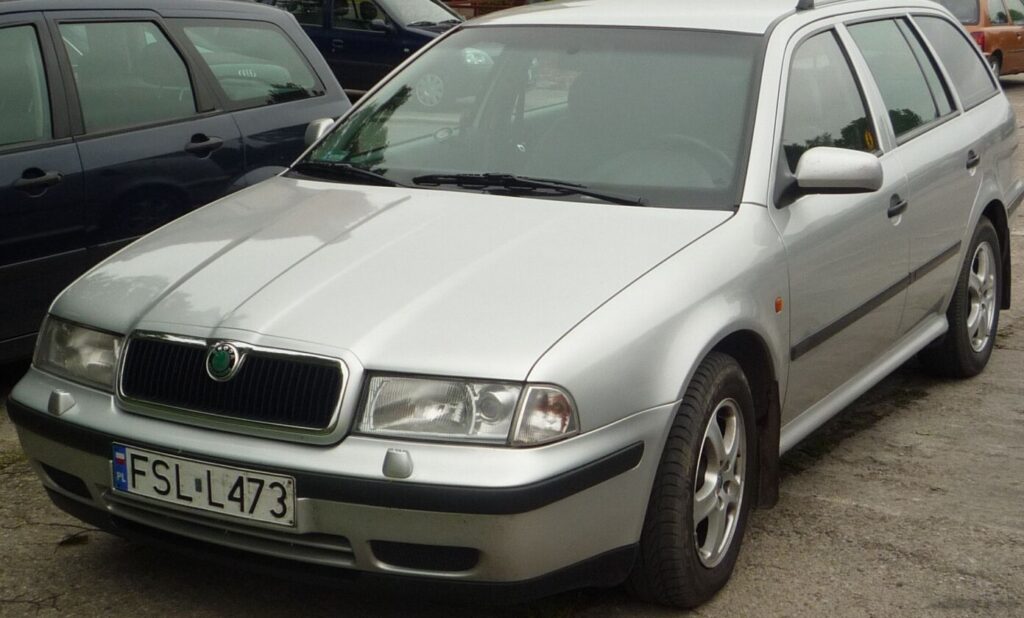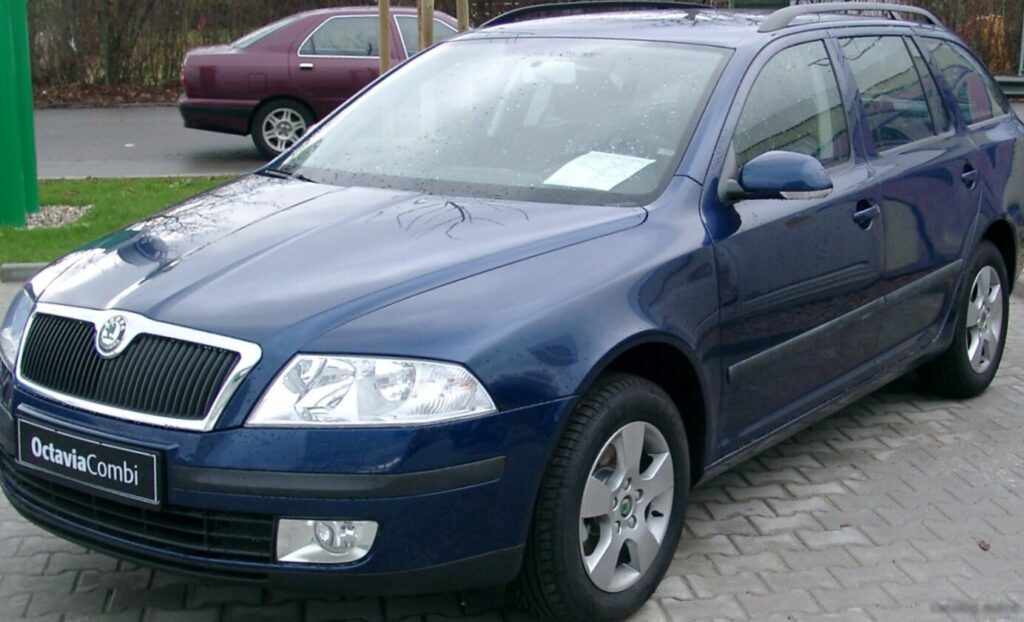
The Skoda Octavia II Combi 1.9 TDI Automatic, produced between February 2004 and October 2008, represents a practical and fuel-efficient variant within the second generation (MkII) Octavia Combi (estate) range. Positioned as a mid-range offering, it catered to buyers seeking the versatility of a station wagon with the convenience of an automatic transmission and the economy of a diesel engine. This model, built on the Volkswagen Group’s A5 (1HX0) platform – shared with the VW Golf Mk5, Audi A3, and other vehicles – aimed to provide a balance between practicality, comfort, and running costs. The 1.9 TDI engine, a mainstay of the Volkswagen Group for many years, was paired with a six-speed automatic transmission to deliver a relaxed driving experience.
Powertrain & Engine Architecture
The heart of the Octavia II Combi 1.9 TDI Automatic is the EA188 series 1.9-liter inline-four cylinder diesel engine, specifically coded BJB or BXE. This engine utilizes a pump-nozzle (unit injector) fuel injection system, a technology known for its precision and efficiency in delivering fuel directly into the combustion chamber. The engine features a single overhead camshaft (SOHC) operating two valves per cylinder. A turbocharger with an intercooler is employed to boost power and torque, mitigating turbo lag and improving overall responsiveness.
The 1.9 TDI engine produces 105 horsepower (hp) at 4000 rpm and 250 Newton-meters (184.39 lb-ft) of torque at 1900 rpm. The engine’s displacement is 1896 cubic centimeters (115.7 cubic inches) with a bore of 79.5 mm (3.13 inches) and a stroke of 95.5 mm (3.76 inches). It boasts a relatively high compression ratio of 19:1, typical for diesel engines. The engine oil capacity is 3.8 liters (4.02 US quarts / 3.34 UK quarts), and the cooling system holds 7.7 liters (8.14 US quarts / 6.78 UK quarts).
The six-speed automatic transmission used in this variant is a conventional hydraulic automatic, offering smooth gear changes and ease of use. While not known for its sportiness, it was well-suited to the engine’s torque characteristics and the car’s intended purpose as a comfortable and practical family vehicle. The transmission’s gear ratios were optimized for fuel efficiency and relaxed cruising.
Engine Codes: BJB & BXE
The BJB and BXE engine codes represent minor variations within the 1.9 TDI family. The BXE code generally denotes a later revision with slight improvements to emissions control and fuel efficiency. Both engines are fundamentally similar in their core architecture and performance characteristics.
Driving Characteristics
The Octavia II Combi 1.9 TDI Automatic delivers a comfortable and predictable driving experience. Acceleration from 0 to 100 km/h (0-62 mph) takes approximately 12.3 seconds, while 0 to 60 mph is achieved in around 11.7 seconds. The top speed is rated at 191 km/h (118.68 mph). While not a performance-oriented vehicle, the 250 Nm of torque provides sufficient power for everyday driving and overtaking maneuvers.
Compared to the manual transmission version of the same engine, the automatic variant typically exhibits slightly slower acceleration due to the inherent efficiency losses within the torque converter. However, the automatic transmission offers a more relaxed driving experience, particularly in urban traffic. Compared to higher-output versions of the Octavia II, such as those equipped with the 2.0 TDI engine, the 1.9 TDI Automatic feels less powerful, but it compensates with superior fuel economy. The automatic transmission’s gear ratios are geared towards maximizing fuel efficiency rather than outright performance.
Equipment & Trim Levels
The Octavia II Combi 1.9 TDI Automatic typically came equipped with a reasonable level of standard features. These included central locking, electric front windows, power steering, an air conditioning system, and an audio system. Interior upholstery was generally cloth, with options for upgraded materials available. The dashboard layout was functional and straightforward, prioritizing usability over stylistic flair.
Optional extras included alloy wheels, a sunroof, rear parking sensors, a more advanced audio system with CD changer, and upgraded interior trim. Higher trim levels, such as the Elegance and Laurin & Klement, offered additional features as standard, including climate control, leather upholstery, and more sophisticated audio systems. The specific equipment levels varied depending on the market and the year of production.
Chassis & Braking
The Octavia II Combi 1.9 TDI Automatic utilizes a MacPherson strut front suspension and a multi-link rear suspension. This setup provides a good balance between ride comfort and handling. The kerb weight of the vehicle is 1325 kg (2921.12 lbs), and the maximum permissible weight is 1985 kg (4376.18 lbs). The front brakes are discs, while the rear brakes are also discs, providing adequate stopping power for the vehicle’s weight and performance. An Anti-lock Braking System (ABS) is standard. The steering system is a rack and pinion type, offering precise and responsive steering feel. The vehicle is equipped with 195/65 R15 tires mounted on 6J x 15 inch wheel rims.
Market Reception & Comparison
The Skoda Octavia II Combi 1.9 TDI Automatic was generally well-received by automotive critics as a practical and economical estate car. It was praised for its spacious interior, large boot capacity (580 liters minimum, 1620 liters maximum), and fuel efficiency. Fuel consumption figures are approximately 7.7 l/100 km (30.5 US mpg / 36.7 UK mpg) in urban conditions and 4.7 l/100 km (50 US mpg / 60.1 UK mpg) on the extra-urban cycle.
Compared to other trims in the Octavia II range, the 1.9 TDI Automatic offered a compelling combination of fuel economy and practicality. While the higher-output engines provided more performance, they also consumed more fuel. The 1.9 TDI Automatic was often seen as the sweet spot for buyers prioritizing running costs and everyday usability. Its reliability was generally considered good, although, like all diesel engines, it required regular maintenance and careful attention to oil changes.
Technical Specifications
| Brand | Skoda |
| Model | Octavia |
| Generation | Octavia II Combi |
| Type (Engine) | 1.9 TDI (105 Hp) Automatic |
| Start of production | February, 2004 |
| End of production | October, 2008 |
| Powertrain Architecture | Internal Combustion engine |
| Body type | Station wagon (estate) |
| Seats | 5 |
| Doors | 5 |
| Fuel consumption (urban) | 7.7 l/100 km (30.5 US mpg) |
| Fuel consumption (extra urban) | 4.7 l/100 km (50 US mpg) |
| Fuel Type | Diesel |
| Acceleration 0 – 100 km/h | 12.3 sec |
| Acceleration 0 – 62 mph | 12.3 sec |
| Acceleration 0 – 60 mph | 11.7 sec |
| Maximum speed | 191 km/h (118.68 mph) |
| Weight-to-power ratio | 12.6 kg/Hp |
| Power | 105 Hp @ 4000 rpm |
| Torque | 250 Nm @ 1900 rpm (184.39 lb.-ft. @ 1900 rpm) |
| Engine layout | Front, Transverse |
| Engine Model/Code | EA188 / BJB, BXE |
| Engine displacement | 1896 cm3 (115.7 cu. in.) |
| Number of cylinders | 4 |
| Engine configuration | Inline |
| Cylinder Bore | 79.5 mm (3.13 in.) |
| Piston Stroke | 95.5 mm (3.76 in.) |
| Compression ratio | 19:1 |
| Number of valves per cylinder | 2 |
| Fuel injection system | Pump-nozzle (Unit Injector) |
| Engine oil capacity | 3.8 l (4.02 US qt | 3.34 UK qt) |
| Coolant | 7.7 l (8.14 US qt | 6.78 UK qt) |
| Kerb Weight | 1325 kg (2921.12 lbs.) |
| Max. weight | 1985 kg (4376.18 lbs.) |
| Max load | 660 kg (1455.05 lbs.) |
| Trunk (boot) space – minimum | 580 l (20.48 cu. ft.) |
| Trunk (boot) space – maximum | 1620 l (57.21 cu. ft.) |
| Fuel tank capacity | 55 l (14.53 US gal | 12.1 UK gal) |
| Length | 4572 mm (180 in.) |
| Width | 1769 mm (69.65 in.) |
| Height | 1468 mm (57.8 in.) |
| Wheelbase | 2578 mm (101.5 in.) |
| Drive wheel | Front wheel drive |
| Number of gears | 6 |
| Gearbox type | automatic transmission |
Legacy
The Skoda Octavia II Combi 1.9 TDI Automatic has proven to be a reliable and durable vehicle. The 1.9 TDI engine, while now superseded by more modern designs, is known for its longevity and relatively low maintenance costs. Common issues include wear and tear on the turbocharger and potential problems with the fuel injection pump, but these are typically addressed with regular servicing. On the used car market, these Octavias represent good value for money, offering a practical and economical option for buyers seeking a spacious estate car. Their reputation for reliability and affordability continues to make them a popular choice, even two decades after their initial production.