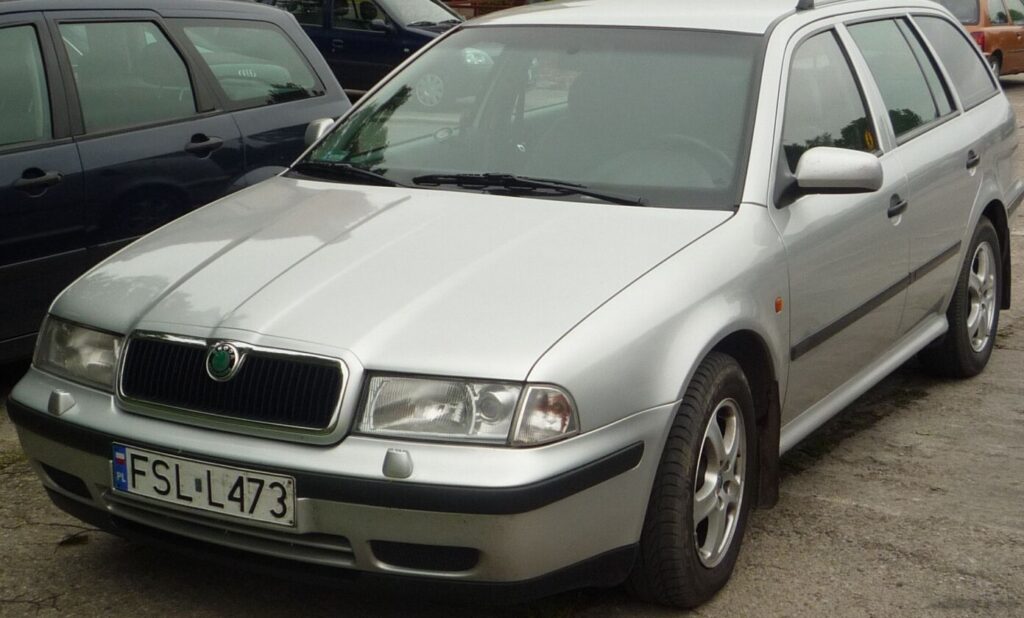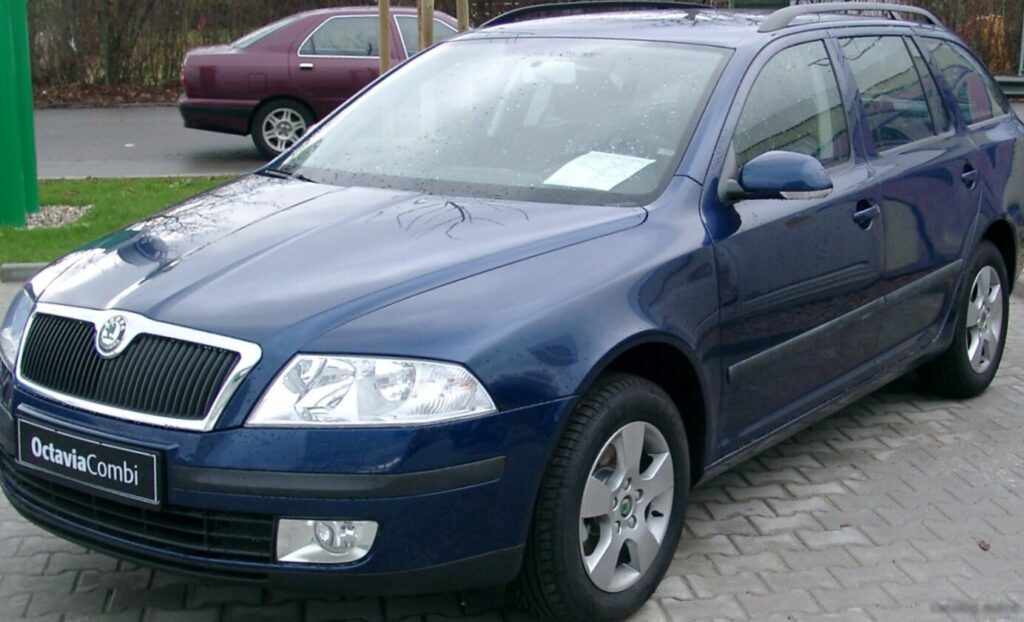
The Skoda Octavia II Combi 2.0 FSI, produced between November 2004 and October 2008, represents a significant offering within the second generation (Octavia II) of Skoda’s popular compact estate car. Positioned as a mid-range variant, it bridged the gap between the more economical 1.4 and 1.6-liter engines and the performance-oriented RS model. Built on the Volkswagen Group’s A5 (1HX0) platform – also known as the A3 platform – the 2.0 FSI Combi aimed to provide a balance of practicality, fuel efficiency, and respectable performance for families and individuals needing a versatile vehicle. The “Combi” designation signifies the estate or wagon body style, offering increased cargo capacity compared to the standard liftback version.
Powertrain & Engine Architecture
At the heart of the Octavia II Combi 2.0 FSI lies the BLR, BLX, BLY, BVX, BVY, or BVZ engine code, a 1984 cc (121.07 cu. in.) inline-four cylinder gasoline engine. This engine is characterized by its direct fuel injection (FSI) system, a technology that improves combustion efficiency and power output compared to traditional port fuel injection. The FSI system injects fuel directly into the combustion chamber, allowing for more precise control over the air-fuel mixture and higher compression ratios. The engine boasts a compression ratio of 11.5:1 and utilizes a double overhead camshaft (DOHC) valvetrain with four valves per cylinder, contributing to its responsive nature.
While a six-speed manual transmission was standard, an optional six-speed automatic transmission was available. This automatic gearbox, typically the 6F24A, is a conventional torque converter automatic, known for its smoothness and reliability. It features electronic control for optimized shift points and adaptive learning to suit driving styles. The engine produces 150 horsepower (hp) at 6000 rpm and 200 Newton-meters (147.51 lb.-ft.) of torque at 3500 rpm. This configuration provides a noticeable step up in performance compared to the lower-displacement engines in the Octavia II range.
Fuel Injection and Valvetrain Details
The direct fuel injection system employed in the 2.0 FSI engine is a key element of its design. It utilizes high-pressure fuel injectors and a sophisticated engine control unit (ECU) to precisely meter fuel delivery. This results in improved fuel economy and reduced emissions. The DOHC valvetrain, coupled with four valves per cylinder, enhances volumetric efficiency, allowing the engine to breathe more effectively and generate more power. Variable valve timing is not a feature of this engine, unlike some later iterations of the FSI technology.
Driving Characteristics
The Octavia II Combi 2.0 FSI offers a noticeably more spirited driving experience than its lower-powered siblings. Acceleration from 0 to 100 km/h (0-62 mph) takes approximately 9.4 seconds, while 0-60 mph is achieved in around 8.9 seconds. The maximum speed is rated at 212 km/h (131.73 mph). The engine’s torque delivery provides adequate pulling power for everyday driving and overtaking maneuvers. The six-speed manual transmission allows for precise gear selection and maximizes the engine’s efficiency, while the optional automatic transmission offers convenience, though at the expense of some responsiveness. Compared to the manual version, the automatic transmission slightly diminishes acceleration times due to inherent transmission losses.
The Combi’s estate body style does add some weight compared to the liftback, but the 2.0 FSI engine provides sufficient power to mitigate any noticeable performance deficit. Handling is generally secure and predictable, typical of front-wheel-drive vehicles. The suspension is tuned for comfort, making it a suitable choice for long journeys.
Equipment & Trim Levels
The 2.0 FSI Combi typically came equipped with a reasonable level of standard features. These included air conditioning, power windows, central locking, an audio system, and alloy wheels. Higher trim levels, such as the Elegance and Laurin & Klement, added features like climate control, leather upholstery, parking sensors, and upgraded audio systems. Optional extras included a sunroof, navigation system, and heated seats. Interior upholstery was typically cloth on the base models, with leather options available on higher trims. The dashboard layout was functional and straightforward, typical of Skoda’s design philosophy at the time.
Chassis & Braking
The Octavia II Combi 2.0 FSI utilizes a front-wheel-drive layout with a MacPherson strut front suspension and a multi-link rear suspension. This suspension setup provides a good balance of ride comfort and handling. The front brakes are ventilated discs, offering good stopping power, while the rear brakes are typically drum brakes, a cost-saving measure for this trim level. Anti-lock Braking System (ABS) is standard, enhancing safety during emergency braking situations. Steering is rack and pinion with hydraulic power assistance, providing a responsive and precise feel. Standard tire sizes were 195/65 R15 or 205/55 R16, depending on the trim level.
Market Reception & Comparison
The Octavia II Combi 2.0 FSI was generally well-received by automotive critics. It was praised for its spacious interior, practical estate body style, and the improved performance offered by the 2.0 FSI engine. Fuel economy was considered reasonable for its class, with combined fuel consumption figures around 7.4 l/100 km (31.8 US mpg). Compared to the 1.4 and 1.6-liter versions, the 2.0 FSI offered a significant performance boost, making it a more appealing option for drivers who frequently carry passengers or cargo. However, it was more expensive to purchase and maintain than the lower-displacement models. Compared to the higher-performance RS model, the 2.0 FSI offered a more balanced driving experience, prioritizing comfort and practicality over outright speed.
Technical Specifications
| Brand | Skoda |
| Model | Octavia |
| Generation | Octavia II Combi |
| Type (Engine) | 2.0 FSI (150 Hp) |
| Start of production | November, 2004 |
| End of production | October, 2008 |
| Fuel consumption (urban) | 10.8 l/100 km (21.8 US mpg) |
| Fuel consumption (extra urban) | 5.7 l/100 km (41.3 US mpg) |
| Fuel consumption (combined) | 7.4 l/100 km (31.8 US mpg) |
| Fuel Type | Petrol (Gasoline) |
| Acceleration 0 – 100 km/h | 9.4 sec |
| Acceleration 0 – 62 mph | 9.4 sec |
| Acceleration 0 – 60 mph | 8.9 sec |
| Maximum speed | 212 km/h (131.73 mph) |
| Emission standard | Euro 4 |
| Weight-to-power ratio | 9.5 kg/Hp |
| Power | 150 Hp @ 6000 rpm |
| Torque | 200 Nm @ 3500 rpm (147.51 lb.-ft. @ 3500 rpm) |
| Engine layout | Front, Transverse |
| Engine Model/Code | BLR, BLX, BLY, BVX, BVY, BVZ |
| Engine displacement | 1984 cm3 (121.07 cu. in.) |
| Number of cylinders | 4 |
| Engine configuration | Inline |
| Cylinder Bore | 82.5 mm (3.25 in.) |
| Piston Stroke | 92.8 mm (3.65 in.) |
| Compression ratio | 11.5:1 |
| Number of valves per cylinder | 4 |
| Fuel injection system | Direct injection |
| Engine aspiration | Naturally aspirated |
| Valvetrain | DOHC |
| Engine oil capacity | 4.6 l (4.86 US qt | 4.05 UK qt) |
| Coolant | 7.7 l (8.14 US qt | 6.78 UK qt) |
| Kerb Weight | 1425 kg (3141.59 lbs.) |
| Max. weight | 1985 kg (4376.18 lbs.) |
| Max load | 560 kg (1234.59 lbs.) |
| Trunk (boot) space – minimum | 580 l (20.48 cu. ft.) |
| Trunk (boot) space – maximum | 1630 l (57.56 cu. ft.) |
| Fuel tank capacity | 55 l (14.53 US gal | 12.1 UK gal) |
| Length | 4572 mm (180 in.) |
| Width | 1769 mm (69.65 in.) |
| Height | 1462 mm (57.56 in.) |
| Wheelbase | 2578 mm (101.5 in.) |
Legacy
The Skoda Octavia II Combi 2.0 FSI has proven to be a relatively reliable vehicle, although, like all cars, it is not without its potential issues. Common concerns include occasional problems with the FSI fuel injectors and the coil packs. The automatic transmission, while generally robust, may require servicing at higher mileages. However, the engine itself is generally considered durable, and with regular maintenance, it can provide many years of service. In the used car market, the 2.0 FSI Combi remains a popular choice due to its practicality, spaciousness, and reasonable running costs. It represents a good value proposition for buyers seeking a versatile and reliable estate car.