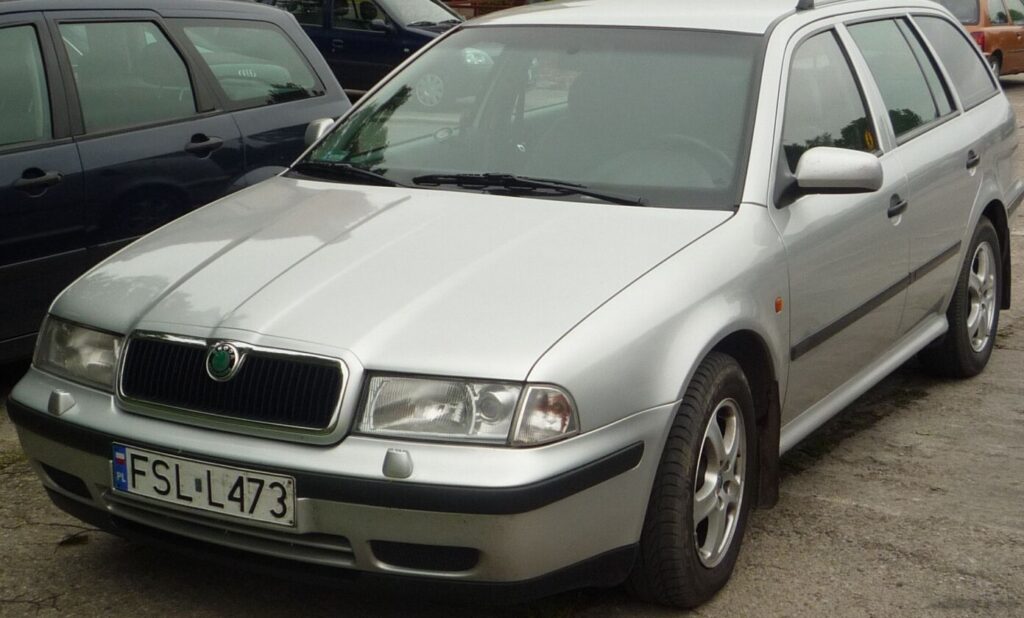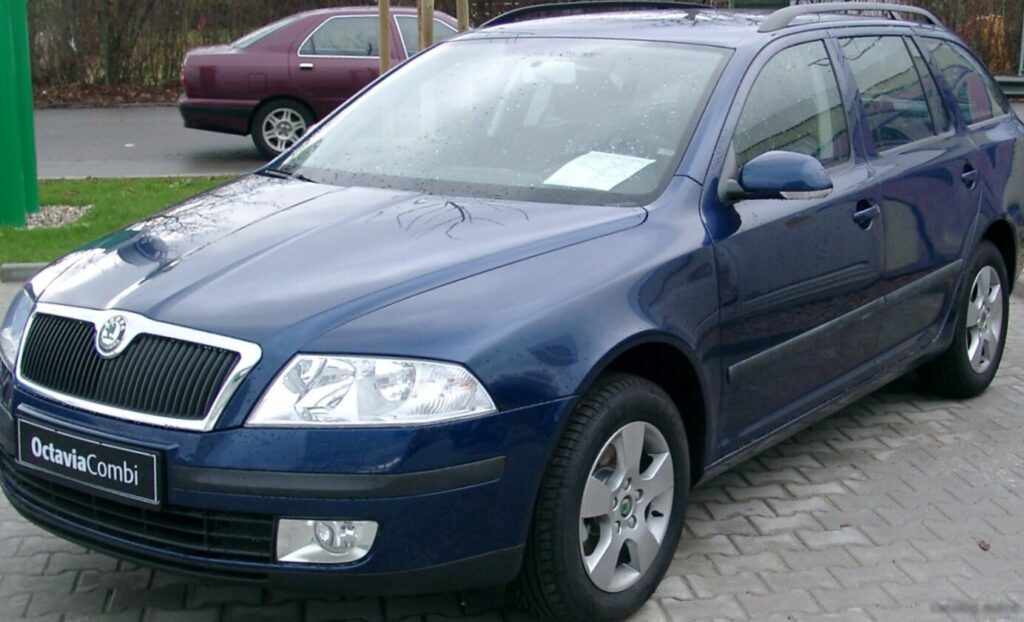
The Skoda Octavia II Combi 2.0 FSI Tiptronic, produced between November 2004 and October 2008, represents a significant offering within the second generation (Octavia II) of Skoda’s popular compact estate car. Built on the Volkswagen Group’s A5 (1HX0) platform – shared with the Volkswagen Golf Mk5, Audi A3, and other models – this variant aimed to provide a balance of practicality, performance, and comfort for families and drivers seeking a versatile vehicle. The Combi (estate) body style, combined with the 2.0 FSI engine and six-speed Tiptronic automatic transmission, positioned this model as a mid-range option within the Octavia II lineup, appealing to those who preferred the convenience of an automatic gearbox and a more powerful engine than the base 1.4 or 1.6-liter options.
Powertrain & Engine Architecture
At the heart of the Octavia II Combi 2.0 FSI Tiptronic lies the BLR, BLX, BLY, BVX, BVY, or BVZ series 2.0-liter inline-four cylinder gasoline engine. This engine is characterized by its direct fuel injection (FSI – Fuel Stratified Injection) system, a technology that allows for precise fuel delivery directly into the combustion chamber, improving efficiency and power output. The engine boasts a displacement of 1984 cc (121.07 cubic inches) and a compression ratio of 11.5:1. It features a double overhead camshaft (DOHC) valvetrain with four valves per cylinder, contributing to its responsive nature.
The 2.0 FSI engine produces a maximum power output of 150 horsepower (hp) at 6000 rpm and 200 Newton-meters (147.51 lb-ft) of torque at 3500 rpm. The engine oil capacity is 4.6 liters (4.86 US quarts / 4.05 UK quarts), and the cooling system requires 7.7 liters (8.14 US quarts / 6.78 UK quarts). Paired with this engine is a six-speed Tiptronic automatic transmission, a conventional torque-converter automatic with the ability for the driver to manually select gears. This transmission provides smooth shifts and enhances driving convenience, although it doesn’t offer the same level of engagement as a manual gearbox.
Fuel Injection and Valvetrain Details
The FSI system utilized in the 2.0 engine is a key component of its performance. Unlike traditional port fuel injection, FSI injects fuel directly into the cylinder, allowing for more precise control over the combustion process. This results in improved fuel economy, reduced emissions, and increased power. The DOHC valvetrain, with its four valves per cylinder, further enhances the engine’s breathing capabilities, contributing to its overall performance. The engine’s design prioritizes a balance between power and efficiency, making it suitable for both urban driving and longer journeys.
Driving Characteristics
The Octavia II Combi 2.0 FSI Tiptronic delivers a respectable driving experience. Acceleration from 0 to 100 km/h (0-62 mph) takes approximately 10.2 seconds, while 0 to 60 mph is achieved in around 9.7 seconds. The top speed is rated at 210 km/h (130.49 mph). While not a sports car, the 2.0 FSI engine provides sufficient power for overtaking maneuvers and maintaining comfortable cruising speeds on the highway. The Tiptronic transmission generally offers smooth and predictable gear changes, although it can sometimes feel slightly hesitant during quick acceleration. Compared to the manual transmission versions of the 2.0 FSI, the Tiptronic variant typically exhibits slightly slower acceleration times due to the inherent power loss within the torque converter. The automatic transmission also alters the driving experience, prioritizing comfort and ease of use over driver engagement.
The gear ratios in the six-speed Tiptronic transmission are optimized for a balance of acceleration and fuel efficiency. Lower gears provide brisk acceleration, while higher gears allow for relaxed cruising at highway speeds. The Tiptronic function allows drivers to manually select gears, providing a degree of control over the engine’s power delivery, but it doesn’t replicate the responsiveness of a dedicated manual gearbox.
Equipment & Trim Levels
The Octavia II Combi 2.0 FSI Tiptronic typically came equipped with a reasonable level of standard features. These generally included air conditioning, power windows, power mirrors, central locking, an audio system (usually a CD player with multiple speakers), and ABS (Anti-lock Braking System). Interior upholstery was typically cloth, although leather options were available as upgrades. Dashboard configuration was consistent across the Octavia II range, featuring a functional and straightforward design. Optional extras commonly included alloy wheels, a sunroof, parking sensors, upgraded audio systems, and climate control. The specific trim level (e.g., Classic, Ambiente, Elegance) determined the extent of standard equipment and the availability of optional extras.
Chassis & Braking
The Octavia II Combi 2.0 FSI Tiptronic utilizes a front-wheel-drive layout. The front suspension consists of wishbones, providing a comfortable and controlled ride. The rear suspension employs a multi-link setup, further enhancing ride quality and handling. The braking system features ventilated discs on the front wheels and drum brakes on the rear wheels. ABS (Anti-lock Braking System) is standard, providing enhanced braking performance and stability in emergency situations. The steering system is a hydraulic power steering rack and pinion, offering precise and responsive steering feel. Tire sizes typically ranged from 195/65 R15 to 205/55 R16, depending on the trim level and optional equipment.
Market Reception & Comparison
The Skoda Octavia II Combi 2.0 FSI Tiptronic was generally well-received by automotive critics. It was praised for its spacious interior, practical estate car body style, and the balance of performance and fuel economy offered by the 2.0 FSI engine. The Tiptronic automatic transmission was appreciated for its convenience, although some reviewers noted its slightly slower response compared to the manual gearbox. Fuel consumption figures were around 8.3 l/100 km (28.3 US mpg / 34 UK mpg) combined, which was competitive for its class. Compared to the 1.8 TSI versions that followed, the 2.0 FSI offered a slightly less refined driving experience but was generally considered more reliable. Compared to the diesel variants (e.g., 1.9 TDI, 2.0 TDI), the 2.0 FSI offered a different driving character, prioritizing responsiveness over fuel economy. The diesel models were often favored by drivers who prioritized low running costs and high fuel efficiency.
Technical Specifications
| Brand | Skoda |
| Model | Octavia |
| Generation | Octavia II Combi |
| Type (Engine) | 2.0 FSI (150 Hp) Tiptronic |
| Start of production | November, 2004 |
| End of production | October, 2008 |
| Fuel consumption (urban) | 11.8 l/100 km (19.9 US mpg / 23.9 UK mpg) |
| Fuel consumption (extra urban) | 6.3 l/100 km (37.3 US mpg / 44.8 UK mpg) |
| Fuel consumption (combined) | 8.3 l/100 km (28.3 US mpg / 34 UK mpg) |
| Fuel Type | Petrol (Gasoline) |
| Acceleration 0 – 100 km/h | 10.2 sec |
| Acceleration 0 – 62 mph | 10.2 sec |
| Acceleration 0 – 60 mph | 9.7 sec |
| Maximum speed | 210 km/h (130.49 mph) |
| Emission standard | Euro 4 |
| Weight-to-power ratio | 9.5 kg/Hp |
| Weight-to-torque ratio | 7.1 kg/Nm |
| Power | 150 Hp @ 6000 rpm |
| Torque | 200 Nm @ 3500 rpm (147.51 lb.-ft. @ 3500 rpm) |
| Engine layout | Front, Transverse |
| Engine Model/Code | BLR, BLX, BLY, BVX, BVY, BVZ |
| Engine displacement | 1984 cm3 (121.07 cu. in.) |
| Number of cylinders | 4 |
| Engine configuration | Inline |
| Cylinder Bore | 82.5 mm (3.25 in.) |
| Piston Stroke | 92.8 mm (3.65 in.) |
| Compression ratio | 11.5:1 |
| Number of valves per cylinder | 4 |
| Fuel injection system | Direct injection |
| Engine aspiration | Naturally aspirated engine |
| Valvetrain | DOHC |
| Engine oil capacity | 4.6 l (4.86 US qt | 4.05 UK qt) |
| Coolant | 7.7 l (8.14 US qt | 6.78 UK qt) |
| Kerb Weight | 1425 kg (3141.59 lbs.) |
| Max. weight | 1985 kg (4376.18 lbs.) |
| Max load | 560 kg (1234.59 lbs.) |
| Trunk (boot) space – minimum | 580 l (20.48 cu. ft.) |
| Trunk (boot) space – maximum | 1630 l (57.56 cu. ft.) |
| Fuel tank capacity | 55 l (14.53 US gal | 12.1 UK gal) |
| Length | 4572 mm (180 in.) |
| Width | 1769 mm (69.65 in.) |
| Height | 1462 mm (57.56 in.) |
| Wheelbase | 2578 mm (101.5 in.) |
| Number of gears and type of gearbox | 6 gears, automatic transmission |
Legacy
The Skoda Octavia II Combi 2.0 FSI Tiptronic, while not without its quirks, has proven to be a relatively reliable vehicle in the long term. The 2.0 FSI engine, while susceptible to carbon buildup on the intake valves if not properly maintained, is generally durable. The Tiptronic transmission, when serviced according to the manufacturer’s recommendations, can provide years of trouble-free operation. Today, these vehicles are readily available on the used car market at affordable prices. They continue to appeal to buyers seeking a practical, spacious, and reasonably well-equipped estate car. Regular maintenance, including oil changes and timing belt replacements, is crucial for ensuring the continued reliability of this powertrain. The Octavia II Combi 2.0 FSI Tiptronic remains a popular choice for those seeking a dependable and versatile vehicle.