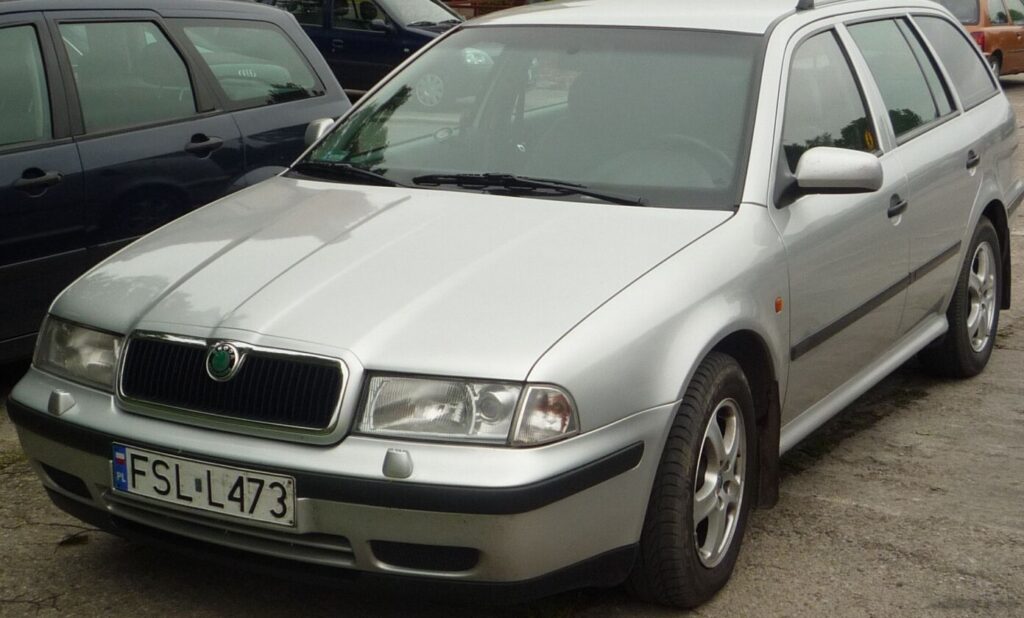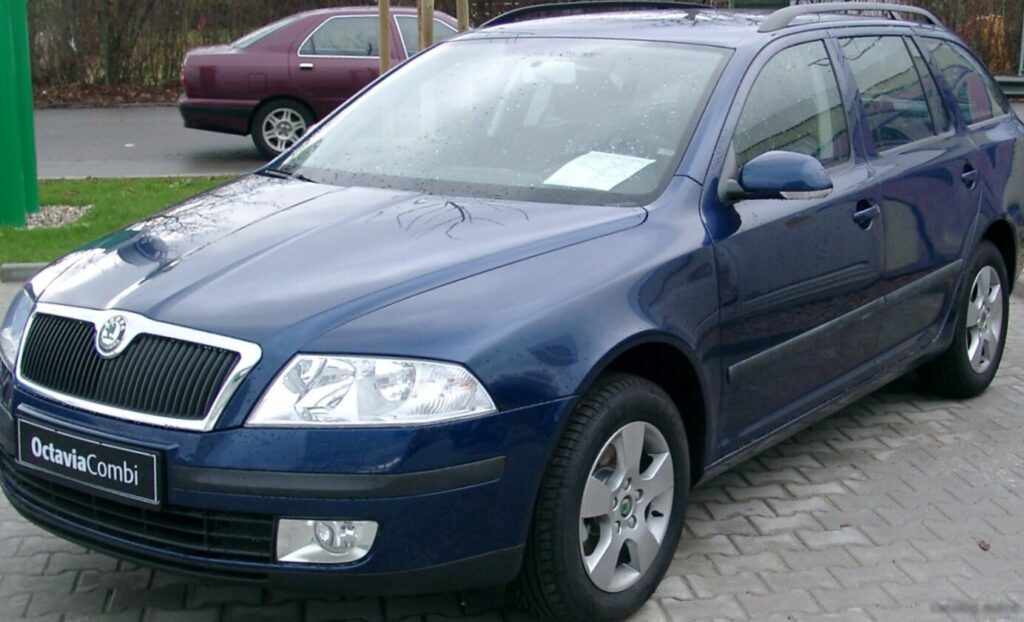
The Skoda Octavia II Combi 2.0 TDI 4×4, produced between February 2004 and October 2008, represents a significant offering in the compact estate car segment. Part of the second generation Octavia (1Z chassis), the Combi – Skoda’s designation for a station wagon – combined practicality with the added security and capability of all-wheel drive. This particular variant, powered by the 2.0 TDI engine producing 140 horsepower, occupied a mid-range position within the Octavia II lineup, appealing to buyers seeking a balance between fuel efficiency, performance, and all-weather traction. It was positioned above the lower-powered diesel options and the gasoline engines, but below the more potent TDI variants and the sporty RS model.
Powertrain & Engine Architecture
At the heart of the Octavia II Combi 2.0 TDI 4×4 lies the EA188 series 2.0-liter inline four-cylinder diesel engine, specifically the BKD engine code. This engine utilizes a common rail direct injection system, a significant advancement over earlier pump-nozzle designs, allowing for finer control of fuel delivery and reduced noise. The BKD engine features a turbocharger with an intercooler to increase air density and boost power output. The engine boasts four valves per cylinder, operated by a single overhead camshaft, and a compression ratio of 18.5:1, contributing to its efficiency. The engine displaces 1968 cubic centimeters (120.09 cubic inches) and produces 140 hp at 4000 rpm and 320 Nm (236.02 lb-ft) of torque at 1750 rpm.
The drivetrain is equipped with a six-speed manual transmission, chosen for its efficiency and driver engagement. The all-wheel-drive system is a viscous coupling-based system, providing automatic torque distribution between the front and rear axles based on traction conditions. This system is fully automatic and requires no driver intervention, enhancing stability in slippery conditions.
Fuel Injection and Turbocharging
The common rail direct injection system in the BKD engine operates at extremely high pressures, atomizing the fuel for more complete combustion. This results in improved fuel economy and reduced emissions. The turbocharger, coupled with the intercooler, forces more air into the cylinders, increasing power output without significantly increasing engine size. The intercooler cools the compressed air, further enhancing its density and improving combustion efficiency.
Driving Characteristics
The Octavia II Combi 2.0 TDI 4×4 delivers a composed and capable driving experience. The 140 hp engine, while not exceptionally powerful, provides ample torque for everyday driving and comfortable highway cruising. Acceleration from 0 to 100 km/h (0-62 mph) takes approximately 9.6 seconds, and 0 to 60 mph is achieved in around 9.1 seconds. The all-wheel-drive system provides enhanced traction, particularly on loose surfaces or in inclement weather. The six-speed manual transmission allows for precise gear selection and contributes to the car’s overall efficiency. Compared to the lower-powered 1.9 TDI models, the 2.0 TDI offers noticeably more responsive acceleration. However, it doesn’t match the outright performance of the higher-output TDI variants or the Octavia RS.
The gear ratios are well-chosen for both fuel economy and performance. First gear is relatively short for quick acceleration from a standstill, while fifth and sixth gears are geared for efficient highway cruising. The steering is precise and well-weighted, providing good feedback to the driver. The suspension is tuned for comfort, absorbing bumps and imperfections in the road surface effectively.
Equipment & Trim Levels
The Octavia II Combi 2.0 TDI 4×4 typically came equipped with a reasonable level of standard equipment. This included power windows, central locking, air conditioning, an audio system, and ABS brakes. Interior upholstery was typically cloth, although leather options were available. Dashboard configuration was functional and straightforward, prioritizing usability over stylistic flair. Optional extras included alloy wheels, a sunroof, parking sensors, and upgraded audio systems. Specific trim levels varied depending on the market, but generally offered progressively more features and luxury appointments.
Chassis & Braking
The Octavia II Combi 2.0 TDI 4×4 utilizes a MacPherson strut front suspension and a multi-link rear suspension. This setup provides a good balance between ride comfort and handling. The front and rear brakes are disc brakes, providing ample stopping power. ABS (Anti-lock Braking System) is standard, enhancing safety during emergency braking situations. The curb weight of the vehicle is approximately 1425 kg (3141.59 lbs), and the gross vehicle weight is 2010 kg (4431.29 lbs). Stabilizer bars are fitted to both the front and rear axles to reduce body roll during cornering.
Market Reception & Comparison
The Skoda Octavia II Combi 2.0 TDI 4×4 was generally well-received by automotive critics. It was praised for its practicality, fuel efficiency, and all-weather capability. Fuel economy figures are around 6.3 l/100 km (37.3 US mpg) combined, making it an economical choice for long-distance driving. Compared to the front-wheel-drive versions of the Octavia, the 4×4 model offered superior traction and stability, particularly in challenging conditions. However, the all-wheel-drive system did add some weight and slightly reduced fuel economy. Reliability was generally good, although some owners reported issues with the diesel particulate filter (DPF) and turbocharger. Compared to competitors like the Volkswagen Passat Variant and Ford Focus Estate, the Octavia offered a compelling combination of value, space, and practicality.
Technical Specifications
| Brand | Skoda |
| Model | Octavia |
| Generation | Octavia II Combi |
| Type (Engine) | 2.0 TDI (140 Hp) 4×4 |
| Start of production | February, 2004 |
| End of production | October, 2008 |
| Fuel consumption (urban) | 8.9 l/100 km (26.4 US mpg) |
| Fuel consumption (extra urban) | 5.3 l/100 km (44.4 US mpg) |
| Fuel consumption (combined) | 6.3 l/100 km (37.3 US mpg) |
| Fuel Type | Diesel |
| Acceleration 0 – 100 km/h | 9.6 sec |
| Acceleration 0 – 62 mph | 9.6 sec |
| Acceleration 0 – 60 mph | 9.1 sec |
| Maximum speed | 199 km/h (123.65 mph) |
| Emission standard | Euro 4 |
| Power | 140 Hp @ 4000 rpm |
| Torque | 320 Nm @ 1750 rpm (236.02 lb.-ft. @ 1750 rpm) |
| Engine layout | Front, Transverse |
| Engine Model/Code | EA188 / BKD |
| Engine displacement | 1968 cm3 (120.09 cu. in.) |
| Number of cylinders | 4 |
| Cylinder Bore | 81 mm (3.19 in.) |
| Piston Stroke | 95.5 mm (3.76 in.) |
| Compression ratio | 18.5:1 |
| Kerb Weight | 1425 kg (3141.59 lbs.) |
| Max. weight | 2010 kg (4431.29 lbs.) |
| Trunk (boot) space – minimum | 580 l (20.48 cu. ft.) |
| Trunk (boot) space – maximum | 1620 l (57.21 cu. ft.) |
| Fuel tank capacity | 55 l (14.53 US gal) |
| Length | 4572 mm (180 in.) |
| Width | 1769 mm (69.65 in.) |
| Height | 1468 mm (57.8 in.) |
| Wheelbase | 2578 mm (101.5 in.) |
| Drive wheel | All wheel drive (4×4) |
| Number of gears | 6 gears, manual transmission |
Legacy
The Skoda Octavia II Combi 2.0 TDI 4×4 remains a popular choice in the used car market. The BKD engine, while generally reliable, can be susceptible to issues with the DPF and turbocharger if not properly maintained. Regular oil changes and the use of high-quality fuel are essential for ensuring long-term reliability. The all-wheel-drive system is robust and typically requires minimal maintenance. The Octavia II Combi’s spacious interior, practical estate car body style, and fuel-efficient diesel engine continue to appeal to buyers seeking a versatile and economical vehicle. Its reputation for value and reliability has cemented its place as a well-regarded vehicle in its class.