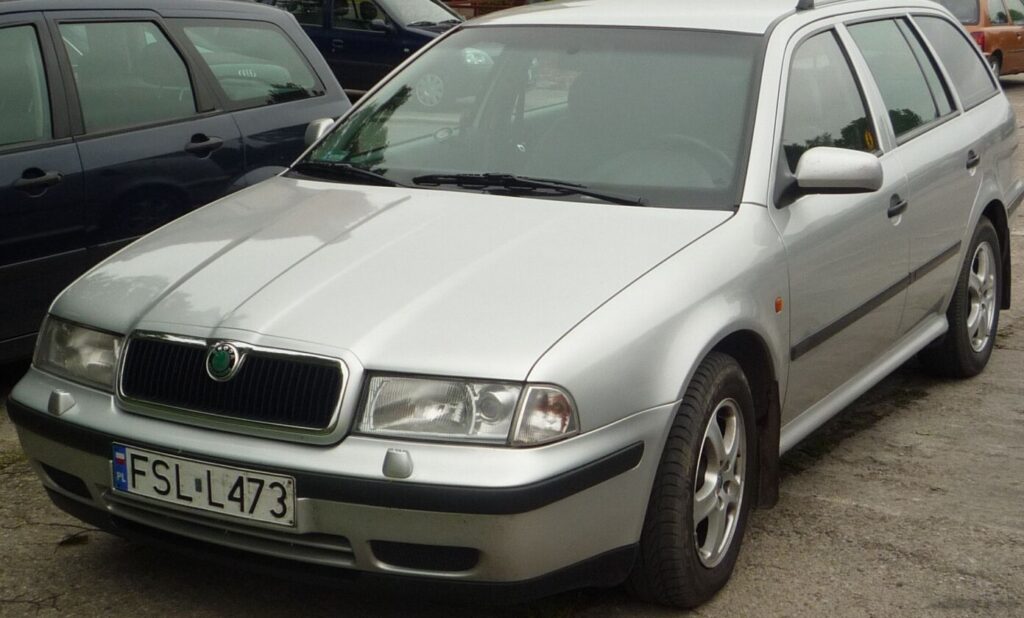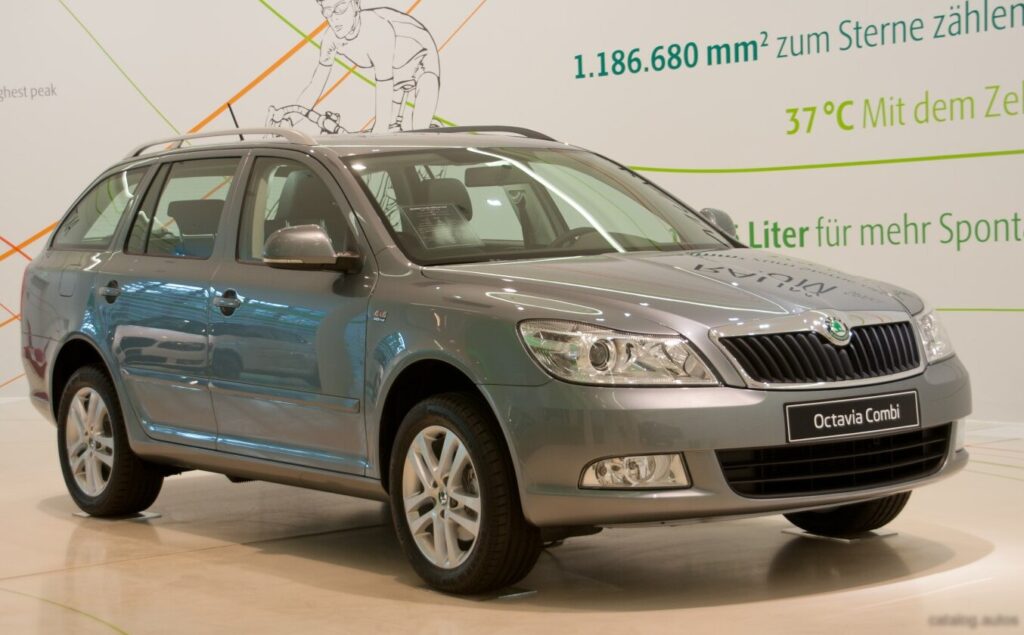
The Skoda Octavia II Combi, specifically the 1.6 MPI (102 hp) Tiptronic variant, was a station wagon (estate) produced from 2009 to June 2013. This model represented an important part of Skoda’s lineup during the facelift of the second-generation Octavia (designated the 1Z chassis). Positioned as an entry-level to mid-range offering, it provided a practical and affordable option for families and individuals needing a spacious and versatile vehicle. The “Combi” designation signified the wagon body style, offering significantly more cargo capacity than the standard liftback version. This particular engine and transmission combination aimed to balance fuel efficiency with acceptable performance for everyday driving.
The 1.6 MPI Tiptronic in the Octavia II Combi Lineup
Within the Octavia II Combi range, the 1.6 MPI Tiptronic served as a stepping stone for buyers. It sat below the more powerful 1.8 TSI, 2.0 TDI, and the performance-oriented RS models. Compared to the diesel options, the 1.6 MPI offered a lower initial purchase price and potentially lower maintenance costs, although at the expense of fuel economy and torque. Against the 1.8 TSI, the 1.6 MPI provided a more economical choice, appealing to drivers prioritizing affordability over outright performance. The Tiptronic automatic transmission, while offering convenience, was generally considered less sporty than the available manual gearbox.
Powertrain & Engine Architecture
The heart of this Octavia variant was the 1.6-liter inline-four cylinder gasoline engine, specifically utilizing engine codes BSE, BSF, or CMXA depending on the specific production year and market. This engine was a naturally aspirated unit, meaning it did not employ turbocharging or supercharging. It featured a multi-port fuel injection system, delivering fuel directly into the intake manifold. The engine’s valvetrain consisted of two valves per cylinder (two intake, two exhaust), a relatively simple design contributing to its reliability and lower manufacturing cost.
The 1.6 MPI engine produced 102 horsepower at 5600 rpm and 148 Nm (109.16 lb-ft) of torque at 3800 rpm. The engine’s bore and stroke measured 81 mm (3.19 in) and 77.4 mm (3.05 in) respectively, resulting in a displacement of 1595 cm³ (97.33 cu. in). A compression ratio of 10.5:1 was employed to optimize combustion efficiency.
Paired with the engine was a six-speed Tiptronic automatic transmission. This transmission was a conventional torque converter automatic, offering smooth shifts and ease of use. The “Tiptronic” function allowed drivers to manually select gears, providing a degree of control over the engine’s RPMs. The transmission’s gear ratios were tuned for fuel efficiency and comfortable cruising, rather than aggressive acceleration. First gear was relatively short for quick take-off, while higher gears were geared for lower engine speeds at highway speeds.
Fuel Injection and Engine Management
The 1.6 MPI engine utilized a Bosch Motronic engine control unit (ECU) to manage fuel injection, ignition timing, and other engine parameters. The multi-port fuel injection system delivered fuel to each cylinder independently, optimizing combustion based on engine load and speed. The ECU monitored various sensors throughout the engine, including oxygen sensors, throttle position sensor, and coolant temperature sensor, to ensure optimal performance and emissions control.
Driving Characteristics
The 1.6 MPI Tiptronic Octavia Combi offered a comfortable and predictable driving experience. Acceleration was adequate for everyday driving, with a 0-100 km/h (0-62 mph) time of around 14.2 seconds. However, it was noticeably slower than the more powerful variants, particularly when fully loaded with passengers and cargo. The automatic transmission contributed to a smooth and effortless driving experience, but it could sometimes feel hesitant during quick overtaking maneuvers. The engine’s torque peak at 3800 rpm meant that drivers often needed to downshift to access sufficient power for accelerating or climbing hills. The steering was light and easy to use, making it well-suited for urban driving. Overall, the driving experience prioritized comfort and practicality over sporty performance.
Equipment & Trim Levels
The standard equipment level for the 1.6 MPI Tiptronic Octavia Combi was generally considered good for its price point. Standard features typically included air conditioning, power windows, power door locks, central locking, an audio system (usually a CD player with MP3 compatibility), and ABS brakes. Safety features such as front airbags were also standard. Interior upholstery was typically cloth, with a relatively simple and functional dashboard design.
Optional extras included alloy wheels, a sunroof, parking sensors, a more advanced audio system with navigation, and heated front seats. Higher trim levels, often denoted by names like “Elegance” or “Ambition,” added additional features such as automatic climate control, cruise control, and upgraded interior trim. The availability of optional equipment varied depending on the market and production year.
Chassis & Braking
The Octavia II Combi featured an independent suspension system on both the front and rear axles. The front suspension utilized a McPherson strut design with coil springs and an anti-roll bar, providing a comfortable ride and predictable handling. The rear suspension employed a multi-link setup, further enhancing ride quality and stability. The chassis was tuned to prioritize comfort and practicality, rather than sporty handling.
Braking duties were handled by ventilated discs on the front wheels and solid discs on the rear wheels. ABS (Anti-lock Braking System) was standard, enhancing braking performance and stability in emergency situations. The braking system was generally considered adequate for the vehicle’s weight and performance. Electric power steering was standard, providing light and easy steering assistance.
Market Reception & Comparison
The 1.6 MPI Tiptronic Octavia Combi received generally positive reviews from automotive critics. It was praised for its spacious interior, practical wagon body style, and affordable price. However, it was also criticized for its relatively slow acceleration and modest fuel economy compared to the diesel variants. Fuel consumption figures were around 7.9 l/100 km (29.8 US mpg) combined, which was acceptable but not class-leading. Reliability was generally good, with the 1.6 MPI engine proving to be a durable and dependable unit. Compared to the 1.8 TSI, the 1.6 MPI offered a lower purchase price and potentially lower maintenance costs, but at the expense of performance and refinement.
Technical Specifications
| Engine Type | 1.6 MPI Inline-4 |
| Engine Code | BSE, BSF, CMXA |
| Displacement | 1595 cm³ (97.33 cu. in.) |
| Power | 102 hp @ 5600 rpm |
| Torque | 148 Nm (109.16 lb-ft) @ 3800 rpm |
| Fuel Type | Petrol (Gasoline) |
| Transmission | 6-speed Tiptronic Automatic |
| Drive Wheels | Front Wheel Drive |
| 0-100 km/h | 14.2 sec |
| Top Speed | 184 km/h (114.33 mph) |
| Fuel Consumption (Combined) | 7.9 l/100 km (29.8 US mpg) |
| Kerb Weight | 1360 kg (2998.29 lbs) |
| Fuel Tank Capacity | 55 l (14.53 US gal) |
| Length | 4569 mm (179.88 in) |
| Width | 1769 mm (69.65 in) |
| Height | 1462 mm (57.56 in) |
Legacy
The 1.6 MPI Tiptronic Octavia II Combi remains a popular choice in the used car market, particularly for buyers seeking an affordable and practical family vehicle. The engine is known for its reliability and relatively low maintenance costs. While not the most exciting or powerful variant, it provides a comfortable and dependable driving experience. Common issues are generally limited to routine maintenance items such as spark plugs, air filters, and oil changes. The Tiptronic transmission, if properly maintained, is also generally reliable. The availability of spare parts is good, and the Octavia II Combi benefits from Skoda’s reputation for building well-engineered and durable vehicles. Its blend of practicality, affordability, and reliability ensures its continued presence on roads today.