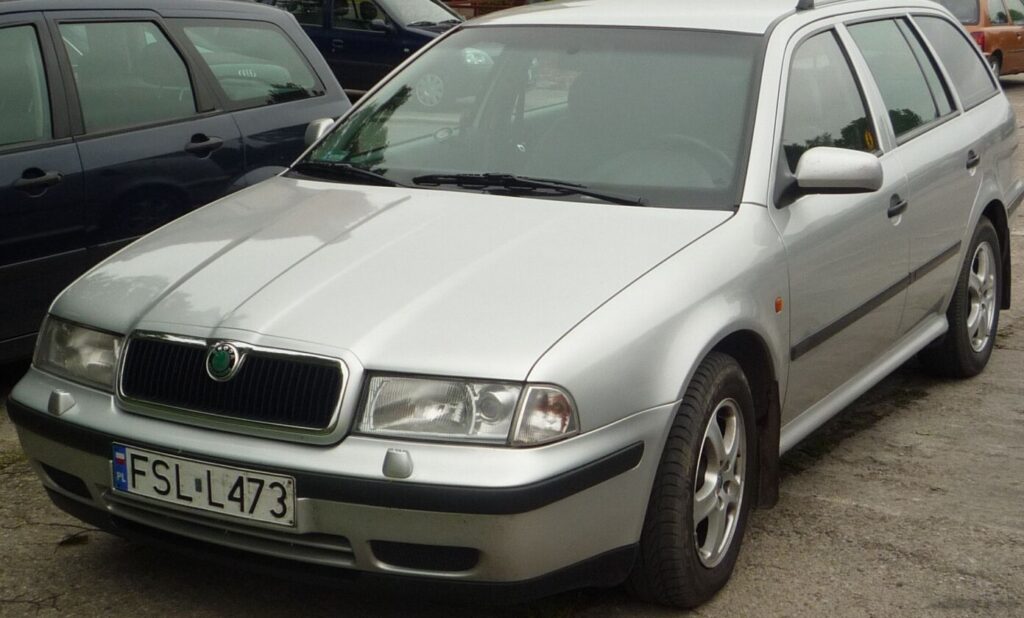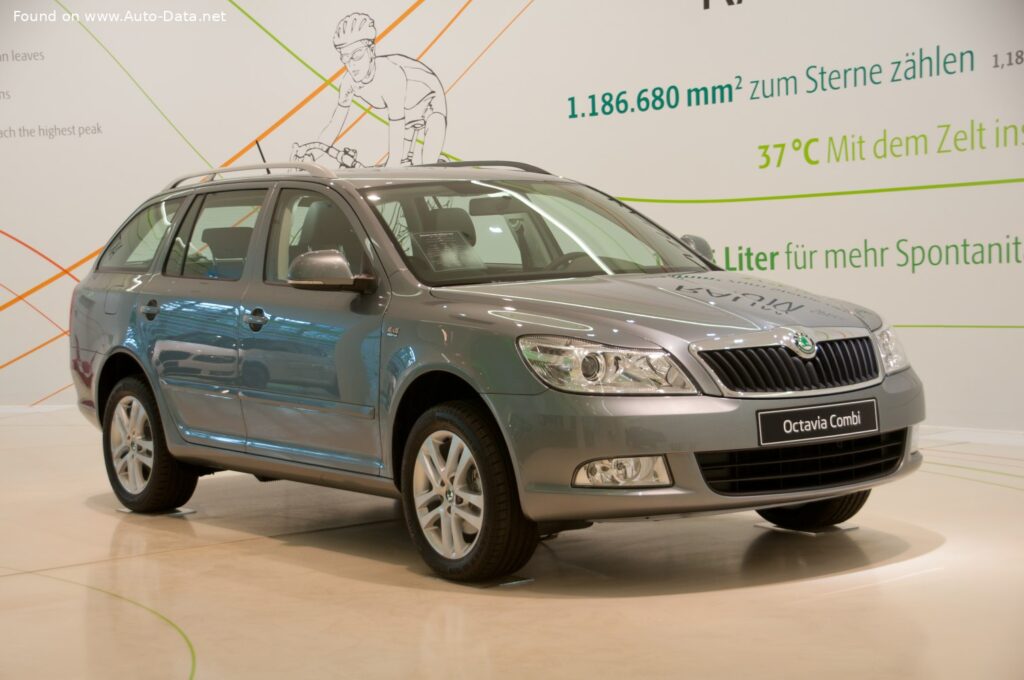
The Skoda Octavia II Combi, specifically the facelifted version introduced in 2009, represented a significant evolution of Skoda’s popular compact estate car. Production of the 2.0 TDI CR (140 Hp) DSG variant ran from February 2010 to May 2013. This model occupied a mid-range position within the Octavia II Combi lineup, offering a balance between performance, fuel efficiency, and practicality. It was positioned above the lower-powered diesel options and the gasoline engines, but below the more potent diesel variants and the performance-oriented RS model. The Octavia II Combi, built on the Volkswagen Group’s A5 (1HX0) platform – also known as the A3 platform – aimed to provide a spacious and versatile vehicle for families and individuals requiring ample cargo capacity.
2.0 TDI CR (140 Hp) DSG Powertrain & Engine Architecture
The heart of this Octavia variant is the 2.0-liter four-cylinder diesel engine, designated CFHC or CLCB depending on the specific production date and market. This engine belongs to the Common Rail (CR) family of Volkswagen Group diesel engines, characterized by its high-pressure common rail fuel injection system. This system, supplied by Bosch, allowed for precise control of fuel delivery, resulting in improved combustion efficiency, reduced emissions, and enhanced performance. The engine utilizes a turbocharger with an intercooler to increase power output. The turbocharger forces more air into the engine, while the intercooler cools the compressed air, further increasing its density and improving combustion.
The engine features four valves per cylinder (16 valves total) and a double overhead camshaft (DOHC) configuration. The compression ratio is relatively high at 18.5:1, typical for diesel engines, contributing to their efficiency. The 2.0 TDI CR produces 140 horsepower (Hp) at 4000 rpm and 320 Newton-meters (236.02 lb-ft) of torque at 1750 rpm. This torque output is a key characteristic of diesel engines, providing strong pulling power at low engine speeds.
The “DSG” designation refers to the dual-clutch transmission (Direct-Shift Gearbox) used in this variant. This six-speed automatic transmission offers faster and smoother gear changes compared to traditional torque-converter automatics. The DSG operates by utilizing two separate clutches – one for odd-numbered gears and one for even-numbered gears. While one gear is engaged, the next gear is pre-selected, allowing for near-instantaneous shifts when the driver calls for a change. This contributes to both improved performance and fuel economy.
Fuel Injection and Valvetrain Details
The Common Rail Direct Injection system used in the CFHC/CLCB engine operates at extremely high pressures (typically around 1600 bar) to atomize the fuel into a fine mist, ensuring complete combustion. The engine management system precisely controls the timing and duration of fuel injection, optimizing performance and minimizing emissions. The valvetrain utilizes hydraulic valve lifters, reducing the need for manual valve adjustments.
Driving Characteristics
The 2.0 TDI CR (140 Hp) DSG Octavia Combi offered a refined and capable driving experience. The engine’s strong low-end torque made it well-suited for everyday driving, providing effortless acceleration in urban environments and ample power for overtaking on highways. While not as overtly sporty as the higher-powered variants, the 140 Hp engine provided sufficient performance for most drivers. The DSG transmission contributed to a smooth and responsive driving experience, with quick and seamless gear changes.
Compared to the lower-powered 1.6 TDI models, the 2.0 TDI CR offered a noticeable improvement in acceleration and overall responsiveness. It also felt less strained when fully loaded or climbing hills. Compared to the more powerful 2.0 TDI variants (typically 170 Hp), the 140 Hp version offered a slightly more relaxed driving experience, with a focus on fuel efficiency rather than outright performance. The gear ratios in the DSG transmission were optimized for a balance between acceleration and fuel economy, with a relatively tall sixth gear for efficient cruising on the highway.
Equipment & Trim Levels
The 2.0 TDI CR (140 Hp) DSG Octavia Combi typically came equipped with a respectable level of standard features. These generally included air conditioning, power windows, power mirrors, a CD/MP3 stereo system, and alloy wheels. Safety features such as ABS (Anti-lock Braking System), ESP (Electronic Stability Program), and multiple airbags were also standard. Interior upholstery was typically cloth, although leather upholstery was available as an optional extra.
Higher trim levels, such as the Elegance or Style, added features like automatic climate control, a multi-function steering wheel, parking sensors, and upgraded audio systems. Optional extras included a sunroof, navigation system, and heated seats. The dashboard configuration was generally consistent across the range, with a functional and ergonomic layout. The Octavia Combi’s spacious interior and large cargo area were key selling points, offering ample room for passengers and luggage.
Chassis & Braking
The Octavia II Combi’s chassis featured independent suspension on all four wheels. The front suspension utilized a McPherson strut design with coil springs and an anti-roll bar, while the rear suspension employed a multi-link setup. This configuration provided a good balance between ride comfort and handling. The steering system was a rack-and-pinion type with electric power assistance.
Braking duties were handled by ventilated discs on the front wheels and discs on the rear wheels. The ABS system prevented wheel lock-up during hard braking, enhancing stability and control. The size of the brake discs and the thickness of the anti-roll bars varied slightly depending on the specific trim level and optional equipment.
Market Reception & Comparison
The Skoda Octavia II Combi 2.0 TDI CR (140 Hp) DSG was generally well-received by automotive critics. It was praised for its spaciousness, practicality, fuel efficiency, and comfortable ride. The DSG transmission was also a popular feature, offering a smooth and responsive driving experience. Critics noted that while the 140 Hp engine wasn’t the most powerful option available, it provided sufficient performance for most drivers and offered excellent fuel economy.
Compared to other cars in its class, such as the Ford Focus Estate and the Vauxhall/Opel Astra Sports Tourer, the Octavia Combi stood out for its generous interior space and large cargo capacity. Its fuel economy was competitive with other diesel-powered estates, and its reliability was generally considered to be good. However, some critics noted that the interior materials weren’t as premium as those found in some of its rivals.
Technical Specifications
| Brand | Skoda |
| Model | Octavia Combi |
| Engine Type | 2.0 TDI CR |
| Engine Code | CFHC, CLCB |
| Power | 140 Hp @ 4000 rpm |
| Torque | 320 Nm @ 1750 rpm (236.02 lb-ft) |
| Displacement | 1968 cm3 (120.09 cu. in.) |
| Cylinders | 4, Inline |
| Fuel Injection | Diesel Commonrail |
| Transmission | 6-speed DSG |
| Drive | Front Wheel Drive |
| Kerb Weight | 1445 kg (3185.68 lbs) |
| Max Weight | 2030 kg (4475.38 lbs) |
| Fuel Consumption (Combined) | 5.9 l/100 km (39.9 US mpg, 47.9 UK mpg) |
| Acceleration 0-100 km/h | 9.7 sec |
| Maximum Speed | 208 km/h (129.25 mph) |
| Fuel Tank Capacity | 55 l (14.53 US gal, 12.1 UK gal) |
| Trunk Space (min/max) | 605 l / 1655 l (21.37 cu. ft / 58.45 cu. ft) |
Legacy
The 2.0 TDI CR (140 Hp) DSG powertrain in the Skoda Octavia II Combi has proven to be relatively reliable over the long term. While diesel engines are generally more complex than gasoline engines, the Volkswagen Group’s 2.0 TDI CR engine is known for its durability. Common issues include potential problems with the diesel particulate filter (DPF), the EGR valve, and the turbocharger, but these are often related to maintenance and driving habits.
In the used car market today, the Octavia II Combi 2.0 TDI CR (140 Hp) DSG remains a popular choice for buyers seeking a spacious, practical, and fuel-efficient estate car. Its relatively low running costs and proven reliability make it an attractive option. However, potential buyers should be aware of the potential maintenance costs associated with diesel engines and ensure that the vehicle has been properly maintained.