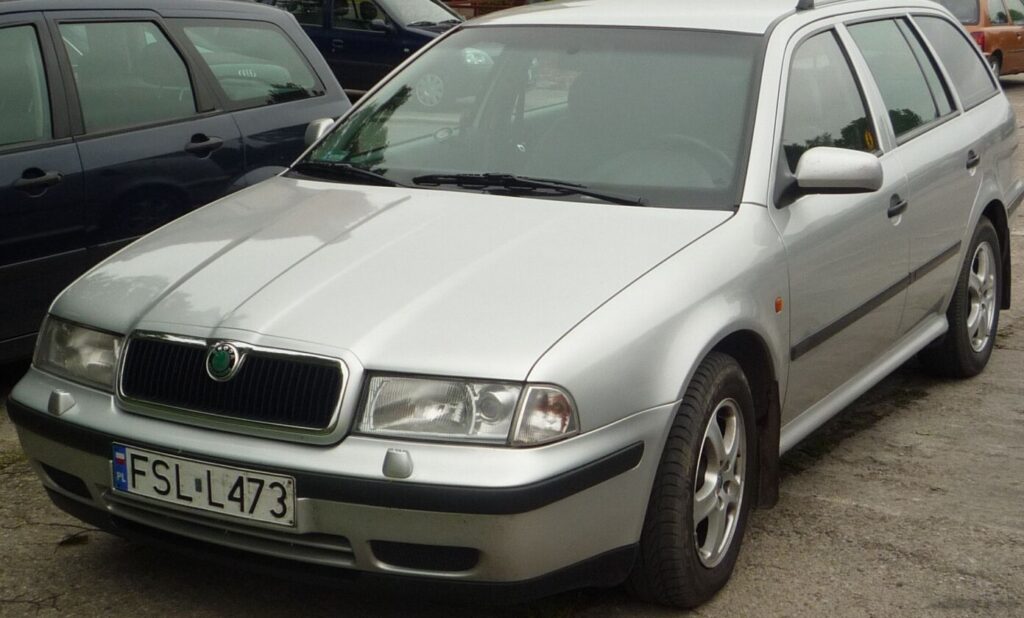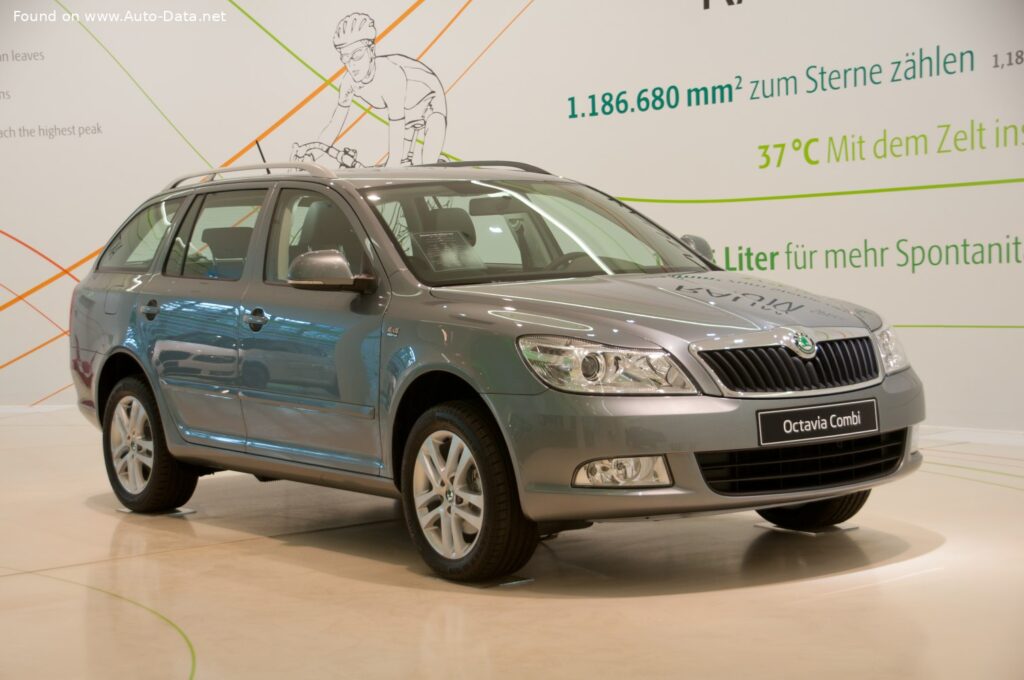
The Skoda Octavia II Combi, specifically the facelifted version produced from 2009 to 2010, offered a range of engine and transmission options. Among these, the 2.0 TDI PD 16V (140 hp) paired with a Direct-Shift Gearbox (DSG) represented a popular mid-range choice for buyers seeking a balance of fuel efficiency, performance, and practicality. This variant occupied a position between the lower-powered diesel options and the more expensive, higher-performance petrol engines available in the Octavia II lineup. It was primarily aimed at drivers who frequently undertook long journeys and required a comfortable, spacious, and economical vehicle.
The 2.0 TDI PD 16V (140 hp) DSG: An Overview
The Octavia II Combi facelift, internally designated as the 1Z5, benefited from styling updates and revised equipment levels compared to the pre-facelift model. The 2.0 TDI PD 16V with 140 horsepower became a key component of the revised range, offering a significant step up in performance from the 1.6 TDI and 1.9 TDI engines while remaining more affordable than the petrol-powered 1.8 TSI. The ‘PD’ designation refers to the Pumpe-Düse (Pump-Nozzle) fuel injection system, a characteristic of Volkswagen Group’s diesel engines of this era. The inclusion of the DSG transmission further enhanced the driving experience, providing smooth and rapid gear changes.
Powertrain & Engine Architecture
At the heart of this Octavia variant lies the EA188 series 2.0-liter inline-four cylinder diesel engine, specifically the BKD engine code. This engine is a turbocharged common rail diesel, utilizing a variable geometry turbocharger (VGT) and an intercooler to optimize performance and efficiency. The ‘PD’ pump-nozzle injection system delivers fuel directly into the combustion chamber at extremely high pressure, contributing to efficient combustion and reduced emissions. The engine boasts a displacement of 1968 cc (120.09 cubic inches) and features a compression ratio of 18.5:1. The cylinder head incorporates four valves per cylinder (16V) operated by a double overhead camshaft (DOHC) valvetrain.
The DSG transmission, in this case a 6-speed unit, is a dual-clutch automated manual transmission. It operates by utilizing two separate clutches for odd and even gears, allowing for seamless and incredibly fast gear changes without the torque interruption associated with traditional automatic transmissions. This contributes to both improved acceleration and enhanced fuel economy. The DSG unit is electronically controlled and offers both fully automatic and manual shift modes, allowing the driver to tailor the driving experience to their preferences.
Driving Characteristics
The 2.0 TDI PD 16V (140 hp) DSG Octavia Combi offered a noticeable improvement in performance compared to the lower-powered diesel variants. With 140 horsepower and 320 Nm (236 lb-ft) of torque available between 1750 and 2500 rpm, the vehicle provided ample power for everyday driving and comfortable highway cruising. Acceleration from 0 to 100 km/h (0-62 mph) took approximately 9.7 seconds, while top speed was electronically limited to 206 km/h (128 mph). The DSG transmission played a crucial role in maximizing the engine’s output, providing quick and precise gear changes that kept the engine within its optimal power band.
Compared to the manual transmission versions of the same engine, the DSG offered a more refined and effortless driving experience, particularly in urban traffic. However, some drivers preferred the greater control offered by a traditional manual gearbox. Against the 1.8 TSI petrol engine, the 2.0 TDI offered superior fuel economy and low-end torque, but lacked the petrol engine’s higher peak power and more responsive throttle response. The 1.9 TDI, while more economical, felt significantly slower and less refined.
Equipment & Trim Levels
The 2.0 TDI PD 16V DSG Octavia Combi was typically offered in mid-range trim levels, such as ‘Ambiente’ or ‘Elegance’, depending on the specific market. Standard equipment generally included air conditioning, electric front windows, power-adjustable mirrors, a CD stereo system, and alloy wheels. Higher trim levels added features like automatic climate control, a multi-function steering wheel, parking sensors, and upgraded upholstery. Optional extras included a sunroof, navigation system, and leather seats. The interior typically featured a dark color scheme with durable cloth upholstery. The dashboard layout was functional and ergonomically designed, prioritizing ease of use.
Chassis & Braking
The Octavia II Combi’s chassis was designed to provide a comfortable and stable ride. The front suspension utilized independent McPherson struts with coil springs and an anti-roll bar, while the rear suspension employed an independent multi-link setup, also with a stabilizer bar. This configuration provided a good balance between ride comfort and handling. The braking system consisted of ventilated discs on the front wheels and solid discs on the rear. Anti-lock Braking System (ABS) was standard, enhancing safety and control during emergency braking. The steering was a rack and pinion system with electric power assistance, providing precise and responsive steering feel.
Market Reception & Comparison
The 2.0 TDI PD 16V DSG Octavia Combi was well-received by automotive critics and consumers alike. It was praised for its fuel efficiency, spacious interior, comfortable ride, and practical estate car body style. The DSG transmission was generally regarded as a significant improvement over traditional automatic gearboxes, enhancing the driving experience. Fuel economy figures averaged around 6.0 l/100 km (39.2 US mpg) combined, making it an attractive option for drivers covering long distances.
Compared to its rivals, such as the Ford Focus Estate and Vauxhall/Opel Astra Estate, the Octavia Combi offered a larger boot capacity and a more refined interior. However, some critics noted that the Octavia’s handling was not as sporty as some of its competitors. Reliability was generally good, although the pump-nozzle injection system could be prone to issues if not properly maintained. The DSG transmission also required regular servicing to ensure optimal performance.
Technical Specifications
| Brand | Skoda |
| Model | Octavia II Combi |
| Engine Type | 2.0 TDI PD 16V |
| Engine Code | BKD |
| Displacement | 1968 cm3 (120.09 cu. in.) |
| Power | 140 hp @ 4000 rpm |
| Torque | 320 Nm (236 lb-ft) @ 1750-2500 rpm |
| Fuel Injection | Pump-Nozzle (Unit Injector) |
| Transmission | 6-speed DSG |
| Drive | Front-Wheel Drive |
| 0-100 km/h | 9.7 sec |
| Top Speed | 206 km/h (128 mph) |
| Fuel Consumption (Combined) | 6.0 l/100 km (39.2 US mpg) |
| CO2 Emissions | 158 g/km |
| Kerb Weight | 1430 kg (3153 lbs) |
| Fuel Tank Capacity | 55 l (14.5 US gal) |
| Boot Space (min/max) | 605 l / 1655 l (21.4 cu ft / 58.5 cu ft) |
Legacy
The 2.0 TDI PD 16V DSG powertrain proved to be a durable and reliable unit when properly maintained. While the pump-nozzle injection system can require specialized attention, the engine itself is generally robust. Today, used examples of the Octavia II Combi with this engine and transmission are readily available and represent a good value proposition for buyers seeking a practical and economical estate car. However, potential buyers should be aware of the importance of regular servicing, particularly for the DSG transmission and fuel injection system. The Octavia II Combi 2.0 TDI PD 16V DSG remains a popular choice for those seeking a spacious, comfortable, and fuel-efficient vehicle for both everyday commuting and long-distance travel.