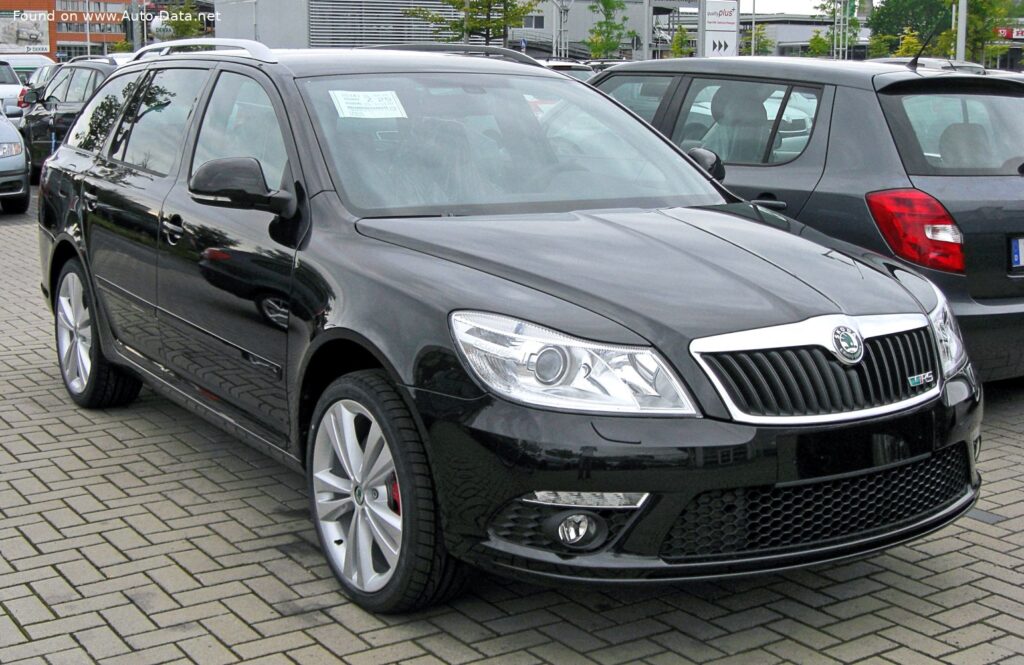
The Skoda Octavia II Combi, particularly the facelifted version introduced in 2009, represented a significant step forward for the Czech automaker. Produced from 2010 to 2013, the RS 2.0 TDI (170 hp) variant occupied the performance-oriented niche within the Octavia Combi lineup. Based on the Volkswagen Group’s A5 (1HX0/A3) platform, this model combined the practicality of a station wagon (estate) with a sporty driving experience, appealing to buyers seeking both utility and performance. It served as the top-tier trim level for those prioritizing diesel power and dynamic handling.
Powertrain & Engine Architecture
The heart of the Octavia II Combi RS 2.0 TDI is the CEGA engine code, a 1968 cc inline four-cylinder diesel engine. This powerplant is a turbocharged common rail direct injection diesel, delivering 170 horsepower at 4200 rpm and 350 Nm (258.15 lb-ft) of torque between 1750 and 2500 rpm. The engine features a double overhead camshaft (DOHC) valvetrain with four valves per cylinder, optimizing gas flow for improved performance. A key component of its efficiency and power output is the turbocharger with intercooler, which forces more air into the cylinders. The compression ratio is relatively high at 16.5:1, typical for diesel engines, contributing to thermal efficiency. Engine oil capacity is 4.3 liters (4.54 US qt / 3.78 UK qt), and the recommended oil specification is crucial for maintaining engine health.
Transmission
The RS 2.0 TDI was primarily equipped with a 6-speed manual transmission. While a Direct-Shift Gearbox (DSG) was available as an option, the manual was the more common configuration. The 6-speed manual provided precise gear changes and allowed drivers to fully exploit the engine’s torque band. The gear ratios were tuned to balance acceleration and fuel economy, with a relatively short first gear for quick starts and a taller sixth gear for efficient cruising. The transmission’s robust construction ensured durability even under spirited driving conditions.
Driving Characteristics
The Octavia II Combi RS 2.0 TDI offered a noticeably more engaging driving experience compared to lower-powered Octavia variants. Acceleration from 0 to 100 km/h (0-62 mph) took approximately 8.4 seconds, and 0-60 mph was achieved in around 8 seconds. While not a sports car, the RS provided ample power for overtaking and maintaining highway speeds. The turbocharger provided a noticeable surge of power in the mid-range, making it responsive in everyday driving situations. Compared to the standard 1.6 TDI or 1.8 TSI models, the RS offered significantly improved acceleration and a more confident feel. The manual transmission allowed for greater driver control, while the optional DSG provided quicker shifts and a more seamless driving experience. The suspension, detailed below, further enhanced the handling characteristics.
Equipment & Trim Levels
The Octavia II Combi RS came standard with a comprehensive list of features designed to enhance both comfort and sportiness. Interior appointments included sport seats upholstered in fabric or optional leather, a leather-wrapped steering wheel, and aluminum pedal covers. The dashboard featured RS-specific trim and instrumentation. Standard equipment also included air conditioning, an audio system with CD player, and electric windows. Optional extras included a sunroof, navigation system, parking sensors, and upgraded audio systems. The RS trim level was positioned as the premium offering, providing a higher level of refinement and technology compared to the base Ambition or Active trims.
Chassis & Braking
The Octavia II Combi RS featured a sport-tuned suspension designed to improve handling and stability. The front suspension utilized McPherson struts with coil springs and an anti-roll bar, while the rear suspension employed an independent multi-link setup, also with a stabilizer bar. This configuration minimized body roll and provided a more controlled ride. Braking duties were handled by ventilated discs on the front wheels and discs on the rear, providing ample stopping power. The Anti-lock Braking System (ABS) was standard, enhancing safety in emergency braking situations. The RS also featured a slightly lowered ride height compared to standard Octavia models, further contributing to its sporty stance and improved handling. Wheel sizes were typically 17 or 18 inches, fitted with 225/45 R17 or 225/40 R18 tires respectively.
Market Reception & Comparison
The Octavia II Combi RS 2.0 TDI was generally well-received by automotive critics. It was praised for its blend of practicality, performance, and fuel economy. Fuel consumption figures were impressive, with combined cycle figures around 5.7 l/100 km (41.3 US mpg / 49.6 UK mpg). Compared to the petrol-powered 1.8 TSI Octavia, the RS TDI offered superior torque and fuel efficiency, although the TSI provided a slightly more refined engine note. Reliability was generally good, although, like all diesel engines, the RS TDI required regular maintenance, including diesel particulate filter (DPF) regeneration. The RS competed with other performance-oriented station wagons such as the Ford Focus ST Estate and the Volkswagen Golf Variant GTD.
Technical Specifications
| Brand | Skoda |
| Model | Octavia |
| Generation | Octavia II Combi (facelift 2009) |
| Type (Engine) | RS 2.0 TDI (170 Hp) |
| Start of production | 2010 year |
| End of production | 2013 year |
| Powertrain Architecture | Internal Combustion engine |
| Body type | Station wagon (estate) |
| Seats | 5 |
| Doors | 5 |
| Fuel consumption (economy) – urban (NEDC) | 7.7 l/100 km (30.5 US mpg, 36.7 UK mpg, 13 km/l) |
| Fuel consumption (economy) – extra urban (NEDC) | 4.6 l/100 km (51.1 US mpg, 61.4 UK mpg, 21.7 km/l) |
| Fuel consumption (economy) – combined (NEDC) | 5.7 l/100 km (41.3 US mpg, 49.6 UK mpg, 17.5 km/l) |
| CO2 emissions (NEDC) | 150 g/km |
| Fuel Type | Diesel |
| Acceleration 0 – 100 km/h | 8.4 sec |
| Acceleration 0 – 62 mph | 8.4 sec |
| Acceleration 0 – 60 mph | 8 sec (Calculated) |
| Maximum speed | 225 km/h (139.81 mph) |
| Emission standard | Euro 5 |
| Weight-to-power ratio | 8.3 kg/Hp, 120.6 Hp/tonne |
| Weight-to-torque ratio | 4 kg/Nm, 248.2 Nm/tonne |
| Power | 170 Hp @ 4200 rpm |
| Torque | 350 Nm @ 1750-2500 rpm (258.15 lb.-ft.) |
| Engine layout | Front, Transverse |
| Engine Model/Code | CEGA |
| Engine displacement | 1968 cm3 (120.09 cu. in.) |
| Number of cylinders | 4 |
| Engine configuration | Inline |
| Cylinder Bore | 81 mm (3.19 in.) |
| Piston Stroke | 95.5 mm (3.76 in.) |
| Compression ratio | 16.5:1 |
| Number of valves per cylinder | 4 |
| Fuel injection system | Diesel Commonrail |
| Engine aspiration | Turbocharger, Intercooler |
| Valvetrain | DOHC |
| Engine oil capacity | 4.3 l (4.54 US qt, 3.78 UK qt) |
| Coolant | 8.4 l (8.88 US qt, 7.39 UK qt) |
| Kerb Weight | 1410-1500 kg (3108.52 – 3306.93 lbs.) |
| Max. weight | 1965-1980 kg (4332.08 – 4365.15 lbs.) |
| Trunk (boot) space – minimum | 605 l (21.37 cu. ft.) |
| Trunk (boot) space – maximum | 1655 l (58.45 cu. ft.) |
| Fuel tank capacity | 55 l (14.53 US gal, 12.1 UK gal) |
| Length | 4599 mm (181.06 in.) |
| Width | 1769 mm (69.65 in.) |
| Height | 1451 mm (57.13 in.) |
| Wheelbase | 2578 mm (101.5 in.) |
Legacy
The Skoda Octavia II Combi RS 2.0 TDI has proven to be a durable and reliable vehicle in the used car market. The CEGA engine, while requiring regular maintenance, is known for its longevity when properly cared for. The 6-speed manual transmission is also generally considered robust. Common issues include DPF clogging (particularly with frequent short trips) and wear on suspension components. Today, these Octavias represent a compelling value proposition for buyers seeking a practical, fuel-efficient, and reasonably sporty station wagon. Their combination of space, performance, and affordability has ensured their continued popularity among enthusiasts and families alike.