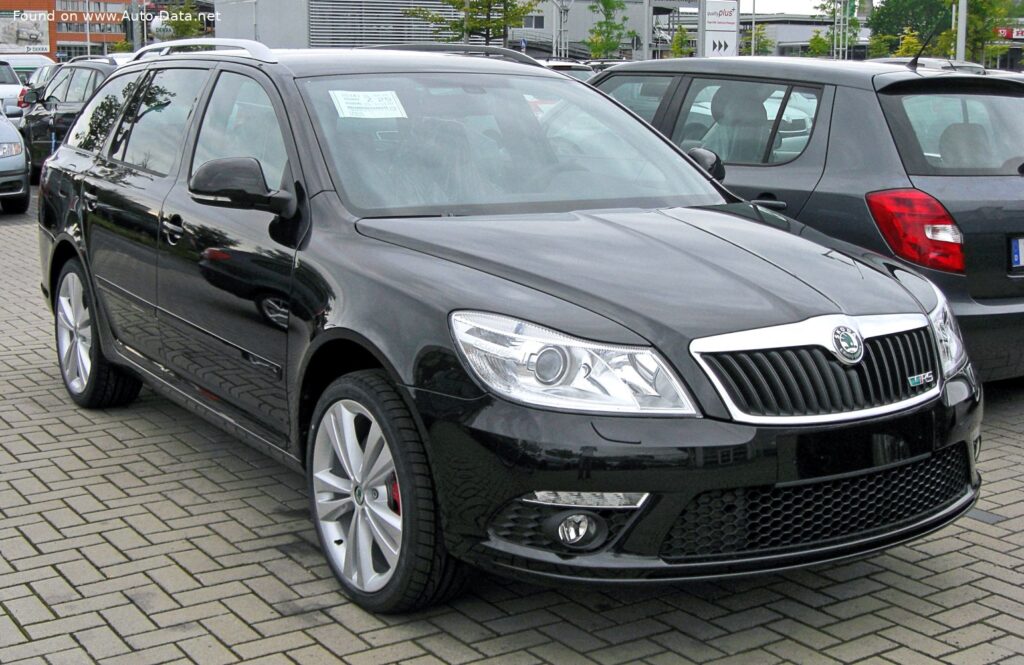
The Skoda Octavia II Combi RS 2.0 TSI, produced from 2009 to 2013, represents the performance-oriented variant of the second-generation Octavia Combi (estate) model. Positioned as the flagship trim level, the RS (Rally Sport) offered a significant upgrade in power and handling compared to the standard Octavia models. This variant was part of the wider Octavia II range, which utilized the Volkswagen Group’s A5 (1HX0/A3) platform, shared with models like the Volkswagen Golf, Audi A3, and SEAT Leon. The 2.0 TSI RS Combi aimed to deliver a blend of practicality, performance, and value, appealing to drivers seeking a sporty yet versatile vehicle.
Powertrain & Engine Architecture
The heart of the Octavia II Combi RS 2.0 TSI is the 1984 cc (121.07 cu. in.) inline-four cylinder engine, designated as the CAWB or CCZA engine code depending on the specific production year and market. This engine is a turbocharged, direct-injection gasoline engine, representing a significant leap in technology compared to the naturally aspirated engines found in lower trim levels. The direct injection system, utilizing FSI (Fuel Stratified Injection) technology, allows for precise fuel delivery, optimizing combustion efficiency and power output.
The engine features a double overhead camshaft (DOHC) valvetrain with four valves per cylinder, contributing to its high volumetric efficiency. The turbocharger, coupled with an intercooler, forces more air into the cylinders, boosting power. The CAWB engine typically produced 200 horsepower (hp) at 5100-6000 rpm and 280 Nm (206.52 lb-ft) of torque between 1700-5000 rpm. The CCZA variant, introduced later in the production run, offered similar performance figures.
While a six-speed manual transmission was standard, a six-speed direct-shift gearbox (DSG) was also available as an option. The DSG transmission, a dual-clutch automated manual, provided faster and smoother gear changes compared to a traditional automatic transmission, enhancing the driving experience and contributing to improved fuel efficiency. The gear ratios were optimized for both acceleration and cruising, with a relatively short final drive to maximize responsiveness.
Fuel Injection and Valvetrain Details
The direct injection system in the 2.0 TSI engine operates at significantly higher pressures than traditional port fuel injection systems. This allows for finer atomization of the fuel, resulting in more complete combustion and reduced emissions. The DOHC valvetrain utilizes chain drive, known for its durability and reduced maintenance requirements compared to timing belts. Variable valve timing on both the intake and exhaust camshafts further optimizes engine performance across the rev range.
Driving Characteristics
The Octavia II Combi RS 2.0 TSI offered a noticeably more engaging driving experience than the standard Octavia models. The 200 hp engine provided brisk acceleration, with 0-62 mph (0-100 km/h) taking approximately 7.3 seconds. The readily available torque, peaking at 280 Nm, made overtaking maneuvers effortless. Compared to the lower-powered 1.6 or 1.8-liter gasoline engines, the RS model felt significantly more responsive and capable.
The optional DSG transmission further enhanced the driving experience, providing quick and seamless gear changes. While the manual transmission offered a more traditional driving feel, the DSG allowed drivers to focus more on steering and braking. The RS model also featured a sport-tuned suspension, lowering the ride height and stiffening the dampers, resulting in reduced body roll and improved handling. The steering was direct and precise, providing good feedback to the driver. Compared to the 1.9 TDI diesel variant, the 2.0 TSI RS offered a more linear power delivery and a higher revving engine, prioritizing performance over fuel economy.
Equipment & Trim Levels
The Octavia II Combi RS came standard with a comprehensive list of features, reflecting its position as the top-of-the-line trim level. Standard equipment included alloy wheels (typically 17 or 18 inch), sport seats with unique upholstery, a leather-wrapped steering wheel, automatic climate control, and a premium audio system. Exterior styling cues included a distinctive front bumper with fog lights, side skirts, a rear spoiler, and dual exhaust outlets.
Optional extras included xenon headlights, a sunroof, parking sensors, and a navigation system. Interior options included leather upholstery and upgraded audio systems. The dashboard layout was similar to other Octavia II models, but the RS featured unique trim accents and instrumentation. The RS also included safety features such as ABS, traction control, and multiple airbags.
Chassis & Braking
The Octavia II Combi RS featured a fully independent suspension system, with McPherson struts at the front and a multi-link setup at the rear. This suspension design provided a good balance between ride comfort and handling performance. The RS model also featured thicker stabilizer bars compared to the standard Octavia, further reducing body roll. The braking system consisted of ventilated disc brakes at the front and solid disc brakes at the rear. ABS (Anti-lock Braking System) was standard, providing enhanced braking control in emergency situations.
Market Reception & Comparison
The Octavia II Combi RS 2.0 TSI was generally well-received by automotive critics. It was praised for its strong performance, practical estate car body style, and competitive price. Reviewers noted that the RS offered a compelling alternative to more expensive hot hatches, providing a similar level of performance with added versatility. Fuel economy was considered reasonable for a performance-oriented vehicle, with combined fuel consumption figures around 7.5 l/100 km (31.4 US mpg).
Compared to the 1.8-liter TSI models, the RS offered a significant performance upgrade, but at the cost of slightly higher fuel consumption and insurance costs. The 1.9 TDI diesel variant offered better fuel economy, but lacked the RS’s outright performance. The RS was often compared to rivals such as the Ford Focus ST and the Volkswagen Golf GTI, offering a similar blend of performance and practicality.
Technical Specifications
| Brand | Skoda |
| Model | Octavia |
| Generation | Octavia II Combi (facelift 2009) |
| Type (Engine) | RS 2.0 TSI (200 Hp) |
| Start of production | 2009 year |
| End of production | 2013 year |
| Powertrain Architecture | Internal Combustion engine |
| Body type | Station wagon (estate) |
| Seats | 5 |
| Doors | 5 |
| Fuel consumption (economy) – urban (NEDC) | 10.2 l/100 km |
| Fuel consumption (economy) – extra urban (NEDC) | 5.9 l/100 km |
| Fuel consumption (economy) – combined (NEDC) | 7.5 l/100 km |
| CO2 emissions (NEDC) | 175 g/km |
| Fuel Type | Petrol (Gasoline) |
| Acceleration 0 – 100 km/h | 7.3 sec |
| Acceleration 0 – 62 mph | 7.3 sec |
| Acceleration 0 – 60 mph | 6.9 sec |
| Maximum speed | 239 km/h (148.51 mph) |
| Emission standard | Euro 5 |
| Weight-to-power ratio | 6.9 kg/Hp, 145.5 Hp/tonne |
| Weight-to-torque ratio | 4.9 kg/Nm, 203.6 Nm/tonne |
| Power | 200 Hp @ 5100-6000 rpm |
| Torque | 280 Nm @ 1700-5000 rpm (206.52 lb.-ft. @ 1700-5000 rpm) |
| Engine layout | Front, Transverse |
| Engine Model/Code | CAWB, CCZA |
| Engine displacement | 1984 cm3 (121.07 cu. in.) |
| Number of cylinders | 4 |
| Engine configuration | Inline |
| Cylinder Bore | 82.5 mm (3.25 in.) |
| Piston Stroke | 92.8 mm (3.65 in.) |
| Compression ratio | 9.6:1 |
| Number of valves per cylinder | 4 |
| Fuel injection system | Direct injection |
| Engine aspiration | Turbocharger, Intercooler |
| Valvetrain | DOHC |
| Engine oil capacity | 4.6 l (4.86 US qt | 4.05 UK qt) |
| Coolant | 8.6 l (9.09 US qt | 7.57 UK qt) |
| Kerb Weight | 1375-1465 kg (3031.36 – 3229.77 lbs.) |
| Max. weight | 1930-1945 kg (4254.92 – 4287.99 lbs.) |
| Max load | 480-555 kg (1058.22 – 1223.57 lbs.) |
| Trunk (boot) space – minimum | 605 l (21.37 cu. ft.) |
| Trunk (boot) space – maximum | 1655 l (58.45 cu. ft.) |
| Fuel tank capacity | 55 l (14.53 US gal | 12.1 UK gal) |
| Length | 4599 mm (181.06 in.) |
| Width | 1769 mm (69.65 in.) |
| Height | 1451 mm (57.13 in.) |
| Wheelbase | 2578 mm (101.5 in.) |
Legacy
The Skoda Octavia II Combi RS 2.0 TSI has proven to be a reliable and durable vehicle, with many examples still on the road today. The 2.0 TSI engine, while requiring regular maintenance, is generally considered robust. Common issues include carbon buildup on the intake valves, which can be mitigated with regular cleaning. The DSG transmission, if properly maintained with fluid changes, is also relatively reliable.
On the used car market, the Octavia II Combi RS 2.0 TSI holds its value well, reflecting its performance and practicality. It remains a popular choice for drivers seeking a versatile and engaging vehicle. Its blend of performance, space, and affordability has cemented its place as a desirable and respected model within the Skoda lineup.