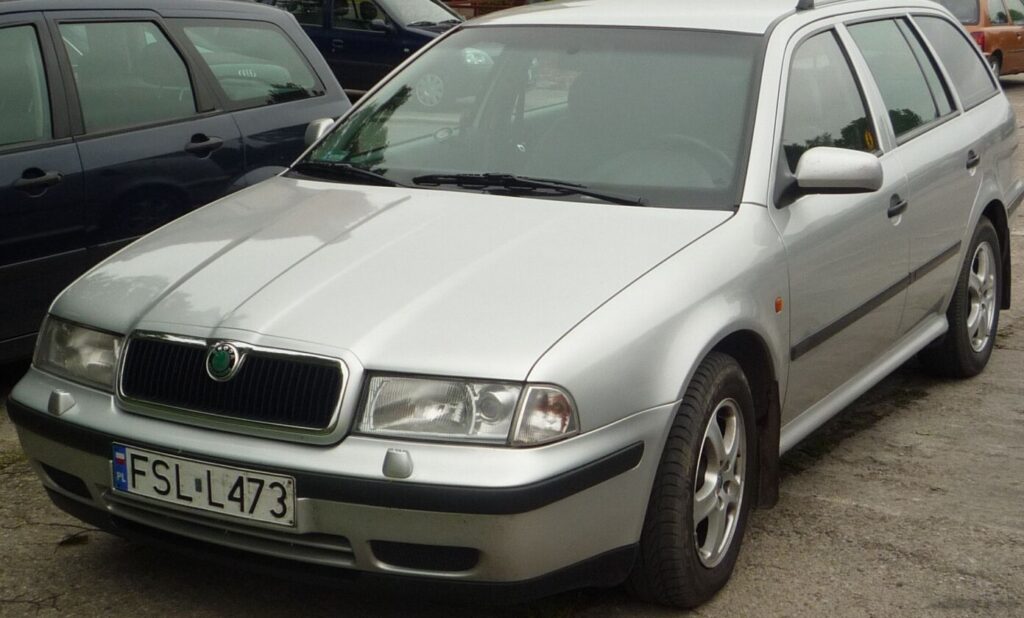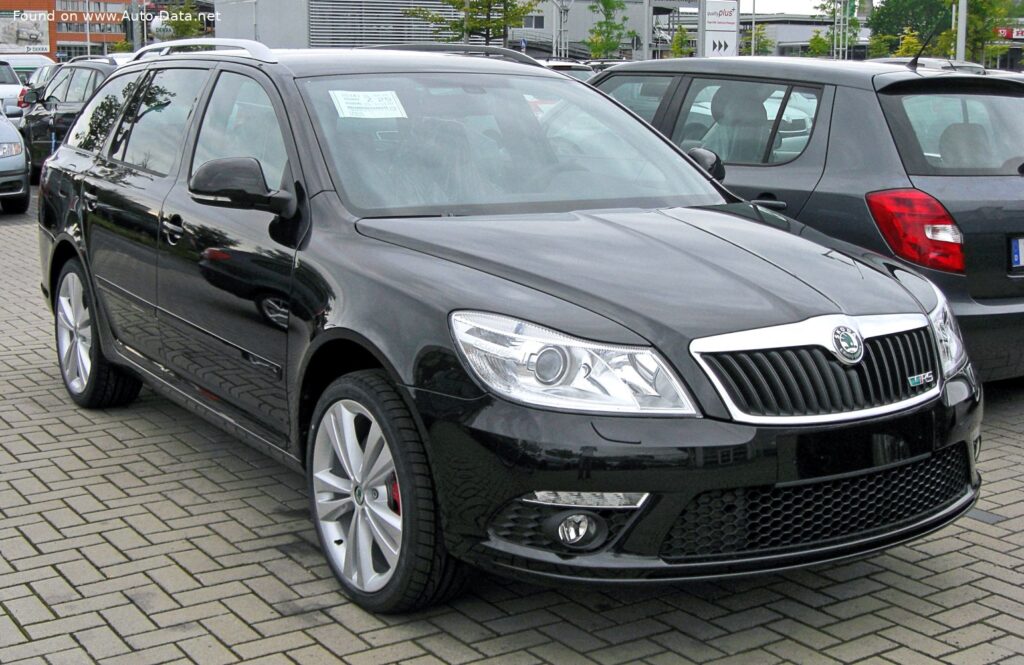
The Skoda Octavia II Combi (facelift, produced 2009-2013) RS 2.0 TSI represents the performance-oriented variant of the second-generation Octavia estate car. Positioned as the flagship trim level, the RS (Rally Sport) model offered a significant upgrade in power and handling compared to the standard Octavia Combi. This particular version, equipped with the 2.0 TSI engine producing 200 horsepower and a six-speed Direct-Shift Gearbox (DSG) automatic transmission, aimed to deliver a blend of practicality, performance, and refinement. It was built on the Volkswagen Group’s A5 (1HX0) platform, shared with models like the Volkswagen Golf Mk5 and Audi A3.
Powertrain & Engine Architecture
The heart of the Octavia II Combi RS 2.0 TSI is the EA888 2.0-liter turbocharged four-cylinder gasoline engine. Specifically, engine codes CAWB and CCZA were utilized during the production run. This engine is a direct-injection, DOHC (Dual Overhead Camshaft) 16-valve unit. The direct injection system, a key feature, allows for precise fuel delivery, contributing to improved efficiency and power output. The turbocharger, coupled with an intercooler, forces more air into the engine, boosting performance. The engine produces 200 hp at 5100-6000 rpm and 280 Nm (206.52 lb-ft) of torque between 1700-5000 rpm.
The six-speed DSG transmission is a dual-clutch automated manual gearbox. It offers the convenience of an automatic transmission with the efficiency and responsiveness of a manual. The DSG operates by utilizing two separate clutches for odd and even gears, allowing for seamless and rapid gear changes. This contributes to quicker acceleration and a more engaging driving experience compared to a traditional torque-converter automatic. The transmission is electronically controlled, adapting shift points based on driving conditions and driver input.
Fuel Injection and Valvetrain
The EA888 engine employs a stratified direct injection system, meaning fuel is injected directly into the combustion chamber at high pressure. This allows for a leaner air-fuel mixture, improving fuel economy and reducing emissions. The DOHC valvetrain, with four valves per cylinder, optimizes airflow into and out of the engine, further enhancing performance. Variable valve timing on both the intake and exhaust camshafts allows the engine to adjust valve timing based on engine speed and load, maximizing efficiency and power across the rev range.
Driving Characteristics
The Octavia II Combi RS 2.0 TSI with the DSG transmission delivers a noticeably more spirited driving experience than the standard Octavia models. Acceleration from 0 to 100 km/h (0-62 mph) takes approximately 7.3 seconds, and 0-60 mph is achieved in around 6.9 seconds. While not a dedicated sports car, the RS offers brisk performance for everyday driving and comfortable long-distance cruising. The DSG transmission provides quick and smooth gear changes, enhancing acceleration and responsiveness. The turbocharger provides a noticeable surge of power in the mid-range, making overtaking maneuvers effortless.
Compared to the manual transmission version of the same engine, the DSG offers slightly quicker acceleration due to the faster and more consistent gear changes. However, some enthusiasts prefer the greater control offered by a manual gearbox. Compared to lower-powered Octavia variants (e.g., the 1.6 MPI), the RS provides a substantial increase in performance, but it comes at the cost of slightly higher fuel consumption.
Equipment & Trim Levels
The Octavia II Combi RS came generously equipped as standard. Interior features typically included sport seats upholstered in fabric and Alcantara, a leather-wrapped multi-function steering wheel, and aluminum pedal caps. The dashboard featured RS-specific trim elements and instrumentation. Standard exterior features included a sporty body kit, including front and rear spoilers, side skirts, and 17-inch alloy wheels (18-inch wheels were often an option). Other standard equipment included automatic climate control, a radio with CD player, and front fog lights.
Optional extras included a sunroof, parking sensors, a navigation system, and upgraded audio systems. Leather upholstery was also available as an option. The RS trim level was generally considered well-equipped for its price point, offering a good balance of comfort, convenience, and performance features.
Chassis & Braking
The Octavia II Combi RS featured a sport-tuned suspension compared to the standard Octavia Combi. The front suspension utilized McPherson struts with a stabilizer bar, while the rear suspension employed an independent multi-link setup, also with a stabilizer bar. This configuration provided improved handling and reduced body roll. The RS also benefited from a lowered ride height, further enhancing its sporty character.
Braking duties were handled by ventilated disc brakes on all four wheels. Anti-lock Braking System (ABS) was standard. The braking system provided ample stopping power for the vehicle’s performance capabilities. The RS typically featured larger brake rotors and calipers compared to the standard Octavia models.
Market Reception & Comparison
The Octavia II Combi RS 2.0 TSI was generally well-received by automotive critics. It was praised for its blend of practicality, performance, and value. Reviewers noted the engine’s strong power delivery and the DSG transmission’s responsiveness. The spacious interior and large cargo area were also highlighted as positive attributes. Fuel economy was considered reasonable for a performance-oriented vehicle, with combined fuel consumption figures around 7.7 l/100 km (30.5 US mpg).
Compared to other performance estates of the time, such as the Ford Focus ST Estate, the Octavia RS offered a more refined and comfortable driving experience. However, some critics found the steering to be slightly lacking in feel. In terms of reliability, the EA888 engine and DSG transmission were generally considered robust, but preventative maintenance, particularly DSG fluid changes, was crucial to ensure long-term reliability.
Technical Specifications
| Brand | Skoda |
| Model | Octavia Combi RS |
| Engine Type | 2.0 TSI (Turbocharged Inline-4) |
| Engine Code | CAWB, CCZA |
| Displacement | 1984 cc (121.07 cu in) |
| Power | 200 hp @ 5100-6000 rpm |
| Torque | 280 Nm (206.52 lb-ft) @ 1700-5000 rpm |
| Transmission | 6-speed DSG (Dual-Clutch) Automatic |
| Drive | Front-Wheel Drive |
| 0-100 km/h | 7.3 seconds |
| 0-60 mph | 6.9 seconds (calculated) |
| Top Speed | 237 km/h (147.26 mph) |
| Fuel Consumption (Combined) | 7.7 l/100 km (30.5 US mpg, 36.7 UK mpg) |
| CO2 Emissions | 180 g/km |
| Kerb Weight | 1395-1485 kg (3075.45 – 3273.86 lbs) |
| Fuel Tank Capacity | 55 liters (14.53 US gal, 12.1 UK gal) |
| Trunk Space (min/max) | 605 l / 1655 l (21.37 cu ft / 58.45 cu ft) |
Legacy
The Octavia II Combi RS 2.0 TSI remains a popular choice in the used car market. Its combination of practicality, performance, and relatively affordable price makes it an attractive option for buyers seeking a versatile and engaging estate car. The EA888 engine, while requiring regular maintenance, is generally considered reliable. The DSG transmission, if properly maintained with regular fluid changes, can provide years of trouble-free operation. However, potential buyers should be aware of the potential for DSG issues if maintenance has been neglected. Overall, the Octavia II Combi RS 2.0 TSI represents a well-rounded and capable performance estate that continues to offer good value for money.